
AI Is Here: Will PV Technical Jobs Be Replaced?
Key points
AI replaces tasks, not jobs. This article takes six roles (materials, design, process, reliability, failure analysis and certification) one by one to see which work is losing value and which is gaining it. About an 8-minute read.
Over the past two years, PV professionals have been carrying two anxieties at once.
One is the industry cycle: capacity shake-out, price wars, hiring freezes. The other is AI: large models step up a level every year, and they now write reports, read standards and interpret images convincingly.
So every so often the same question pops up in engineering chat groups: in a few years, will materials, process, reliability and certification still need this many people?
Our view: there will be somewhat fewer people, but the roles will not disappear; what is really being rewritten is what people should be doing within each role. Let's unpack that.
01A framework first: AI replaces tasks, not jobs
A job has never been one thing; it is a bundle of tasks.
Take a reliability engineer. In a typical week they schedule tests, tend equipment and samples, organise data, make charts and write reports, look up standards, liaise with customers or certification bodies, and, when something odd shows up, judge whether it is a real failure or a problem with the test itself.
These tasks differ enormously in how resistant they are to AI. Organising data, charting, drafting reports and looking up clauses: AI can already do most of that today. Judging anomalies, designing experiments and owning the result: there AI can only assist.
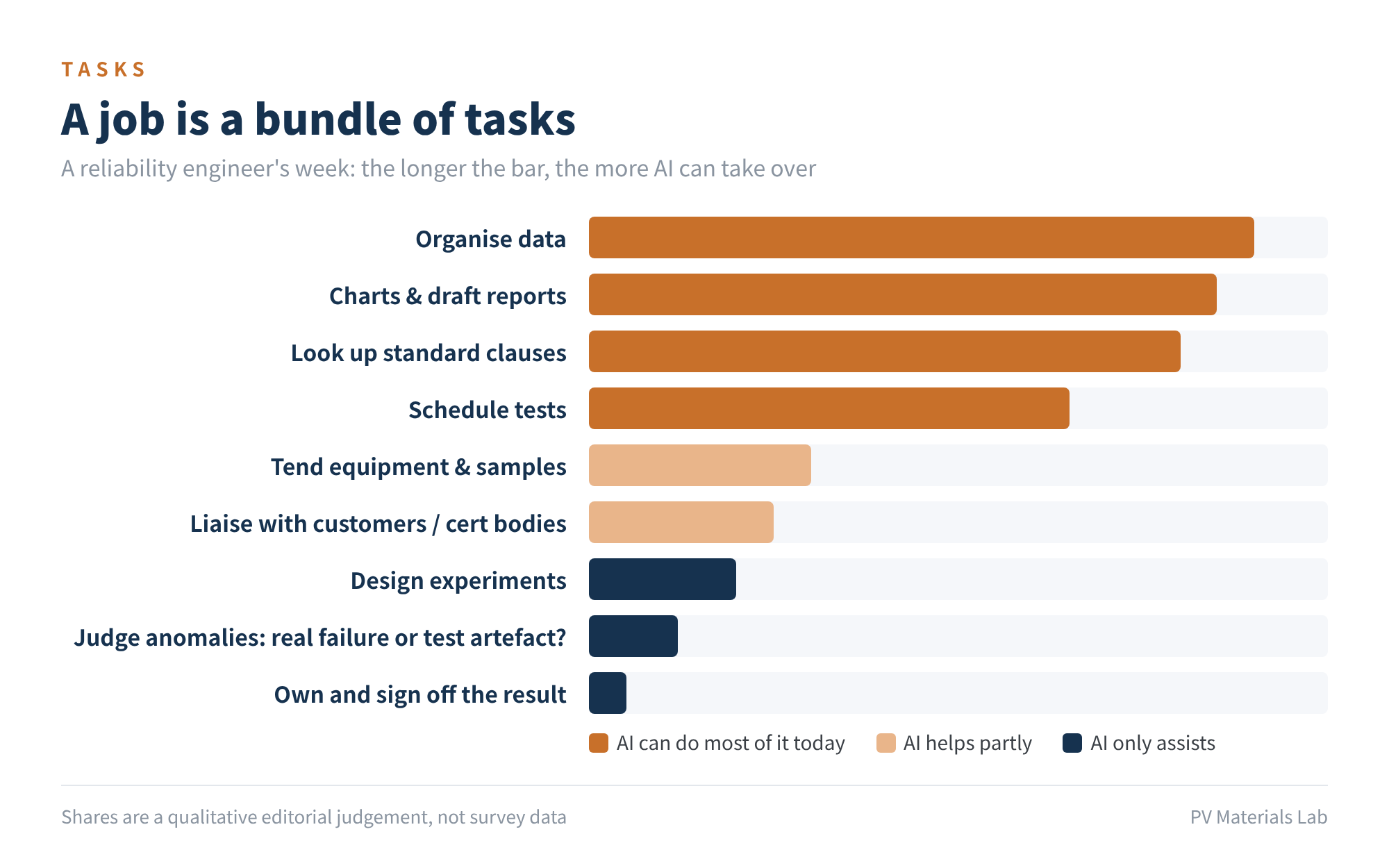
Figure 1 A job is a bundle of tasks
"Will my job be replaced?" is the wrong question. The right one is: which of my tasks are losing value, and which are gaining it?
02How far has AI already got?
Forget the concepts; look at three things that have already happened.
- Production-line inspection came first. Long before large models, cloud providers worked with cell makers to automate EL defect classification in milliseconds. In the large-model era, according to public reports, Yingli and a team at Hebei University of Technology have been developing a PV inspection model since 2024: the model flags suspected defects such as cold solder joints on EL images, and people only review and confirm. Note this division of labour, machine first pass and human review: it is the template for every role that follows.
- R&D has gone further than most people think. A 2026 paper in Nature closed the loop between machine-learning molecule screening and automated device fabrication. It found a new interface-passivation molecule for perovskite cells (5ANI) and optimised the process autonomously using Bayesian optimisation: small-area cells reached 27.22% efficiency, 21.4 cm² mini-modules 23.49%, and the automated platform's efficiency reproducibility was about five times that of manual fabrication. The "design–fabricate–test–analyse" loop for PV devices can now turn largely without human hands.
- Text-based work is changing fastest. Standard-clause lookup, literature reviews, draft test reports, 8D report frameworks, English emails: general-purpose models are already good enough, and the only barrier is an account.
All three point to the same rule: wherever inputs and outputs are data and right and wrong are clearly defined, AI moves in fastest.
03Six roles, one by one
Applying that rule, let's go through the six most common roles on the PV technical side. For each we answer just three questions: what AI takes over, what people keep, and the verdict.
1. Materials R&D and introduction
- AI takes over: literature and patent reviews, modelling links between formulation and performance, draft DOE plans, comparing supplier data.
- People keep: judging what will go wrong when a new material reaches mass production: batch variation, compatibility with other materials, the lamination window, whether the supplier can really be trusted. Material introduction is essentially risk judgement, and risk often hides outside the data.
- Verdict: R&D speeds up markedly, while the human role in introduction actually grows.
2. Module design
- AI takes over: layout, parameter sweeps in electrical and optical simulation, CTM loss breakdown, BOM cost estimates.
- People keep: trade-offs among power, cost, reliability, manufacturability and customer preference. Wherever the constraints cannot be stated precisely, that is the designer's place.
- Verdict: options come several times faster; choosing among them is still human.
3. Process development
- AI takes over: process-window optimisation, SPC anomaly alerts, correlation analysis of equipment data, virtual metrology.
- People keep: the shop floor. The quirks of each tool, what changes after a material switch, where to look when yield suddenly drops half a point: that comes from time spent on the line.
- Verdict: factories with good data foundations benefit most, and they squeeze hardest those who can only tweak parameters.
4. Reliability testing
- AI takes over: test scheduling, data cleaning and charting, draft reports, extrapolating degradation trends.
- People keep: test design and interpreting results. More importantly, time cannot be compressed: DH1000 is still 1,000 hours and TC200 is still 200 cycles. AI cannot make a climate chamber run faster.
- Verdict: paperwork shrinks sharply; people who can design tests and read results become scarcer.
5. Failure analysis
- AI takes over: defect recognition and classification in EL, IR and visual images, searching historical cases, listing possible mechanisms.
- People keep: the causal chain. Going from symptom to mechanism to root cause means deciding where to cut next and what to measure, and ruling out plausible-but-wrong explanations. AI can offer ten hypotheses; falsifying nine of them takes people and experiments.
- Verdict: AI is an excellent "second opinion", but people still have to reach the conclusion.
6. Certification
- AI takes over: searching and comparing standard clauses, mapping differences between market requirements, preparing application documents, a first pass at which retests a BOM change triggers.
- People keep: communication and dispute handling with certification bodies, judgement on the grey areas of standards, and the responsibility behind a signature.
- Verdict: document-heavy work is hit hardest; people who understand the reasoning behind standards gain value.
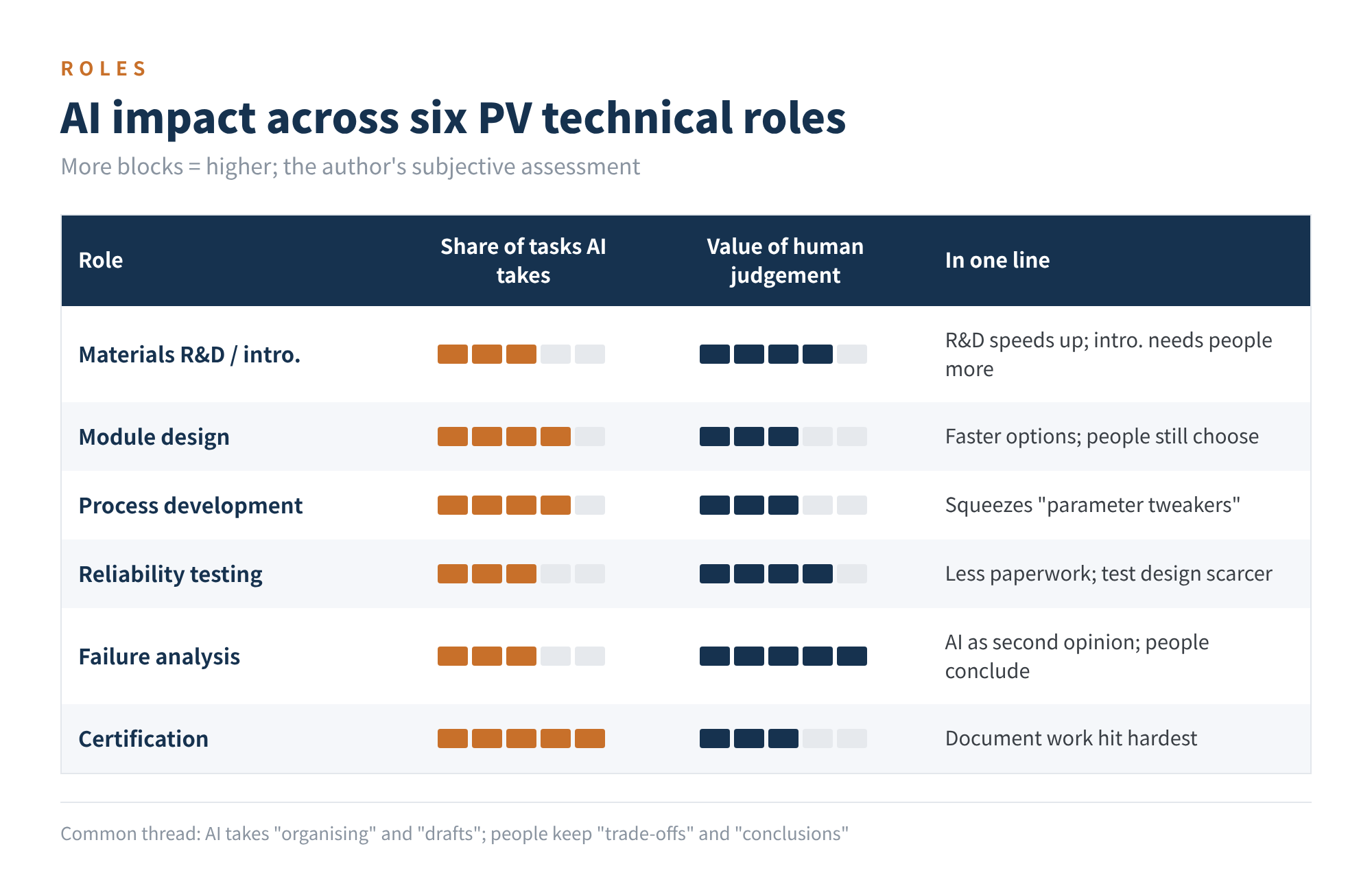
Figure 2 AI impact across six PV technical roles (the author's subjective assessment)
Across all six roles there is a common thread: AI mostly takes the "organising" and the "first drafts"; what it leaves to people is mostly "trade-offs" and "conclusions".
04Three hurdles AI cannot get around
- The first is data. PV data is scattered across companies, highly confidential and inconsistent in format, and failure samples in particular are few and messy. What a model hasn't seen, it can only guess. Only those with clean, systematic data will get AI that truly works.
- The second is physics. Material ageing and outdoor validation need real time and real environments. AI can help us run fewer wasted experiments, but it cannot replace experiments.
- The third is accountability. A certification report, a material-introduction decision or a batch release is backed by 20–30-year warranties and real-money claims. The one who signs, and answers for it, can only be a person.
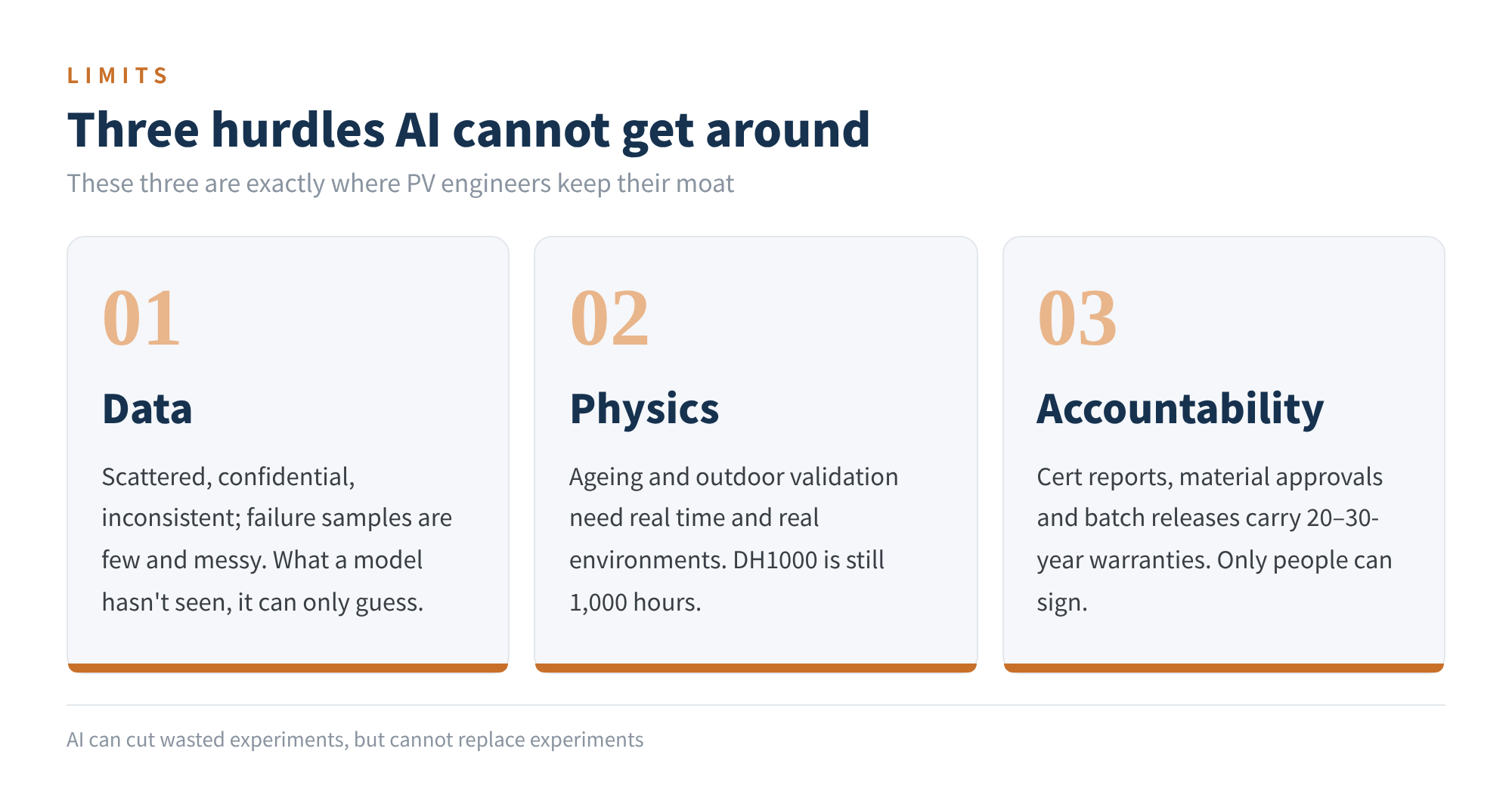
Figure 3 Three hurdles AI cannot get around
05Valuable skills are shifting
In the past, much of an engineer's value came from knowing: remembering standard clauses, writing reports quickly and thoroughly, having worked long in one step and seen a lot.
Those abilities still work; they are just no longer scarce. AI levels the gap in knowing and widens the gap in judging. What will be worth more is asking the right questions, telling true from false, designing experiments, working across steps and owning conclusions.
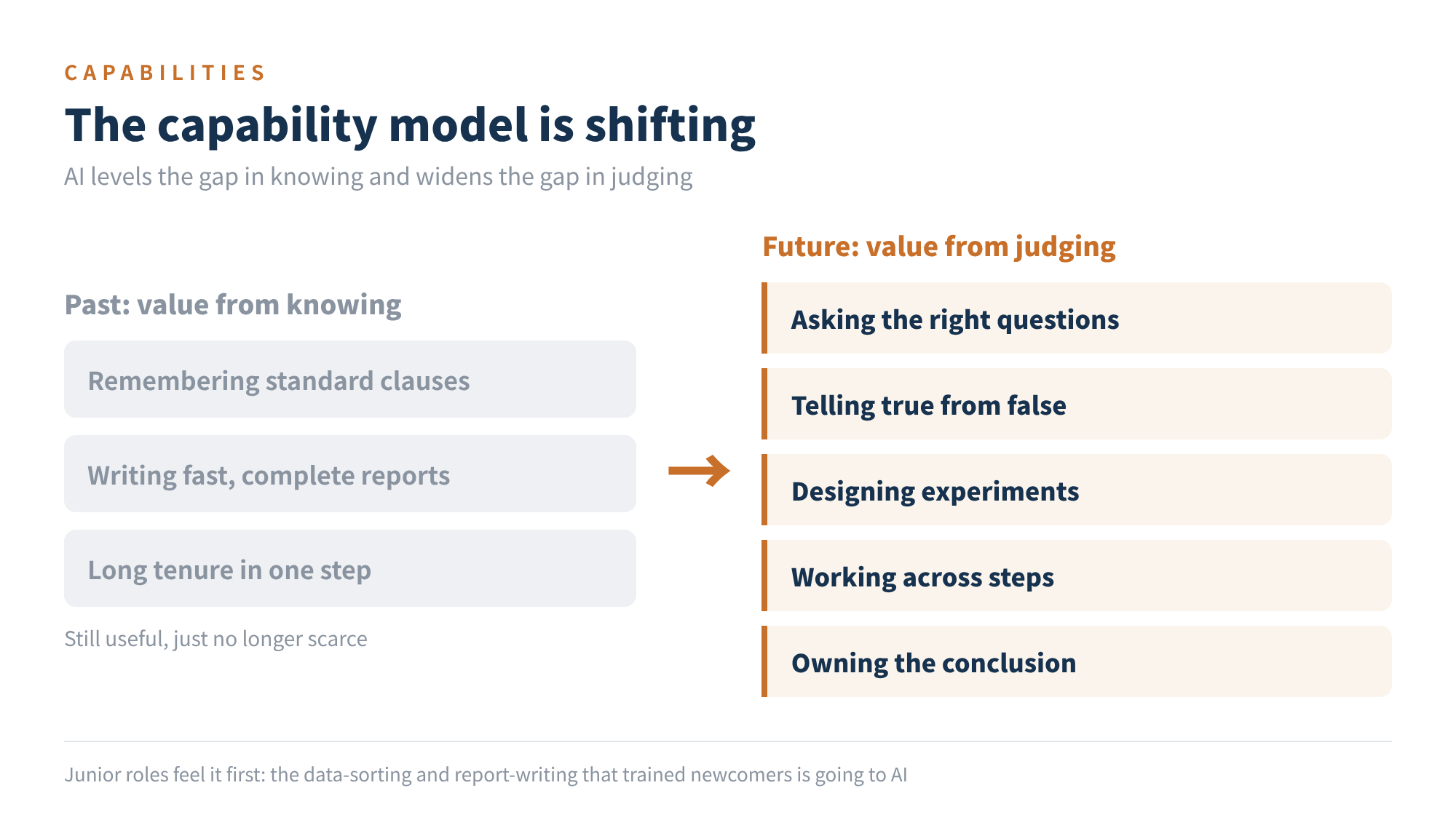
Figure 4 The capability model is shifting
Junior roles feel it most directly. Newcomers used to learn the ropes by organising data and writing reports, and that work is now going to AI. How newcomers grow and how seniors mentor both have to change, which is a more practical management question than whether to cut staff.
06Five pieces of advice for fellow practitioners
- Work with AI as a colleague. Start with what you do every day: reading standards, writing reports, organising data. Only by using it will you learn where it is reliable and where it is not.
- Spend more time on the shop floor. Hands-on experience is the data AI finds hardest to get, and it is the source of judgement.
- Write your experience down. Cases, criteria, the pitfalls you have hit. Only systematised experience can be handed to AI, and only then does it become your own asset.
- Step into the neighbouring stage. Materials people should learn some reliability; test people some certification. Cross-stage judgement is the scarcest of all.
- Stay rigorous. AI can be confidently wrong. Clause numbers, values and mechanisms all need checking against the original standard and the data.
07Final thoughts
PV is an industry validated by time: a module has to stand outdoors for twenty or thirty years before we know whether the original judgement was right.
AI will let us calculate faster, see more and write with less effort. But someone still has to answer for whether it is right.
What gets replaced will not be PV engineers, but the way of working that neither uses AI nor keeps sharpening judgement.
Which parts of your job have you already handed to AI? We would be glad to hear from you.
References
- D. Gao, et al. Autonomous closed-loop framework for reproducible perovskite solar cells. Nature 653, 707–714 (2026). DOI: 10.1038/s41586-026-10482-y
- "Frontline stories of AI empowering industries (23): a large-model 'inspector' gives PV lines sharp eyes", 2026 (in Chinese)
- DeepTech: "AI Frontline: production-line inspection catches defects in PV, PCB and chip products" (in Chinese)
A PV R&D and technology team with 10+ years of experience | In-depth technical knowledge sharing
Materials · Reliability · Failure Analysis · Standards & Certification · Products · Processes
Exploring AI + PV; collaboration welcome
Disclaimer:
1. Original content reflects the authors' personal views only, is for reference only and does not constitute investment advice.
2. Reposted and cited content is credited to its source, out of respect for original work.
3. Some content was produced with AI assistance (chart generation, data retrieval, concept explanations, etc.); the core framework and key content were written by our technical team and reviewed by people.
4. If anything is inaccurate or infringes your rights, please leave a message or contact us and we will deal with it.