
The New York Times Says Tandem Cells Could Help the US Catch China in Solar. We Doubt It
Conclusions first
● Tandems are the industry's agreed next-generation direction, and the report is right about that; but casting them as an "American technology breakthrough" goes too far.
● Across five races (certification, efficiency, shipments, production lines and bottom cells), none is led by a purely US-based company.
● The real barrier is not "making one" but reliability data, cost per watt and the silicon bottom-cell supply chain, exactly where the US is weakest.
● The more likely outcome: the US grows a domestic tandem industry behind its tariff wall, rather than "overtaking" China in the global market.
On 5 October, The New York Times ran a report with a rousing message: US solar manufacturers want to catch China with a big leap in technology. Its subject was perovskite/silicon tandem modules: Qcells, First Solar and Tandem PV all say they are close to commercialisation, and the US might use this new generation of technology to break China's dominance of solar manufacturing.
Over the following two weeks the report was widely reprinted and summarised, with ever bolder headlines. Having worked on modules for many years, across materials, processes, reliability and certification, we have a few things to say. A caveat first: the original is behind a paywall, so our references to it come from reprints and summaries in several English-language outlets, and we have checked the figures against company announcements and trade media wherever we could.
01What the report actually said
Based on the reprinted text, its main points were roughly these:
- More power: tandem modules generate about 25% more electricity than most panels on sale today, a quarter more from the same land or roof.
- Progress: Qcells became the first company to obtain UL and IEC certification for a tandem module; Tandem PV says testing shows less than 1% degradation a year; First Solar says it has invested more than USD 2 billion in thin-film R&D.
- Claims: Mike Carr of the Solar Energy Manufacturers for America (SEMA) Coalition called tandems "the next frontier" and said Chinese tandem technology "is not better than ours".
- Obstacles: tandem modules are estimated to cost 3 to 3.5 times as much as conventional panels; whether they can run reliably for twenty or thirty years is unknown; and China controls, directly or indirectly, about 80% of the global solar panel market.
To be fair, the report itself is not one-sided; it raises both cost and lifetime. The problem lies in the headline and the storyline: "US breakthrough, China chased". That framing does not match the facts.
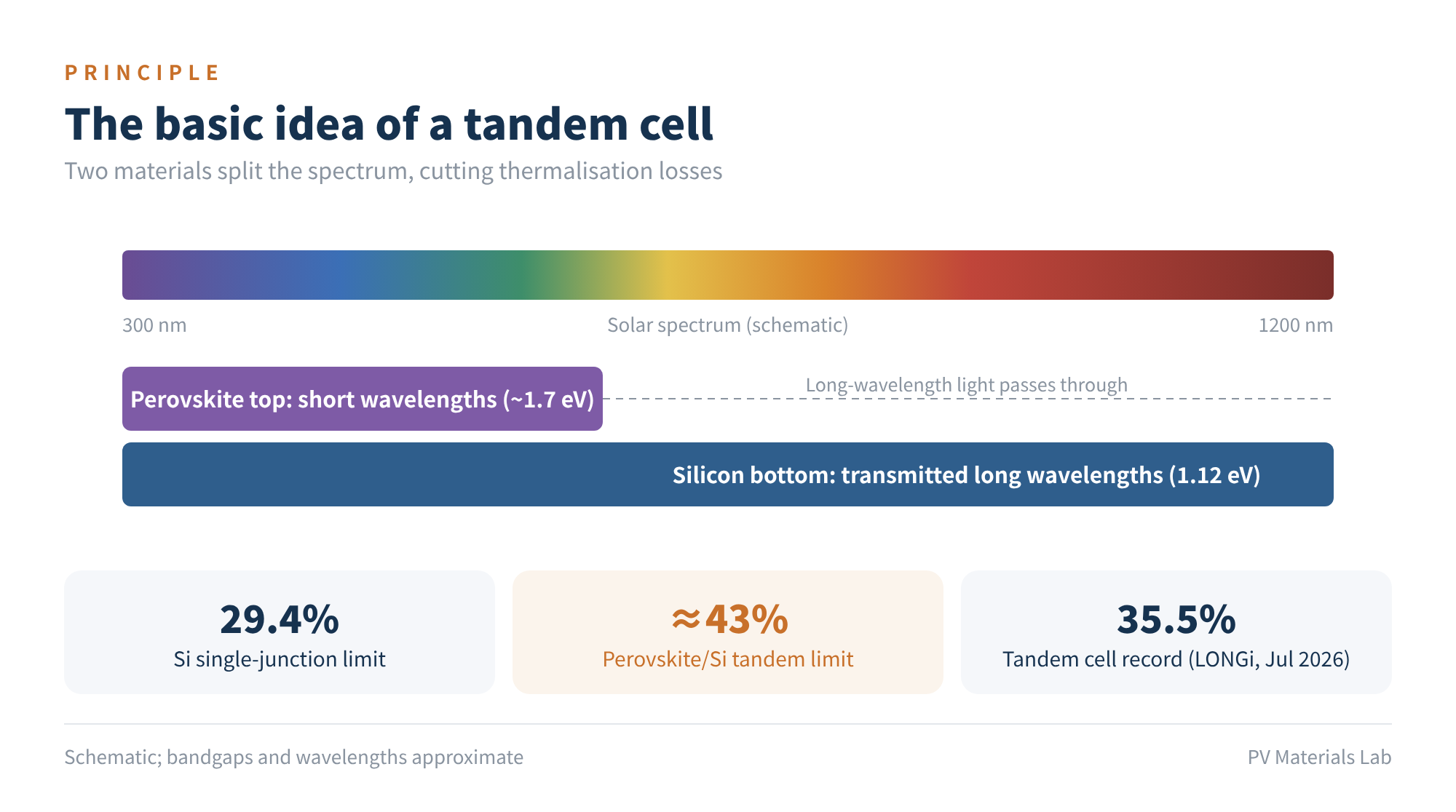
Figure 1 The basic idea of a tandem cell: two materials split the solar spectrum
02Credit where due: the direction is right and the certification is real
The theoretical efficiency limit for single-junction silicon is about 29.4%, mass-production cells are already around 26%–27%, and the remaining headroom gets harder to win every year. Stack a wide-bandgap perovskite layer on top of silicon to use the spectrum in two parts, and the theoretical limit rises to about 43%. That tandems are the next generation is not in dispute, and they are on the R&D roadmaps of China's leading companies too.
Qcells' certification is likewise a genuine milestone. In July, TÜV Rheinland confirmed that its two-terminal perovskite/silicon tandem module had passed the full IEC 61215, UL 61215 and 61730 test sequences, with samples made from full-size M10 cells on a pilot line using mass-production processes. The stress tests disclosed earlier included UV preconditioning, TC200, HF10 and DH1000. Anyone who has been through certification knows how hard it is for perovskites to complete the whole set.
The direction is right and the milestone is real. But "first to be certified" and "technology leader" are two different things.
03The "US breakthrough" label is too big
Break the race into its parts and "who leads" depends entirely on which part you compare.
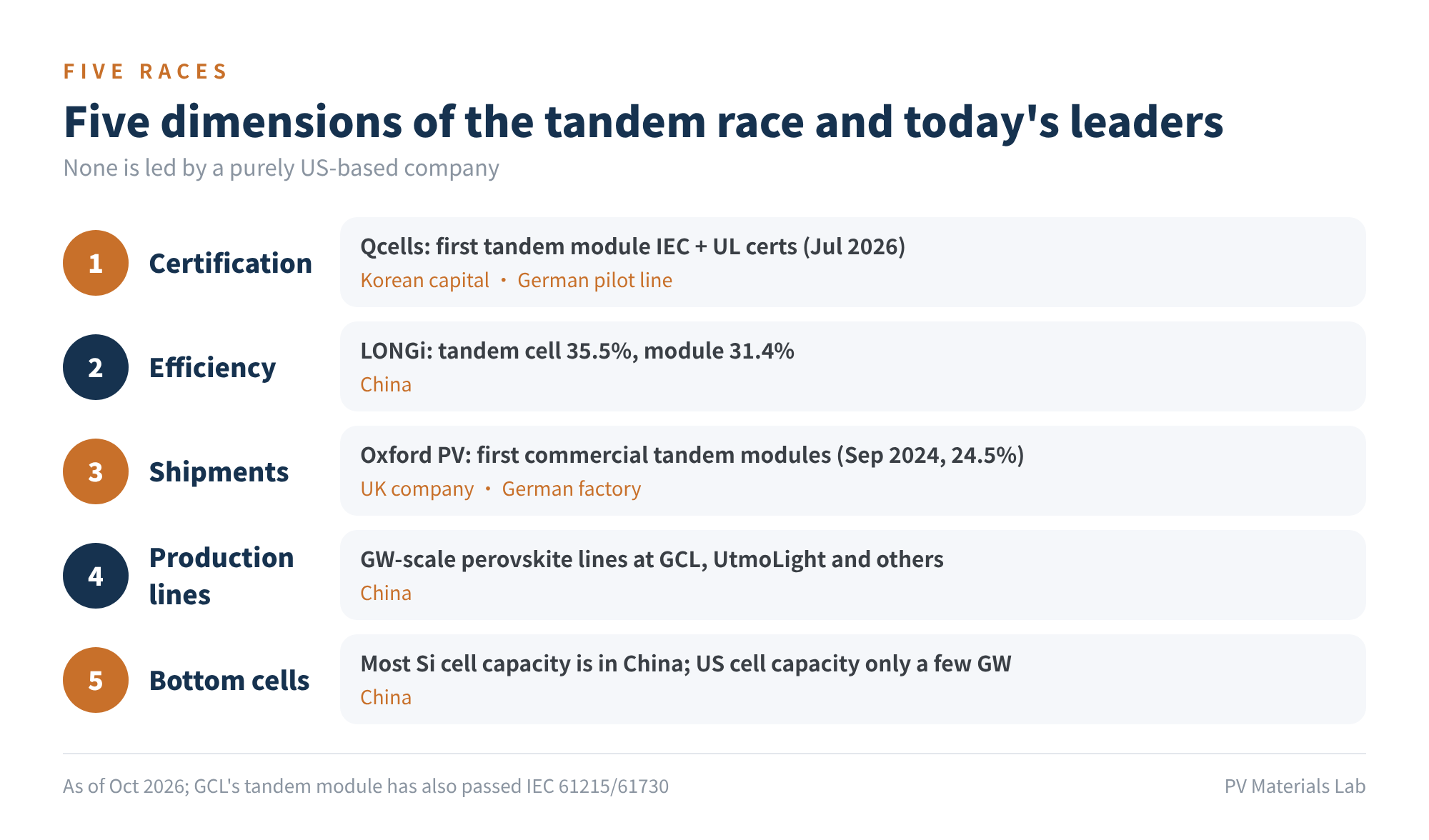
Figure 2 Five dimensions of the tandem race and today's leaders
- First, who the protagonist is. Qcells is the solar business of South Korea's Hanwha group. The certified samples came from its pilot line in Bitterfeld-Wolfen (Thalheim), Germany, developed with Germany's Helmholtz-Zentrum Berlin. It does have large manufacturing sites in Georgia, but the technology's R&D roots are in Germany and its capital is Korean.
- Next, "firsts". The world's first commercially shipped perovskite tandem modules came from the UK's Oxford PV, delivered to a US customer in September 2024 at 24.5% module efficiency and made at its factory in Brandenburg, Germany. Oxford PV then licensed its patents to two companies: Trina Solar received an exclusive licence for China (April 2025), and First Solar a non-exclusive licence for the US (February 2026).
- Then, efficiency. In July LONGi announced a silicon-perovskite tandem cell at 35.5%, certified by Europe's ESTI; a cell close to industrial size (261 cm²) reached 34.3%, and tandem modules 31.4% and 29.4%. Qcells' published full-size tandem cell efficiency is 28.6% (December 2024). Small cells and full-size cells cannot be compared directly, but at least this shows that the claim that "Chinese tandem technology lags behind" has no data to back it.
- Finally, mass production. GW-scale perovskite lines have been coming on stream in China since 2025, including UtmoLight and GCL Optoelectronics. On 18 September, GCL Optoelectronics announced that its GW-scale perovskite line was fully connected, able to make both single-junction and perovskite/silicon tandem modules, and its tandem module has also passed IEC 61215/61730 certification. Its chairman admitted, however, that the line has only "preliminarily run through", with yield of about 80%, very small shipments in 2026 and output expected above 100 MW in 2027. That is still some way from "tandem mass production", but large-area deposition, encapsulation and domestic equipment are exactly the skills tandem mass production needs.
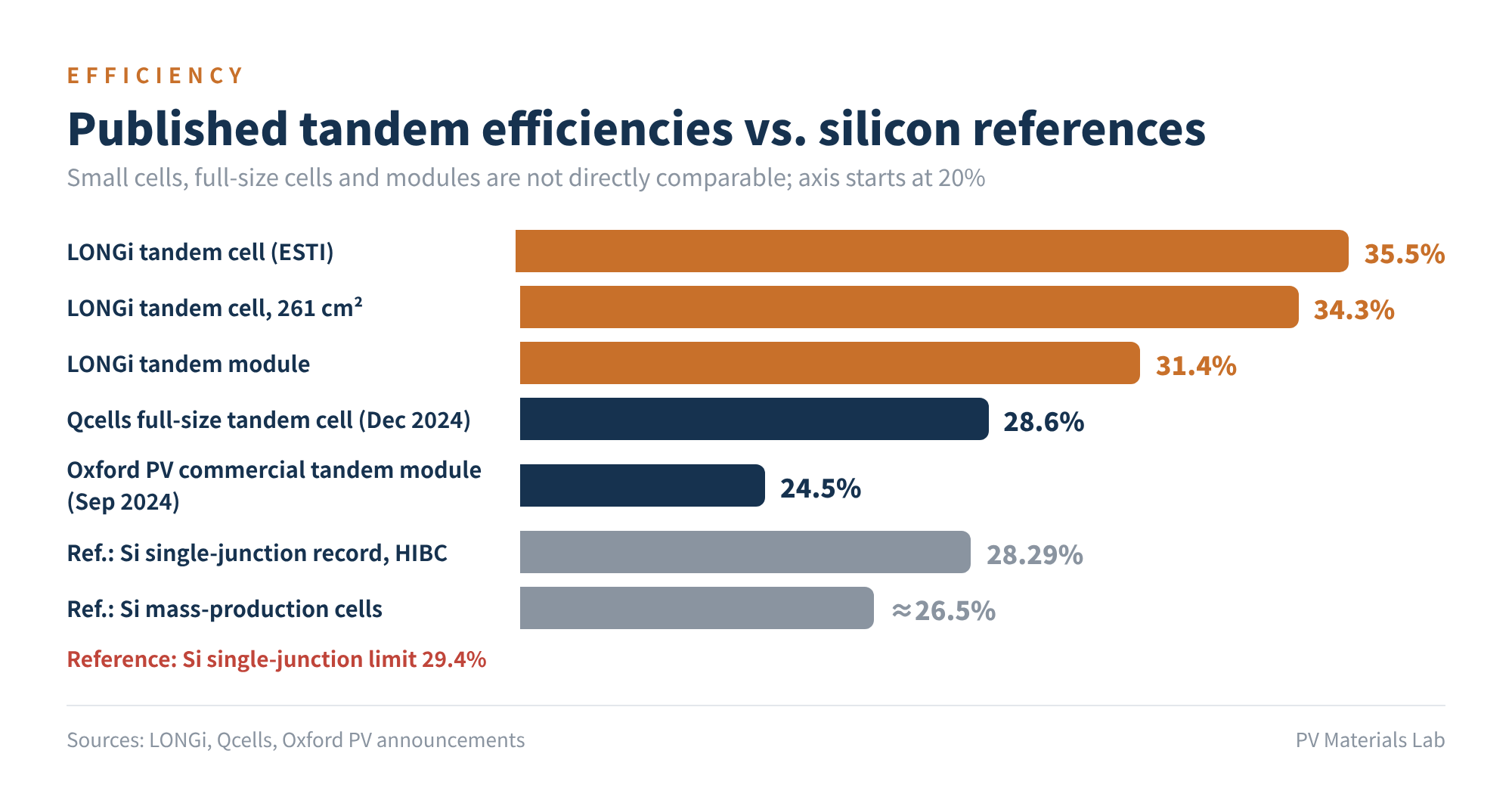
Figure 3 Published tandem efficiencies vs. silicon references
So it is more accurate to say: tandems are a race being run simultaneously around the world, each player holds one "first", and US-based companies are not currently out in front.
04A certification view: passing 61215 does not mean 25 years of service
This is the section we most wanted to write.
IEC 61215 is formally "design qualification and type approval". Its purpose has never been lifetime prediction, but screening out design flaws that would show up early. Sequences such as TC200, DH1000 and HF10 were worked backwards from decades of outdoor failure experience with silicon modules, and each corresponds to a known silicon failure mechanism: ribbon fatigue, encapsulant hydrolysis, delamination, corrosion.
Perovskites fail through a different set of mechanisms: ion migration, metastable changes between light and dark, decomposition under combined light and heat, UV damage, and reverse bias from shading. The current sequences either do not cover these mechanisms or apply far too little dose. For example, the 15 kWh/m² of UV preconditioning corresponds to only a few months of outdoor UV. Dedicated test methods for perovskites are still under discussion in IEC TC82.
In other words, Qcells' certificate shows that "this module has no obvious design flaw", not that "it can generate power in a plant for 25 years". Qcells knows this better than anyone: according to The Korea Herald in June, Hanwha Qcells has set 2029 as its target for commercialising tandem technology, and is leading a Korean government project to develop and demonstrate commercial-size tandem modules of at least 1.7 m² and 28% efficiency over three years, with outdoor demonstration a key part.
Plant investors need bankability, and bankability rests on long-term outdoor data. An expert from the Electric Power Research Institute (EPRI) said something crucial in the report: manufacturers are not very open to sharing details and data. With a new technology, that is usually not a good sign.
Why does degradation matter so much? A simple sensitivity example:
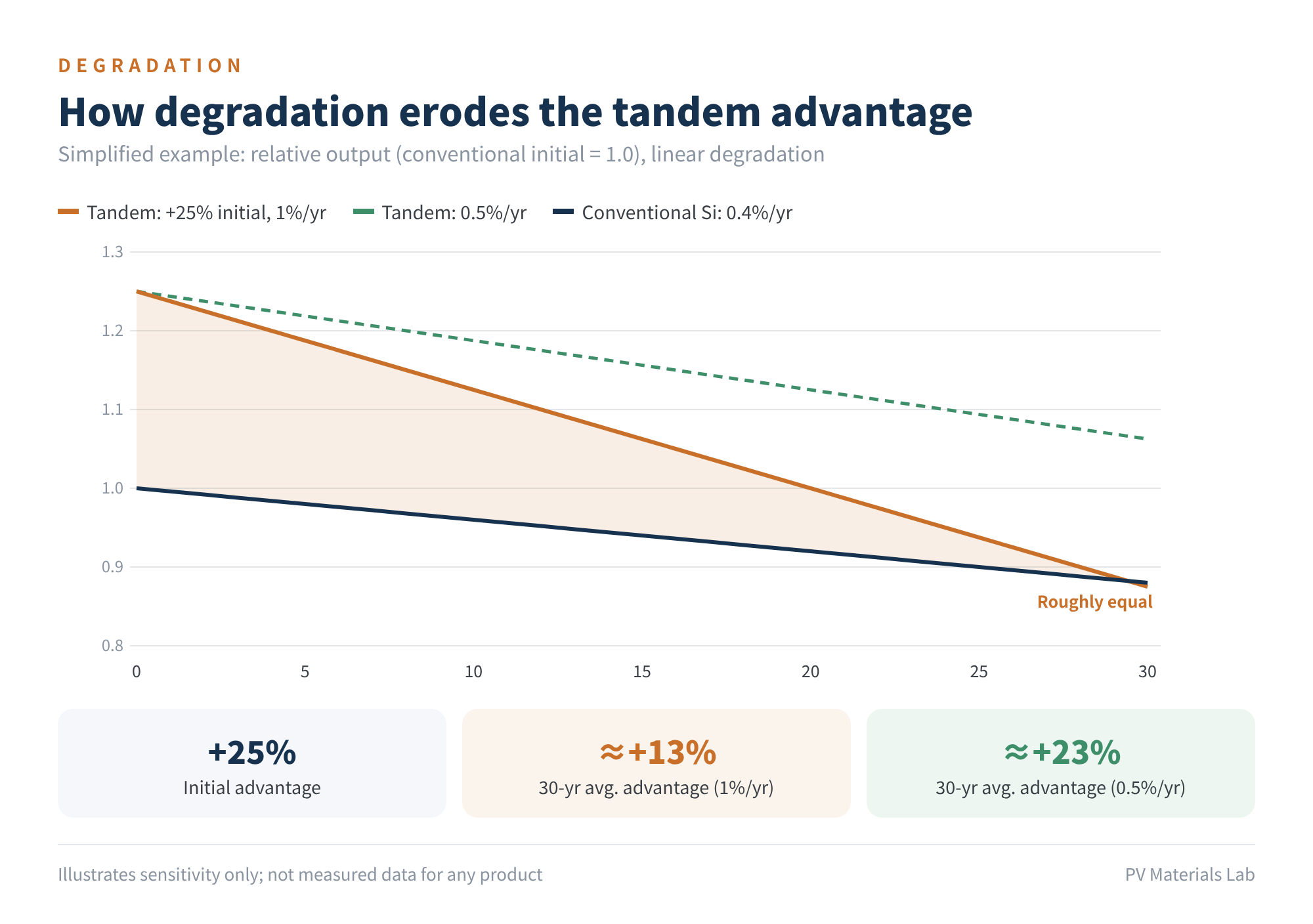
Figure 4 How degradation erodes the tandem advantage (simplified example)
Suppose a tandem module starts with 25% more output but degrades linearly by 1% a year (the upper bound of Tandem PV's "less than 1%"), while conventional silicon degrades by 0.4%. Averaged over 30 years, the tandem advantage shrinks from 25% to about 13%, and by year 30 the two are roughly equal. A 0.6-point difference in degradation eats almost half the advantage. If tandem degradation could be brought to 0.5% a year, the 30-year average advantage would stay at about 23%. So for tandems, cutting annual degradation from 1% to 0.5% may be worth more than another point of efficiency.
05How to read "three times the cost"
The report says tandem modules are estimated to cost 3 to 3.5 times as much as conventional ones. That number needs converting first: with 25% more power from the same area, "3 times per panel" is roughly "2.4 times per watt".
What is efficiency worth? Efficiency saves area: land, racking, cables and installation labour. Following Business Model Analyst's approach: a US tracker-based utility plant costs about USD 1.06/W, of which modules are USD 0.33/W. Even optimistically assuming that all of the remaining USD 0.73 scales with area, 25% more power saves only about USD 0.15/W. In other words, a tandem module only pays off below about USD 0.48/W, whereas three times the panel price works out at USD 0.79/W.
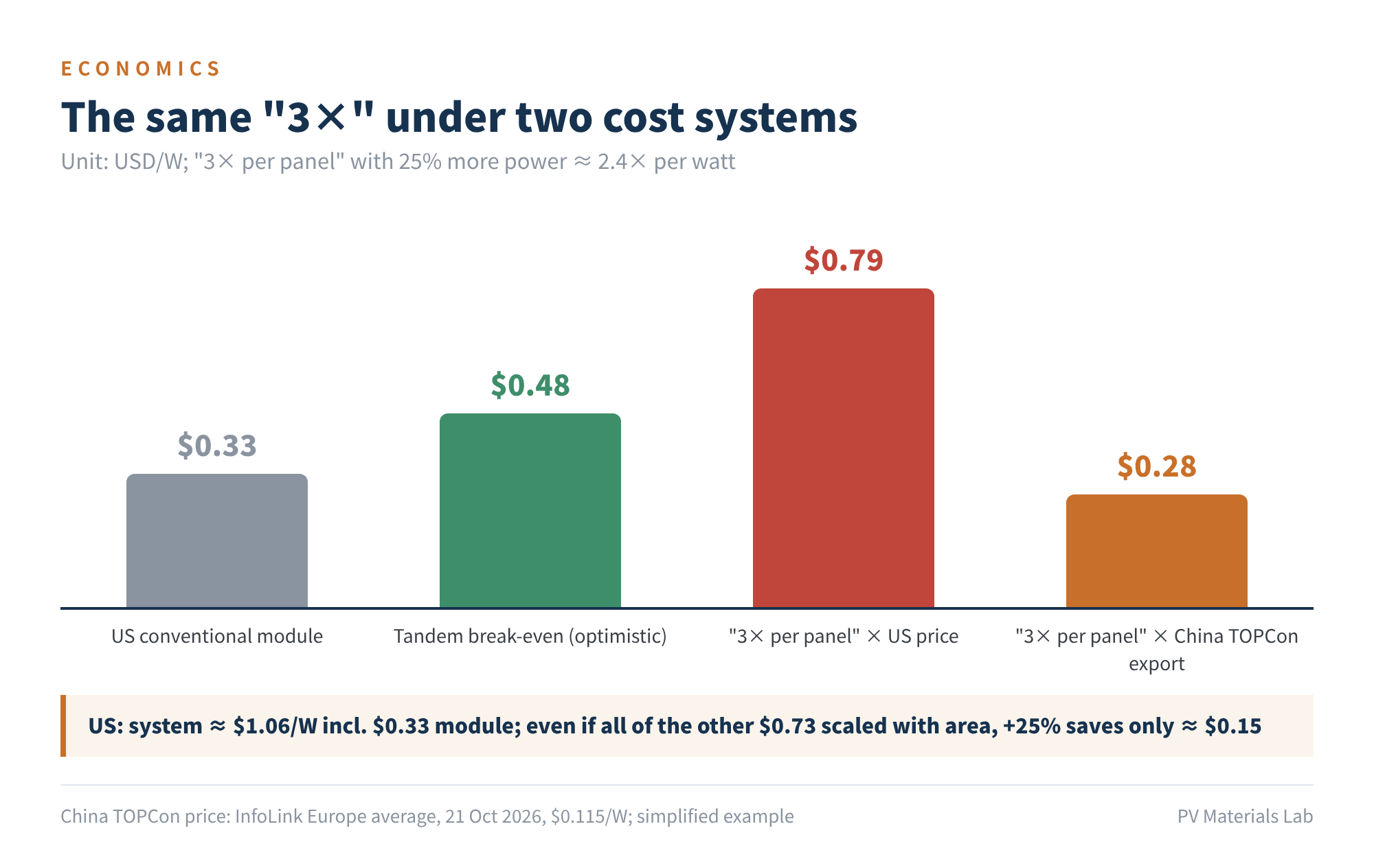
Figure 5 The same "3×" under two cost systems
Here is the interesting part: apply the same "3 times" to the export price of Chinese-made TOPCon modules (InfoLink's 21 October average for European projects, about USD 0.115/W), and the result is around USD 0.28/W, cheaper than the conventional modules US developers buy today.
That tells us two things. First, with expensive land, labour and steel plus a tariff wall, the US is the market most willing in the world to pay a premium for efficiency, and tandems will land first on rooftops and land-constrained projects. Second, the player closest to "making tandems pay" is the one that has already pushed the cost of silicon bottom cells to the floor.
One more detail. In the report, executives claimed tandems could raise plant capacity factors from about 24% to more than 31%. Capacity factor is energy generated divided by rated capacity; when module efficiency rises, rated power rises with it, so the capacity factor itself barely changes. 24% multiplied by 1.25 to 1.29 lands neatly at 30% to 31%. The figure is really another way of saying "more energy per unit area": tandems will not make a plant generate at night.
06Will a technology change reshuffle the rankings?
The "change lanes to overtake" logic sounds neat: if you cannot catch up in silicon, switch tracks. Those who argue it seriously have a point. Swift Solar's CEO, for example, has written that the TOPCon technology China has bet on so heavily is not the ideal bottom cell for tandems, and that retrofitting will be a heavy burden once tandems scale.
But look at PV history: PERC came from the University of New South Wales in Australia, TOPCon from Germany's Fraunhofer Institute, and heterojunction from Sanyo in Japan. Almost no generation of technology was invented in China, yet each was scaled up and cost-reduced there. Rankings are decided not by who makes the first wafer, but by who can repeat the same process billions of times.
Tandems are no exception, and depend even more on the existing system: the lower half of a perovskite/silicon tandem is still a silicon cell. According to SEIA, at the end of March this year the US had about 70 GW of module capacity but only about 3.2 GW of cell capacity. Where the bottom cells come from is an unavoidable question. As for the TOPCon "burden", Chinese companies have already published tandem results on TOPCon bottom cells, so that route is not closed.
The real "lane-changer" in the US is First Solar. The patent licence it obtained from Oxford PV in February explicitly excludes crystalline silicon semiconductors, and the intent seems clear: stack perovskite on its own thin-film cells, with no silicon wafer anywhere in the structure and so no dependence on the polysilicon and wafer chain China dominates. If that works, it would be a genuinely independent pole. But it is currently further from mass production than the perovskite/silicon route.
The more likely outcome is not "overtaking" but "partition": the US has a domestic tandem industry behind its tariff wall, while tandem modules on the global market are still supplied mainly by whoever has scale and bottom cells.
07Three reminders for us from this report
All these "doubts" do not mean there is nothing to worry about. Three things in this report deserve serious attention from Chinese colleagues.
- The voice in certification and bankability. The efficiency records are ours, but the first tandem module certificate covering both IEC and UL is someone else's; GCL Optoelectronics' tandem module has since passed IEC certification too, so China is not far behind. Tandem test standards are being written now, and whoever's data goes into the standard defines "pass".
- Patents. Oxford PV shipped first, then licensed its patents to companies on both sides of the wall, so it collects whoever wins. On the same day it took its licence, First Solar filed an action at the US International Trade Commission (ITC) over a TOPCon patent against ten foreign manufacturers, including JinkoSolar, JA Solar, Trina Solar and Qcells. Patents in the tandem era will only get denser.
- Outdoor field data. In the end, perovskites must answer the question of lifetime, not efficiency. China already has megawatt-scale perovskite plants that have run for more than two years, a valuable asset. Whoever first produces multi-year outdoor degradation data that stands up to third-party scrutiny will hold the real ticket into the tandem era.
08Final thoughts
The New York Times report gets the direction right but the framing wrong. Tandems are not a uniquely American breakthrough but a global relay; nor will they rewrite the industry's structure automatically, because the scale, cost and supply chains that decide it will not be reshuffled just by changing one absorber layer.
Enjoy the headlines, but watch one plain number: the price per watt of the first tandem module sold with a 30-year warranty that banks will lend against. The day that number appears is the real start of the tandem era.
How do you see the US–China picture in the tandem era? We would be glad to hear from you.
References
- The New York Times: "A New Crop of Solar Panels Is the U.S.'s Best Hope of Catching China" (5 Oct 2026; reprinted by The Boston Globe, Honolulu Star-Advertiser, dnyuz and others)
- Business Model Analyst: "Solar Panels' 25% Upgrade Only Pays Where Space Is Expensive" (6 Oct 2026)
- pv magazine: "Qcells secures TÜV Rheinland certification for perovskite-silicon tandem solar tech" (16 Jul 2026); PV Tech: "Qcells secures 'first' UL, IEC certifications for perovskite tandem tech"
- LONGi: "35.5%! LONGi once again breaks world record for crystalline silicon-perovskite tandem solar cell efficiency" (15 Jul 2026)
- The Korea Herald: Qcells to lead Korean project on commercial-size perovskite/silicon tandem modules, 2029 commercialisation target (29 Jun 2026); Qcells to supply tandem cells for NASA-backed space solar power demonstration (9 Jun 2026)
- Oxford PV: "Oxford PV and Trinasolar announce landmark perovskite PV patent licensing agreement" (Apr 2025); pv magazine USA: "First Solar reports 2025 earnings, announces Oxford PV licensing agreement, alleges patent infringement in new ITC action" (24 Feb 2026)
- Science and Technology Daily: GW-scale perovskite line fully connected (19 Sep 2026); Caiwen News: GCL Optoelectronics opens GW-scale perovskite line (18 Sep 2026) (in Chinese)
- Wallstreetcn: "GW-scale perovskite capacity takes off" (summary of a Guosheng Securities report) (in Chinese)
- InfoLink Consulting: PV spot prices (21 Oct 2026)
- Renewable Energy World: opinion piece by Joel Jean (Swift Solar)
A PV R&D and technology team with 10+ years of experience | In-depth technical knowledge sharing
Materials · Reliability · Failure Analysis · Standards & Certification · Products · Processes
Exploring AI + PV; collaboration welcome
Disclaimer:
1. Original content reflects the authors' personal views only, is for reference only and does not constitute investment advice.
2. Reposted and cited content is credited to its source, out of respect for original work.
3. Some content was produced with AI assistance (chart generation, data retrieval, concept explanations, etc.); the core framework and key content were written by our technical team and reviewed by people.
4. If anything is inaccurate or infringes your rights, please leave a message or contact us and we will deal with it.