
Offshore PV Corrosion Protection Gets an Industry Standard: The Text Isn't Out Yet, but Your BOM Should Be Ready
The catch: at the time of writing, the full text can be neither bought nor read. So we won't guess at clauses. We'll do three things instead: lay out what is confirmed; use existing group standards and established offshore wind practice to explain what offshore steel actually has to be protected against; and compile a BOM and certification checklist so owners, EPCs and suppliers can prepare during the six-month countdown.
01 The Standard: What We Know and What We Don't
First, the confirmed facts, all taken from the announcement and its annex:
- Number: NB/T 12126—2026, a recommended (non-mandatory) energy industry standard.
- Title: Technical Specification for Corrosion Protection of Offshore PV Structures.
- Dates: approved October 9, 2026; effective April 9, 2027, which leaves a six-month transition period.
- Publisher and supersession: published by China Water & Power Press; the catalogue lists no superseded standard.
There is far more we don't know. Does the scope cover piles, upper racking and floating bodies alike? Does it recommend coating systems by corrosion zone? Are its cathodic protection criteria original, or taken from offshore wind? All of that waits for the official text. Until it is published, treat any claim that "Clause X of NB/T 12126 requires…" as unreliable.
Why does it matter? Before this standard, offshore PV corrosion protection mostly ran on borrowed rules. The drafting notes of group standard T/CSPSTC 136 are blunt: China had no specification dedicated to corrosion protection of offshore PV steel structures, and the existing T/CSIQ 8010—2018 targets onshore products and has no cathodic protection requirements. On real projects the usual practice is to borrow offshore wind documents such as NB/T 10626 and DNV-RP-B401.
Here is roughly how the relevant documents fit together today:
| Level | Document | Status | Role here |
|---|---|---|---|
| Industry standard | NB/T 12126—2026 Corrosion Protection of Offshore PV Structures | Approved, effective 2027-04-09 | The subject; text pending |
| Group standard | T/CSPSTC 136—2024 Corrosion Protection of Offshore PV Steel Structures | In force (since 2024-10-30) | Most complete public reference |
| Group standard | T/CEPPC 47—2025 Powder Coatings for PV Plant Steel Structures | In force | Powder-coating route, incl. offshore |
| Group standard | T/HNECER 0019—2026 Powder Coating Corrosion Resistance for Offshore PV Racking | In force | Epoxy primer + polyester topcoat |
| National plan | 20256253-Z-606 Corrosion Control of Offshore PV Systems | Planned (issued 2025-11) | System level, in drafting |
| Wind references | NB/T 10626, ISO 24656, DNV-RP-B401 | In force | Often borrowed; not PV-specific |
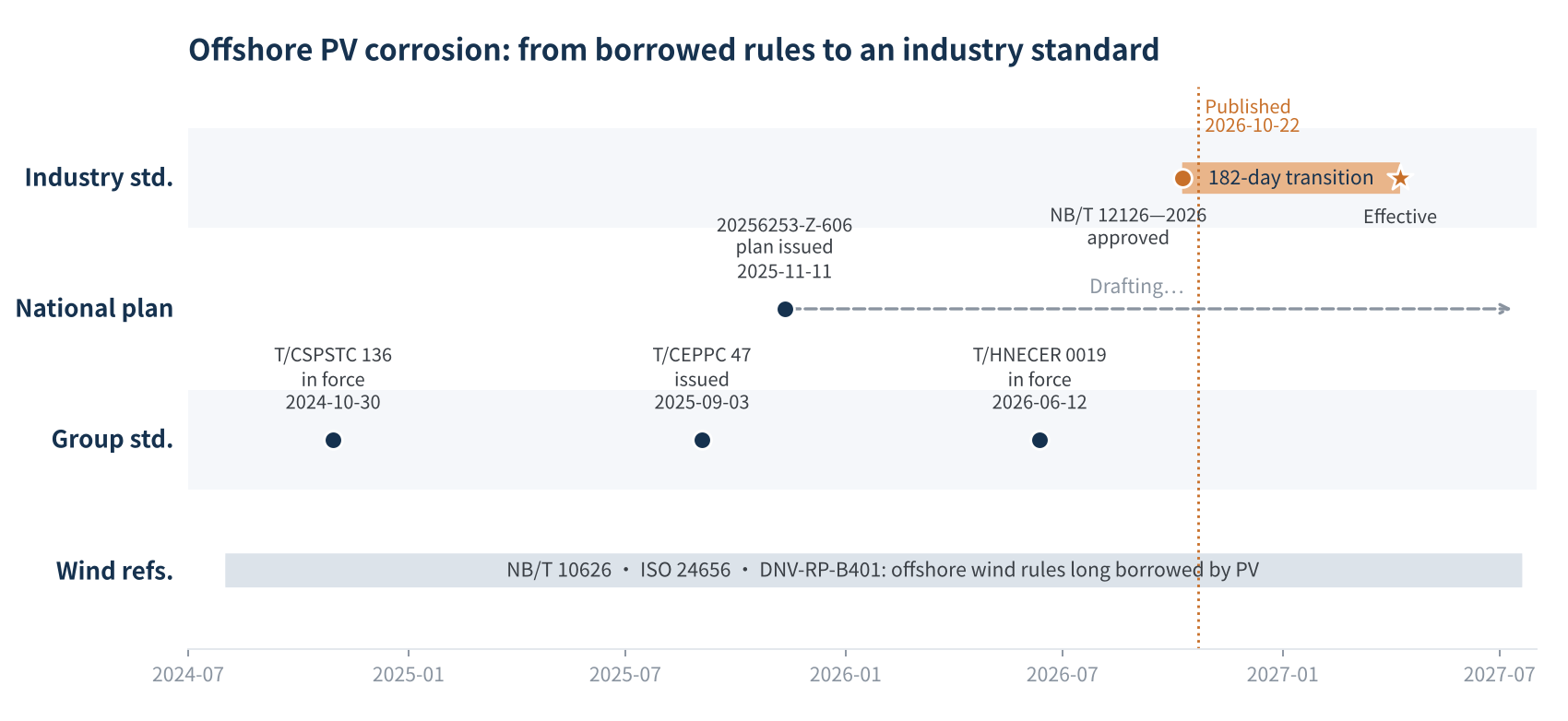
Figure 1 Offshore PV corrosion standards landscape and timeline
02 Corrosion Zones: One Pile, Five Fates
From the module racking down to the pile embedded in the seabed, an offshore PV steel structure goes through very different corrosion environments. The industry usually divides it into five zones:
- Atmospheric zone: upper racking and purlins. Salt deposition, strong UV and high humidity combine; ISO 12944 puts offshore atmosphere in its highest class, CX.
- Splash zone: the section above high tide that gets wetted by waves. Alternate wetting and drying, plenty of oxygen and wave impact make it the fastest-corroding part of the pile, and because it is rarely submerged, cathodic protection barely reaches it.
- Tidal zone: alternately submerged and exposed by the tide; cathodic protection only works while it is underwater.
- Submerged zone: permanently in seawater, where cathodic protection plus coating does the heavy lifting.
- Mud zone: buried in the seabed, low in oxygen but at risk of microbial corrosion; protection relies mainly on CP.
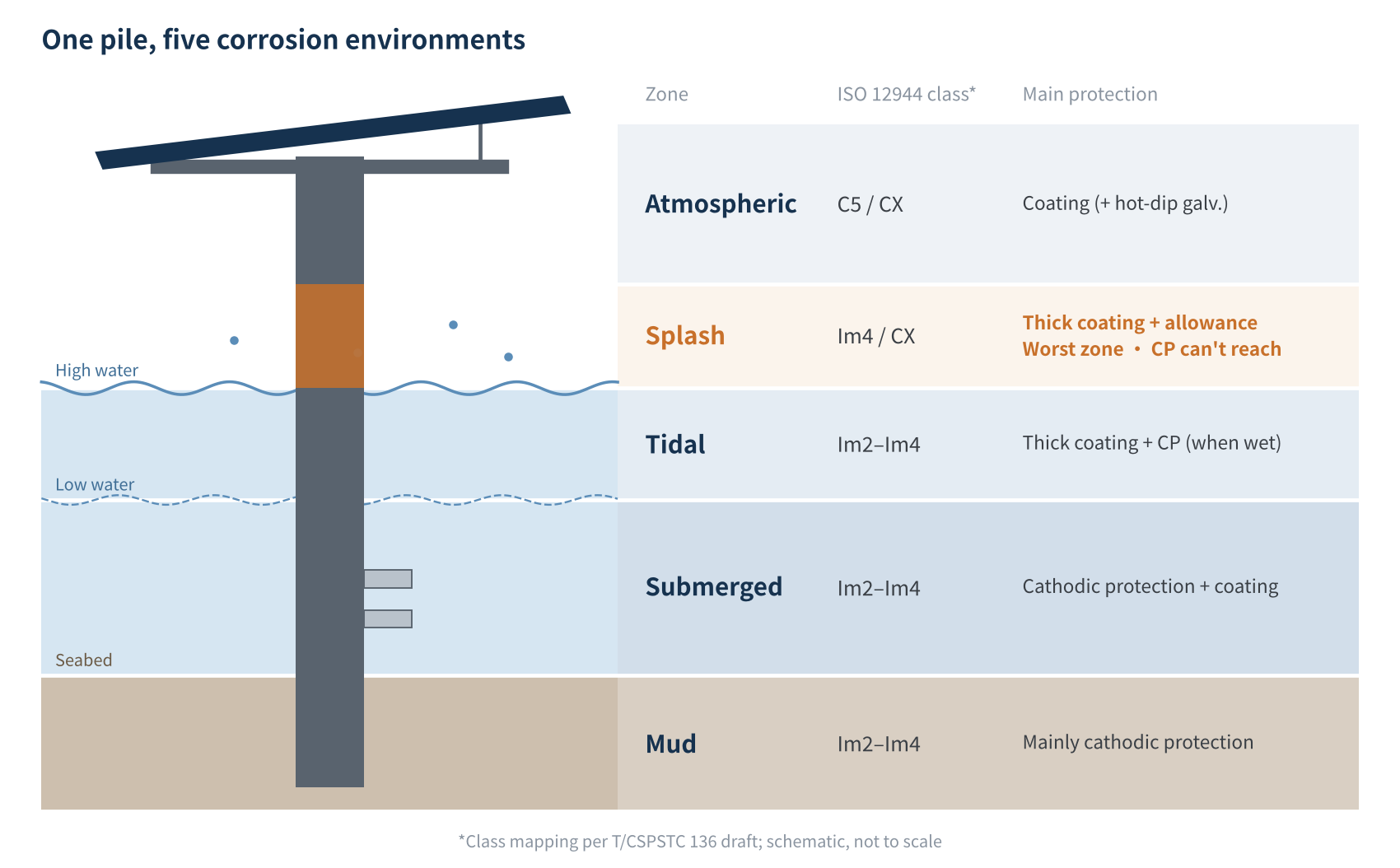
Figure 2 Corrosion zones of an offshore PV pile and main protection methods
The zones drive the BOM directly. The draft for comments of T/CSPSTC 136 (public version, July 2024) maps them to ISO 12944 categories: the external atmospheric zone is C5 (coastal) or CX (offshore); splash and tidal zones are Im4 or Im2 combined with CX; submerged and mud zones are Im2–Im4. It also states the protection system's design life should not be less than 25 years, matching module lifetime.
In coating thickness, the zones differ several-fold. Some systems from Table 1 of the draft:
| Location | Example system (min. DFT) | Min. total DFT |
|---|---|---|
| External atmospheric C5 | Epoxy zinc-rich 60 + high-build epoxy 200 + weathering topcoat 60 | 320 μm |
| External atmospheric CX | Epoxy zinc-rich 60 + high-build epoxy 220 + weathering topcoat 80 | 360 μm |
| Non-atmospheric (with CP) | Abrasion-resistant epoxy / epoxy glass flake 800 + topcoat 60 | 860 μm |
| Non-atmospheric (no CP) | Polyester glass flake 1000 + topcoat 60 | 1060 μm |
Note: values are from the T/CSPSTC 136 draft for comments, not the text of NB/T 12126, and may change in the final version.
Atmospheric zone: it's about the coating. Splash zone: thickness and corrosion allowance. Underwater: cathodic protection. One pile needs at least three different BOM logics.
03 Nine BOM Categories at a Glance
Following the zone logic through, offshore PV structural corrosion protection breaks down into roughly nine material categories. We compiled the table below from the group-standard framework, offshore wind practice and project experience. It is a framework for planning, not NB/T clauses.
| Category | Typical items | Key verification | Typical documents |
|---|---|---|---|
| A Main structure | Carbon / low-alloy steel piles, trusses, racking, purlins | Material, corrosion allowance, initial rust grade | Mill certs, design calcs |
| B Fasteners | Bolts, washers, gusset plates | Corrosion resistance ≥ main steel; galvanic corrosion | Coating and salt-spray reports |
| C Surface prep | Blast abrasives, field-joint materials | Cleanliness grade, roughness, soluble salts | Application and inspection records |
| D Organic coatings | Zinc-rich primer, high-build epoxy, glass flake, topcoat, powder | Salt spray, cyclic ageing, seawater immersion, cathodic disbondment, VOC | Third-party type test reports |
| E Thermal spray | Sprayed Zn / Al / ZnAl + sealer | Thickness, adhesion | Procedure qualification, test reports |
| F Cathodic protection | Al / Zn sacrificial anodes, ICCP anodes, reference electrodes, rectifiers, cables | Chemistry, electrochemical performance, electrical continuity | Factory reports, CP design |
| G Sealing | Crevice sealants, cable penetration seals | Salt spray, ageing | Material test reports |
| H Monitoring | Corrosion sensors, reference electrodes, data loggers | Accuracy, input impedance, online display | Calibration certificates |
| I O&M spares | Touch-up coatings, replacement anodes, probes | Compatibility with original system | Compatibility notes |
A few points in the table are especially easy to get wrong:
- Fasteners: the draft requires bolts, washers and gusset plates to resist corrosion at least as well as the main steel. Stainless bolts on carbon-steel racking look more corrosion-resistant, but the two metals form a galvanic couple in seawater and accelerate corrosion of the carbon steel, so isolation needs to be designed in.
- Electrical continuity: CP only works if nothing is left out. The draft requires contact resistance below 0.1 Ω between structural parts and bonding cables on non-welded metal parts. Coating at bolted joints is exactly where continuity breaks.
- Anode selection: in fishery areas and waters with quality requirements, the draft recommends low-zinc aluminium anodes. Offshore PV is often combined with aquaculture, so this is a practical point.
- Impressed current: already in use. A 2026 paper in the Journal of Shandong University (Engineering Science) studied HG30, China's first fixed-pile offshore PV plant: one auxiliary anode plus one reference electrode, at 4–5 A output, effectively protected piles within a radius of about 200 m.
- Environmental compliance: the draft sets coating VOC at no more than 420 g/L. We expect more tenders to write environmental compliance into technical specifications.
04 Inspection and Certification: Five Gates from Factory to Sea
There is no single offshore PV "corrosion certificate" that settles everything. In practice you need an inspection chain covering the whole lifecycle:
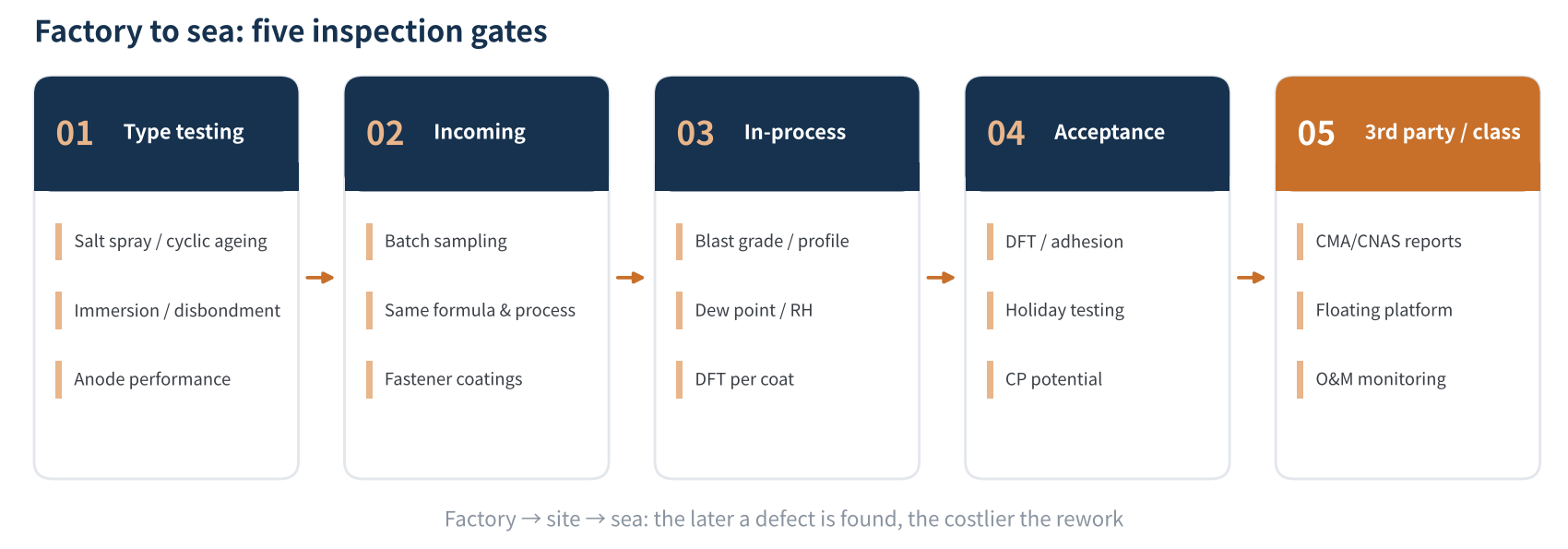
Figure 3 Five inspection gates for offshore PV structural corrosion protection
- Gate 1 · Type testing: coating systems tested for the target environment (salt spray, cyclic ageing, seawater immersion, cathodic disbondment); sacrificial anodes tested for chemistry and electrochemical performance. Reports should ideally come from CMA/CNAS-accredited third-party labs.
- Gate 2 · Incoming inspection: batch sampling of coatings, anodes and fasteners, checking they match the type-tested formulation and process.
- Gate 3 · In-process inspection: surface preparation grade, ambient temperature, humidity and dew point, and film thickness of each coat. The draft requires substrate temperature at least 3 °C above dew point and relative humidity no higher than 85%.
- Gate 4 · Completion acceptance: DFT measured at area-based sampling points, pull-off adhesion (average at least 5 MPa), holiday detection by spark or wet sponge, thermal-spray adhesion, and CP potential (the draft gives −0.80 to −1.00 V vs Ag/AgCl for steel).
- Gate 5 · Third party / classification society: floating platforms are closer to offshore equipment. China Classification Society (CCS) carried out on-site construction verification for Huaneng's "Huanghai No. 1" floating PV platform, covering incoming materials, welding, dimensional accuracy and coating work. CCS's Guidelines for Corrosion Protection Inspection of Offshore Wind Facilities (GD010-2025) is a useful reference path, but it is a wind guideline, not a mandatory basis for PV.
One more boundary to keep clear: salt-spray (IEC 61701) and seawater immersion tests on the modules themselves are module reliability; structural corrosion protection, the subject here, concerns racking, piles and floats. These are two separate evidence chains, so don't mix them in tender documents.
05 The Six-Month Countdown: Test Duration Is the Real Bottleneck
169 days remain until the standard takes effect. That sounds like plenty, but for coating suppliers it may already be too late. The bottleneck is testing, not production.
For offshore CX and Im4 environments, the internationally used ISO 12944-9 requires a 4,200-hour cyclic ageing test for coating systems. The T/CSPSTC 136 draft also specifies 4,200 h cyclic ageing for CX and non-atmospheric zones, plus 4,200 h seawater immersion and 4,200 h cathodic disbondment for the non-atmospheric zone. 4,200 hours is 175 days, longer than the time left before the effective date, and that's before lab queues, sample preparation and reporting.
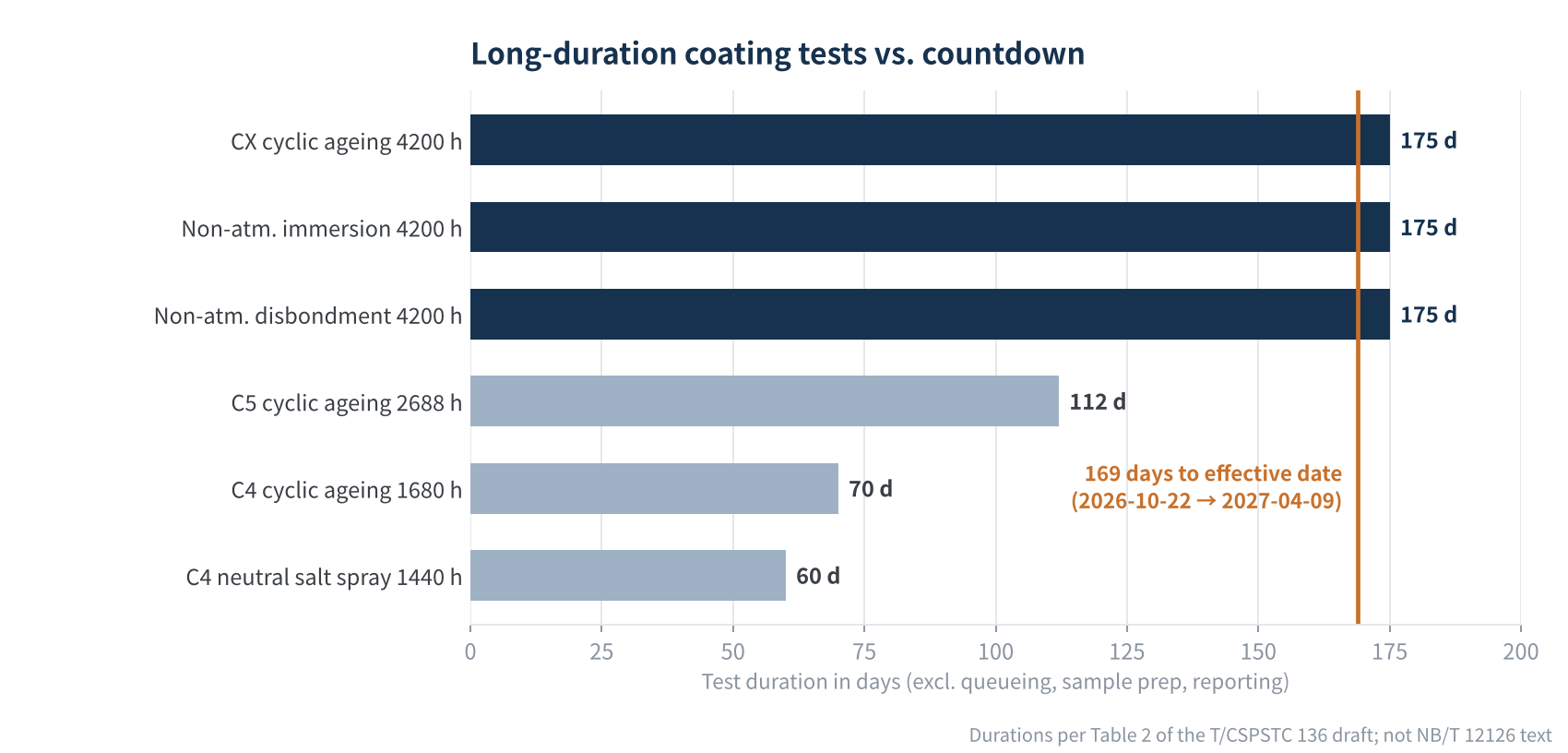
Figure 4 Long-duration coating tests vs. countdown to the effective date
A coating system without a 4,200-hour-class report can't make April 9, 2027 even if testing starts today. Lab slots, not production lines, are what to worry about.
Our suggested checklist by role:
- Coating / powder coating suppliers: audit which corrosion categories your existing reports cover; book long tests first wherever CX/Im4 reports are missing.
- Anode and CP suppliers: have GB/T 4948 and GB/T 4950 chemistry and electrochemical reports ready, prepare a low-zinc aluminium anode option, and template your CP design calculations.
- Racking and fastener suppliers: review how coating systems and fasteners are matched, and fill gaps in galvanic corrosion and salt-spray data.
- Applicators: check corrosion-protection contractor qualifications and certificates for key-process personnel, and set up record templates for dew point, film thickness and holiday testing.
- Owners and design institutes: write technical specs on a "group standards + wind references" basis for now, with a switch-over clause stating that the official NB/T 12126 text prevails.
06 Final Thoughts
An industry standard is more than a new number. It puts offshore PV corrosion protection, until now a field where everyone borrowed their own rules, onto a single exam paper. The paper hasn't been handed out, but the subjects are clear enough: zone-based design, coating systems, cathodic protection, inspection and acceptance.
Our view: the BOM can't wait for the text. What you can do now is map out your systems and start long-duration tests. What you shouldn't do is promise group-standard values as if they were industry-standard requirements.
Once the full text of NB/T 12126 is published, we'll do a clause-by-clause reading and compare it with T/CSPSTC 136. Which item worries you most in your part of the chain? Let us know in the comments.
Calculation Notes / Data Basis
1. Countdown: October 22, 2026 to April 9, 2027 is 169 days, about 4,056 hours; 4,200 hours ÷ 24 = 175 days.
2. Coating thickness, test duration, protection potential, contact resistance and VOC values cited here all come from the T/CSPSTC 136 draft for comments (public version on the National Group Standards Information Platform, July 2024). They are not the text of NB/T 12126 and may differ from the final version.
3. The nine BOM categories and five inspection gates are our own framework for planning and do not represent any standard's clauses.
References
[1] National Energy Administration. NEA Announcement No. 4 of 2026 (annex: industry standards catalogue). http://www.nea.gov.cn/20261021/35115ff2391547fc9d2cf3e4af2c669c/c.html
[2] National Library of Standards. T/CSPSTC 136—2024 Technical Code for Corrosion Protection of Offshore PV Steel Structures. https://ndls.cnis.ac.cn/standard/detail/8b0cc703a3ab06b29eabd0158b1ffc9c
[3] National Group Standards Information Platform. Draft for comments of T/CSPSTC 136, 2024. https://www.ttbz.org.cn/upload/file/20240709/6385613710680746735286262.pdf
[4] National Group Standards Information Platform. Drafting notes of T/CSPSTC 136, 2024. https://www.ttbz.org.cn/upload/file/20240709/6385613711785409913597905.pdf
[5] National Library of Standards. T/CEPPC 47—2025. https://ndls.cnis.ac.cn/standard/detail/ed5c0e6ba763409ff4b4c189dc559c47
[6] National Library of Standards. T/HNECER 0019—2026. https://www.ndls.org.cn/standard/detail/538e1d8392eee8aab58e8a84006bcde7
[7] National Library of Standards. National standard plan 20256253-Z-606. https://www.ndls.org.cn/standard/detail/6f83add4057bfd01b017e6be8046ca44
[8] China Classification Society. Construction verification of the "Huanghai No. 1" floating PV platform. https://www.ccs.org.cn/ccswz/articleDetail?id=202408050833584054
[9] China Classification Society. Guidelines for Corrosion Protection Inspection of Offshore Wind Facilities (GD010-2025). https://www.ccs.org.cn/ccswz/file/download?fileid=202505210198447764
[10] Wang Feng, Lin Bin. Application of cathodic protection system for offshore photovoltaic pile foundation. Journal of Shandong University (Engineering Science), 2026, 56(1): 142-148. https://gxbwk.njournal.sdu.edu.cn/CN/Y2026/V56/I1/142
[11] ISO 12944-2:2017 Classification of environments; ISO 12944-9:2018 Protective paint systems and laboratory performance test methods for offshore and related structures.
[12] DNV-RP-B401 Cathodic protection design. https://www.dnv.com/energy/standards-guidelines/dnv-rp-b401-cathodic-protection-design/
PV Materials Lab
PV Materials Lab (光伏新材料研究所)
A PV R&D and technical team with 10+ years of experience | In-depth professional knowledge sharing
Materials · Reliability · Failure Analysis · Standards & Certification · Products · Processes
Exploring AI + PV — collaboration welcome
Disclaimer:
1. Original content reflects the author's personal views only, is for reference only and does not constitute investment advice.
2. Reproduced and cited content is attributed to its source, with respect for original work.
3. Some content was produced with AI assistance (chart generation, data retrieval, concept explanations, etc.); the core framework and key content were written by our technical team and reviewed by humans.
4. If anything is inaccurate or infringing, please leave a comment or contact us.