
Musk Raises 200 GW Again with Jensen Huang: How Long Will This Solar Story Run?
On 29 September, in a public conversation with NVIDIA CEO Jensen Huang, Elon Musk said it again: SpaceX, together with Tesla, is targeting 200 GW of solar manufacturing capacity per year.
The PV world buzzed once more. But as PV practitioners, what we care about is this: since the start of the year, how far has this actually moved?
This is not a new target but a restatement of January's. What deserves attention is not the "200 GW" number but the actual progress over the past six months.
- Ground 100 GW: could partly materialise, but most likely later than "three years" and at a reduced scale;
- Space 100 GW: for the foreseeable future, mostly a narrative.
01Old target, new venue
At the World Economic Forum in Davos on 22 January this year, Musk announced that SpaceX and Tesla planned to build a combined 200 GW of solar manufacturing capacity in the United States within about three years, 100 GW each, serving ground-based data centres and power for AI satellites in space respectively.
He was blunt about the background at the time: US tariff barriers on solar panels are high, and China makes almost all solar products.
This time he repeated the same target with Jensen Huang on stage. The audience changed from the energy world to the AI-compute world, but the number did not.
One reminder: the 200 GW here is annual manufacturing capacity, not installed capacity. Many commentaries confuse the two.
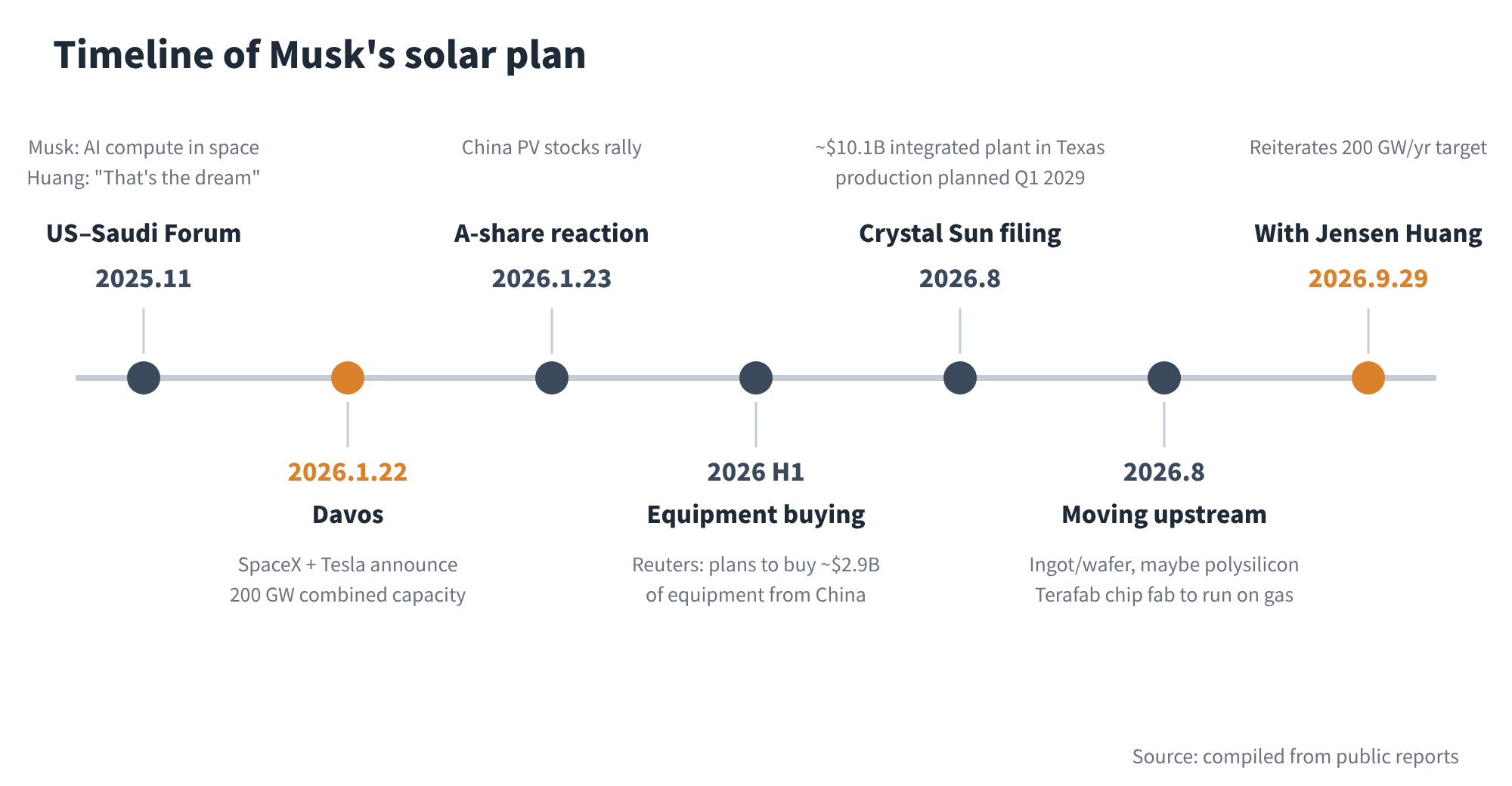
Figure 1 Key milestones of Musk's solar plan
02Any real progress over the past six months?
Yes, and quite a lot.
- Equipment: according to Reuters, Tesla plans to buy about US$2.9 billion of PV manufacturing equipment from Chinese suppliers, with Suzhou Maxwell among the leading candidates; suppliers were asked to deliver before this autumn, and some equipment is bound for Texas.
- Factory: a Texas tax-incentive application made public in early August shows Tesla's "Project Crystal Sun" would be built in Fort Bend County, southwest of Houston, with a total investment of about US$10.1 billion (including about US$8.6 billion of equipment). It would cover the full chain from ingot casting and wafers to cells and modules, with production planned for Q1 2029 and about 9,700 jobs.
- Upstream: industry reports say the plan has extended from cells and modules upstream to ingot pulling and wafers, and may eventually reach polysilicon.
The direction is clear: not buying modules and installing them, but replicating a complete industrial chain on US soil.
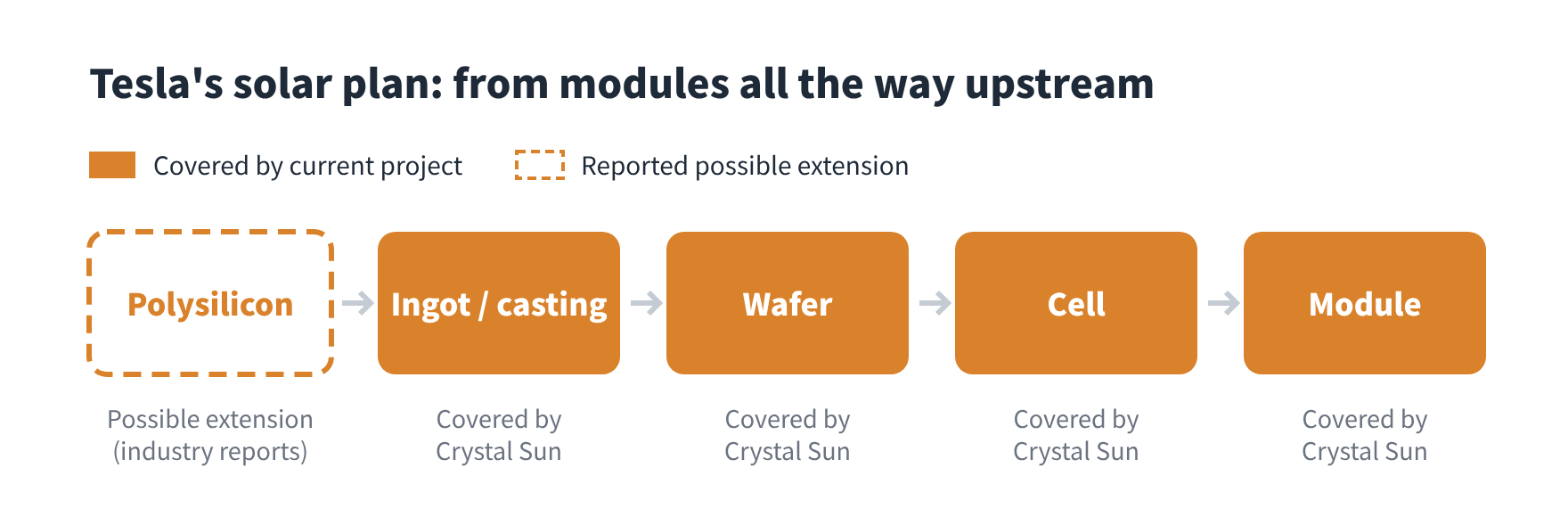
Figure 2 Value-chain segments covered by Tesla's solar plans
The Crystal Sun filing puts start of production in Q1 2029, almost exactly three years after January's "built within three years" announcement, and that is only the first plant starting up, not 100 GW at full output.
03Technically and operationally, where are the hurdles?
1. A very low starting point
US module capacity can now largely meet domestic demand, but US cell capacity was only about 3.2 GW. Taking cells from single-digit GW to 100 GW runs into hard bottlenecks in process ramp-up, yield control and talent.
Equipment can be bought from China; know-how cannot.
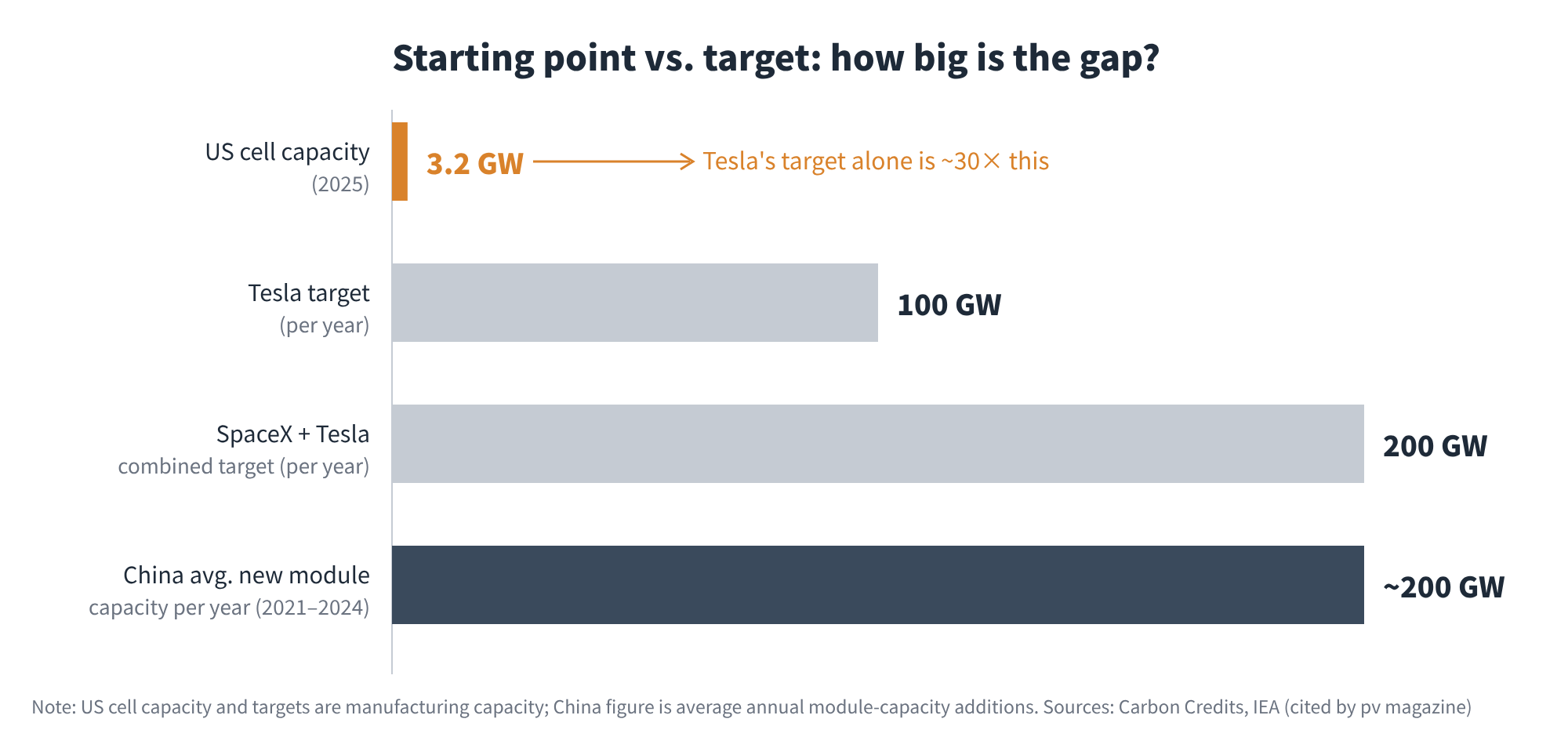
Figure 3 US cell capacity vs. targets and China's pace of expansion
2. There is a benchmark, but it is China
According to the IEA, China added close to 200 GW of module capacity per year on average in 2021–2024. That shows "tens to a hundred-plus GW in a year" is entirely feasible from an engineering standpoint, but it rests on China's complete supply chain, huge engineering workforce and mature materials ecosystem.
Whether the US has these conditions is a very big question mark.
3. Musk's own actions are contradictory
According to reports, the new Terafab chip plant will be powered by its own natural-gas power plants plus large-scale storage, not Tesla solar. Musk himself wrote on X that natural gas will still be needed to supplement and "bootstrap" solar for several years, and SpaceX is setting up gas-turbine blade casting in Texas.
In other words, to solve AI's near-term power needs, his real bet is on gas.
4. Space solar deserves the steepest discount
Space places entirely different demands on modules than the ground does: degradation from high-energy particle radiation, extreme thermal cycling, atomic oxygen and intense UV erosion… the encapsulation material system and reliability qualification all have to be redone. And perovskites have not yet fully proven long-term stability even on the ground.
We consider "100 GW of space solar before 2030" very unlikely. When Musk and Huang discussed AI compute in space on stage in November 2025, Huang merely chimed in: "That's the dream."
04What does it mean for China's PV industry?
- Short term: equipment makers are the surest winners. US expansion cannot do without Chinese turnkey equipment. But watch US FEOC (foreign entity of concern) rules, which may restrict equipment sources and follow-on service models.
- Medium term: export room shrinks. The US market may shift from "imported modules" to "domestic manufacturing + Chinese equipment", further narrowing room for module exports to the US.
- Stock market: already priced in once. On 23 January this year, China's A-share PV stocks rallied across the board. This restatement is more of a sentiment catalyst than new fundamental information.
05Final thoughts
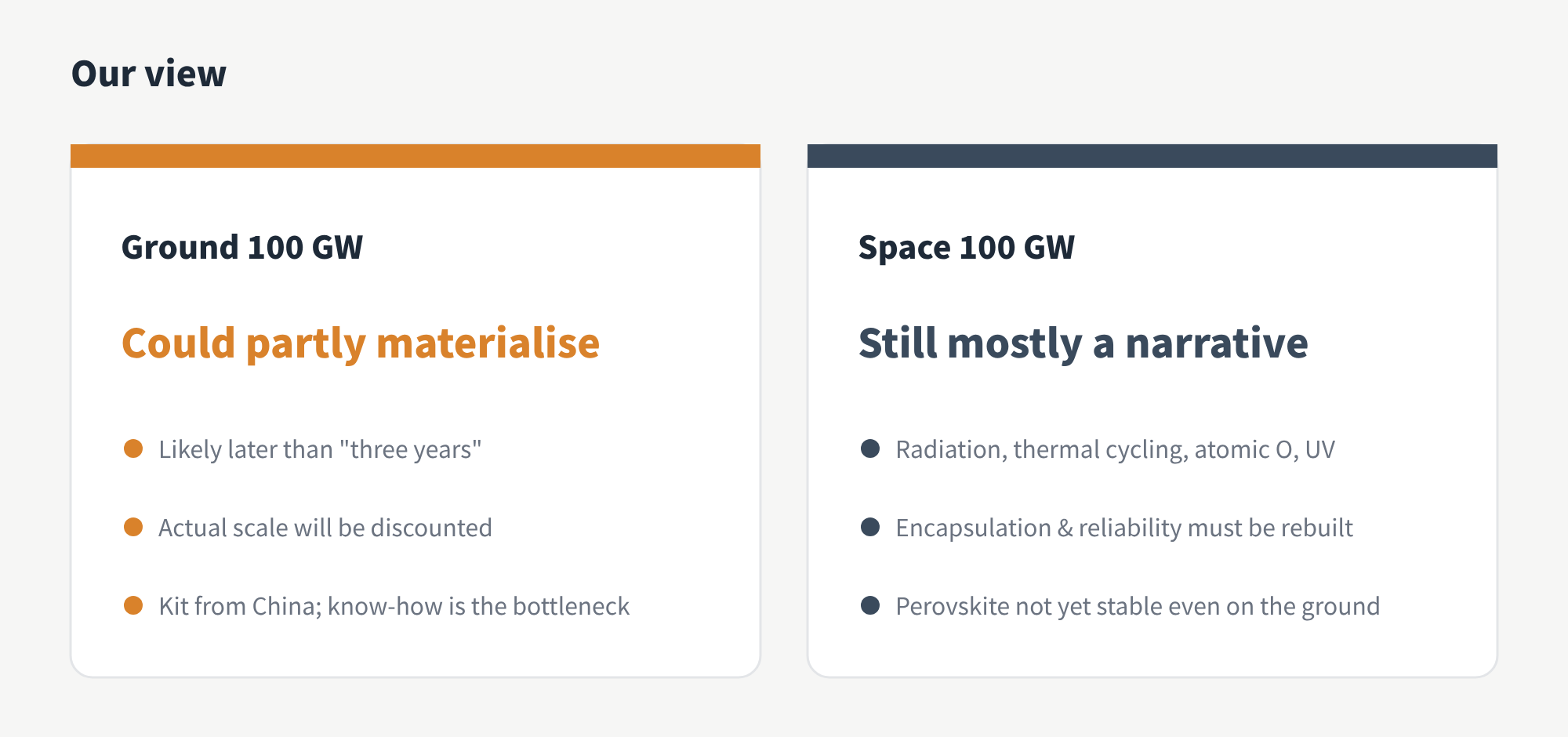
Figure 4 Our view on the ground and space 100 GW
The ground 100 GW could partly materialise, but most likely later than "three years" and at a reduced scale; the space 100 GW will remain mostly a narrative for the foreseeable future.
The signals truly worth tracking are these:
- Start of production: when will Tesla's first Crystal Sun cell line start up, and can it hold to Q1 2029?
- Yield: what mass-production yield can it achieve?
- Technology route: which cell technology will it choose?
Once these questions have answers, 200 GW will have moved from "narrative" to "delivery".
How much of Musk's solar plan do you think will be delivered? We would be glad to hear from you.
References
- Guangfu Jianwen / Sina Finance: SpaceX and Tesla plan to build a combined 200 GW of PV capacity in the US within three years, 2026-01-23
- pv magazine USA: Assessing Elon Musk's massive 100 GW solar ambitions, 2026-05-26
- Carbon Credits: Elon Musk's 100 GW Solar Moonshot: Can Tesla and SpaceX Pull It Off?, 2026-06-02
- Electrek: Tesla files plans for $10.1B solar cell factory in Texas — Project Crystal Sun, 2026-08-11
- Electrek / TechCrunch: Musk's Terafab chip plant will run on gas, not Tesla solar, 2026-08
- DIGITIMES: Musk pushes US solar supply chain upstream as polysilicon ambitions emerge, 2026-08
- Power Engineering: Elon Musk has a plan to dominate domestic solar and gas turbine manufacturing, 2026-09-14
- Yahoo Finance: Elon Musk Reveals Massive New Goal for SpaceX, 2026-09-30
- Gulf News: Elon Musk and Jensen Huang's cosmic power play (US-Saudi Investment Forum), 2025-11
A PV R&D and technology team with 10+ years of experience | In-depth technical knowledge sharing
Materials · Reliability · Failure Analysis · Standards & Certification · Products · Processes
Exploring AI + PV; collaboration welcome
Disclaimer:
1. Original content reflects the authors' personal views only, is for reference only and does not constitute investment advice.
2. Reposted and cited content is credited to its source, out of respect for original work.
3. Some content was produced with AI assistance (chart generation, data retrieval, concept explanations, etc.); the core framework and key content were written by our technical team and reviewed by people.
4. If anything is inaccurate or infringes your rights, please leave a message or contact us and we will deal with it.