
Steel Module Frames: How Far Has Mass Production Got?
Key points
With aluminium above 23,000 CNY/t, steel frames are back in the spotlight. China has reached "a standard plus project-level batches", the US has reached "GW-scale long-term contracts", but three hurdles still stand between steel and the mainstream: corrosion, weight and data.
Every so often over the past few years, someone in the PV industry has asked: are steel frames about to take off?
This time the question is being asked more seriously, for a simple reason. Aluminium has climbed from an average of about 19,900 CNY/t in 2024 to 24,400 CNY/t in April 2026; it was still around 23,700 CNY/t in early August and about 23,500 CNY/t in mid-October. Meanwhile, module makers have pushed frame processing fees down to the point where frame makers are losing money. There is no room left to squeeze processing fees, so only two paths remain: keep thinning the aluminium, or switch materials.
This article skips the concepts and answers three questions: how far has steel-frame mass production actually got? Where is it stuck? Which applications are most likely to scale first?
01The conclusion first: lots of noise, little share
By any measure, aluminium frames dominate. SMM and several brokers have said in the past two years that aluminium has "more than 95% market share", while the 2026 International Technology Roadmap for Photovoltaic (ITRPV) from Germany's VDMA puts it at 92% of modules worldwide using aluminium frames in 2025. In other words, steel, composite and frameless designs together account for only about 8%.
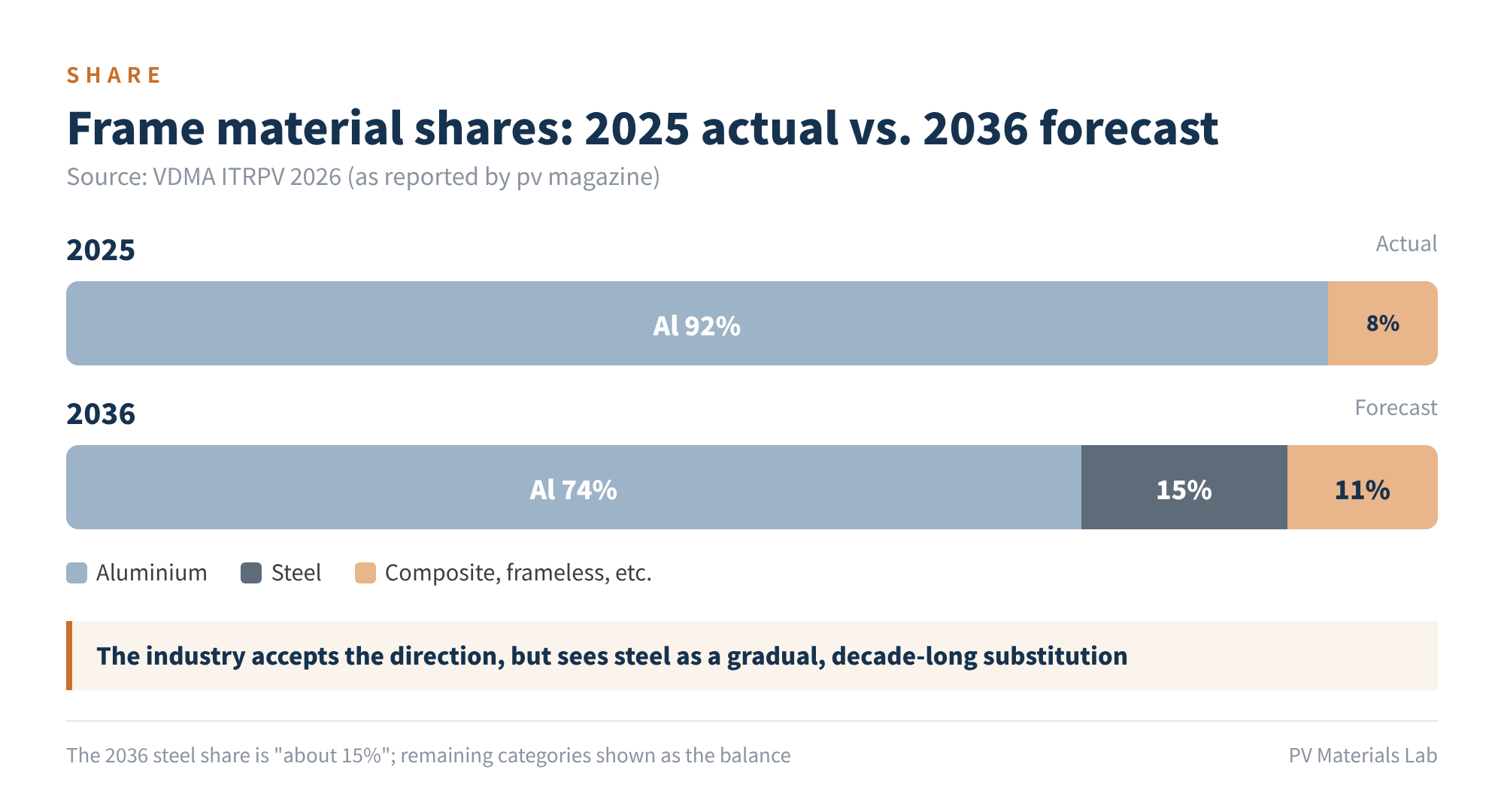
Figure 1 Frame material shares: 2025 actual vs. 2036 forecast
The same roadmap expects aluminium's share to fall to 74% by 2036, with steel rising to about 15%. This tells us two things: the industry does accept the direction of steel frames, and it sees them as a gradual substitution over a decade, not a switch within two or three years.
02Why the debate is more serious this time
The frame is one of the highest-value materials in a module. On 2023 figures, aluminium frames cost about 0.10 CNY/W, more than 9% of module manufacturing cost. And the cost structure is very rigid: aluminium ingot accounts for about 82%, pricing is "aluminium price + processing fee", and the processing fee is the only part module makers can negotiate.
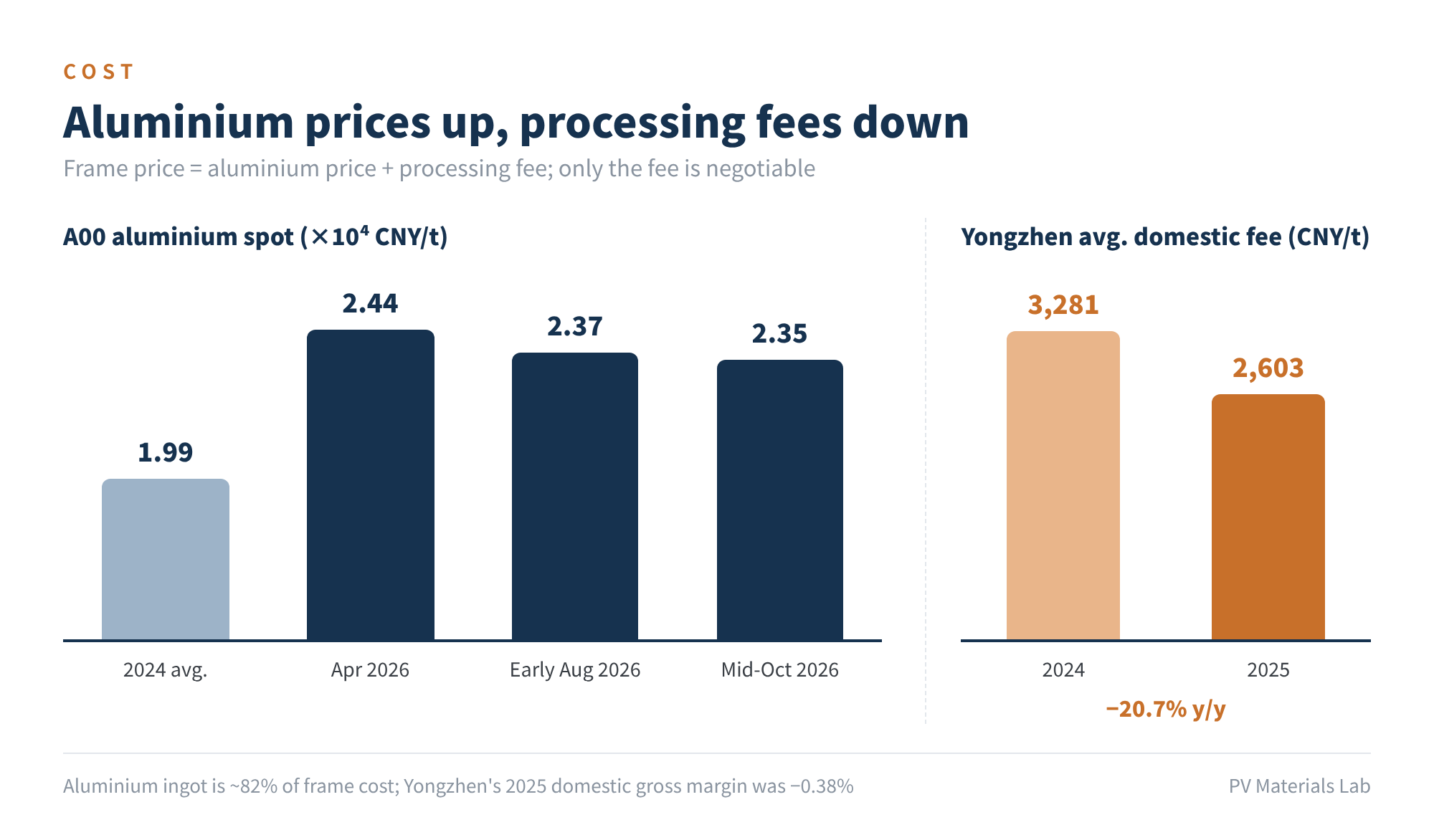
Figure 2 Aluminium prices up, processing fees down
How far have processing fees fallen? Industry leader Yongzhen disclosed in its June 2026 reply to an exchange inquiry on its annual report that its average domestic processing fee in 2025 was 2,603 CNY/t, down about 20.7% year on year (3,281 CNY/t in 2024); gross margin on domestic business was −0.38%, and some order prices were "close to or even below cost". Another leader, Xinbo, also made a loss in 2025.
With processing fees squeezed to the limit, cost cuts can only come from material usage. Aluminium usage per GW has fallen from about 5,000 t in 2023 to 4,500–4,800 t, while modules keep getting larger. Thinner profiles on larger modules leave ever less margin under mechanical load, which is exactly the opening the steel-frame camp keeps pointing to.
03What a steel frame is and how it differs from aluminium
The mainstream route for commercial steel frames is high-strength zinc-aluminium-magnesium (ZAM) coated steel strip plus continuous roll forming: the strip is slit and bent through dozens of roll stations into a closed or semi-closed section, then cut to length and punched, with corner keys joining the four corners. This is an entirely different process chain from aluminium extrusion, anodising and corner cutting.
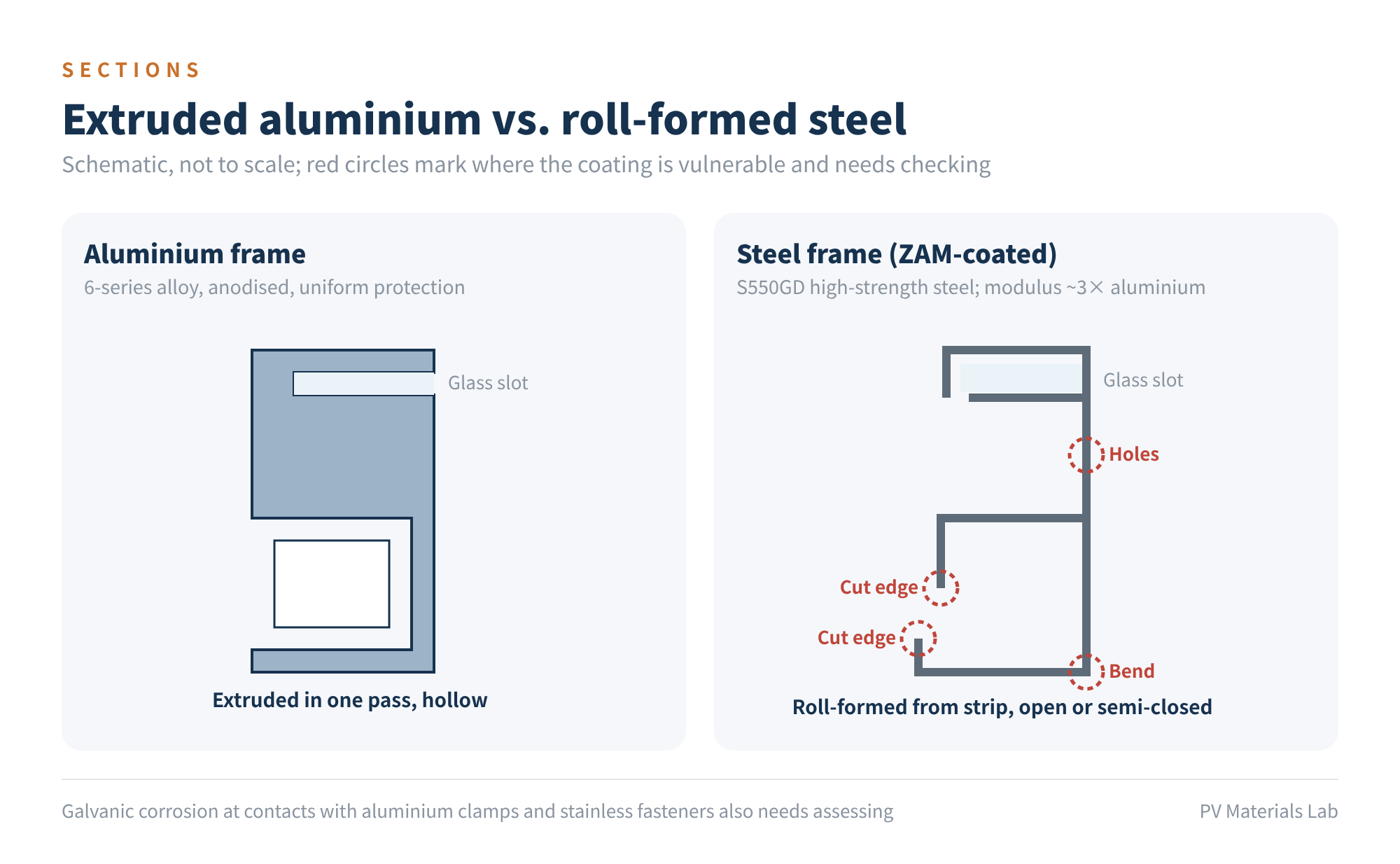
Figure 3 Extruded aluminium vs. roll-formed steel: sections and risk points (schematic)
| Item | Aluminium frame | Steel frame (ZAM-coated) |
|---|---|---|
| Forming | Extrusion + anodising | Roll forming + punching/cutting |
| Strength | 6-series aluminium alloy | S550GD grade, yield ~550 MPa (manufacturer data) |
| Stiffness | Elastic modulus ~70 GPa | ~200 GPa, about 3× aluminium |
| Weight per module | Baseline | About 2–2.5 kg heavier |
| Corrosion protection | Oxide film, uniform | Metallic coating; cut edges and holes are weak points |
| Carbon footprint | Primary aluminium is energy-intensive | Makers claim >80% lower than aluminium |
| Scrap value | High | Clearly lower than aluminium |
Strength and carbon-footprint figures in the table come from public statements by companies such as Zhengxin, Astronergy and Nextpower; they are manufacturer claims, and no consistent third-party comparison is available.
04How far mass production has got
China: a standard in place, project-level batches
China's progress can be summed up in one sentence: there is a standard, there are products and there are projects, but no public GW-scale annual shipment data yet.
On standards, the China Photovoltaic Industry Association's group standard T/CPIA 0080—2024, "Zinc-aluminium-magnesium coated steel frames for PV modules", took effect in August 2024. The list of drafting organisations is itself an industry map: frame makers Huishan, Kaisa and Gangying; module makers JA Solar, Astronergy, GCL SI, Suntech and Shuangliang; steelmakers Baosteel Zhanjiang and the Baosteel Central Research Institute; plus racking makers and owners such as Arctech, Huaneng Clean Energy Research Institute, SPIC Huanghe and China Southern Power Grid Energy. Leading module makers are involved, which at least shows that technical preparation and certification work are under way.
The standard links coating weight directly to the corrosion environment, which is very useful for selection:
| Coating weight (g/m², min.) | Recommended environment |
|---|---|
| 275 | C4 and below |
| 300 / 350 | C5 |
| 400 / 450 | CX (extreme corrosion) |
It also requires no red rust after at least 4,000 hours of neutral salt spray, 20 cycles of ammonia corrosion, no more than 10% loss of mechanical properties after 1,000 hours of damp heat, and corner keys at least as corrosion-resistant as the profile itself.
On projects, the clearest public example is Astronergy: in early 2025 it disclosed supplying 240 MW of ASTRO N7 steel-framed modules to phase III of Jiuquan Iron & Steel's Jinta Baishuiquan PV plant, plus a combined 42 MW of steel-framed modules for rooftop projects at Baowu's Zhanjiang Steel phase II and Baoshan base. Earlier, in 2023, module makers such as Jolywood were already buying steel frames from Huishan, and second-tier makers such as Zhengxin list S550GD high-strength steel-framed modules for sale on their websites.
One pattern is worth noting: the owners of China's first 100 MW-scale projects are steelmakers themselves. Jiugang and Baowu are both material suppliers and plant owners, naturally willing to back "steel frames for the steel industry". That is a good way to start, but it also shows that large-scale acceptance by third-party owners has not yet arrived.
As for shipments, we found no public annual steel-frame shipment figures from any leading Chinese module maker. Brokers' view at the end of 2024 was still "actual shipments are small and customer acceptance is low". Taken together with the ITRPV figures, it is reasonable to see steel frames in China as "a low single-digit share, shipped project by project".
Overseas: the US is first to GW-scale long-term contracts
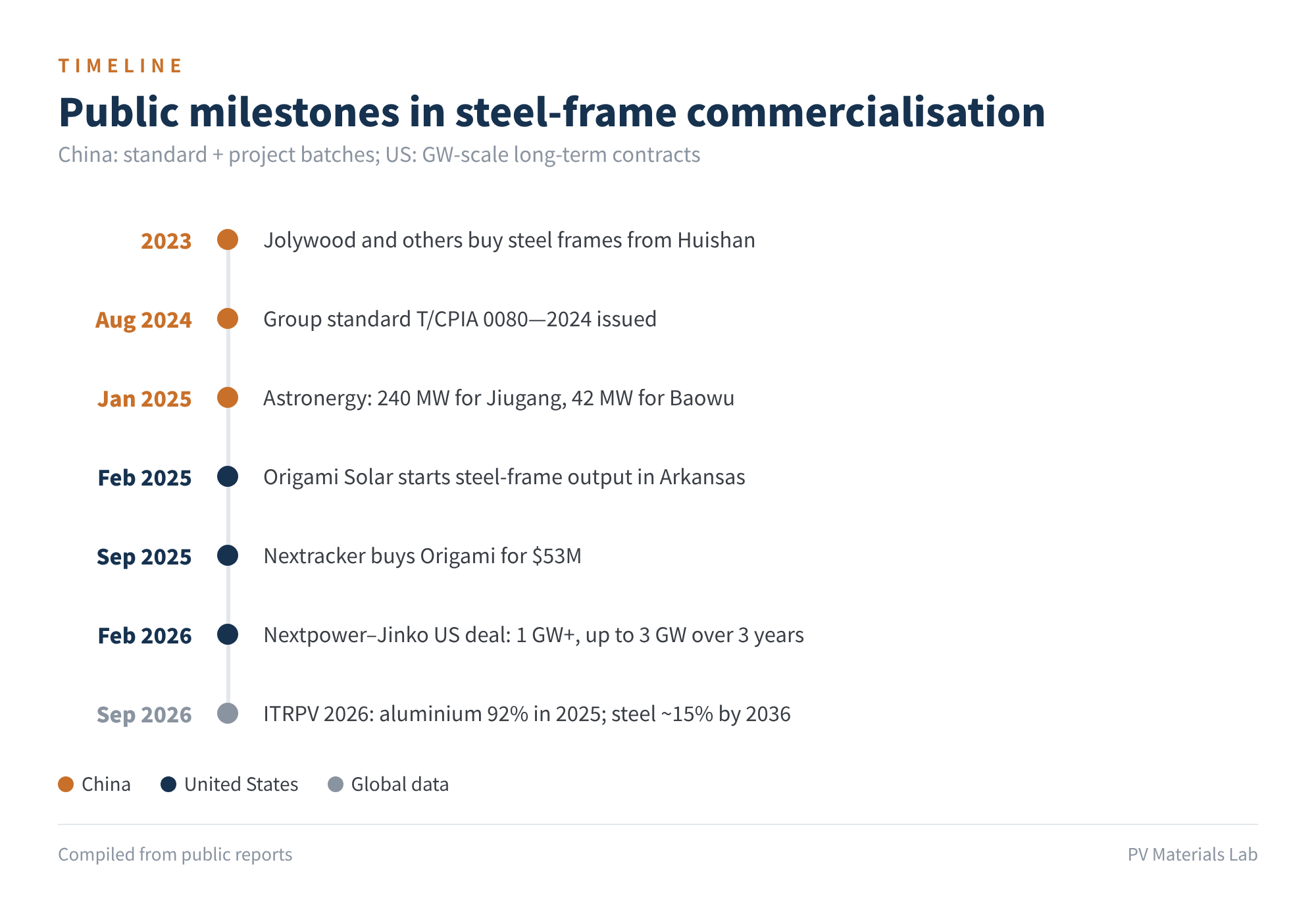
Figure 4 Public milestones in steel-frame commercialisation
GW-scale contracts have so far appeared only in the US. Origami Solar started steel-frame production in Arkansas in February 2025; that September it was acquired by tracker leader Nextracker (now renamed Nextpower) for about $53 million. T1 Energy, Jinko Solar's US arm and Thornova have since signed agreements. The Jinko deal, announced in February 2026, supplies steel frames to its factory in Jacksonville, Florida: it is a multi-year agreement for more than 1 GW initially, expandable to 3 GW over three years, with supply expected to start in mid-2026.
The US has made it work not because steel-frame technology is more mature there, but because the commercial conditions are different: tariffs on imported steel and aluminium, tax-credit bonuses for domestic content, almost no large-scale PV aluminium extrusion capacity in the US, and a tracker maker making frames itself. None of these conditions exist in China, so US progress cannot simply be transplanted.
05Where it is stuck: five unavoidable issues
- 1. Corrosion, concentrated where the coating is damaged. The flat-surface corrosion resistance of ZAM coatings is not really in dispute; the problems are at cut edges, punched holes and bends. Cut edges rely on the coating's sacrificial protection and corrosion products to "self-heal", which depends heavily on sheet thickness, coating weight and environment. Broker reports flag that "rust easily forms at grounding holes, making a 25-year life hard to reach". Galvanic corrosion where steel frames meet aluminium clamps or stainless fasteners also needs separate assessment in humid and salt-spray environments.
- 2. The lifetime debate: neither side has the data. The aluminium side says steel frames last only 10–15 years; steel-frame makers say they stay rust-free for 25–30 years in C5 environments. Both are camp positions. 4,000 or 5,000 hours of salt spray is an accelerated test and cannot be converted directly into outdoor years, and China's earliest volume deployments date from 2022–2023, so there are only three or four years of field data. Only time can close this gap.
- 3. Weight. Each module is about 2–2.5 kg heavier. For ground-mounted plants this has limited impact on racking design; for commercial rooftops with little spare load capacity and for residential projects carried by hand, it is a real obstacle. Container loading and manual installation efficiency also need recalculating.
- 4. Stiffness is a strength, but creates new matching issues. Steel's elastic modulus is about three times aluminium's. Nextpower says a steel frame deflects only about a third as much as an aluminium one under the same conditions, lowering the risk of glass breakage; Chinese broker reports warn that "steel's modulus differs greatly from that of the cells, so they cannot deform together under load, creating a risk of glass bursting". The two views do not contradict each other: a stiffer frame changes the load path and where stress concentrates, so the outcome depends on section design, sealant and mounting, and must be settled with static-load, dynamic-load and post-ageing sequence data.
- 5. Process precision and supply-chain habits. Roll-formed parts spring back, and dimensional tolerance, corner gaps and corner-key pull-out force all affect automated framing cycle time and yield. Aluminium frames also have high scrap value and a mature recycling system, whereas steel frames are worth much less as scrap. And in the technical specifications of banks, insurers and owners, "aluminium alloy frame" is still often the default clause, which is slower to change than the material itself.
06Running the numbers: how much does switching to steel save today?
Below is our rough estimate, meant only to show the order of magnitude. The finished steel-frame price is an assumption; plug in your own purchase price:
Aluminium frame: 4.5–4.8 g/W × (aluminium ~23,500 + processing fee 2,600) CNY/t ≈ 0.12 CNY/W
Steel frame: for a 600 W module, the aluminium frame weighs about 2.8 kg; a steel frame about 2–2.5 kg heavier is about 5 kg, or about 8.3 g/W; at an assumed finished price of 7–9 CNY/kg ≈ 0.06–0.075 CNY/W
Difference: about 0.045–0.06 CNY/W
With module profits measured in fen per watt, four to five fen per watt is an attractive number, and larger than the "20%–30% cost reduction" steel-frame makers claimed in 2023, because aluminium has risen over the past two years. But this calculation leaves out several hidden costs: certification changes and retesting, framing-line modifications and yield ramp-up, the weight cost in transport and installation, the difference in end-of-life scrap value, and above all the warranty risk if batch corrosion occurs. The real net gain will be clearly smaller than the paper difference, and if aluminium prices fall back, it will narrow further.
07Which applications will scale first
| Application | Our view | Main reasons |
|---|---|---|
| US-made modules | Already scaling | Tariffs, domestic-content bonus, little local aluminium extrusion |
| Plants owned by steelmakers and SOEs | Already deployed | Jiugang and Baowu projects; owner is also the material supplier |
| Desert ground-mount and trackers | Most likely to scale first | Dry and low-corrosion, high wind loads need stiffness, weight matters less |
| Commercial rooftops | Depends on load margin | 2–2.5 kg more per module |
| Residential | Slower | Manual handling, weight and appearance |
| Coastal, floating and offshore | Cautious | CX environments need the highest coating class; composite frames fit better |
There is another competitor to watch: composite frames. At SNEC 2026 there were already more than 20 suppliers of glass-fibre-reinforced polyurethane frames, pitching light weight, insulation and salt-spray resistance. The future is most likely not steel replacing aluminium, but aluminium as the mainstay, with steel and composites each taking certain applications.
In our view, three variables will set the pace for steel frames in China: whether aluminium stays above 23,000 CNY/t for long; whether a leading module maker puts steel frames into its standard BOM rather than project-specific builds; and the condition of cut edges and grounding holes after the first projects have run for three to five years. Of the three, the last is the most important, and it cannot be rushed.
08An adoption checklist for materials and process engineers
If your company is evaluating steel frames, these are the validation items you cannot skip:
- Specification: choose substrate grade, thickness and coating weight according to the project's corrosion class, using the C4 / C5 / CX mapping in T/CPIA 0080; one specification does not fit all.
- Cut edges and holes: examine cross-sections of cut ends, mounting holes, grounding holes and drainage holes separately after salt spray and damp heat, rather than only flat surfaces.
- Grounding: verify equipotential bonding continuity (MST 13 in IEC 61730-2) and re-measure contact resistance after corrosion tests.
- Mechanical load: in addition to static load, run dynamic mechanical load (IEC TS 62782) and load tests after TC, DH and other ageing sequences, focusing on the glass-to-frame interface.
- Environmental tests: salt spray (IEC 61701) and ammonia (IEC 62716), plus sand abrasion for desert projects.
- Framing process: corner-key pull-out force, corner gaps, sealant adhesion to the coating, and compatibility and cycle time on automated framing machines.
- Certification changes: a frame-material change is a design change requiring retesting; use IEC TS 62915 to map the retests and align with the certification body early.
- Installation manual: spell out clamp material, torque and isolation measures between dissimilar metals and the racking; this is where most field problems arise.
09Final thoughts
Steel frames are not a new story, but the backdrop this time really is different: aluminium prices are high, frame makers are losing money, a standard is in place, and GW-scale long-term contracts have appeared in the US.
Steel frames are still far from "mainstream", but very close to becoming "a stable niche option".
For module makers, the more realistic move now is not to bet, but to get certification, process and supplier preparation done in advance, and let the first batch of field data decide how much to scale next. Has your company evaluated steel frames? Where did it get stuck? We would be glad to hear from you.
References
- VDMA, ITRPV 2026, as reported in pv magazine, "New materials in the frame", Sep 2026: pv-magazine.com
- China Photovoltaic Industry Association, T/CPIA 0080—2024, Zinc-aluminium-magnesium coated steel frames for PV modules (in Chinese)
- Yongzhen: reply to the exchange's inquiry letter on its 2025 annual report, Jun 2026 (in Chinese)
- Sina Finance: "Aluminium for PV: the next super-cycle hidden in a 60-billion-yuan market", May 2026; Sina Finance futures channel A00 aluminium spot quotes, 16 Oct 2026 (in Chinese)
- SMM: "PV frames are mainly aluminium; aluminium price swings hit module makers' profits", Sep 2024; AlCircle/SMM PV frame weekly, Aug 2026
- China.com: "Astronergy steel-framed modules support the energy-intensive steel industry's dual-carbon goals", Jan 2025 (in Chinese)
- Donghai Securities: Yongzhen in-depth report, Nov 2024; Dongguan Securities: PV frame report, Dec 2024 (in Chinese)
- Solarbe: "Aluminium, composite and steel frames!", Jul 2023; ces.cn, Aug 2023 (in Chinese)
- pv magazine USA: "Nextracker acquires Origami Solar for $53 million", 9 Sep 2025; "Nextpower to supply steel frames for JinkoSolar factory in Florida", 20 Feb 2026; PV Tech reporting on T1 Energy and Thornova
- Zhengxin PV website: "High-strength steel-framed modules" product page (in Chinese)
A PV R&D and technology team with 10+ years of experience | In-depth technical knowledge sharing
Materials · Reliability · Failure Analysis · Standards & Certification · Products · Processes
Exploring AI + PV; collaboration welcome
Disclaimer:
1. Original content reflects the authors' personal views only, is for reference only and does not constitute investment advice.
2. Reposted and cited content is credited to its source, out of respect for original work.
3. Some content was produced with AI assistance (chart generation, data retrieval, concept explanations, etc.); the core framework and key content were written by our technical team and reviewed by people.
4. If anything is inaccurate or infringes your rights, please leave a message or contact us and we will deal with it.