
Changed a Material: Does the Certificate Still Count? A Guide to the IEC TS 62915 Retesting Specification
The short answer
Once a module has IEC 61215 / IEC 61730 certificates, any change in design, materials or components means the original certificate cannot simply be assumed to "automatically cover" the new product. But there is no need to repeat the full test programme either: IEC TS 62915 sets out which tests to repeat for which change.
Anyone who works on PV modules will know these situations:
Purchasing says a new supplier's encapsulant is 0.2 CNY cheaper. Process engineering says cutting the glass from 3.2 mm to 2.0 mm saves weight and cost. R&D says the next-generation cell is more efficient and larger. Sales says the customer wants a 1500 V system version.
Each one sounds like a "small change". But here is the question: is the module that went for certification back then still the same product as the one on the line today? Does the certificate still count?
That is today's subject: IEC TS 62915, usually called the "retesting specification" in the industry.
01Why a retesting specification is needed
To enter mainstream markets, a module usually has to pass two base standards: IEC 61215 (design qualification and type approval, covering performance and reliability) and IEC 61730 (safety qualification). A full round of testing needs multiple samples and several sequences, including thermal cycling, damp heat, humidity freeze, UV and mechanical load, and takes months.
PV, however, is an industry of very fast technology turnover and intense cost pressure, so the bill of materials (BOM) almost never stays fixed. That creates a dilemma:
- Full testing after every change? Long lead times and high costs that companies cannot sustain, and the introduction of new materials and technologies would be badly slowed.
- No testing after any change? Changes in materials, components and processes can affect a module's electrical performance, reliability and safety. If the certified product and the shipped product differ, certification loses its meaning.
Without common rules, the same change could lead to different test programmes at different labs and on different projects. In 2018 the IEC set the retesting rules down as a Technical Specification: IEC TS 62915. Its value lies in the sentence in its scope: it sets forth a uniform approach to maintain type approval, design and safety qualification of terrestrial PV modules that have undergone or will undergo modification.
02What IEC TS 62915 is
First, its "ID card":
| Item | Details |
|---|---|
| Number | IEC TS 62915 |
| Title | Photovoltaic (PV) modules – Type approval, design and safety qualification – Retesting |
| Common name | The "retesting specification" |
| Document type | TS (Technical Specification) |
| Committee | IEC TC 82 (Solar photovoltaic energy systems) |
| Current edition | Ed. 2.0, published September 2023, replacing the 2018 first edition |
| Corrigendum | COR1, published August 2024 |
| Scope | WBT (wafer-based technology, including crystalline silicon) modules; MLI (monolithically integrated) thin-film modules |
The key to understanding this document is its role: it does not create any new test methods. All test items, sample sizes and pass criteria come from IEC 61215 and IEC 61730. What 62915 does is map "type of change" to "tests that must be repeated".
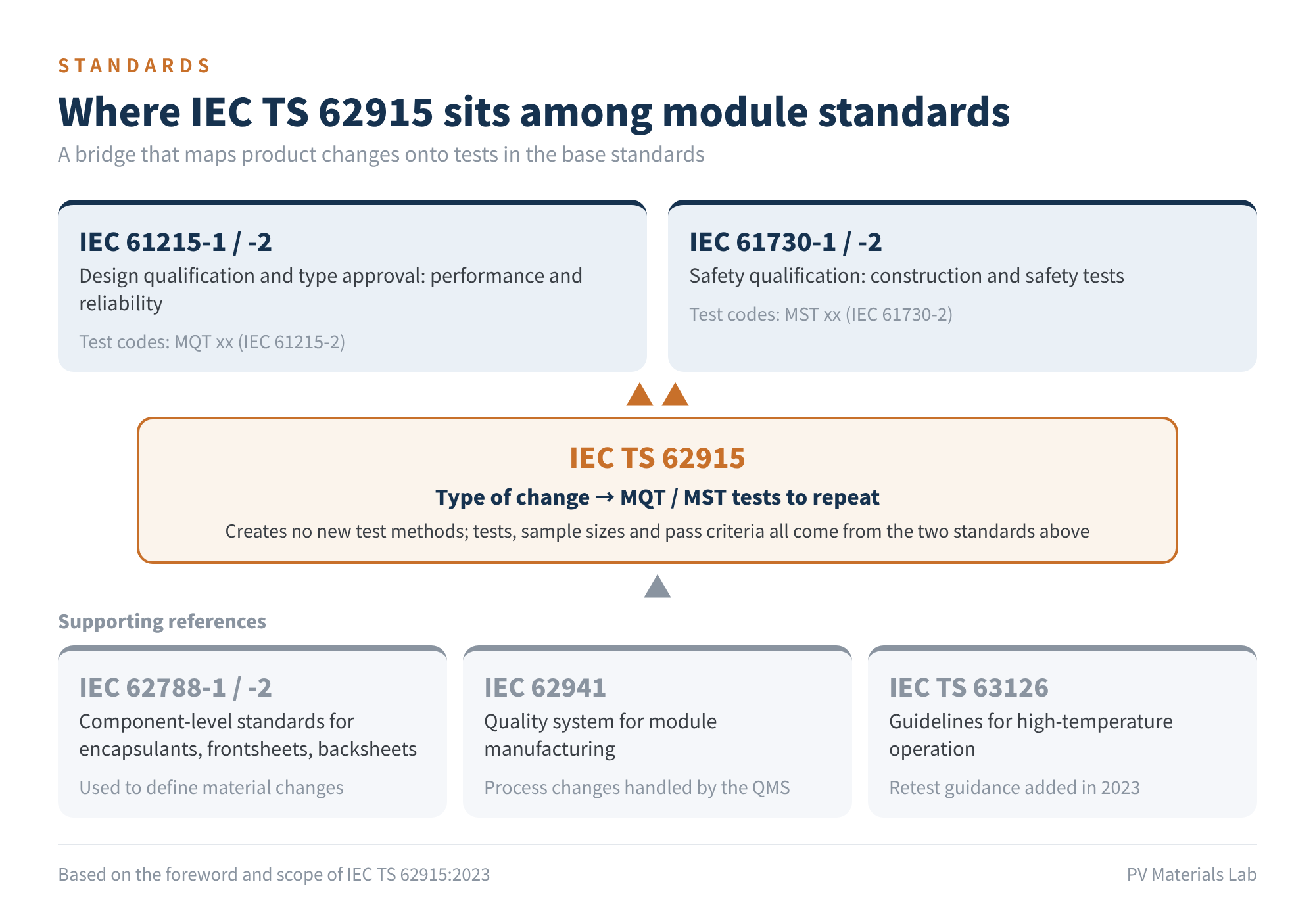
Figure 1 Where IEC TS 62915 sits among module standards
The standard is also clear about the effect of the results: products that successfully follow the test sequences it defines are considered compliant with the standard against which they were originally assessed in a full qualification. In other words, pass the retest and the original certification is maintained.
Among IEC publications, an IS is a full International Standard and a TS is a Technical Specification; 62915 is the latter. Its scope candidly says the document "provides assistance" and that "at some level, engineering judgement may be needed". So it is a guide, not a checklist that covers every case.
03How it is organised: a "change map"
The 2023 edition has a simple structure, built around Clause 4, "Retesting":
- 4.1 General: common rules that every retest must follow (detailed in the next section).
- 4.2 Test programmes for WBT modules: for crystalline silicon and other wafer-based modules, divided into 19 subclauses by type of change.
- 4.3 Test programmes for MLI thin-film modules: 22 subclauses. Content identical to 4.2 is not repeated; only thin-film-specific items remain, such as the front contact (TCO), back contact and edge deletion.
- Annex A (normative): Table A.1 summarises all retest requirements; Figure A.1 shows the combined IEC 61215 and IEC 61730 test flow; A.3 gives the method for assessing new combinations of materials and components.
For crystalline silicon modules, the 19 types of change cover everything from the laminate stack to system ratings:
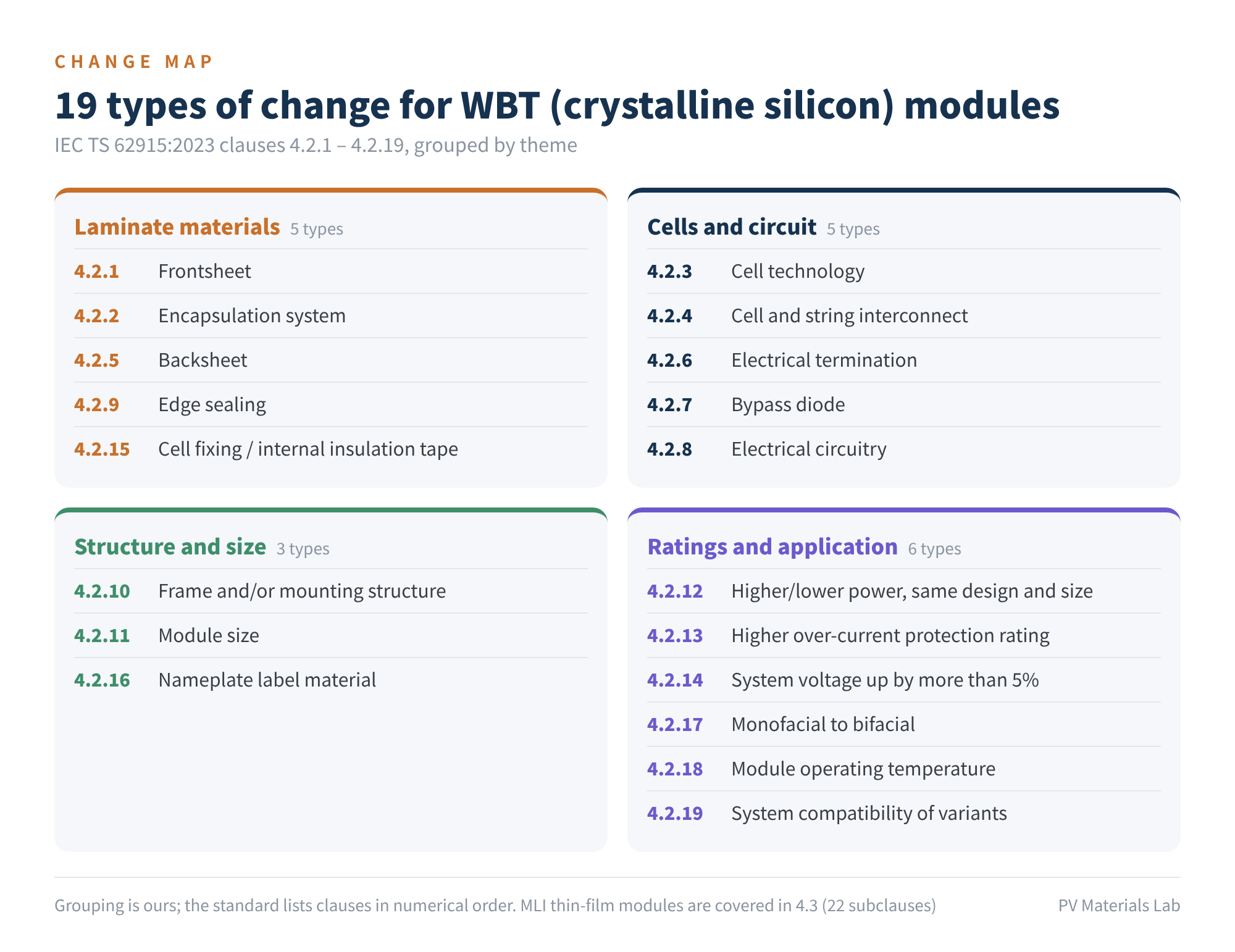
Figure 2 19 types of change for WBT modules (clauses 4.2.1–4.2.19)
Each subclause follows roughly the same pattern: first it lists what counts as a change, then it gives the MQT tests to repeat under IEC 61215 and the MST tests to repeat under IEC 61730. The 2023 edition lists the two separately, which is clearer whether a product is certified to one standard or to both together.
These codes come up again and again in retest programmes; here are the common ones:
| Code | Test | Code | Test |
|---|---|---|---|
| MQT 01 | Visual inspection | MQT 13 | Damp heat (DH) |
| MQT 03 | Insulation test | MQT 15 | Wet leakage current |
| MQT 06.1 | Performance at STC | MQT 16 | Static mechanical load |
| MQT 09 | Hot-spot endurance | MQT 17 | Hail |
| MQT 10 | UV preconditioning | MQT 19 | Stabilisation |
| MQT 11 | Thermal cycling (TC) | MQT 20 | Cyclic (dynamic) mechanical load |
| MQT 12 | Humidity freeze (HF) | MQT 21 | Potential-induced degradation (PID) |
Table 1 Common MQT codes (IEC 61215-2:2021)
MQT tests belong to IEC 61215-2 and MST tests to IEC 61730-2. Common MSTs include MST 01 (visual), MST 03 (maximum power determination), MST 16 (insulation), MST 17 (wet leakage current), MST 32 (module breakage) and MST 53 (damp heat).
04The general rules: six that matter
What exactly to test has to be looked up in the tables, but a few rules in 4.1 decide how you look things up and apply them. This part repays careful reading.
- ① Disclosing changes is the manufacturer's responsibility. The manufacturer must disclose changes in design, materials, components, material combinations, suppliers or processes relative to the version last tested. If component-level data are to be used to reduce retesting, the manufacturer must supply those data too.
- ② What counts as a "different material". The standard defines it as a material that differs from the one it replaces in chemical composition, type designation or specification (electrical, optical and mechanical properties, taking nominal values and tolerances into account). Note the accompanying remark: the same material from a different supplier or production site need not count as a "different material" if this can be clearly demonstrated.
- ③ The originally tested value is the baseline; check the tolerance. A new thickness or dimension is assessed against the one originally tested; a new value outside the tolerance of the nominal value may be assessed as a change. If the manufacturer's declared tolerance itself exceeds the change that triggers retesting (the standard's example is a 10% reduction in front glass thickness), the component should be tested at its worst-case limit.
- ④ Stabilise first, then compare before and after. Every module submitted for retesting must be electrically stabilised (MQT 19) according to the applicable standard. Initial and final measurements are made before and after each test, for example MQT 01 / 03 / 06.1 / 15 / 19 in the 61215 programme and MST 01 / 03 / 16 / 17 in the 61730 programme.
- ⑤ Order must be kept. If only some tests in a sequence need repeating, they must still run in the order the original standard specifies. Tests may be skipped, but never reordered.
- ⑥ Several changes at once: use A.3. What if both the encapsulant and the backsheet change? All combinations of materials and components are assessed with the matrix in A.3, and the standard gives a worked example in Figure A.2.
In addition, any change affecting the optical path or the electrical circuit must include an STC power measurement (MQT 06.1). In 61215-related retests, stabilised power, open-circuit voltage and short-circuit current are assessed against the nameplate values (Gate 1), and the relative power change before and after testing is assessed against the IEC 61215-1 criterion (Gate 2).
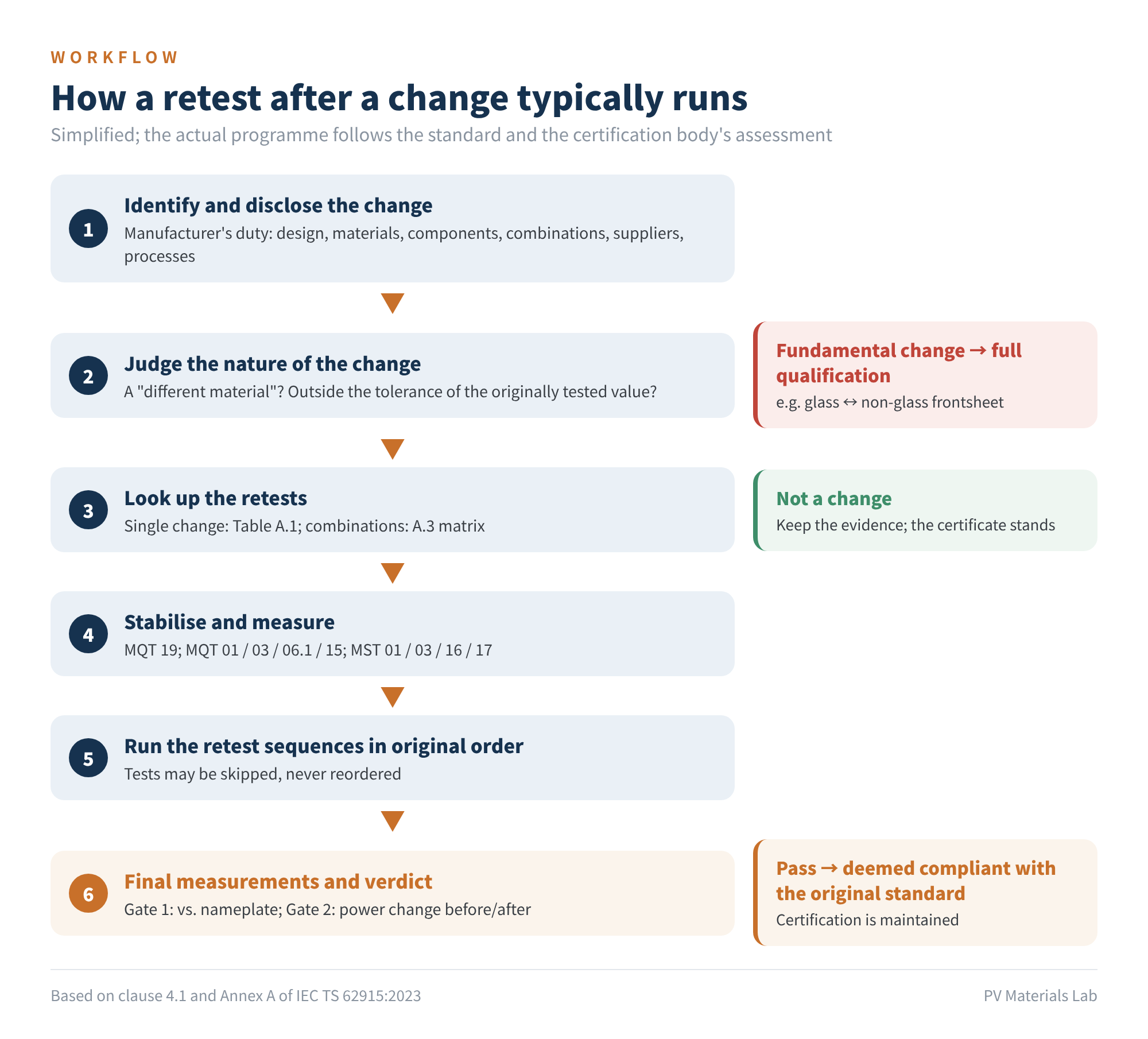
Figure 3 How a retest after a change typically runs
05A few examples to get a feel for it
The examples below come from the standard's text or from interpretations of its corrigendum, and help build an intuition for what triggers retesting:
- Glass front to non-glass front (or the reverse). This is not a "retest" but a case requiring full qualification. A fundamental change of frontsheet type amounts to a new product.
- Thinner front glass. The example in the general rules: a 10% reduction in front glass thickness triggers retesting. As module glass has kept getting thinner in recent years, this is one of the rules met most often.
- Change in cell size. According to the interpretation of the 2024 corrigendum given at an IEC TC82 WG2 meeting, this is clarified as follows: a change of more than 10% in cell length, width or area requires retesting; for changes under 10%, no retest is needed as long as cell-to-cell spacing and cell-to-busbar spacing stay the same or increase.
- Higher system voltage. The title of clause 4.2.14 states the threshold: an increase in system voltage of more than 5%. Going from 1000 V to 1500 V clearly qualifies.
- Same design and size, different power class. Clause 4.2.12 deals specifically with "higher or lower output power with the identical design and size", a common question when extending a product's power bins.
- Monofacial to bifacial. The 2023 edition has a dedicated clause, 4.2.17, for changing a monofacial module to a bifacial one.
These are only illustrative examples; each type of change has further sub-cases and exceptions. When drawing up an actual retest programme, follow the standard's text, Table A.1 and your certification body's assessment.
06What changed from 2018 to 2023
The second edition is a technical revision. The foreword lists nine significant technical changes, one of which has a sub-item, giving ten points in all:
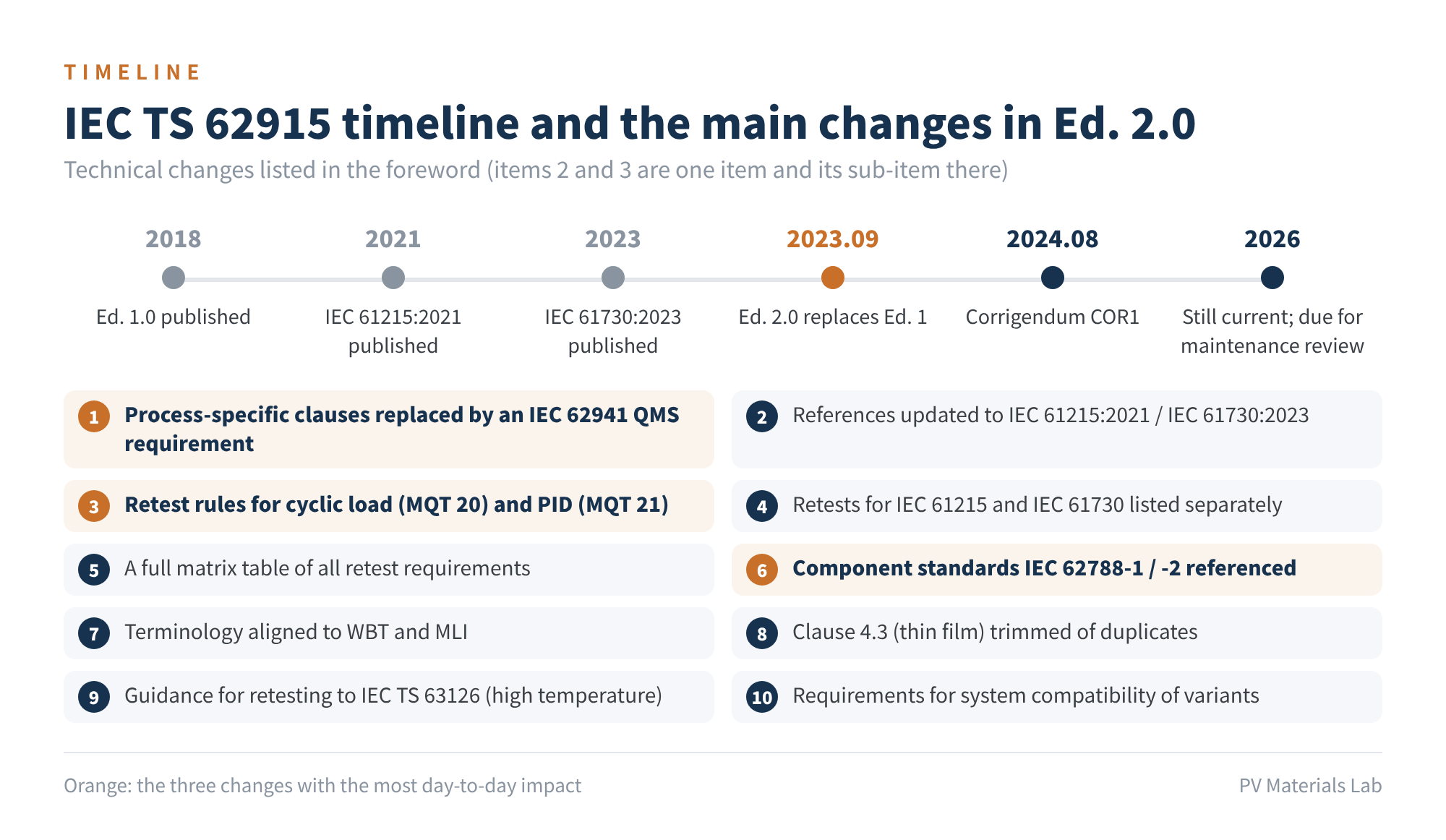
Figure 4 IEC TS 62915 timeline and the main changes in Ed. 2.0
Three of them have the most impact on day-to-day work:
- Alignment with the new base standards. References were updated to IEC 61215:2021 and IEC 61730:2023, and the newly added cyclic (dynamic) mechanical load (MQT 20) and PID (MQT 21) tests were brought into the retest requirements.
- A new approach to process changes. The first edition's clauses on specific process changes were removed and replaced by a general requirement to ensure a consistent quality management system per IEC 62941. In other words, process changes are now mainly controlled through the quality system.
- Material changes linked to component standards. The IEC 62788-1 and IEC 62788-2 series are now referenced, using component-level standards to define changes to polymeric materials such as encapsulants, frontsheets and backsheets.
Two more are worth noting. Guidance was added for retesting according to IEC TS 63126 (guidelines for qualifying modules for high-temperature operation), which matters for rooftop, BIPV and other hot applications. And requirements were added for system compatibility of variants of the same model (4.2.19).
Corrigendum COR1, published in August 2024, is mainly editorial: it fixes inconsistencies between tables and text and wording that could mislead. The working group has also said that technical issues will be left for the next edition.
● As of October 2026, IEC TS 62915:2023 (with COR1) is still the current edition; the main standards stores list no new amendment or edition.
● According to the original article, the document's stability date is 2026, when it is to be confirmed, withdrawn or revised, so the outcome of TC82's maintenance review is worth watching.
● The base standards it depends on are also moving: draft Amendment 1 to IEC 61215-1 / -2 went out for public comment in 2025. Once the base standards' test items change, the retesting mappings will need to follow.
07Advice for engineers
- Bring retest assessment forward into design review. When a new material or cost-down project is approved, estimate the retests and timeline against Table A.1. Thinking about certification only after the samples are built is often too late.
- Bundle changes and test once. Group several changes into one round of retesting where possible and use the A.3 combination rules to cut duplicate sequences; it saves time and money compared with submitting changes one by one.
- Plan tolerances and limits at initial certification. Because assessment uses the originally tested values as the baseline, the thicknesses, dimensions and tolerances chosen at first certification directly shape the room for later changes.
- Manage each material's "ID". Deciding whether a material is "different" depends on composition, type designation and specification. A supplier quietly changing a formulation without changing the type designation is the hardest change to spot and the most dangerous, and it has to be caught through incoming-material control and supplier change-notification processes.
- Passing a retest does not guarantee outdoor performance. 61215 / 61730 are qualification tests that check for obvious design flaws; they do not predict lifetime. The retesting specification only extends that same level of assurance. For major changes, extended stress testing and field data remain valuable.
08Final thoughts
IEC TS 62915 answers a plain question: when the product changes, how does the certificate stay valid? Its answer: identify the change, look it up in the tables, and run the tests that are needed. Changes are neither left unchecked nor met with needless repetition.
When the product changes, the certificate does not change with it automatically; understanding the retesting specification is what lets you cut cost, iterate and stay compliant at the same time.
What retesting problems have you run into when introducing materials or changing products? We would be glad to hear from you.
References
- IEC TS 62915:2023, Photovoltaic (PV) modules – Type approval, design and safety qualification – Retesting, Edition 2.0 (VDE Verlag public preview: contents, foreword and scope)
- IEC TS 62915:2023/COR1:2024, Corrigendum 1
- IEC 61215-1:2021 / IEC 61215-2:2021, Terrestrial photovoltaic (PV) modules – Design qualification and type approval
- IEC 61730-1:2023 / IEC 61730-2:2023, Photovoltaic (PV) module safety qualification
- Interpretation of the IEC TS 62915 corrigendum from the IEC TC82 WG2 spring 2024 meeting
- ANSI Webstore: IEC TS 62915 Ed. 2.0 en:2023 page (status and amendments)
- BSI: Draft BS EN 61215-2 AMD1 (March 2025)
A PV R&D and technology team with 10+ years of experience | In-depth technical knowledge sharing
Materials · Reliability · Failure Analysis · Standards & Certification · Products · Processes
Exploring AI + PV; collaboration welcome
Disclaimer:
1. Original content reflects the authors' personal views only, is for reference only and does not constitute investment advice.
2. Reposted and cited content is credited to its source, out of respect for original work.
3. Some content was produced with AI assistance (chart generation, data retrieval, concept explanations, etc.); the core framework and key content were written by our technical team and reviewed by people.
4. If anything is inaccurate or infringes your rights, please leave a message or contact us and we will deal with it.