
Perovskite Modules Head to Orbit Again: What's Different About GCL Optoelectronics' In-Orbit Test?
On 1 October, single-junction perovskite solar modules developed by Kunshan GCL Optoelectronics completed integration for an in-orbit validation mission and entered final pre-launch preparation. The news, released on China's National Day, was brief, but it carries real weight for the perovskite industry.
01What happened
According to Renmin Caixun and STCN, the single-junction perovskite modules will fly aboard a B300-series small cargo spacecraft from Beijing Ziwei Yutong Technology and undergo performance validation in a near-circular low Earth orbit at about 360 km altitude and 41.5° inclination. The reports describe it as an important engineering test of Chinese perovskite cells for space power applications.
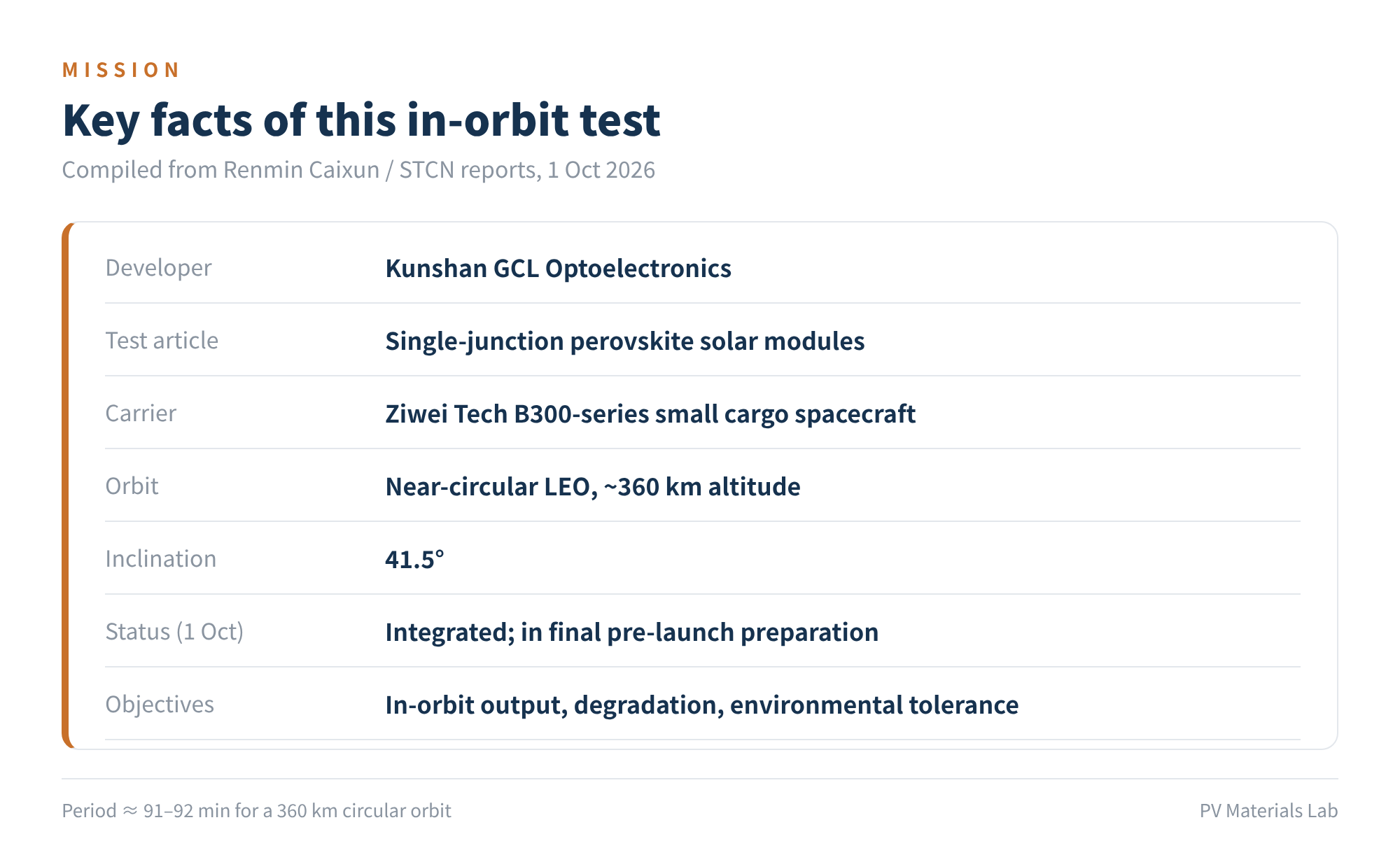
Figure 1 Key facts of this in-orbit test
The partnership was not improvised. In June this year GCL Optoelectronics agreed with Ziwei Tech to use its low-orbit flight platform to test perovskite cells' power output, degradation and environmental tolerance in real space conditions; in July it signed a joint R&D framework with Xianxiang Innovation covering space-grade module development, sample preparation and space-environment testing. In early August GCL Optoelectronics also closed a D1 round of more than RMB 100 million, earmarked for commercial delivery to ground power plants and for space-PV validation. From "signing" to "on the spacecraft" took about one quarter.
02Not the first flight, but this one is different
GCL's perovskites have flown before. In December 2023, a Zhuque-2 Y3 rocket launched multiple satellites, and GCL perovskite modules went to orbit with Honghu-2 and others; GCL called it the world's first space flight test of perovskite modules. The company later disclosed that a perovskite product aboard the Tianyan-24 satellite had operated stably in orbit for more than four months.
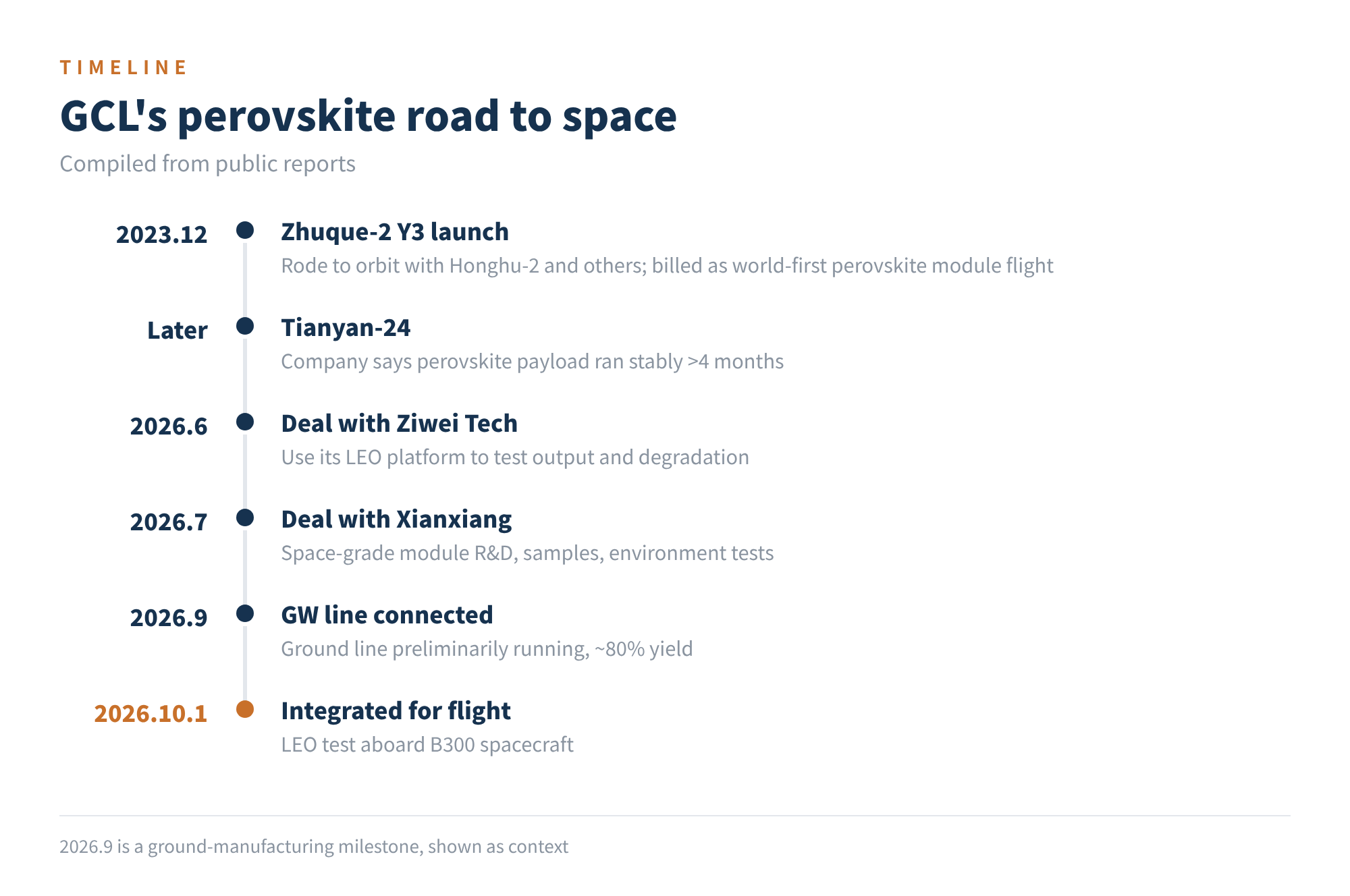
Figure 2 GCL's perovskite road to space (compiled from public reports)
So what is "new" this time? We see three things:
- A different goal: from "ride-along tests proving the cells survive" to explicit engineering validation for space power, focused on output and degradation data that can feed into design inputs.
- A different platform: earlier ride-alongs on satellite surfaces typically yielded only limited data such as current and voltage. GCL Optoelectronics general manager Tian Qingyong has said the company is upgrading its test platform and pushing for longer in-orbit tests, such as one-year campaigns.
- A different foundation: GCL Optoelectronics' GW-scale perovskite line was fully connected in September; its 2 m²-class single-junction module had passed IEC 61215 plus 3× extended ageing, and its tandem module holds IEC 61215/61730 dual certification. Chairman Fan Bin admits, however, that the line is only "preliminarily running" at about 80% yield with small 2026 shipments, targeting more than 100 MW of output and yield above 90% in 2027.
The space story now has ground manufacturing and a reliability system behind it, but that foundation is itself still ramping up.
03Our take: why perovskites, and why now
Space power has long belonged to III-V multijunction cells (the gallium-arsenide family): high efficiency, long life, good radiation tolerance, but expensive and capacity-limited. The boom in LEO constellations has changed the demand structure. With satellites numbering in the thousands and design lives shortened to a few years, cost per watt and power per kilogram now matter as much as efficiency, which is why silicon (especially thinned HJT) entered the constellation market first.
Perovskites' opportunity sits exactly in this structural gap:
- Specific-power potential: the absorber is only a few hundred nanometres thick and can be made on flexible ultra-thin substrates, so theoretical power-to-mass ratio is far higher than silicon or germanium-substrate III-V, directly lowering launch cost.
- Radiation tolerance: many studies show perovskites generally tolerate proton and electron irradiation better than silicon, and some report "self-healing" after radiation damage.
- Tunable bandgap: it can be optimised for the AM0 space spectrum and naturally evolves towards perovskite/silicon and all-perovskite tandems, so the efficiency ceiling goes beyond single junction.
- Process and cost: low-temperature solution or vapour processes and small material use give a steep cost curve at scale, with far better capacity flexibility than III-V.
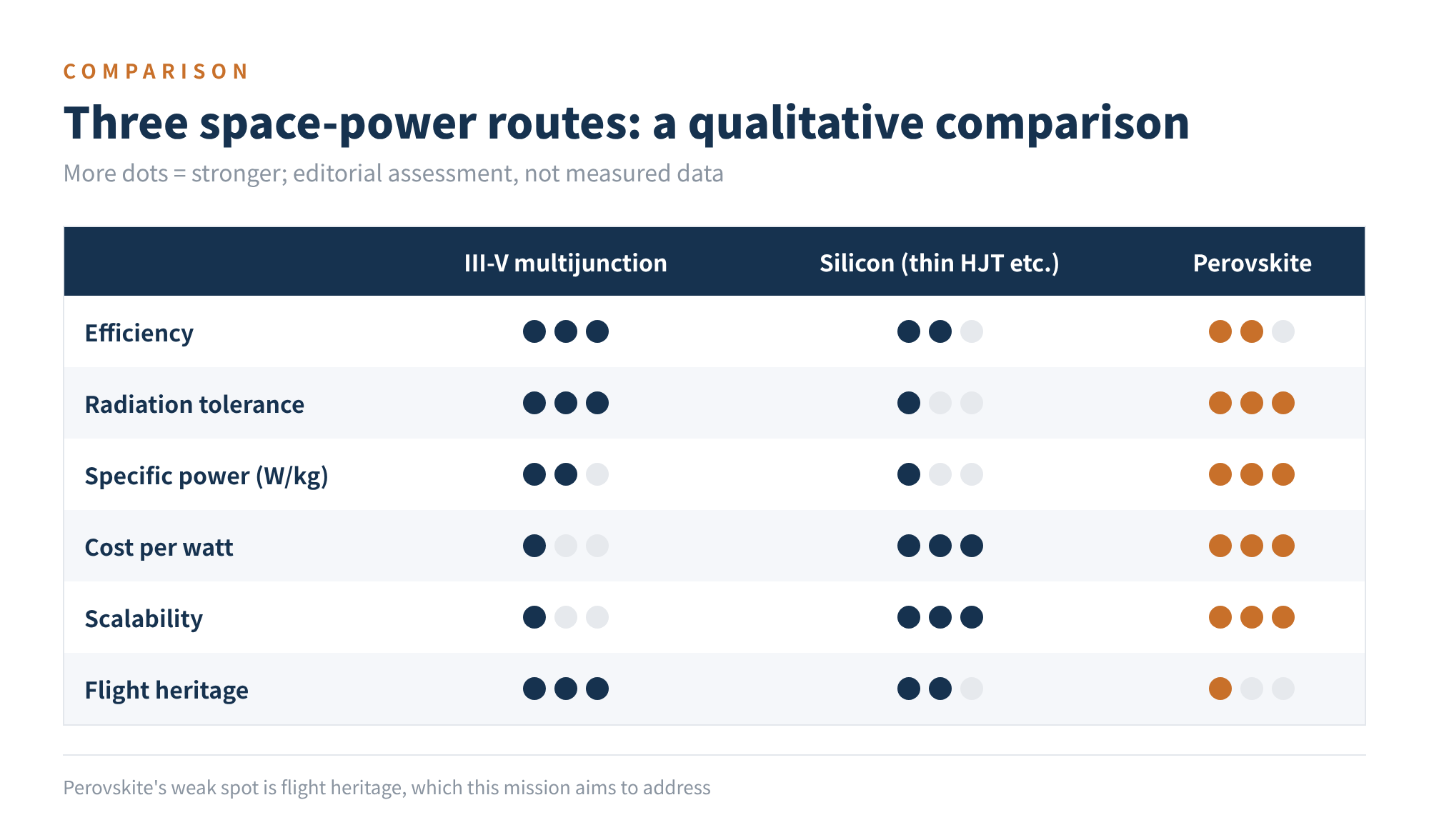
Figure 3 Three space-power routes: a qualitative comparison (editorial assessment)
There is also an often-cited "bonus": space has almost no water or oxygen, which happen to be perovskites' number-one degradation drivers on the ground. GCL has also noted that this factor is eliminated in space.
04A sober view: space is a harder exam than the ground
But "no moisture or oxygen" does not mean "easier to survive". GCL's own design target extends the thermal-cycling range from the ground's −40 to 85 °C to −90 to 110 °C in space, while also coping with atomic-oxygen erosion and cosmic radiation. From a materials and reliability-engineering standpoint, there are at least four hard problems:
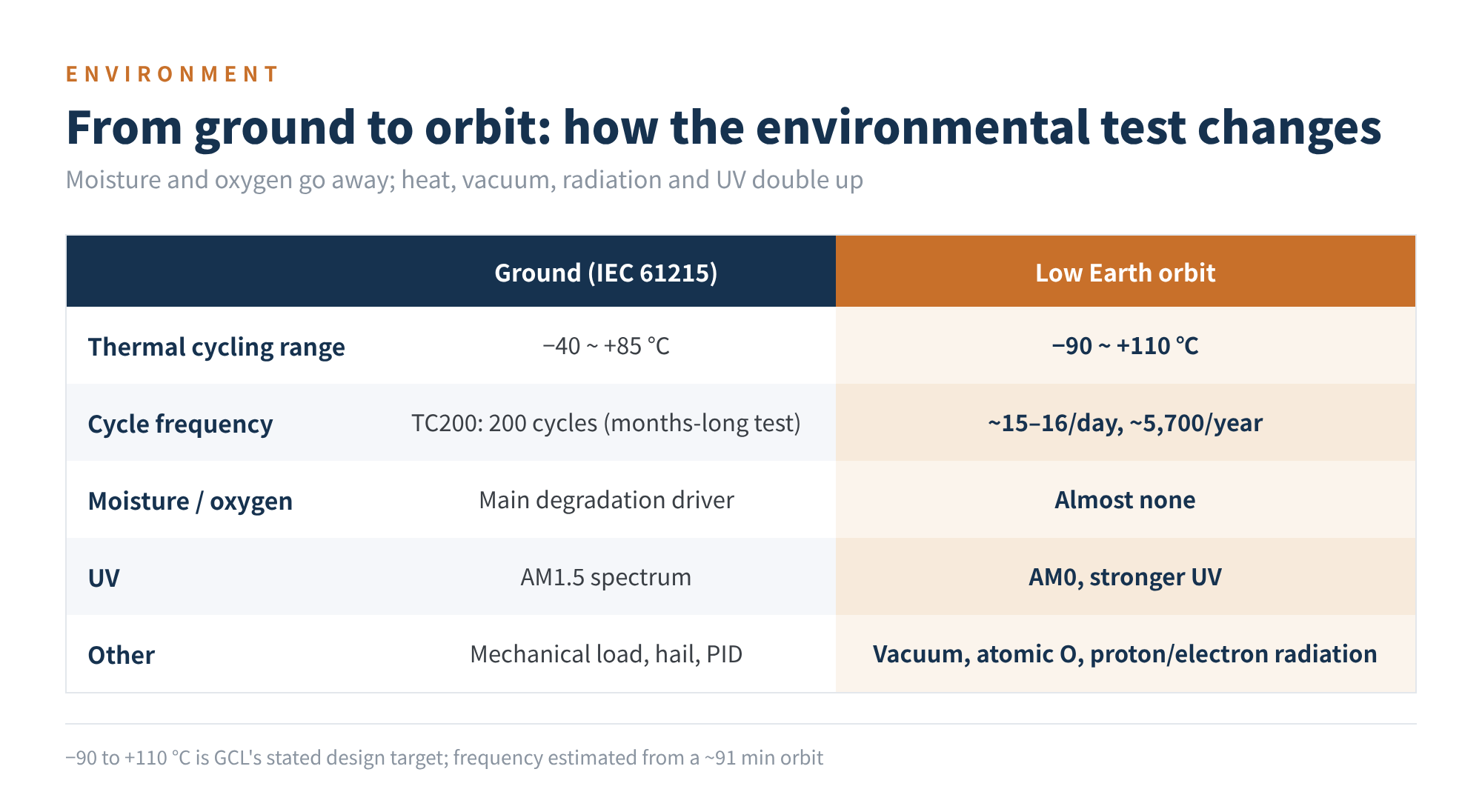
Figure 4 From ground to orbit: how the environmental test changes
1. Thermal cycling: more than ten times as frequent as on the ground
A ~360 km orbit has a period of about 91 minutes, so modules pass in and out of Earth's shadow about 15–16 times a day, roughly 5,700 thermal shocks a year. CTE mismatch between the perovskite layer, transport layers, electrodes, encapsulation and substrate is amplified by high-frequency cycling into interfacial delamination, microcracks and interconnect fatigue. The ground IEC TC200 is merely the "appetiser" here.
2. Heat + vacuum: component volatilisation and ion migration
Vacuum removes moisture and oxygen but opens new failure paths: organic cations and halides volatilise more easily under heat and vacuum, and ion migration accelerates; the temperature limit of organic transport layers also directly decides whether a module survives the hot sun-facing side. Tian Qingyong has acknowledged that the core difficulties are the high-temperature tolerance of the absorber and transport layers, an encapsulant to replace POE films that tend to melt, and the reliability of electrode lead-outs.
3. AM0 UV and atomic oxygen: front sheet and encapsulation need a rewrite
UV intensity in LEO is higher than under terrestrial AM1.5, atomic oxygen continuously erodes surface organic materials, and encapsulants must also account for vacuum outgassing affecting optical and electrical performance. The mature terrestrial "glass + encapsulant" system will very likely need re-selection for space.
4. Data: what is collected decides how much this test is worth
We suggest watching for:
- Consistency: initial in-orbit power versus ground calibration;
- AM0 performance: temperature coefficients and measured efficiency under AM0;
- Degradation slope: the degradation slope through sun/eclipse cycles, rather than single-point values;
- Operating condition: whether the modules generate continuously under load;
- Openness: whether the data are made public. Earlier in-orbit tests released little quantitative data.
Space takes away what perovskites fear most, moisture and oxygen, but doubles the exam on heat, vacuum, radiation and UV.
05Outlook: from "it generates power" to "standard power source"
GCL's roadmap is a "three-step space plan": in 2026, complete 2–3 launch validations and deepen in-orbit endurance testing, with a Q4 near-space validation by high-altitude balloon planned with CASC's Institute 811; in 2027–2028, mass-produce space-specific modules with a target life of more than 5 years; in the long run, become a "standard power source" for spacecraft. The company's business lead has said plainly that simple power supply is relatively easy, but reaching a life of more than five years still needs continued technical breakthroughs.
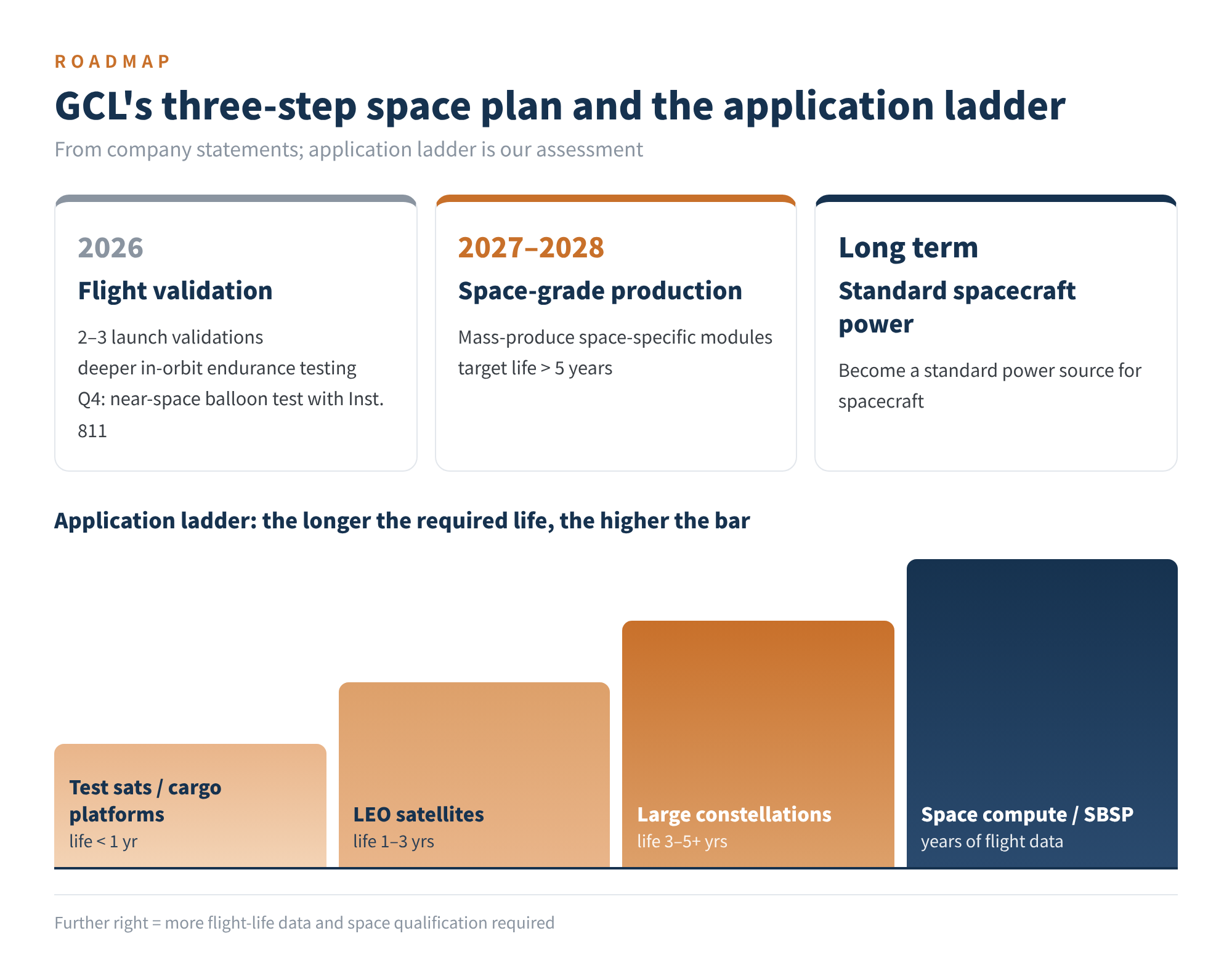
Figure 5 GCL's three-step space plan and the application ladder
Taking the industry's current state into account, our view of the outlook is:
- Near term (1–3 years): the most realistic entry points are LEO satellites with 1–3-year design lives, test satellites and cargo platforms. Tian Qingyong has also said that, once certified, the modules could first serve LEO satellites with lower lifetime requirements. At this stage the competition is over reliability data, not efficiency records.
- Medium term (3–5 years): tandem technology plus flexible roll-out solar arrays entering large constellations. The real barrier is a space-grade qualification system: equivalence models linking ground-accelerated radiation and thermal cycling to in-orbit degradation, plus a space-grade encapsulant supply chain.
- Long term: space computing and space-based solar power offer bigger horizons, but they need years of in-orbit evidence, not one or two ride-alongs.
There is a deeper meaning for the industry too. The first practical application of solar cells was in space: the Vanguard 1 satellite of 1958 used silicon cells. More than half a century later, perovskites are following a similar path: using high-value, less cost-sensitive space applications to provide an early market and cash flow while the new technology ramps up production. At the same time, space's harsh conditions will force upgrades to materials, encapsulation and electrode systems that ultimately feed back into the reliability of terrestrial modules.
06Final thoughts
It must be stressed that integration ≠ successful launch ≠ successful validation. As of 22 October, we have not seen public reports of this mission reaching orbit or of in-orbit data. Its real value can only be judged after the spacecraft reaches orbit and data come back.
But at least one clear signal is visible: perovskite companies are no longer content with "checking in to space", and have started to accumulate the data needed for space power systematically, at the pace of aerospace engineering.
On the ground, perovskites must compete on price with ultra-low-cost silicon; in space, they face an exam that is harder, but also fairer. We will keep following the data disclosed from this in-orbit test.
References
- Renmin Caixun / STCN: Kunshan GCL Optoelectronics single-junction perovskite modules complete integration for in-orbit validation mission, 2026-10-01
- MoneyDJ: GCL Optoelectronics single-junction perovskite modules begin LEO performance validation, 2026-10-01
- GCL official website: World's first space flight test of perovskite modules a complete success, 2023-12
- Securities Times: GCL Optoelectronics GM Tian Qingyong on efficiency and stability as top R&D priorities
- Cailian Press / Sina Finance: reports on GCL Technology's 2025 results briefing, 2026-03-31
- Tencent News: GCL Optoelectronics plans near-space perovskite validation with Institute 811 in Q4, 2026-03-31
- Tencent News: GCL Optoelectronics raises another RMB 100 million+; how far are perovskites from space?, 2026-08-03
- Caiwen News: GCL Optoelectronics connects GW-scale perovskite line; chairman Fan Bin expects 100 MW+ output in 2027, 2026-09-18
- China Powder Network: GCL Technology's big transformation: is perovskite the next growth engine?
A PV R&D and technology team with 10+ years of experience | In-depth technical knowledge sharing
Materials · Reliability · Failure Analysis · Standards & Certification · Products · Processes
Exploring AI + PV; collaboration welcome
Disclaimer:
1. Original content reflects the authors' personal views only, is for reference only and does not constitute investment advice.
2. Reposted and cited content is credited to its source, out of respect for original work.
3. Some content was produced with AI assistance (chart generation, data retrieval, concept explanations, etc.); the core framework and key content were written by our technical team and reviewed by people.
4. If anything is inaccurate or infringes your rights, please leave a message or contact us and we will deal with it.