
Nearly CNY 100 Million on "Roll-Up Solar Wings": Space PV Through the Eyes of a PV Engineer
Key points
In September, Shanghai Xingyi Xinneng ("Shangyi"), a company in Jiading, Shanghai, founded less than a year earlier, announced a Pre-A strategic round reported at nearly CNY 100 million. Its plan is to build perovskite cells on a transparent polyimide film and roll the entire solar wing up for launch. Our view: the CPI material will pay off first, and perovskites in space will be judged by how many years of on-orbit data they accumulate.
Having worked on ground-mounted modules for many years, we want to use this news to discuss three things: what is new about this kind of solar wing, how its reliability exam differs from that of ground modules, and how far the field has come.
01The news itself
| Item | Details |
|---|---|
| Company | Shanghai Xingyi Xinneng Technology Co., Ltd. ("Shangyi"), reportedly founded January 2026, headquartered in Jiading, Shanghai |
| Team | Core R&D and founding team from the Shanghai Institute of Optics and Fine Mechanics (Chinese Academy of Sciences) system; took over the assets, staff and business of Hangzhou Shangyi Optoelectronics |
| This round | Pre-A strategic round, reported by STAR Market Daily at nearly CNY 100 million; IO Capital is lead financial adviser for follow-on financing |
| Investors | Junda Co., Shanghai Future Industry Fund, Lingang Lanwan Capital, Nanxun Luyao, and industry investors linked to Xinyang Semiconductor; existing shareholder Zhongke Shenguang added to its stake |
| Use of funds | Technology iteration, space-environment testing and on-orbit satellite validation |
Table 1 The facts at a glance
The investor to watch is Junda Co. This leading PV cell maker announced in January that it had invested CNY 30 million for about 16.67% of Xingyi Xinneng, and the two also have a joint venture, Jietai Aerospace, that makes aerospace-grade CPI film. Ground PV cell makers heading for space has been a clear trend in the industry this year.
02Why roll up a solar wing?
The solar wing is a satellite's power plant. A conventional rigid wing uses gallium arsenide cells bonded to an aluminium honeycomb substrate under a glass coverslip. It is mature and reliable, but its areal mass is typically 20–30 kg/kW, equivalent to a specific power of only 33–50 W/kg, and it can account for up to 35%–40% of the satellite's mass.
Per-satellite power in low Earth orbit (LEO) constellations keeps rising, as communications payloads and on-board computing consume more and more power. Wings must get bigger, but mass and launch volume cannot grow with them. That is what flexible roll-out wings are for: for the same power-generating area, stowed volume can be more than 60% smaller than a rigid design.
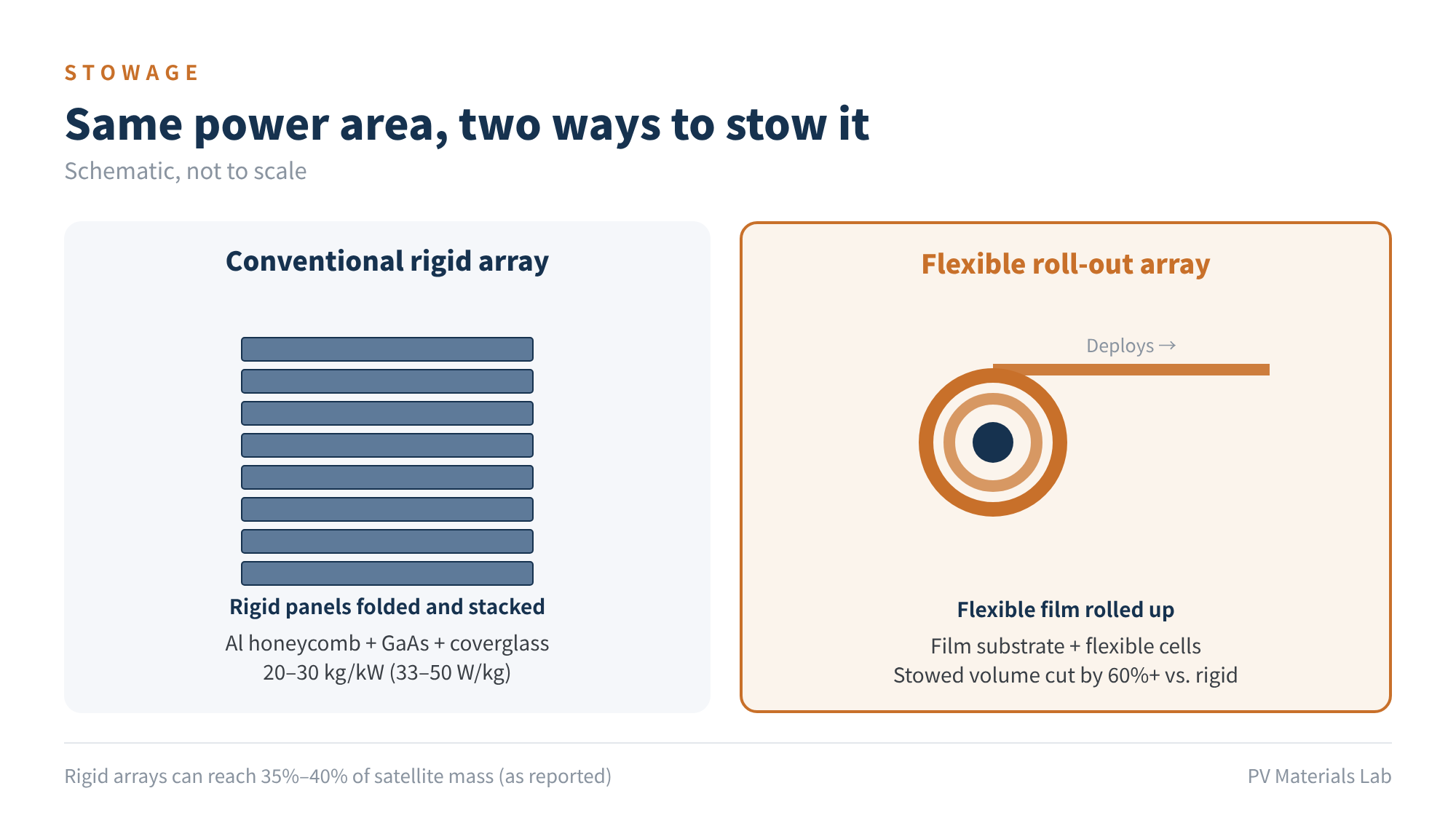
Figure 1 Same power area, two ways to stow it
Flexible wings are not new in themselves: the roll-out arrays later added to the International Space Station and the flexible wings on China's space station are both of this kind. What is new is the aim of making them cheap enough to use on thousands of commercial satellites.
03The company's approach: two routes merged into one
Space PV currently has two lines of evolution. One changes the encapsulation, replacing cerium-doped glass coverslips with CPI film; the other changes the cell, replacing gallium arsenide or silicon with perovskite. Shangyi is doing both: space-grade CPI serves as both substrate and protective layer, with a perovskite cell sandwiched between.
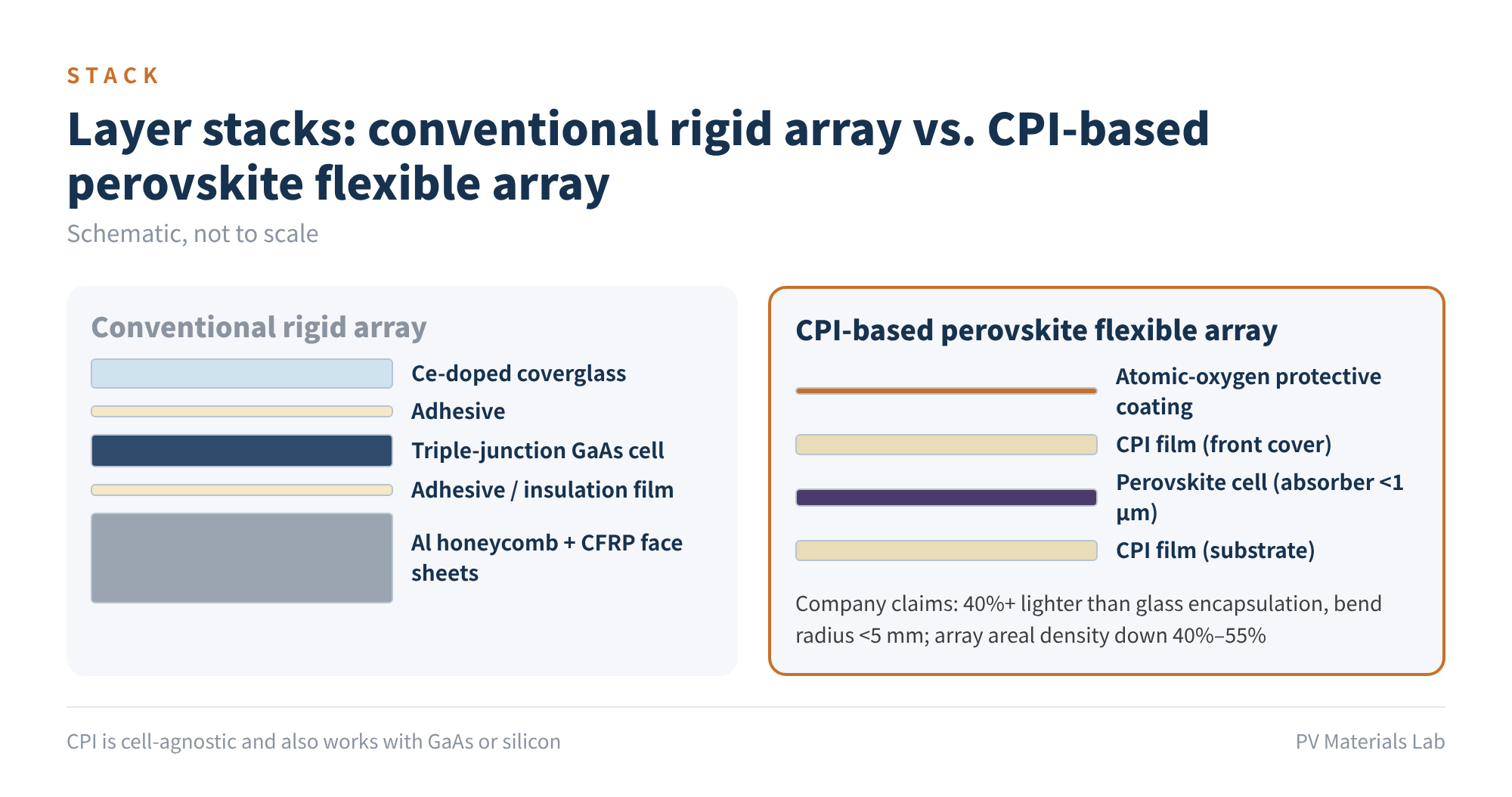
Figure 2 Layer stacks of a conventional rigid wing and a CPI-based perovskite flexible wing (not to scale)
First, CPI
CPI is colourless transparent polyimide. It does not generate power; it transmits light, carries load and protects. According to reports, it is more than 40% lighter than glass encapsulation and can bend to a radius below 5 mm; the company says wing areal density drops by 40%–55% and overall launch cost per satellite in LEO falls by 15%–20%.
More importantly, it is cell-agnostic: it works with gallium arsenide, silicon or perovskite. So the company's strategy is to do business with CPI film first while validating perovskite cells along the way. In our view, this is the most pragmatic part of the whole plan.
Then, perovskite
A perovskite absorber is less than 1 micron thick, a natural fit for thin, light, flexible devices. Reports mention a "single-junction theoretical efficiency of 33.7%". To clarify: 33.7% is the Shockley–Queisser limit for any single-junction cell, whatever the material; perovskite's advantage is that its bandgap can be tuned close to the optimum. Also, the space spectrum is AM0, so the same cell's efficiency figure is somewhat lower than under terrestrial AM1.5; numbers from different sources cannot be compared directly.
One detail from an interview is telling: they have set the cell size at 5 cm × 5 cm. Space power systems favour high voltage and low current, so many small cells in series fit well; a small area also sidesteps perovskite's biggest terrestrial headaches, large-area uniformity and yield, and makes affordable equipment and processes that would be too costly for ground mass production. Weaknesses that matter on the ground matter much less in space.
04Reliability: a different exam paper
For anyone working on ground-module reliability, this is the part most worth reading.
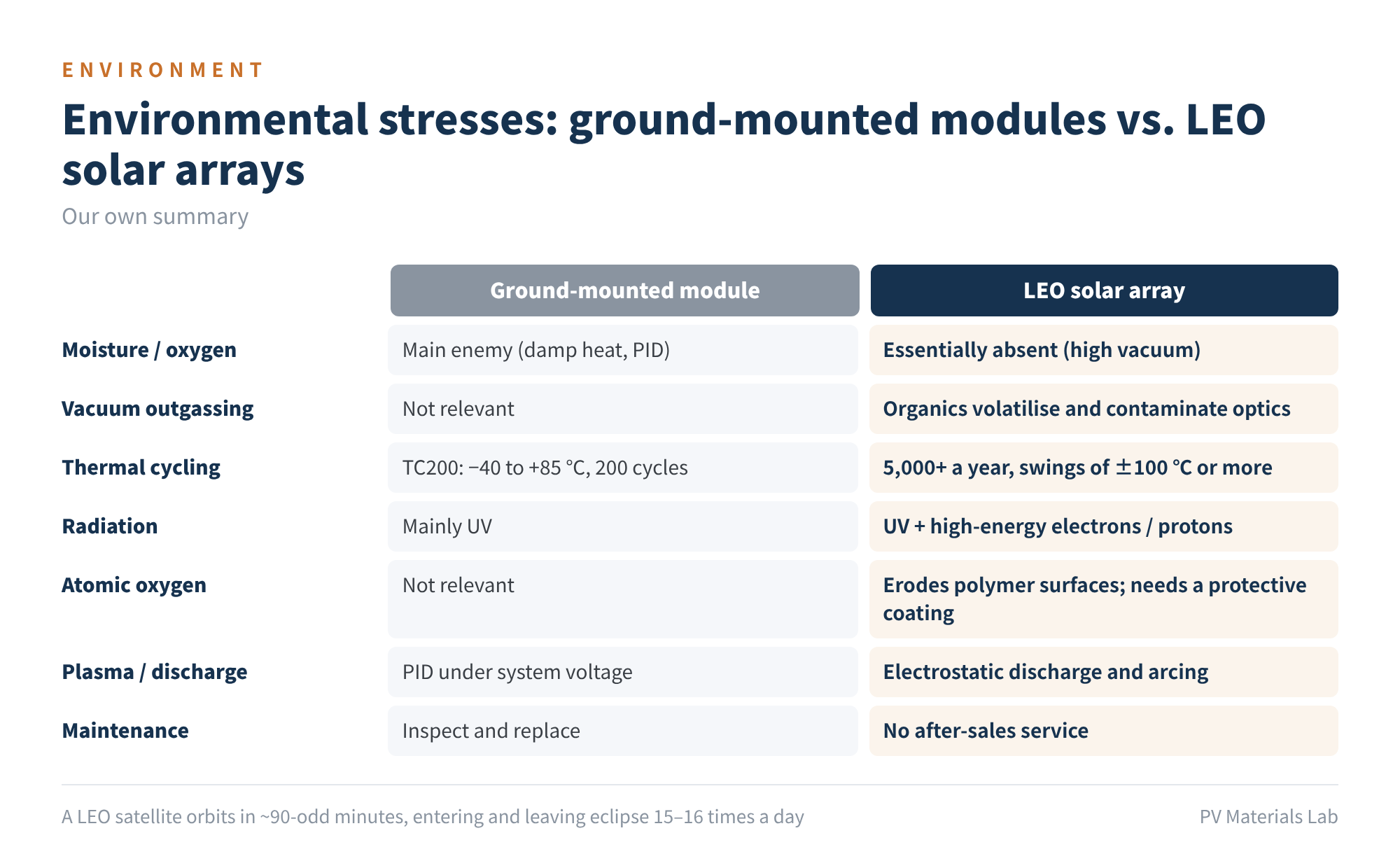
Figure 3 Environmental stresses on ground-mounted modules and LEO solar wings
- Moisture is gone; outgassing arrives. On the ground, perovskites fear water and oxygen above all; in orbit it is high vacuum, so the biggest enemy is absent. The price is vacuum outgassing: volatilisation of organic components under vacuum and heat, and contamination of optical surfaces by adhesive outgassing.
- Thermal cycling goes from elective to core course. IEC 61215's TC200 is 200 cycles between −40 ℃ and +85 ℃. A LEO satellite circles the Earth in ninety-odd minutes and passes in and out of eclipse fifteen or sixteen times a day, more than 5,000 times a year, with far larger temperature swings. The company's ground data show more than 90% efficiency retention after 4,000 thermal shocks between −120 ℃ and +120 ℃. Converted, 4,000 cycles is roughly eight or nine months of day–night cycles in LEO; five years in orbit means more than twenty thousand. A good start, but far from the finish line. The failure modes to watch are all familiar: interconnect fatigue, interface delamination and film cracking.
- Atomic oxygen is a LEO speciality. UV splits oxygen molecules in the residual atmosphere into atomic oxygen, which the satellite runs into at seven or eight kilometres a second. Polyimide is a classic "victim" in atomic-oxygen erosion studies. So whether CPI can fly depends not just on the film itself but on its protective surface coating, and on whether that coating cracks after repeated bending and thermal shock. Shangyi's CEO also named coatings, adhesives and interface matching as key issues in an interview.
- High voltage brings its own trouble. A high-voltage, low-current array immersed in orbital plasma faces electrostatic discharge and arcing. Anyone who has worked on PID will find this familiar: once system voltage rises, materials and insulation design have to be recalculated, even though the mechanisms differ.
- No after-sales service. A ground plant can be inspected and modules replaced; a satellite cannot. Every problem has to be thought through before launch.
4,000 thermal shocks equal roughly eight or nine months of LEO day–night cycles, while five years in orbit need more than twenty thousand: ground data are a starting point, not the finish line.
05How far has it come?
Space hardware lives by its "flight heritage": without having flown in orbit, it is hard to win orders. Shangyi is validating in three steps: materials first, then devices, then the system.
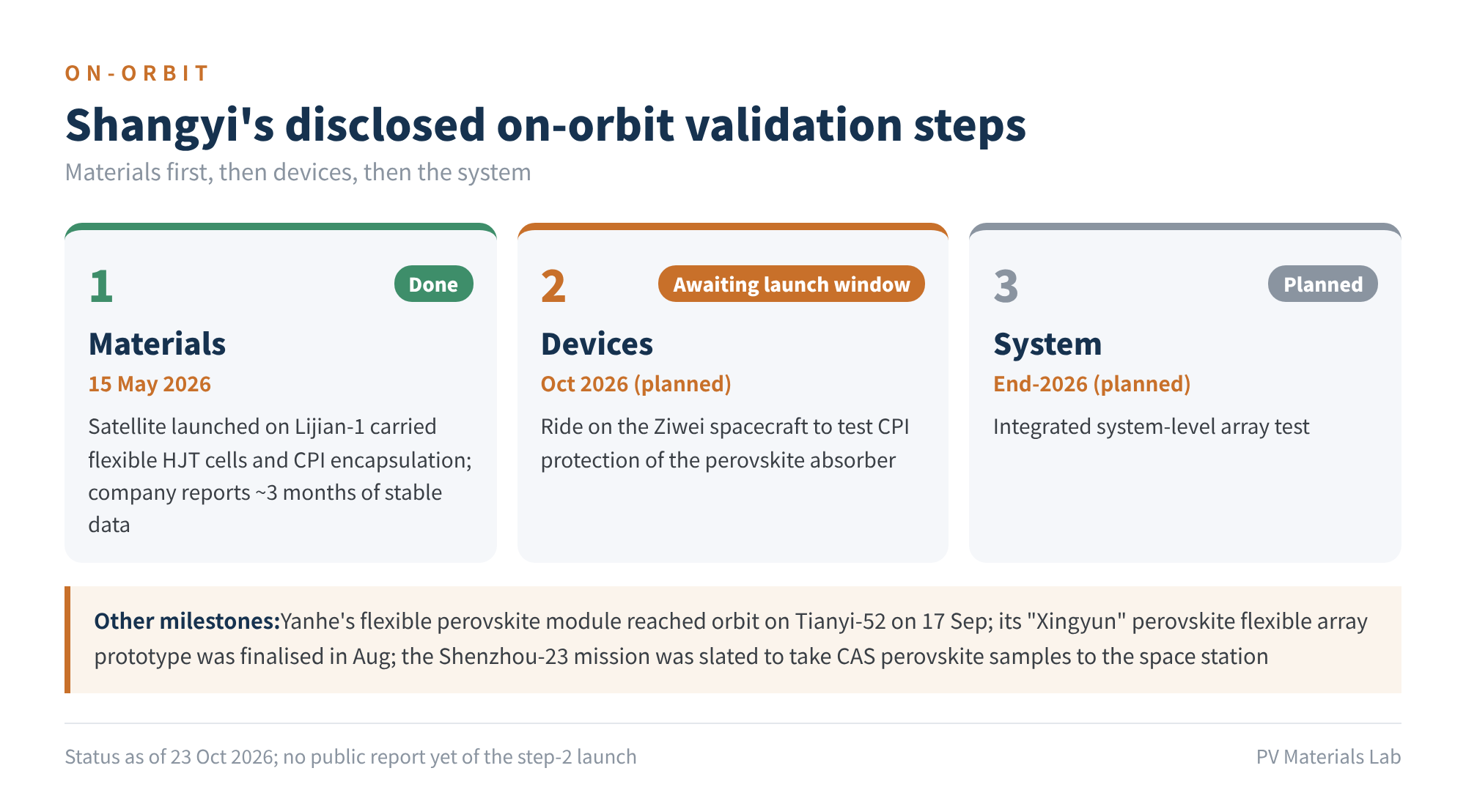
Figure 4 Shangyi's disclosed on-orbit validation steps
The first step is done. According to STAR Market Daily, a satellite launched on a Lijian-1 rocket on 15 May carried flexible heterojunction silicon cells and Shangyi's CPI encapsulation; the company says it has about three months of stable data. The second step was planned for October aboard the Ziwei spacecraft, to test how well CPI protects the perovskite absorber; as of 23 October we had not found any public report of this launch. The third step is integrated system-level validation by the end of the year.
Shangyi is not alone on this road:
- Yanhe Technology: in August its "Xingyun" perovskite flexible solar wing prototype was finalised, using a 0.1 mm fully flexible PI substrate, a stowage ratio of up to 35 times and 25%–30% less mass than conventional designs. On 17 September a flexible perovskite module rode Tianyi-52 into orbit on a Kuaizhou-11 rocket for long-term monitoring, described as China's first module-level, full-condition on-orbit test in commercial spaceflight. Notably, its founder has acknowledged that the expected lifetime of current space perovskite cells is only about six months.
- Institute of Semiconductors, CAS: single-junction and tandem perovskite samples were slated to go to China's space station on the Shenzhou-23 mission for long-term testing.
- Hengxing Liliang: began building a perovskite space-PV pilot line in May, with planned investment of about CNY 150 million.
- GCL Optoelectronics: plans near-space environment tests on a high-altitude balloon in the fourth quarter.
- General Design Department of CAST (the Fifth Academy): the mainstay of conventional solar wings, which said in 2025 it could make 400 sets a year and is expanding flexible-wing capacity.
On the cell side, three routes are still being validated in parallel, and none has yet won:
| Route | Status | Strengths | Weaknesses |
|---|---|---|---|
| Triple-junction GaAs | On-orbit mainstream, ~30% efficiency | Efficiency and reliability proven over the long term | Expensive, limited capacity |
| Ultra-thin silicon / heterojunction | Cost-down option for commercial LEO constellations | Mature ground supply chain, low cost | Lower efficiency |
| Perovskite | Early on-orbit validation | Light, thin, flexible, low theoretical cost | Long-term stability and scale manufacturing unproven |
Table 2 Three space cell routes compared
06The outlook, and our three views
The demand story is big. One industry forecast says LEO satellites in orbit worldwide could pass 300,000 by 2031, an optimistic view. Another market study estimates the global market for flexible space solar arrays at about USD 1.12 billion in 2024, possibly reaching USD 4.36 billion by 2033, a compound annual growth rate of about 16%. Further out lie computing constellations in space; Shangyi is a member of Shanghai's "Xingshu Plan" computing constellation.
- Materials, not cells, will most likely pay off first. CPI film works with many kinds of cell, its validation path is short, and switching carries little risk for customers. Perovskite cells offer more upside, but come later.
- Perovskites in space will be judged by years of on-orbit data. Ground silicon modules took decades to map IEC test sequences to outdoor failures one by one. That map does not yet exist for perovskites in space, and nobody can yet say how well ground accelerated tests represent on-orbit behaviour. Public on-orbit data are counted in months; customers want years. A peer's own expectation of a "six-month lifetime" shows the gap.
- This is an opportunity for ground PV people. Encapsulation materials, interconnects, reliability test design and failure analysis all transfer. What needs adding is the space-environment course: atomic oxygen, radiation, vacuum. Space has its own standards, such as ECSS-E-ST-20-08 (photovoltaic assemblies and components) and AIAA S-111 (qualification of space solar cells), which are well worth reading.
Most of the reduction and benchmark figures in this article are the company's own claims, and the funding amount is as reported by the media. The company is less than a year old and still at an early stage of on-orbit validation.
07Final thoughts
"Roll-up solar wings" take some of ground PV's old skills (encapsulation, interconnection, reliability) into a completely different exam hall. Moisture exits the stage; atomic oxygen, vacuum outgassing, tens of thousands of hot–cold cycles and plasma take its place.
The ticket into space PV is not efficiency but flight heritage; the next milestone to watch is the data from the Ziwei spacecraft flight.
What do you think of ground PV companies "heading for space"? We would be glad to hear from you.
References
- 36Kr: "SIOM-incubated space PV company raises nearly CNY 100 million, backed by Junda, Shanghai Future Industry Fund and others", 11 Sep 2026 (in Chinese)
- STAR Market Daily: "Space PV company Shangyi completes nearly CNY 100 million financing", 11 Sep 2026; "Shanghai Future Industry Fund invests in space PV as Xingyi Xinneng closes new round", 2 Sep 2026 (in Chinese)
- ChinaVenture / Sina Finance: reports on Shangyi's Pre-A strategic round, 11 Sep 2026 (in Chinese)
- 10jqka: Junda invests CNY 30 million in Xingyi Xinneng, 23 Jan 2026 (in Chinese)
- Science and Technology Daily: "China's first module-level on-orbit validation of flexible perovskite PV begins", 17 Sep 2026; "'Xingyun' perovskite flexible solar wing reaches engineering readiness", 14 Aug 2026 (in Chinese)
- Perovskite-Info: "China to test perovskite PV on Shenzhou-23 space station mission", May 2026
- China Academy of Space Technology: "New-generation flexible solar wing from the Fifth Academy's General Design Department wins more commercial orders", May 2025 (in Chinese)
- Weilai Tianji: "Ten new commercial spaceflight sectors of 2025: flexible solar wings", Dec 2025 (in Chinese)
- ECSS-E-ST-20-08 Photovoltaic assemblies and components; AIAA S-111 Qualification and Quality Requirements for Space Solar Cells
A PV R&D and technology team with 10+ years of experience | In-depth technical knowledge sharing
Materials · Reliability · Failure Analysis · Standards & Certification · Products · Processes
Exploring AI + PV; collaboration welcome
Disclaimer:
1. Original content reflects the authors' personal views only, is for reference only and does not constitute investment advice.
2. Reposted and cited content is credited to its source, out of respect for original work.
3. Some content was produced with AI assistance (chart generation, data retrieval, concept explanations, etc.); the core framework and key content were written by our technical team and reviewed by people.
4. If anything is inaccurate or infringes your rights, please leave a message or contact us and we will deal with it.