
Payrolls Up Just 29,000, Rate-Hike Bets Cool: Can PV Breathe Easier?
Bottom line up front
US nonfarm payrolls rose just 29,000 in September, far below expectations, and the odds of another hike in October fell sharply. For PV, though, this means "one less tap on the brake", not "foot on the accelerator": rates remain high in absolute terms, the September CPI that followed came in hot, and a December hike is still the market's base case. In the short term, the industry's main storyline is still supply-side consolidation.
At 20:30 Beijing time on 2 October, the US Bureau of Labor Statistics (BLS) released the September employment report. During China's National Day holiday, the data became the focus of global markets because it bore directly on one question: would the Fed hike for a second straight time at the end of October?
PV is a classic capital-intensive, long-cycle industry, and interest rates, exchange rates and silver prices all feed into project returns and manufacturing costs. This article first sets out the data, then looks at what it means for PV, and finally adds what has happened in the two weeks since.
01The data: three measures weak at once
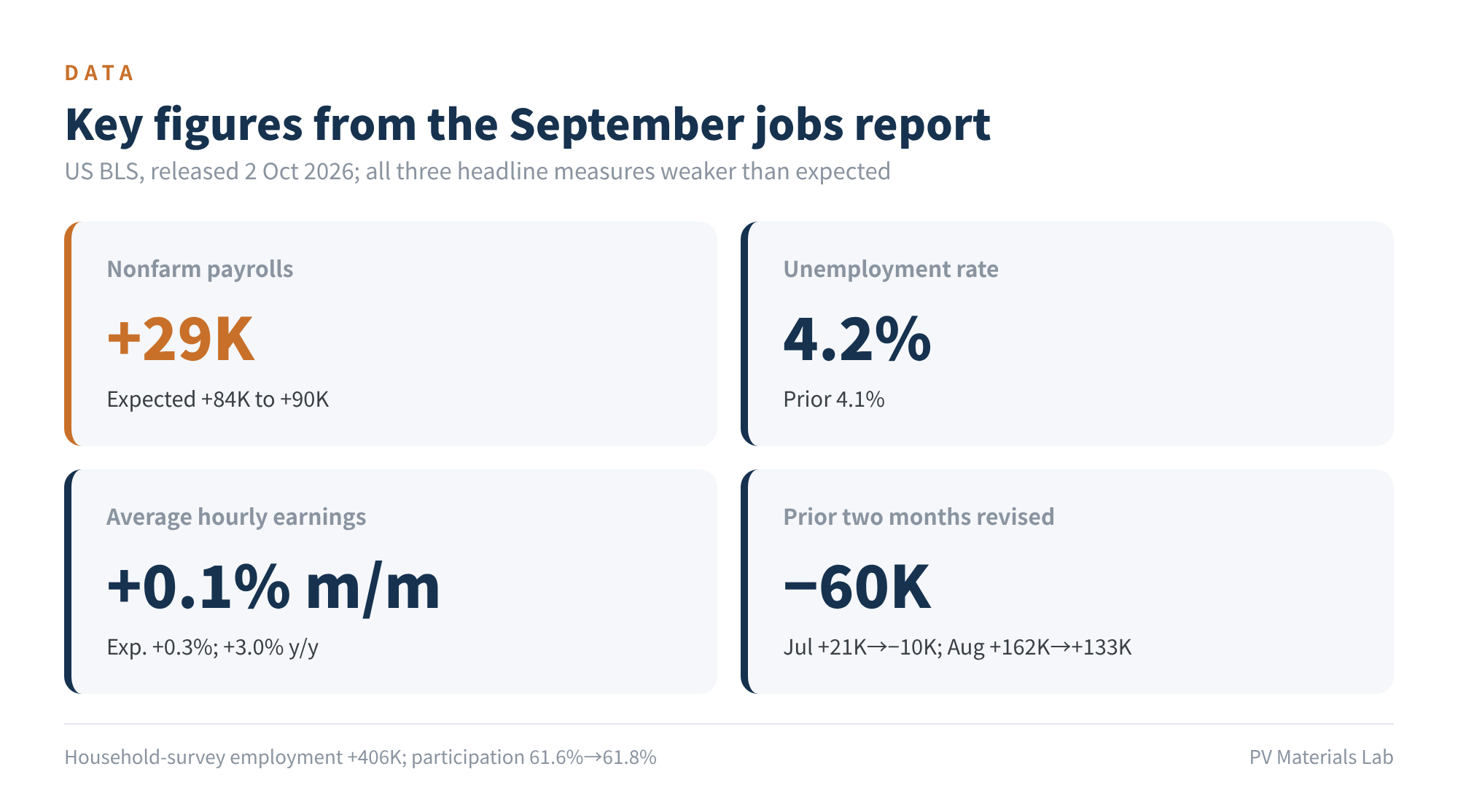
Figure 1 Key figures from the September jobs report
Job growth, the unemployment rate and wage growth were all weaker than expected:
- Nonfarm payrolls +29,000. The Dow Jones consensus was +84,000 and Bloomberg's survey about +90,000; the actual figure was below every economist's forecast in the Bloomberg survey.
- Unemployment rate 4.2%. Up 0.1 percentage point from 4.1%.
- Average hourly earnings +0.1% m/m. Expected +0.3%; +3.0% y/y (expected +3.1%).
- Prior two months revised down by a combined 60,000. July went from +21,000 to −10,000, and August from +162,000 to +133,000.
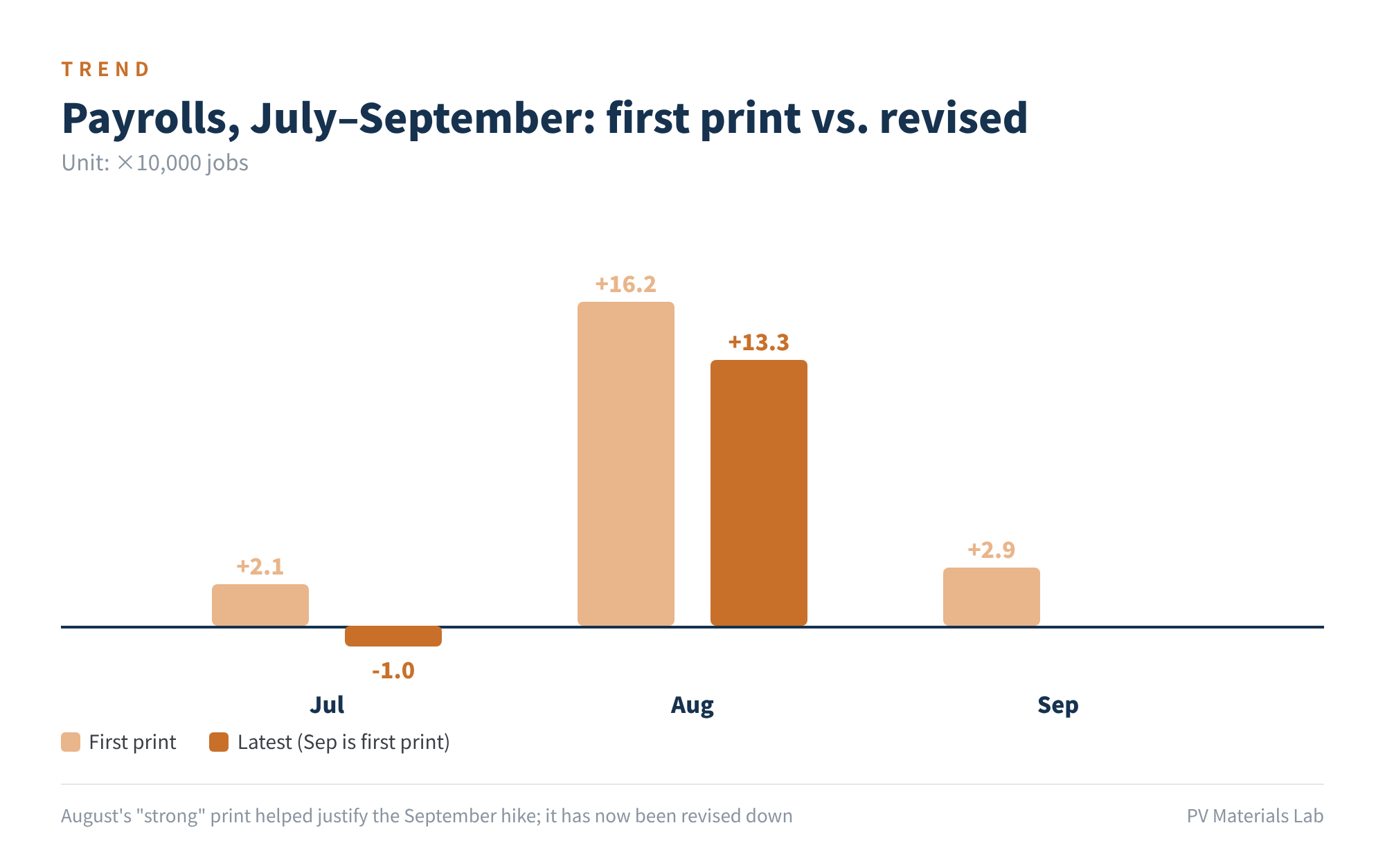
Figure 2 Payrolls, July–September: first print vs. revised (×10,000 jobs)
August's "strong" print of 162,000 was one of the key justifications for the September hike. With it revised down and September at only 29,000, the job-growth trend looks weaker than it did a month ago.
Two points need balancing, though. First, the household survey was not bad: the participation rate rose from 61.6% to 61.8% and household-survey employment rose by about 406,000, so part of the rise in unemployment reflects more people returning to look for work. Second, the BLS itself described employment and unemployment as "little changed", with the unemployment rate in a 4.1%–4.3% range since March. The more accurate description is therefore: job growth has slowed markedly, but there is no wave of layoffs yet.
02The mix: construction and manufacturing still hiring
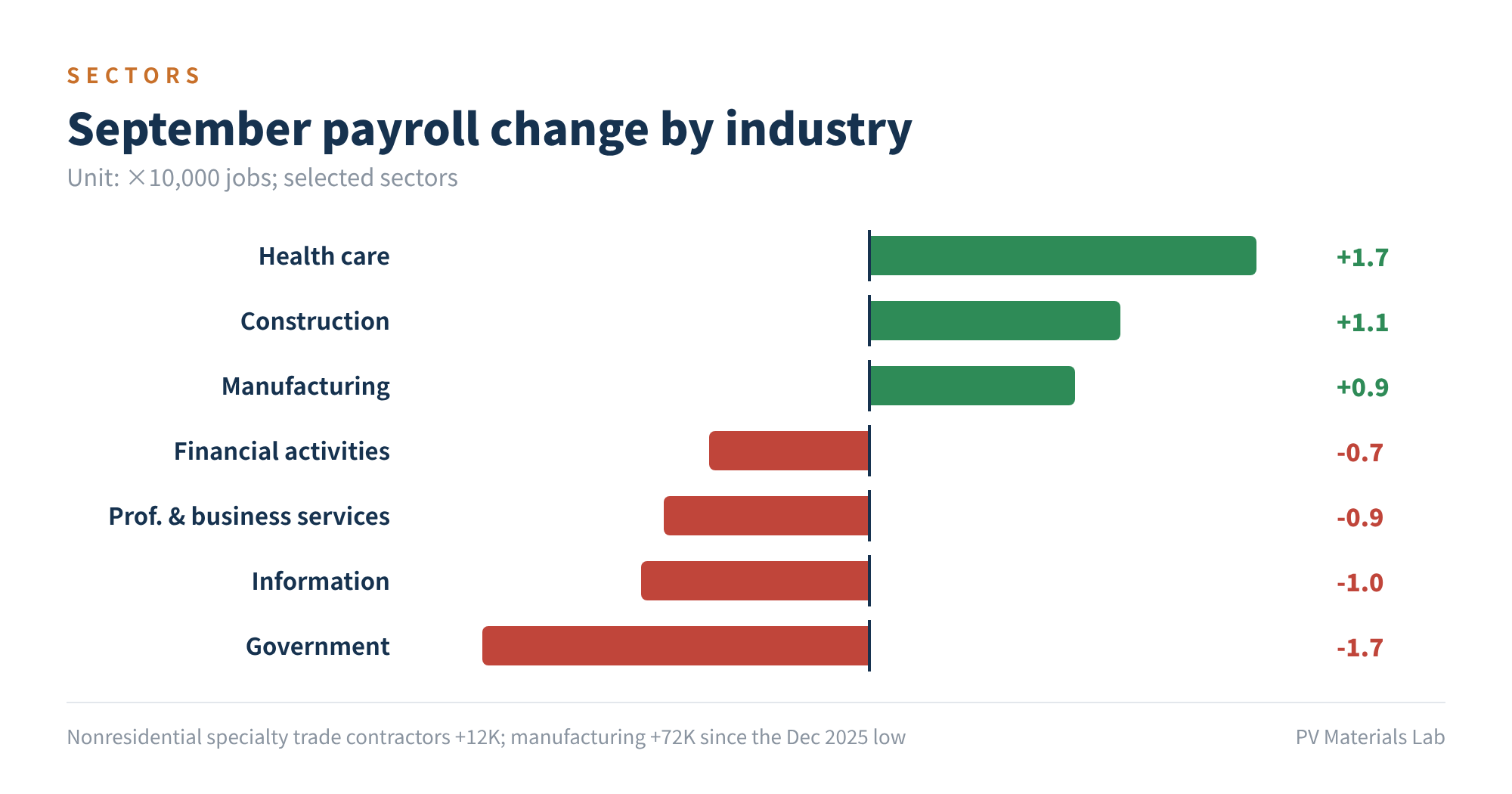
Figure 3 September payroll change by industry (×10,000 jobs)
By industry, the drag came mainly from government (−17,000), information (−10,000), professional and business services (−9,000) and financial activities (−7,000). Health care was still the largest contributor, but its +17,000 was only half its average monthly gain over the previous 12 months (+33,000).
The two industries closest to energy and manufacturing were actually bright spots: construction added 11,000, including 12,000 at nonresidential specialty trade contractors, and manufacturing added 9,000, up a cumulative 72,000 since its December 2025 low. Hiring tied to physical investment did not fall along with the headline.
03The market: an October hike briefly all but ruled out
To read the market reaction, start with the background. US inflation has stayed high this year under an energy-price shock. On 16 September the Fed raised rates by 25 basis points to 3.75%–4.00%, its first hike since 2023, and hinted at one more this year. On 1 October the 10-year Treasury yield briefly touched 5.34%, its highest since 2002.
After the jobs report:
- Rate expectations: according to CNBC, traders saw an October hike as very unlikely; on the prediction platform Kalshi, the odds of an October hike were about 18%, down from nearly 70% a week earlier. CME FedWatch, however, still put the odds of a December hike above 75%.
- Treasuries: 2- to 7-year yields fell at least 10 basis points intraday, and the 10-year briefly dipped to around 5.18% before paring the move.
- US equities: the Dow rose about 0.49% to 51,177.44 and the Nasdaq 1.19% to 27,190.86, hitting an intraday record.
- Precious metals: spot gold rose more than 1% to about $4,224/oz, and spot silver about 1.2% to about $61.7/oz.
In other words, the market was trading "no move in October", not "the end of the hiking cycle". That distinction matters for the views below.
04Transmission: four channels from payrolls to PV
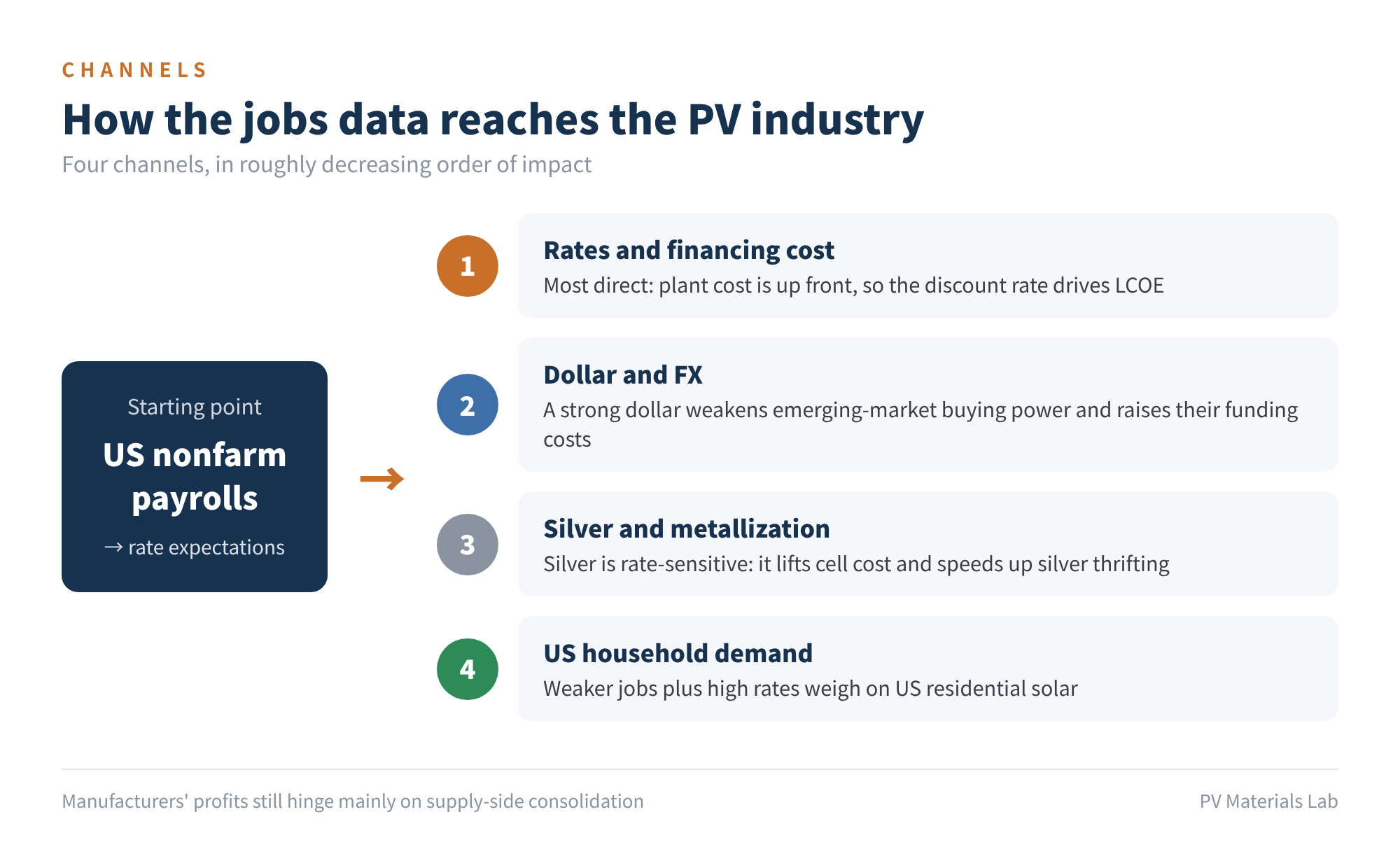
Figure 4 How the jobs data reaches the PV industry
Channel 1: interest rates and financing cost (the most direct)
Almost all of a solar plant's cost is incurred during construction and recovered through 25+ years of electricity sales, so financing cost affects the levelized cost of electricity (LCOE) far more than for fuel-based generation. We ran a simplified calculation: with a 25-year operating life and all else equal, each 1-point rise in the project discount rate raises LCOE by about 8%–9%.
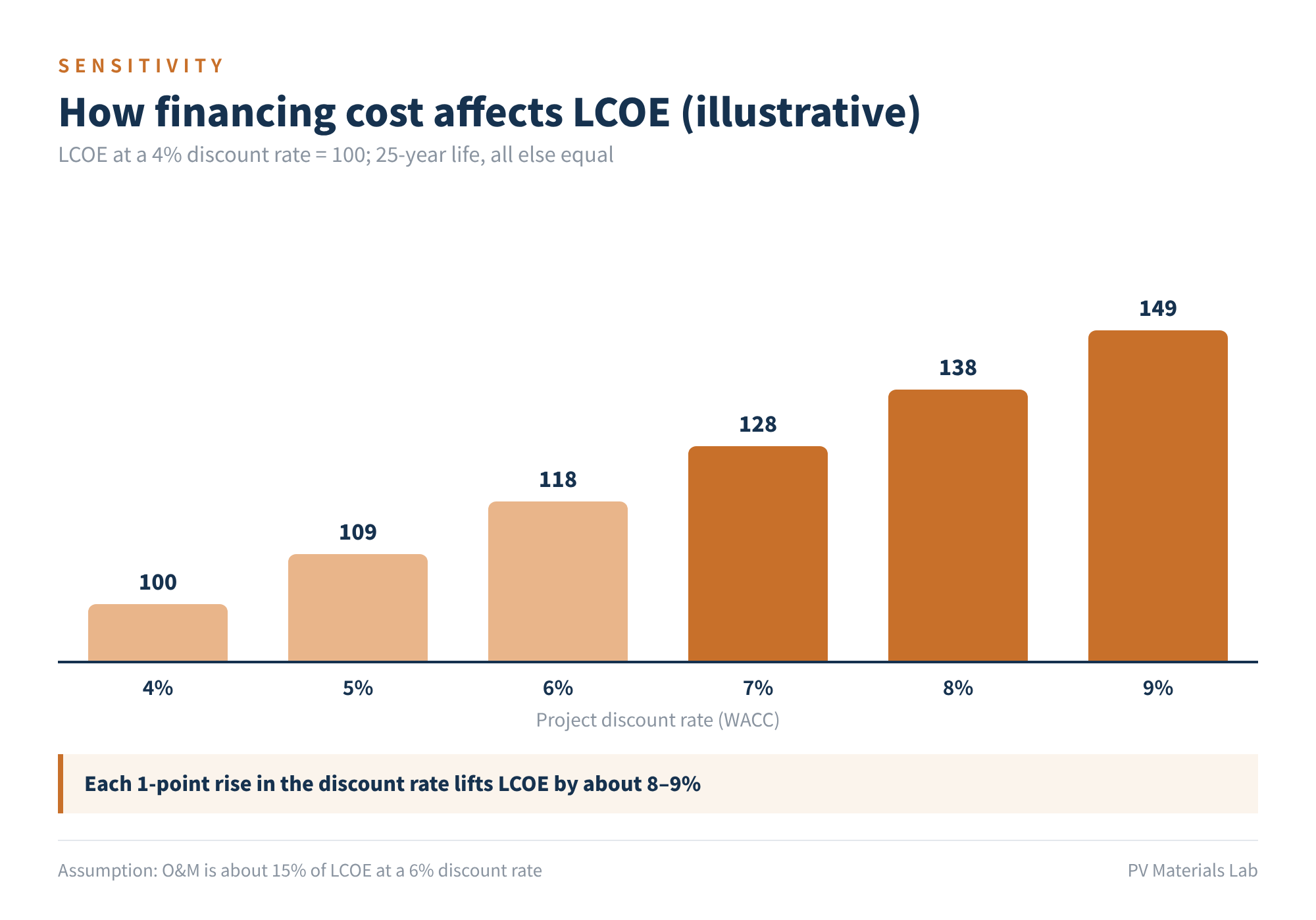
Figure 5 How financing cost affects LCOE (illustrative)
So cooler hike expectations and lower long-term rates are a marginal positive for downstream plant investment. But to be clear-eyed: even after falling back, the 10-year Treasury yield is still around 5.1%–5.2%, near its highest in more than two decades. Financing conditions for overseas projects have merely stopped getting worse.
Channel 2: the dollar and exchange rates
The dollar index had been setting new highs for the year on the back of Treasury yields. A strong dollar shows up as FX gains on exporters' books, but for emerging markets such as the Middle East, Latin America, South Asia and Africa, which import modules priced in dollars, it means weaker purchasing power and dearer financing. If hike expectations keep cooling and the dollar eases, pressure on emerging-market demand will ease too, and these markets have been an important source of growth for Chinese module exports over the past two years.
Channel 3: silver and metallization cost
Silver is both a financial and an industrial metal, and when rate expectations turn dovish it usually moves more than gold. Silver rose with gold after the jobs data, a cost-side disturbance for cell makers. The industry is becoming less sensitive to silver prices, though: the Silver Institute expects PV silver demand to fall by about 19% in 2026, as low- and zero-silver solutions such as silver-coated copper, copper paste and copper plating scale up. Every spike in the silver price reinforces that trend.
Channel 4: US household demand
Weaker employment hits US residential solar directly. The Q3 report from SEIA and Wood Mackenzie, published in September, showed 11.4 GWdc installed in Q2, up 45% year on year, with utility-scale at 9.6 GW, up 61%. Residential was just 995 MW, down 12% and the lowest quarter in five years, with a 23% contraction forecast for full-year 2026. Installers report longer sales cycles, and homeowners commonly cite personal finances and economic uncertainty. With slower hiring on top of high rates, residential is unlikely to recover soon. Utility-scale is underpinned by 216–240 GW of previously safe-harboured projects and is less affected by a single month's jobs data.
05Commentary: three views
- First, the direction has improved, the level has not. One weak jobs report has only pushed the October hike back; a December hike remains the market's base case. For PV project financing, rates moving from "possibly higher" to "not higher for now" is good news, but it is a long way from the demand expansion a cutting cycle would bring. Reading this data as a "liquidity turning point" is premature.
- Second, for China's manufacturers, the supply side is still the main storyline. According to the Silicon Industry Branch, polysilicon operating rates are expected to fall to about 35% from October, mainstream module quotes are around 0.69–0.71 CNY/W, and export tax rebates on PV products were abolished from 1 April. These factors matter far more to company earnings than a single jobs report. Macro data sets the water level of overseas demand; the pace of the industry's own consolidation decides who survives until that level rises.
- Third, in a high-rate era, reliability is worth more. As a technical team, this is the point we most want to stress. The higher the cost of finance, the stricter investors become about the certainty of energy yield: first-year degradation, long-term degradation rate, PID and thermal-cycling performance, and whether warranties can actually be honoured all get priced into financing terms. At a 4% interest rate, the same module competes on upfront price; at 7%, it competes on how credible its output is in every one of 25 years. Products backed by solid reliability data and certification records have more pricing power in this environment.
06Two weeks on: inflation running hot, a December hike still the base case
Since the original article was published, several key data points have landed (as of 21 October):
- 7 October, minutes of the Fed's September meeting: the September hike was unanimous, and most participants saw a need for at least one more 25-basis-point hike this year. With data weakening after the meeting, however, New York Fed President John Williams said there was "no need for urgency" and the Fed had time to gather more information.
- 14 October, US September CPI: 3.7% year on year (prior 3.4%, expected 3.6%) and 0.6% month on month; energy was up 20.4% year on year and gasoline 9.1% month on month, accounting for more than half of the monthly increase. Inflation did not cool along with employment. After the release, the odds of an October hike briefly rose to about 40%.
- As of 21 October: with the 3 November midterm elections approaching, markets broadly see an October hike as unlikely; various measures put the odds of a hike on 28 October back at 12%–20%, while a December hike is still seen as likely. The 10-year Treasury yield is around 5.1%, about 25 basis points below its early-October peak.
This bears out the earlier view: a weak jobs report only delayed the timing of the hike. As long as inflation does not come down, rates will struggle to fall in earnest, and high financing costs for overseas PV projects will persist for a while.
07What to watch next
| Date | Event | What to watch |
|---|---|---|
| 28 Oct | FOMC decision | How the Fed frames December while holding |
| 3 Nov | US midterm elections | Policy expectations and risk appetite |
| 6 Nov | US October jobs report | Whether the slowdown is a trend or a one-off |
| 9 Dec | FOMC decision | Whether a second hike this year materialises |
08Final thoughts
For PV, whether rates can truly fall depends on inflation and employment cooling together. September delivered the opposite combination, weaker jobs with sticky inflation, which makes the Fed's position harder and keeps long-term rates elevated.
The weak jobs report means one less tap on PV's brake, but high rates have not gone away. Macro sets the level of demand, supply-side consolidation decides who survives, and in a high-rate environment, solid reliability data is pricing power.
Has your company felt the change in financing conditions on overseas projects? We would be glad to hear from you.
References
- U.S. Bureau of Labor Statistics. The Employment Situation — September 2026, 2 Oct 2026: bls.gov
- U.S. Bureau of Labor Statistics. Consumer Price Index — September 2026, 14 Oct 2026: bls.gov
- CBS News: September CPI report shows inflation accelerated to 3.7% as energy costs soared: cbsnews.com
- Yahoo Finance: The Fed was unanimous about raising rates in September. Economic signals have since changed: yahoo.com
- Reporting on the September jobs report and market reaction by CNBC, Charles Schwab, Xinhua, Cailian Press, Sina Finance and Trading Economics, 2–3 Oct 2026
- SEIA / Wood Mackenzie. US Solar Market Insight Q3 2026 (as reported by Mercom): mercomindia.com
- pv magazine: Silver demand from PV industry expected to drop 19% this year, Apr 2026: pv-magazine-usa.com
- Silicon Industry Branch of the China Nonferrous Metals Industry Association: polysilicon weekly reviews, Sep–Oct 2026 (in Chinese)
A PV R&D and technology team with 10+ years of experience | In-depth technical knowledge sharing
Materials · Reliability · Failure Analysis · Standards & Certification · Products · Processes
Exploring AI + PV; collaboration welcome
Disclaimer:
1. Original content reflects the authors' personal views only, is for reference only and does not constitute investment advice.
2. Reposted and cited content is credited to its source, out of respect for original work.
3. Some content was produced with AI assistance (chart generation, data retrieval, concept explanations, etc.); the core framework and key content were written by our technical team and reviewed by people.
4. If anything is inaccurate or infringes your rights, please leave a message or contact us and we will deal with it.