
First Price Rise in October: Three Module Makers Raise Prices — Is the Slide Over?
After several weeks of decline, the word "increase" finally appeared in module price reports this week. Look closer, though, and it was a week of both rises and cuts: some makers raised prices, others lowered them, and the weekly change in the price indices was only on the order of one-tenth of a percent. We break the weekly review down: which bins went up, which went down, why this is not yet a reversal, and which signals to watch next.
According to a survey by DataBM (数字新能源), six companies adjusted prices this week: three raised some quotes and four cut some. The numbers add up to seven because TCL Zhonghuan appears on both sides — up on some TOPCon models, down on some BC models.
| Technology | Direction | Manufacturers | Change (RMB/W) |
|---|---|---|---|
| TOPCon | Up | TCL Zhonghuan, GCL, Risen | +0.01 to 0.03 |
| TOPCon | Down | Astronergy, Gokin Solar, Skyworth PV | −0.02 to 0.03 |
| BC | Down | TCL Zhonghuan, Gokin Solar | −0.02 to 0.03 |
| HJT | Partly down | Leading makers, distributed quotes | Now 0.67–0.69 |
Table 1 Module price adjustments this week (source: DataBM; VAT included, freight excluded)
The price indices barely moved. As of October 23, the TOPCon 210mm index stood at RMB 0.7149/W, up 0.0013 week on week; TOPCon 210R at 0.7262, down 0.0006; HJT 210mm flat at 0.7000; and BC 210R at 0.8152, down 0.0007. In other words, the "first rise" amounts to only about 0.2% at the index level.
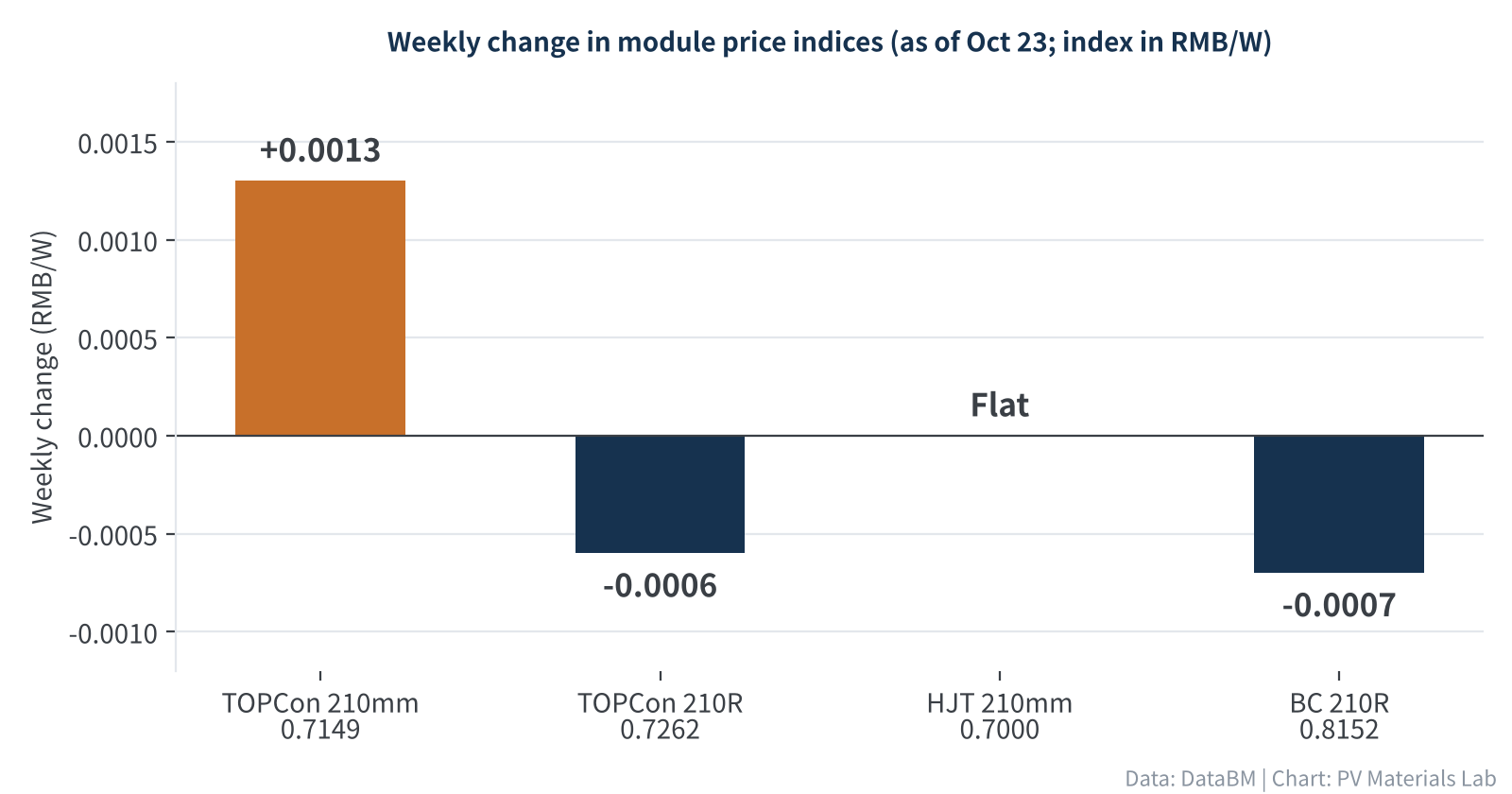
Figure 1 Week-on-week change in four module price indices (as of Oct 23)
Quote ranges: TOPCon RMB 0.65–0.77/W, BC 0.72–0.88/W, HJT 0.67–0.76/W. For TOPCon, leading makers' mainstream transactions sit at 0.67–0.75/W, their lower-efficiency products have reached 0.64–0.66/W, and tier-2/3 makers' mainstream transactions are at 0.64–0.69/W.
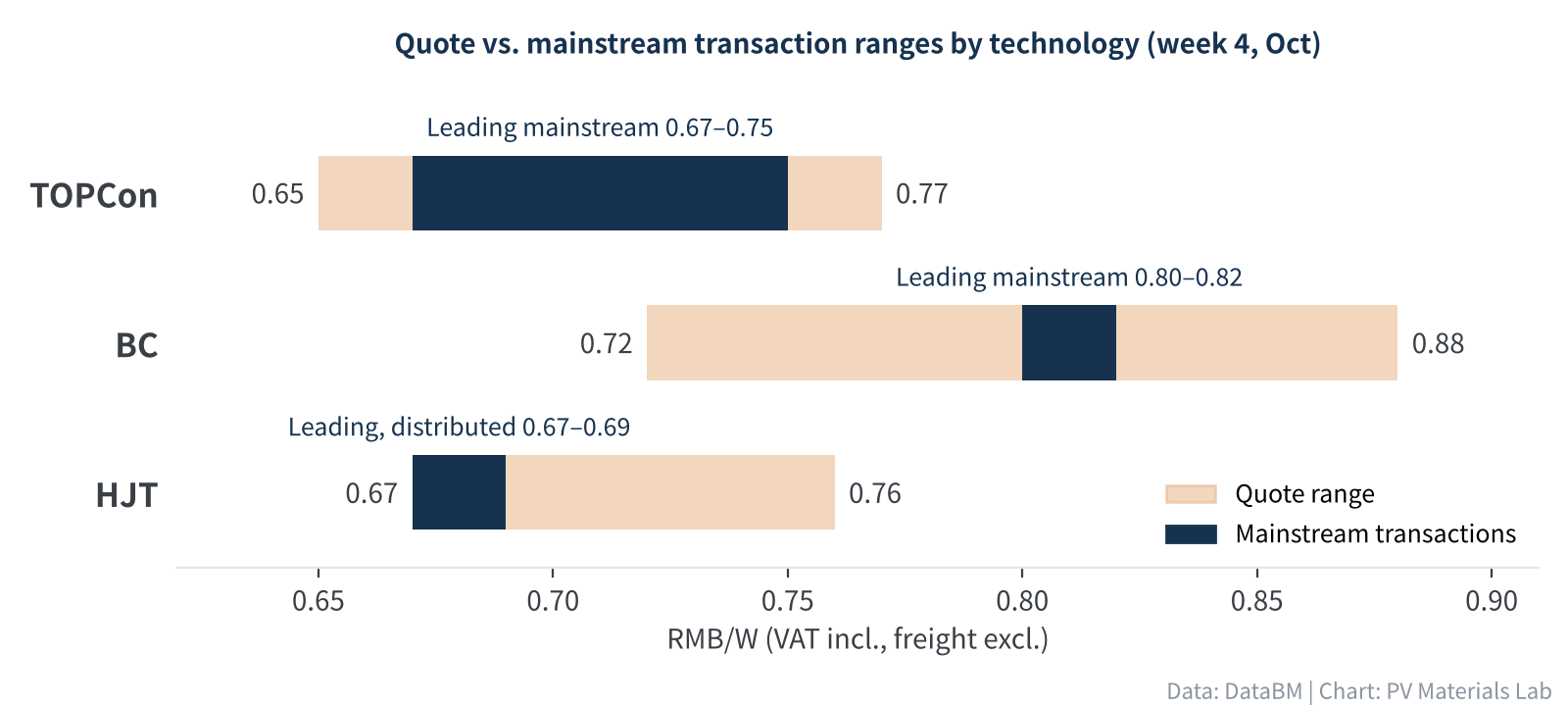
Figure 2 Quote ranges vs. mainstream transaction ranges by technology
This was not a portfolio-wide increase. It was concentrated in two power bins, each with a different driver:
630–640 W mid-size modules: tightening supply. This is where distributed-market inquiries are most concentrated (the other cluster is 720–725 W). Demand is relatively firm, so when supply tightens, quotes move first.
770–780 W large modules: channel restructuring. These are mostly sold through distribution platforms to the residential market; the higher quotes reflect channel pricing changes rather than broadly stronger end demand.
From a technology and manufacturing perspective, there is another factor behind the tight mid-size supply: China's mandatory energy-efficiency standard for modules and inverters takes effect on January 1, 2027, after which non-compliant products may not be sold domestically. pv magazine reports that the market expects lower cell output in October as lines are upgraded. With lines being retrofitted while mainstream orders still need filling, local shortages are no surprise.
Summary
The rise is essentially "popular bins in short supply + channel pricing adjustments" — a local, structural repair of quotes.
Cuts covered all three technologies — TOPCon, BC and HJT. Most were in bins previously quoted high and selling poorly; the goal is simple: hit Q4 shipment targets.
BC: TCL Zhonghuan and Gokin followed with cuts, mainly for 640–655 W. Transactions in that bin have dropped as low as RMB 0.72/W, while leading makers' mainstream BC transactions hold at 0.80–0.82/W.
HJT: Pricing is clearly split — spot orders are about RMB 0.05–0.06/W below utility-scale projects.
High-priced TOPCon bins: 645–650 W sells weakly because of its higher unit price; meanwhile leading makers' lower-efficiency products have been pushed down to 0.64–0.66/W.
Low prices for low-efficiency products also make sense in light of the new standard: with the bar rising next year, low-efficiency inventory only gets harder to sell, so clearing it this year is rational. This and the tight mid-size bins are two sides of the same coin — what sells is scarce, what doesn't is being dumped.
To judge whether prices have turned, we look at three things: cost, transactions and demand. None of them signals a reversal this week.
Costs aren't pushing: polysilicon, wafer and cell quotes were all flat this week, so the module increase lacks cost support.
The transaction center hasn't moved: the overall center of module transaction prices stayed stable — some quotes rose, not overall transactions.
Demand is weak: weekly utility-scale tenders fell back to a normal 0.41 GW, and awarded volume was only 0.12 GW; the distributed market is in wait-and-see mode, with deals concentrated in low-priced products.
Over the full year, demand pressure is even clearer. Citing National Energy Administration data, pv magazine reports China added 97.19 GW of PV in January–August, down more than 57% year on year. Overseas is no better: in Europe, TOPCon modules are quoted at USD 0.10–0.12/W and BC at USD 0.11–0.14/W, and Chinese makers are still cutting quotes and planning a Q4 overseas volume push.
Bottom line
This week was "local rises, no overall reversal": the price structure is repairing, but cost, transactions and demand are not yet on the side of higher prices.
The weekly review offers a rare "reconcilable" list — which maker, which technology, which power bin, how much up or down. Before treating it as a turning point, we suggest checking three things:
Quotes or transactions? So far the increases show up mainly in quotes. Next week will tell whether actual transaction prices in these bins follow. Quotes that rise without transactions usually get corrected quickly.
Sample basis? The 770–780 W increase is closely tied to platform channels. Platform channel prices and makers' direct-sales prices are different bases and should be compared separately.
Will it spread? November–December is still China's installation rush, so increases on tight products could spread to more models — but only if utility-scale projects really ramp up, which current tender and award data don't yet show.
Policy is another variable. On October 16 China's State Council executive meeting approved in principle the draft amendment to the Pricing Law, calling for rules on industry cost surveys and curbing below-cost dumping; it still has to go to the NPC Standing Committee. Its effect on a module "price floor" is likely medium-term and won't directly change this week's structural moves.
For industry practitioners the takeaway is concrete: price is no longer a single line, but a table laid out by technology and power bin. Buyers with firm needs in tight bins such as 630–640 W may want to lock in volume early; high-priced bins and mid-power BC still leave room to negotiate. For manufacturers and product teams, the efficiency standard is reshuffling supply and demand by bin — which way to steer the product mix matters more than this week's few fen of movement.
Next week we will keep tracking whether this week's increases turn into transaction prices, and whether utility-scale tenders pick up in November.
Calculation notes / data basis
1. Weekly index change is our estimate: last week's TOPCon 210mm index ≈ 0.7149 − 0.0013 = 0.7136 RMB/W, so the weekly rise ≈ 0.0013 ÷ 0.7136 ≈ 0.18%; all other index changes are within 0.1%.
2. All prices are DataBM survey prices, VAT included and freight excluded; they are maker quotes and surveyed transaction ranges, not official exchange prices.
3. In "six makers, three up and four down", TCL Zhonghuan appears on both the up (TOPCon) and down (BC) sides, giving seven maker-entries in total.
References
[1] DataBM (数字新能源): DBM Weekly Review: 3 makers raise prices — first rise in October; is the module slide reversing? 2026-10-23. https://www.databm.com/news/62741618990146115.html
[2] pv magazine: China TOPCon solar cell prices edge lower after Golden Week as industry weighs price floors, 2026-10-16. https://www.pv-magazine.com/2026/10/16/china-topcon-solar-cell-prices-edge-lower-after-golden-week-as-industry-weighs-price-floors/
[3] Beijing News (新京报): explainer on the draft amendment to the Pricing Law (approved in principle by the State Council on Oct 16). https://www.bjnews.com.cn/detail/1792391155129374.html
PV Materials Lab
PV Materials Lab (光伏新材料研究所)
A PV R&D and technology team with over a decade of experience | In-depth professional knowledge sharing
Materials · Reliability · Failure Analysis · Standards & Certification · Products · Processes
Exploring AI + PV — collaboration welcome
Disclaimer:
1. Original content represents the author's personal views only, is for reference only, and does not constitute investment advice.
2. Reprinted and cited content is credited to its source, with respect for the original authors.
3. Some content is AI-assisted (chart generation, data retrieval, concept explanations, etc.); the core framework and key content are written by our technical team and reviewed by humans.
4. If anything is inaccurate or infringing, please leave a comment or contact us.