
Stop Calling Appliance Makers "Outsiders" in Solar
Introduction
TCL, Gree, Skyworth, Konka, Haier… In recent years Chinese home-appliance makers have piled into PV, and are often teased as "outsiders crossing over". But take the two industries apart and you find the same logic in efficiency regulation, manufacturing, channels and service, and smart integration. China's mandatory national standard GB 47834—2026, released in June 2026, has put that relationship squarely on the table.
The link between appliances and PV runs much deeper than "both use electricity": both are manufacturing industries that assemble upstream parts into end products, both face mandatory regulation built on efficiency grades plus minimum entry, both rely on channels and after-sales service to reach millions of households, and both are moving towards smart, system-level products.
Above all, GB 47834—2026 Minimum allowable values of energy efficiency and energy efficiency grades for crystalline silicon PV modules and inverters was released on 27 June 2026 and becomes mandatory on 1 January 2027. It brings PV end products into the same "efficiency grades + minimum entry" era that appliances have long lived in.
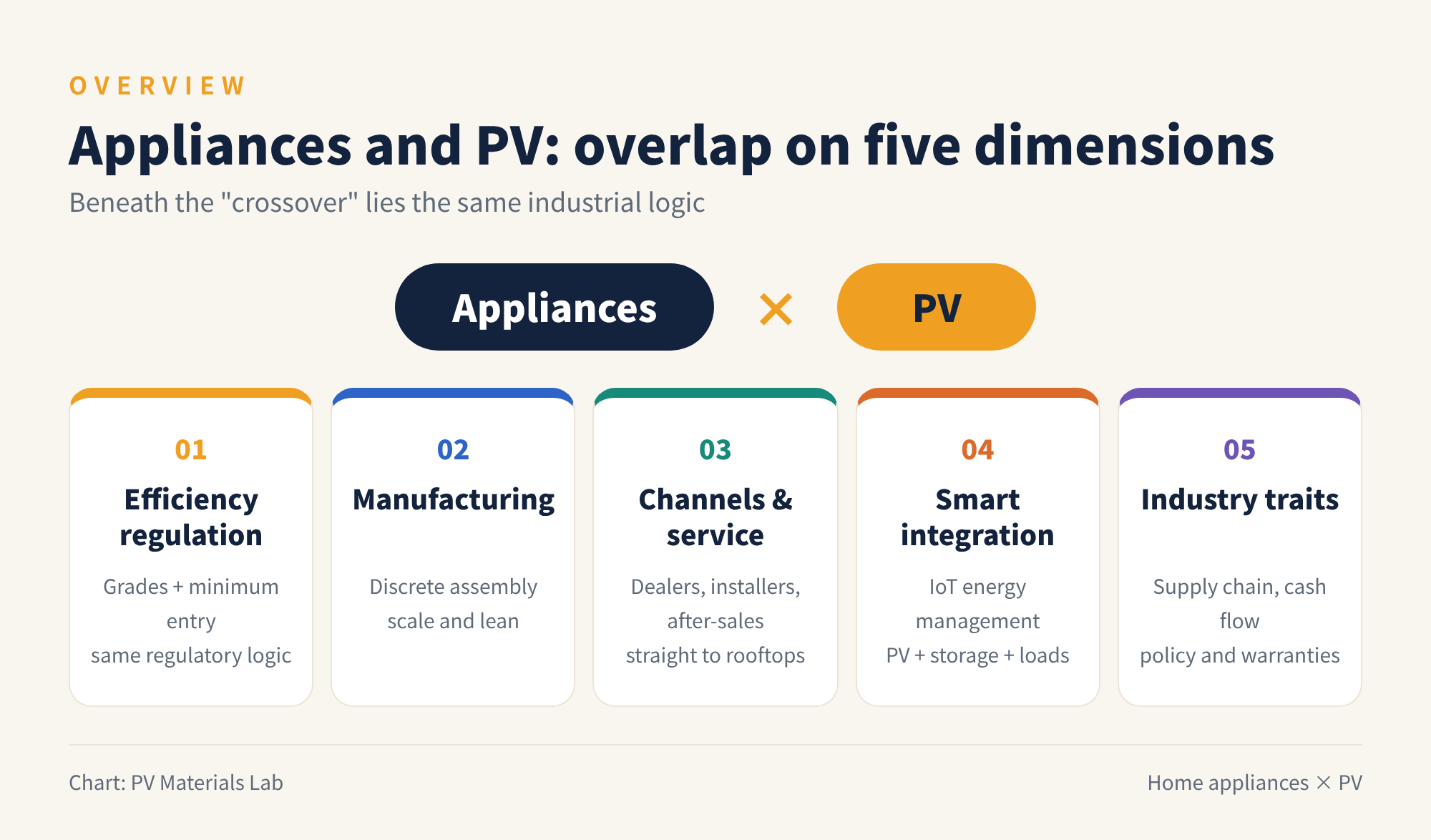
Figure 1 Overlap between appliances and PV on five dimensions
Let's take them one by one.
01Efficiency grades + mandatory entry: the most direct common ground
Anyone who has bought an air conditioner or refrigerator in China knows the energy label.
China's appliance industry has long operated a mandatory energy-efficiency labelling system. For product categories such as refrigerators (GB 12021.2) and room air conditioners, products are divided into efficiency grades, Grade 1 being the most efficient and the lowest grade corresponding to the minimum allowable efficiency. Products below that limit may not be produced or sold. The aim is clear: eliminate inefficient capacity, guide consumers and force technology upgrades.
GB 47834—2026 brings exactly this approach into PV.
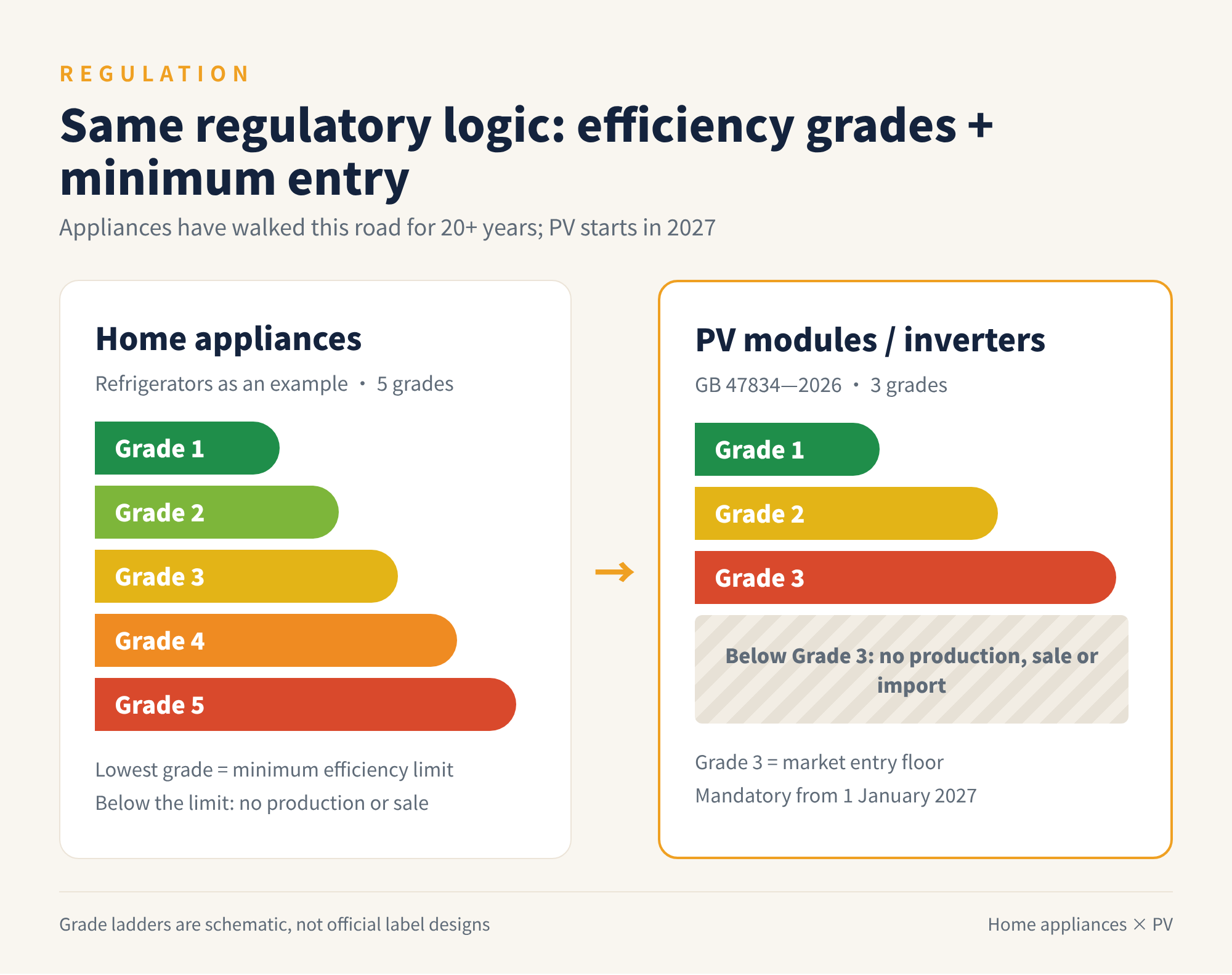
Figure 2 Efficiency regulation logic for appliances and PV (schematic)
Modules are divided into 3 efficiency grades. Grade 1 is the highest and Grade 3 is the market-entry floor, with separate thresholds for each technology (under STC):
| Technology | Grade 1 | Grade 2 | Grade 3 (entry floor) | Bifaciality |
|---|---|---|---|---|
| TOPCon | ≥24.0% | ≥23.7% | ≥23.2% | ≥75% |
| HJT | ≥23.8% | ≥23.5% | ≥23.2% | ≥85% |
| BC (back contact) | ≥24.2% | ≥23.9% | ≥23.5% | ≥70% |
Beyond efficiency and bifaciality, several other requirements stand out:
- Reliability: degradation after coupled environmental stress must not exceed 8.6%. In other words, efficiency counts not only at the factory gate but also after the module has been through environmental stress.
- Power: for the standard 1134 mm × 2382 mm format, the minimum power class corresponding to Grade 3 is about 630 W for TOPCon and HJT and about 635 W for BC.
- Inverters: also divided into 3 efficiency grades, banded by rated output power and assessed on weighted average total efficiency and maximum conversion efficiency.
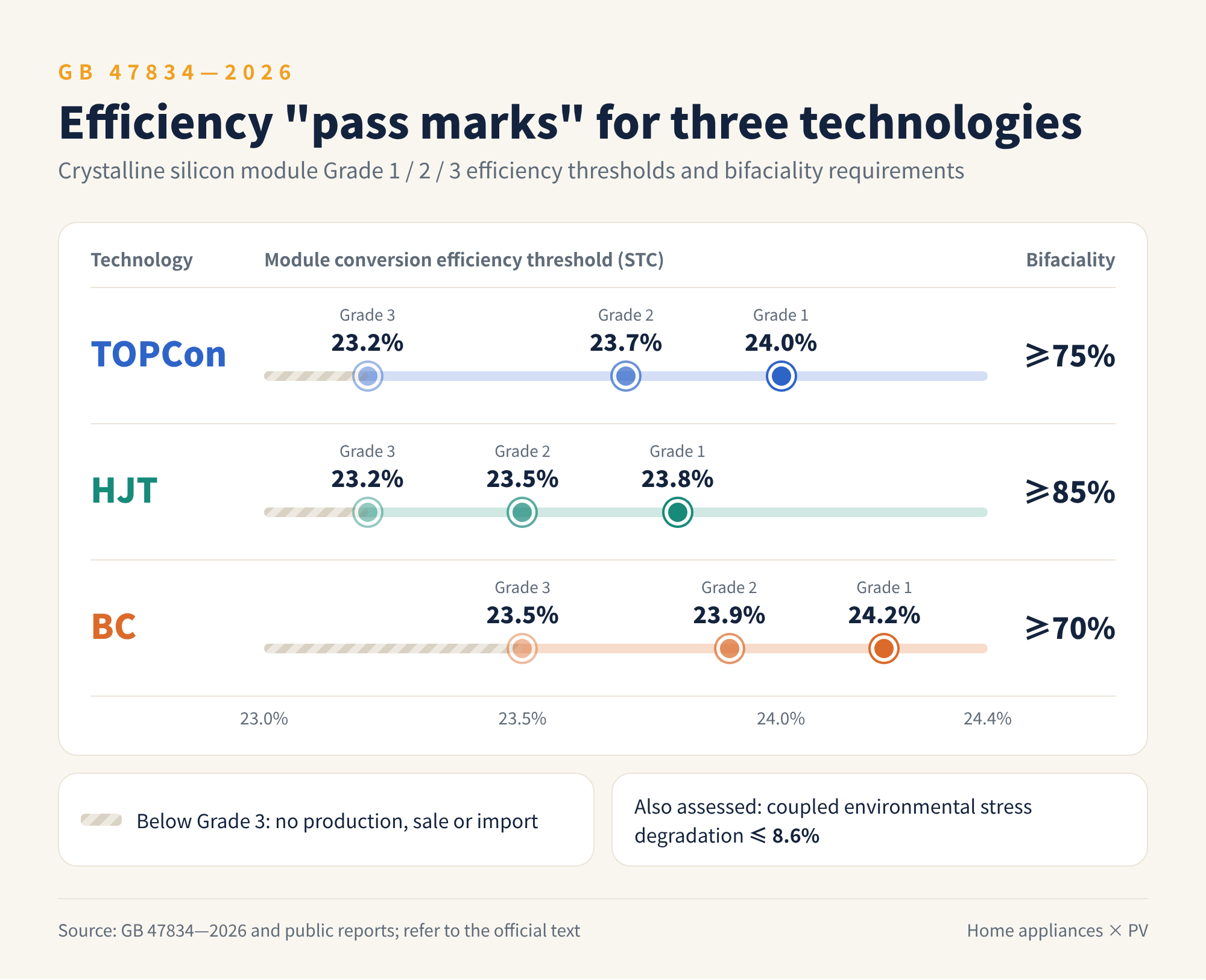
Figure 3 Module efficiency thresholds for three technologies in GB 47834—2026
What matters most is the consequence: from 1 January 2027, products below Grade 3 may not be produced, sold or imported. This is not "losing a few points in a tender"; it is being shut out of the market.
The market reacted even before the standard takes effect. In September 2026, China Huadian Group issued the second batch of its PV module framework tender (estimated at about 5 GW), requiring module efficiency of at least 23.2%; orders with deliveries extending into 2027 must meet the new Grade 3 requirement. State-owned buyers, in other words, are already applying the new standard as a cut-off.
For the PV industry this is a shift from "competing on who has the highest efficiency" to "not efficient enough, not allowed to sell". And that is precisely the game appliance makers know best: successive tightening of efficiency standards, testing and certification, label registration and product lines that iterate with each new standard are things they have done for more than twenty years.
The new standard is bound to accelerate consolidation, and the winners will be companies with high-efficiency technology routes and solid quality control. Here, appliance makers' manufacturing DNA is an advantage.
02Both are discrete assembly: the production logic is shared
Set the product form aside, and a module factory and an appliance assembly plant do the same kind of work:
- PV module: cells + glass + encapsulant + backsheet (or rear glass) + frame + junction box go through stringing, lay-up, lamination, framing and testing to become a module.
- Appliance: compressor / motor + sheet-metal parts + electronic controls + housing go through sub-assembly, final assembly and testing to become a finished unit.
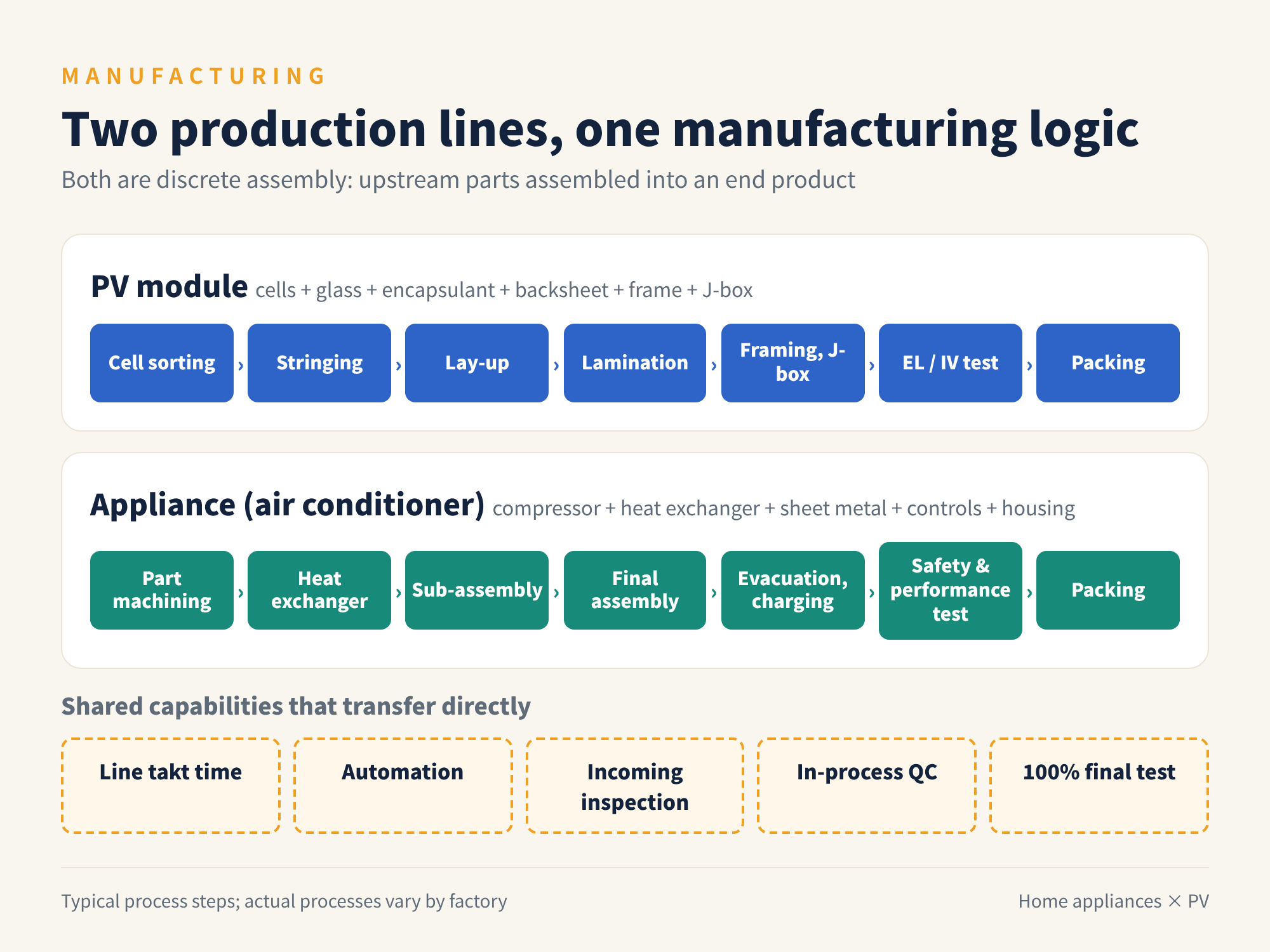
Figure 4 Typical manufacturing flows of PV modules and appliances (schematic)
Both are discrete assembly manufacturing and compete on the same set of capabilities: lean production, automation, supply-chain coordination, cost control and economies of scale. Leading appliance makers are deeply experienced in all of these, so moving into module manufacturing does not mean starting from scratch. Some have gone further: TCL, for example, entered the wafer segment through an acquisition.
Quality management is also shared. The new PV standard adds a degradation assessment after environmental stress, which is essentially the same idea as appliance durability and lifetime testing: look not only at performance out of the factory but also after many years of use.
03Channels and service networks: appliance makers' strongest card
If manufacturing is about "being able to make it", channels are about "being able to sell, install and repair it". This is appliance makers' biggest advantage in PV, especially in residential and distributed markets.
- Ready-made networks: nationwide dealers, installation teams and after-sales systems are a natural fit for rooftop PV. Selling PV is much like selling an air conditioner or water heater: site survey, sale, installation, after-sales service.
- Similar product positioning: residential PV can be positioned as "home energy equipment" and bundled with appliances into an integrated PV + storage + appliances package.
- Transfer of brand trust: for equipment that will sit on the roof for more than twenty years, households would rather trust an appliance brand they have used for years, which directly lowers the sales barrier.
Traditional PV manufacturers are stronger in utility-scale plants and large customers; appliance makers play closer to the load side: where users are, how they use electricity and how to deliver fine-grained service. That is their home turf.
04Smart integration: the destination is the same home energy system
Both industries are heading towards "smart + green":
- Smart appliances: connectivity (IoT), app control, energy-saving modes.
- Smart PV: generation monitoring, remote O&M, interaction with the grid and storage.
Further down the road, the two lines merge: home energy management systems (HEMS), vehicle-to-home (V2H), PV-direct-drive appliances… Generation and consumption will ultimately be dispatched by one and the same system.
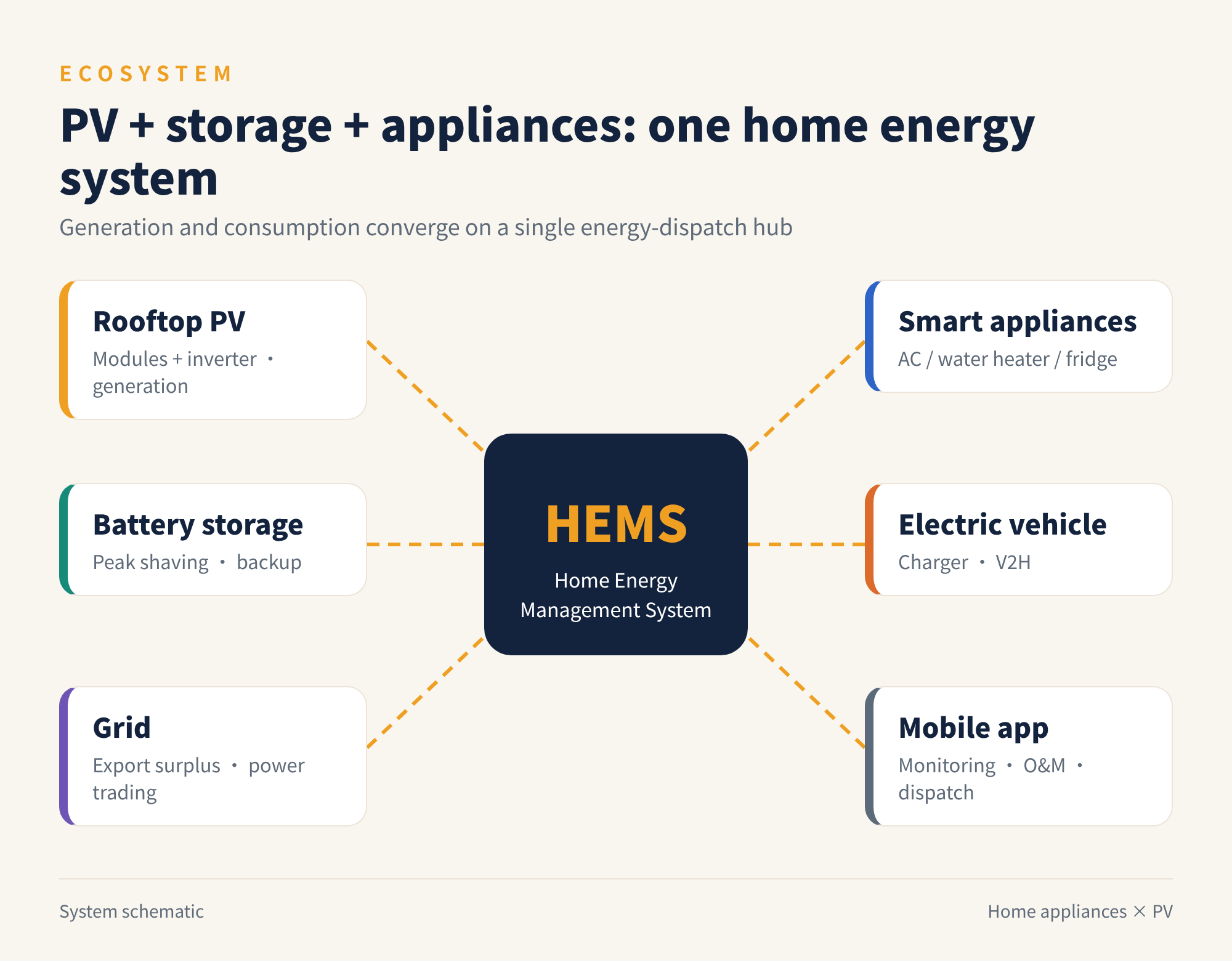
Figure 5 PV, storage and appliances converge in one home energy system (schematic)
In this scenario, whoever controls the devices and the entry point on the consumption side is best placed to do system integration. That is exactly where appliance makers stand.
05Some easily overlooked similarities
- Supply chain and quality management: both run multi-tier supplier systems and rely on strict incoming inspection and final testing to ensure consistency.
- Capital and resilience: appliances are a mature market with stable cash flow that can fund capital-intensive PV investment; conversely, moving from a saturated, hyper-competitive appliance market into new energy is also a matter of diversification.
- Policy drivers: China's dual-carbon goals, energy conservation and green procurement are long-term tailwinds for both industries, and both must keep dealing with mandatory national standards and certification.
- Lifetime service: PV modules' power warranties of 25 years or more, like appliance durability promises, test long-term after-sales capability.
06But don't make the crossover sound too easy
Saying appliance makers are not outsiders does not mean PV has no barriers to entry.
PV has its own particularities: power plants are strongly project-driven, involving grid connection, long-term energy-yield guarantees and project finance; and modules must work outdoors for more than twenty years, so the demands on materials and reliability cannot be met simply by copying appliance experience.
The more realistic path is therefore complementarity: appliance makers' manufacturing, channels and brands, combined with specialist PV technology and project-finance capability.
07Final thoughts
What appliances and PV have in common comes down to four words: manufacturing, end products, channels and service, efficiency regulation.
GB 47834—2026 puts PV modules on a track where they are graded for efficiency just like appliances. On that track, what decides the winners is manufacturing quality, supply-chain capability and channel execution.
So let's stop calling appliance makers pure outsiders in PV. This crossover is more like an industrial convergence, and the ultimate beneficiaries will be end users who get more efficient, more hassle-free energy solutions.
References
- GB 47834—2026, Minimum allowable values of energy efficiency and energy efficiency grades for crystalline silicon PV modules and inverters, SAMR / SAC, released 27 June 2026, effective 1 January 2027
- Ministry of Industry and Information Technology (MIIT): three mandatory national standards for the PV sector officially approved and released (July 2026)
- CLASP: China Introduces the World's First National Mandatory MEPS for Photovoltaic Modules (2026)
- GB 12021.2, Minimum allowable values of energy consumption and energy efficiency grades for household refrigerators
A PV R&D and technology team with 10+ years of experience | In-depth technical knowledge sharing
Materials · Reliability · Failure Analysis · Standards & Certification · Products · Processes
Exploring AI + PV; collaboration welcome
Disclaimer:
1. Original content reflects the authors' personal views only, is for reference only and does not constitute investment advice.
2. Reposted and cited content is credited to its source, out of respect for original work.
3. Some content was produced with AI assistance (chart generation, data retrieval, concept explanations, etc.); the core framework and key content were written by our technical team and reviewed by people.
4. If anything is inaccurate or infringes your rights, please leave a message or contact us and we will deal with it.