
What a PV Module Frame Actually Does: The Module's Skeleton
PV Module Frame Series · 01
INFO
In a PV module, the frame may be the least glamorous part. It has no efficiency story like the cells, and no complex material formulation like the encapsulant or the ribbon. It looks like nothing more than four aluminum profiles and four corner keys. Yet it is the most expensive auxiliary material in the module, and it decides whether a module survives wind and snow, whether it can be mounted, and whether it can be grounded. In this first article of our frame series, we lay out the frame's job description.
01 Meet the frame
A standard crystalline-silicon module frame consists of two long sides, two short sides and four corner keys. The sides are extruded aluminum-alloy profiles. The corner keys slide into the profile cavities and are punched or pressed to lock the four sides into a rigid rectangle. The laminate (glass, encapsulant, cell strings, backsheet or rear glass) gets silicone or tape around its edges and is pressed into the slot of the profile, giving the finished module.
The industry names the faces of the profile cross-section by position:
- Face A: the top lip facing the sun, which sits over the glass;
- Face B: the outer vertical wall, which sets the frame height (the familiar 30 mm, 35 mm or 40 mm frames refer to this height);
- Face C: the bottom flange facing the ground, where most mounting and grounding holes are punched;
- Face D: the inner wall opposite Face B, which together with Face B forms the cavity.
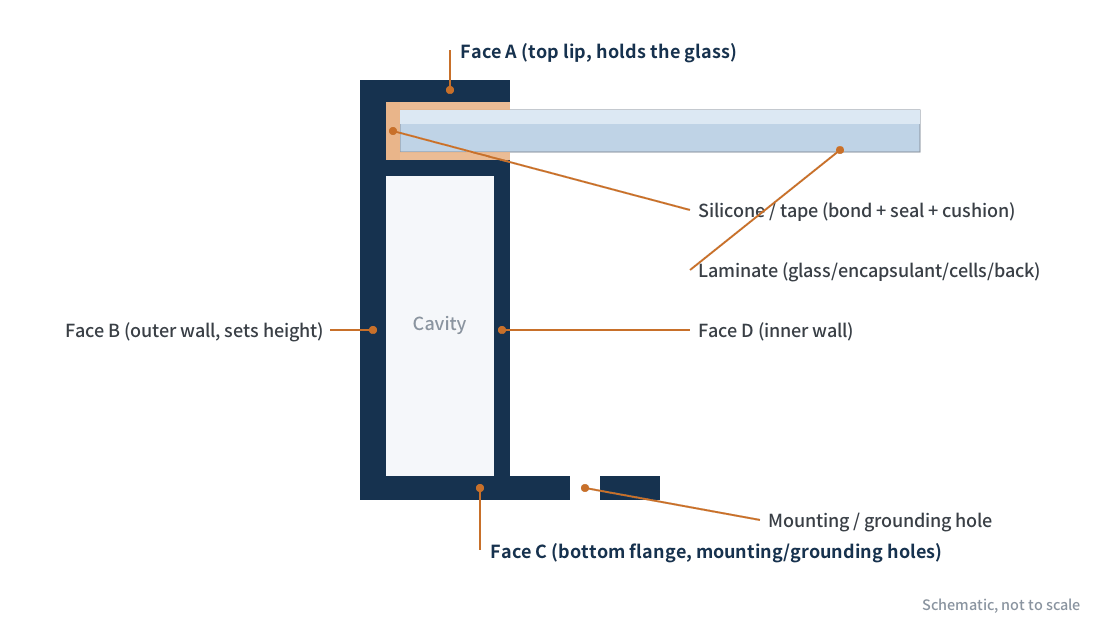
Figure 1 Frame cross-section (faces A/B/C/D, slot and cavity)
It looks simple, but every dimension in that cross-section serves a specific task. In total, the frame does five jobs.
02 Mechanical support: a skeleton for a giant pane of glass
Mainstream modules are now 2.3 to 2.4 m long and over 1.1 m wide, with more than 2.5 m² of area. The laminate does contain glass, but a "sandwich" of thin glass and soft encapsulant has limited bending stiffness. On its own it can neither resist strong wind nor carry heavy snow.
The frame's first job is to give the laminate a stiff, bending-resistant skeleton. Wind and snow act on the glass surface, and the load roughly travels along this path:
Glass → encapsulant/silicone → frame slot → frame profile → mounting points → racking
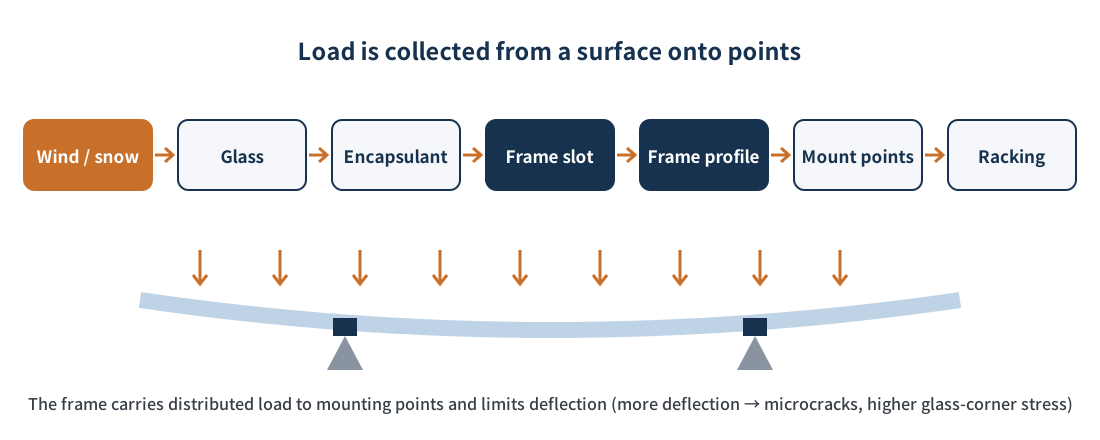
Figure 2 Load path when a module is loaded
Along this path the frame plays two roles: it collects the distributed load onto a few mounting points, and it limits the deflection of the whole module. Excessive deflection causes cell microcracks and sharply raises stress at glass edges and corners.
The standard way to judge whether a frame is strong enough is the mechanical load test. In the static mechanical load test of IEC 61215-2:2021 (MQT 16), the test load equals the design load multiplied by a safety factor of at least 1.5. The same edition added a cyclic (dynamic) mechanical load test (MQT 20) that targets low-amplitude, repeated wind-induced stress. The familiar "5400 Pa front, 2400 Pa rear" figures come from classic values in test methods such as ASTM E1830: 2400 Pa simulates wind on both surfaces, and 5400 Pa simulates heavy snow and ice on the front.
Summary
The larger the module, the more bending the frame must resist. Cross-section shape, wall thickness and Face B height are all trade-offs between stiffness, weight and cost. We will cover this in Article 04, "Frame structural design".
03 Protection and sealing: guarding the laminate's weakest edge
The four edges of the laminate are where trouble most often starts:
- Glass edges: glass fears edge impacts and concentrated stress far more than face pressure, and cracks usually start here;
- Moisture entry: the exposed edges of encapsulant and backsheet are the shortest path for water vapor and oxygen into the module, which matters most for glass-backsheet modules;
- Material interfaces: interfaces between glass, encapsulant and backsheet are most prone to delamination at the edge.
Together, the frame and the silicone (or tape) in the slot act as a physical edge guard and seal. The silicone bonds the laminate in the slot and also cushions it, absorbing relative movement between frame and glass caused by thermal expansion and deformation under load.
Frames also usually have drain holes. If water collects in Face C or the cavity, freezing in winter can crack the frame or its corners, so the position and size of drain holes are part of the frame design.
04 Mounting interface: the "universal plug" between module and racking
A module needs something to hold on to. The two mainstream mounting methods are:
- Clamp mounting: clamps press Face A down onto purlins or rails. It adapts well on site and is common in ground-mounted plants;
- Bolt mounting: bolts go through pre-punched holes in Face C. The connection is more secure and is widely used on trackers.
Either way, mounting positions are not arbitrary. On the long side, mounting points near the quarter-length positions let the frame work as both a span and a cantilever, spreading the bending moment more evenly. That is why installation manuals specify clamping zones and mounting holes: move the mounting points and the module's load capacity may change completely, and the load ratings in the certificate may no longer apply.
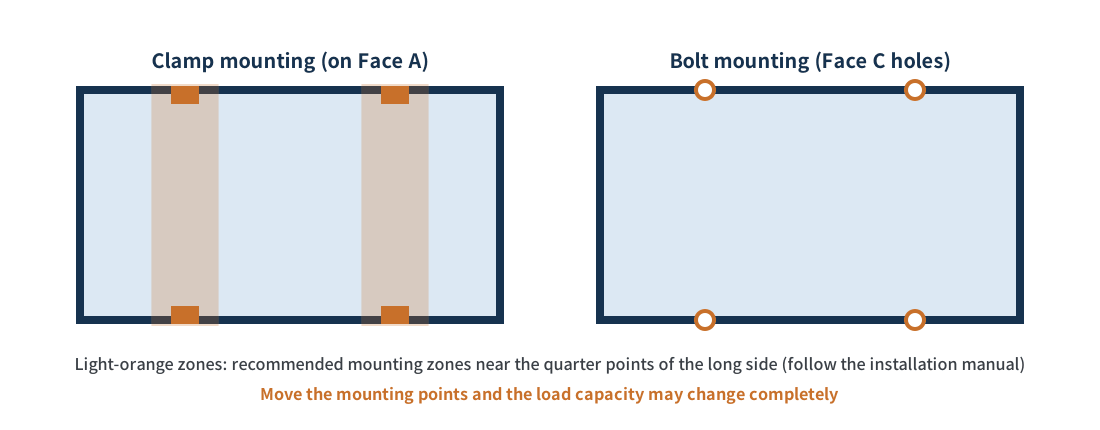
Figure 3 Two common mounting methods and recommended mounting zones
The frame also protects the module during handling, packing and transport. After leaving the factory, a module is packed, shipped, lifted and carried on site, and the frame takes almost all of the knocks and stacking loads first.
05 Grounding and electrical safety: the easily overlooked job
This is the frame's most overlooked function, yet it is directly tied to personal safety.
An aluminum frame is a conductor, an "exposed conductive part" of the module. If insulation inside the module fails, the frame can become live. Modules with metal frames must therefore be reliably grounded so that fault current has a safe path.
The equipotential bonding continuity test in IEC 61730-2 (MST 13) verifies exactly this. Between the manufacturer's designated grounding point and the exposed conductive part farthest from it, a current of 2.5 times the module's maximum overcurrent protection rating is applied for at least 2 minutes, and the resistance calculated from the voltage drop shows whether the conductive path is reliable.
A very practical detail: the anodized layer on an aluminum frame is an insulator. If a grounding bolt or clamp merely presses on the anodized layer, it looks connected but may have a high contact resistance. That is why the field uses toothed grounding washers, dedicated grounding clips, or bare metal at the grounding hole to pierce or bypass the anodized layer.
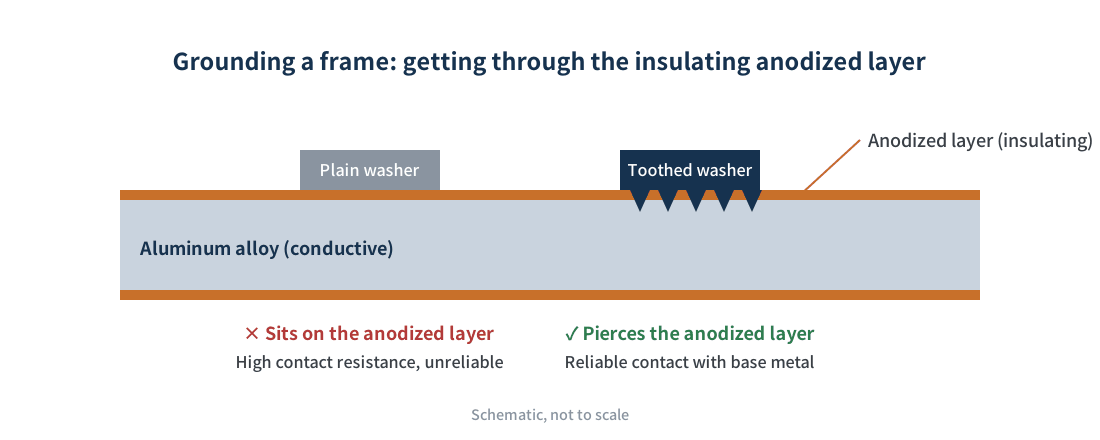
Figure 4 Frame grounding: the anodized layer and piercing-type grounding
Frame grounding is also closely linked to PID (potential-induced degradation). At high system voltage, a large potential difference forms between the grounded frame and the cells, which is one of the necessary conditions for PID. The distance between frame and cells, and whether the glass surface is wet, both affect the leakage current. We discuss this in detail in our PID series.
Key takeaway
The frame is not just a structural part. It is also a link in the module's electrical safety chain. Poor grounding means a safety risk, not just lost energy yield.
06 A cost you cannot ignore
Now let's look at what the frame costs.
| Item | Figure | Source |
|---|---|---|
| Frame share of module cost (2023) | ~9%, second only to cells | Qianzhan Industry Research Institute |
| Frame share of module cost (2025) | ~14% | Yongzhen annual report (compiled by Guanyan Tianxia) |
| Typical range for aluminum frames | ~10%–15% | Covestro |
| Carbon emissions of primary aluminum profile | ~24.2 kg CO₂/kg | TÜV SÜD (cited by Covestro) |
After polysilicon and cell prices fell sharply, the cost weight of auxiliary materials rose by default, and the frame is the heaviest of them. Every swing in aluminum prices passes straight into module cost. On top of that, overseas markets are tightening carbon-footprint requirements, and the high energy intensity of primary aluminum has become a new burden for exported modules.
That is the root reason steel frames and composite frames have drawn so much attention in the past two years: everyone wants to cut this cost and these emissions without sacrificing reliability. Whether alternative materials can deliver all five jobs, especially mechanical load and grounding safety, is exactly what we will take apart in later articles.
07 Final thoughts
Put the five jobs side by side and the frame's role becomes clear:
- Structural skeleton: resists wind and snow loads and limits module deflection;
- Edge guard and seal: protects the glass edge and blocks moisture entry;
- Mounting interface: determines how and where a module can be mounted reliably;
- Grounding path: a key link in the module's electrical safety chain;
- Transport protection: from factory to site, the frame always takes the first knock.
A seemingly simple aluminum profile carries five jobs at once: structure, sealing, mounting, safety and transport protection. This means any cost reduction or material substitution for the frame must answer, job by job, whether these five things can still be done well.
In the next article we start with materials: why are PV frames almost always 6063 aluminum alloy? What is the difference between the T5 and T6 tempers? And how do wall thickness and aluminum prices play against each other? Stay tuned.
References
- IEC 61215-2:2021 Terrestrial photovoltaic (PV) modules – Design qualification and type approval – Part 2: Test procedures (MQT 16, MQT 20)
- IEC 61730-2 Photovoltaic (PV) module safety qualification – Part 2: Requirements for testing (MST 13 equipotential bonding continuity test)
- ASTM E1830 Standard Test Methods for Determining Mechanical Integrity of Photovoltaic Modules
- Qianzhan Industry Research Institute: Value chain and cost structure of China's PV module industry, 2024-06 (in Chinese)
- Guanyan Tianxia: China's PV frame industry – rising cost weight and margin pressure, 2026-04 (in Chinese)
- Covestro: Modules with polyurethane composite frames pass 3 GW cumulative shipments (Solarbe), 2025-06
- T/CPIA 0081—2024 Glass-fiber-reinforced composite frames for PV modules (in Chinese)
PV Materials Lab
A PV R&D and technology team with 10+ years of experience | Hard-core technical knowledge
Materials · Reliability · Failure analysis · Standards & certification · Products · Processes
Exploring AI + PV — collaboration welcome
Disclaimer:
- Original content reflects the authors' personal views, is for reference only and is not investment advice.
- Reposted and cited content is credited to its source.
- Some content is AI-assisted (chart generation, data retrieval, concept explanations); the core framework and key content are written by our technical team and reviewed by humans.
- If anything is inaccurate or infringing, please leave a message or contact us.