
Copper Tops 110,000 CNY/t: How Far Is Copper-Clad Aluminium Ribbon from Mass Production?
Key points
In an earlier article we looked at the four main reliability risks of copper-clad aluminium (CCA) ribbon. This one takes a practical angle: who is actually using it today and where, and whether it has a real chance of reaching mass production.
1. On paper, CCA ribbon saves more than 2 fen (0.02 CNY) per watt. With modules selling at just over 0.7 CNY/W and the whole industry shipping at around cash cost, that is hard to ignore.
2. In reality, the picture is "tier-1s validating, tier-2/3 in small batches, very little public information", still clearly short of mainstream production.
3. Looking ahead, the likelier path is not a wholesale replacement of copper, but gradual penetration starting with bus ribbon, specific markets and specific products.
01Do the maths first: why the topic is hot again this year
In September 2026 copper set new record highs: on 8 September the SHFE main contract closed above 110,000 CNY/t for the first time, and on 15 September it broke through 112,000 CNY/t. On 30 September, Shanghai No.1 copper cathode spot was about 111,000 CNY/t, while A00 aluminium ingot spot was about 24,000 CNY/t.
The copper/aluminium price ratio is about 4.6×. For context, when the ratio stood at 4.2× at the start of this year, it was already being called a 20-year high.
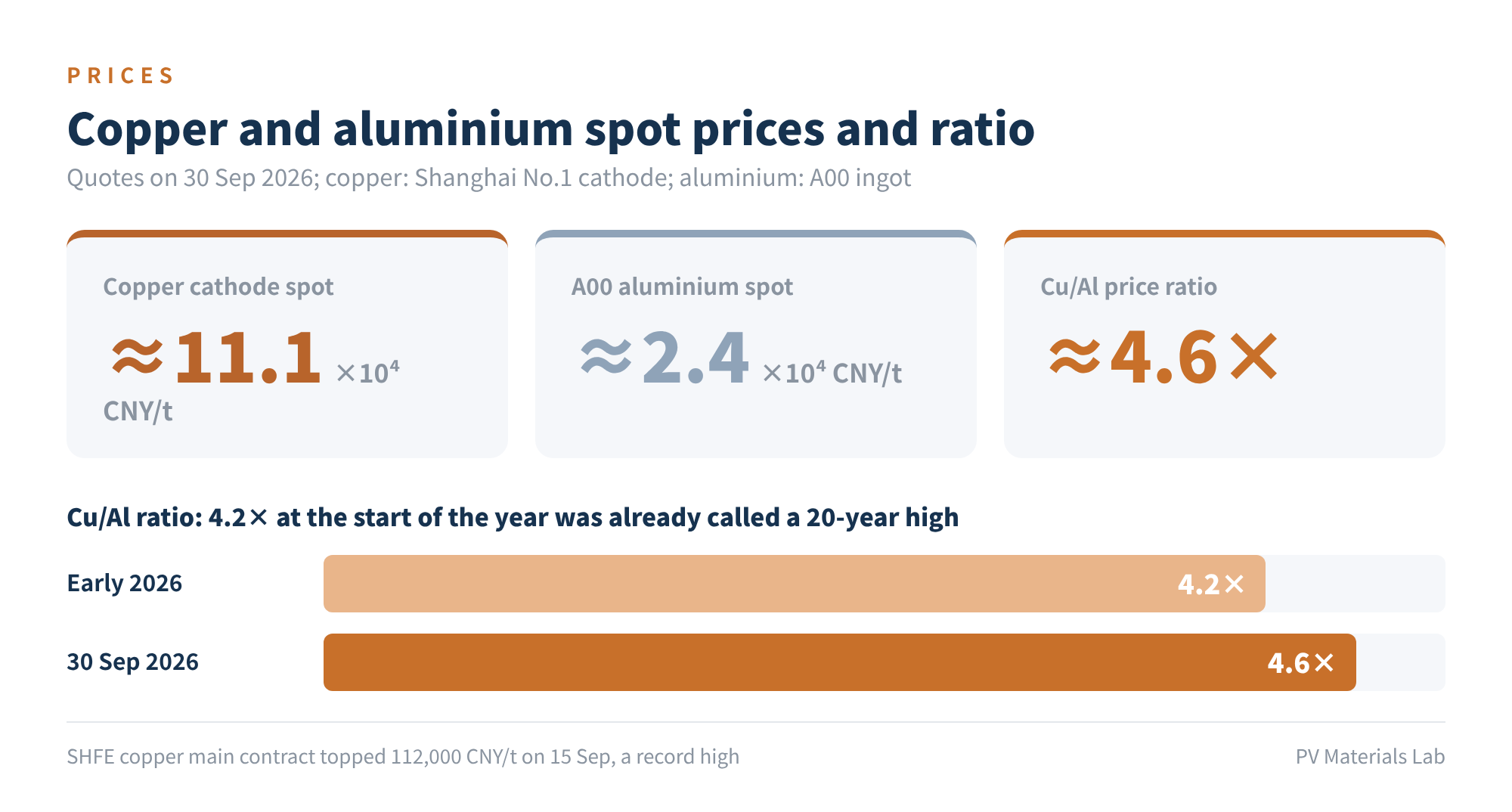
Figure 1 Copper and aluminium spot prices and their ratio
Ribbon is the module material that uses copper most directly. According to earlier broker estimates, SMBB and 0BB modules use roughly 380–410 tonnes of ribbon per GW.
We ran a rough equal-resistance comparison: for 1 GW of modules, copper ribbon contains about 355 tonnes of copper base metal worth about 39 million CNY. CCA ribbon needs a cross-section more than 50% larger, but its density is less than half that of copper, so its weight actually falls to about 220 tonnes, with a metal value of about 12.4 million CNY.
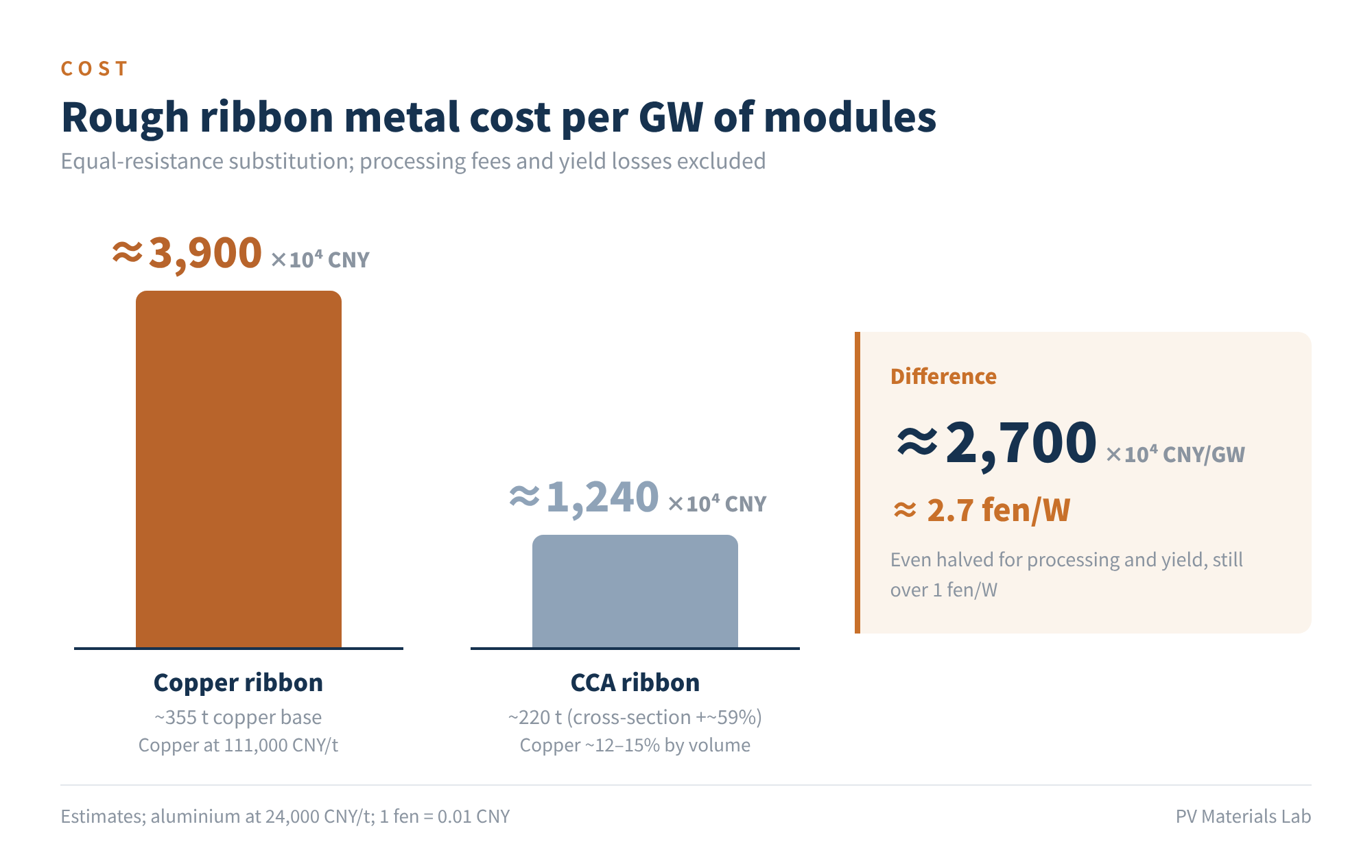
Figure 2 Rough ribbon metal cost per GW of modules (processing fees and yield excluded)
The difference is about 2.7 fen/W. That is before CCA's higher processing fees and yield losses, so the real saving is smaller; but even halved, it is still more than 1 fen.
Compare that with the state of the module business: at the end of September, TOPCon modules averaged about 0.72 CNY/W, and InfoLink said bluntly in a July weekly review that prices had fallen into manufacturers' cash-cost range. In that environment, a single material that saves 2%–3% of the selling price is a real temptation.
CCA ribbon's power loss is not the main reason it has not caught on. Even a 0.5% module power loss works out to only about 0.4 fen/W at 0.72 CNY/W, far less than the material saving. What really holds people back is the risk of failure within a 25–30-year warranty.
02Where things stand: three groups, three attitudes
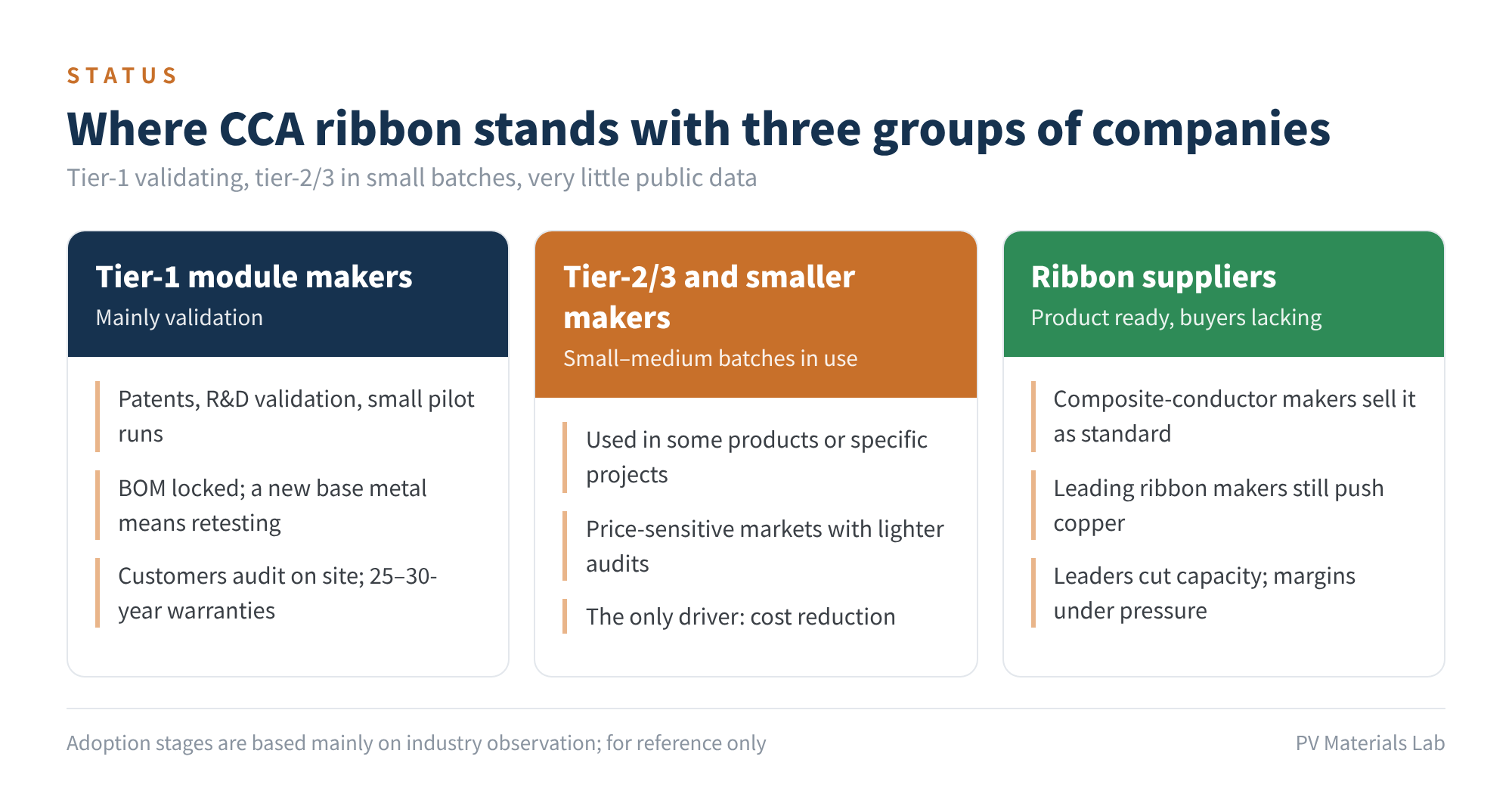
Figure 3 Where CCA ribbon stands with three groups of companies
Tier-1 module makers: validation is one thing, mass production another
So far, tier-1 makers' involvement with CCA ribbon has largely stayed at patents, R&D validation and small pilot runs. The reasons are practical:
- The BOM is locked. Ribbon models and suppliers are written into the certified bill of materials; changing the base metal is a key-material change that requires retesting.
- Customers won't accept it. Large plant owners and overseas customers generally require a locked BOM and on-site production audits, so unvalidated new materials struggle to pass.
- Warranties are too long. Module makers carry 25–30-year power warranties, and the cost of a single batch failure would far exceed what the ribbon saves.
Tier-2/3 and smaller makers: already using it, but on a limited scale
From what we understand, tier-2/3 module makers and some smaller non-standard module makers are already using CCA ribbon in small to medium batches, mainly in certain products or specific customer projects, and mostly in price-sensitive markets with relatively light certification and audit requirements. There is only one driver: cost reduction.
Suppliers: the product exists; what's missing is customers willing to use it
There are two kinds of supplier. One is companies specialising in copper-aluminium composite conductors, which already sell composite ribbon and composite bus ribbon as standard products. For example, a company in Zhejiang states on its website that its products cover BC, SMBB, 0BB and other formats, with conductivity of 62%–70% IACS and 58%–63% less weight than copper at the same size, and a minimum sample order of 200 kg.
The other is the traditional ribbon leaders, whose public focus is still on copper-based products such as 0BB, BC and low-temperature ribbon. We found no information on volume shipments of CCA ribbon in their public disclosures.
Notably, on the evening of 24 September, Yubang New Materials announced plans to terminate its 20,000-tonne-per-year PV ribbon project funded by convertible bonds (about 183 million CNY invested, roughly 51% complete) and to use the remaining funds permanently as working capital. The reasons given were a temporary supply-demand imbalance in the industry, persistent pressure on ribbon profitability, and demand uncertainty from rapid iteration across multiple cell technologies. If even a leader is this cautious, the ribbon segment is clearly not flush right now.
Public sources say almost nothing about module makers' CCA ribbon usage. Our description of each group's adoption stage is based mainly on our own industry observation and is for reference only.
03Where to start: four ribbon types, different difficulty
"Can CCA ribbon reach mass production?" is too broad a question. Break ribbon down and the difficulty varies a lot by position and format.
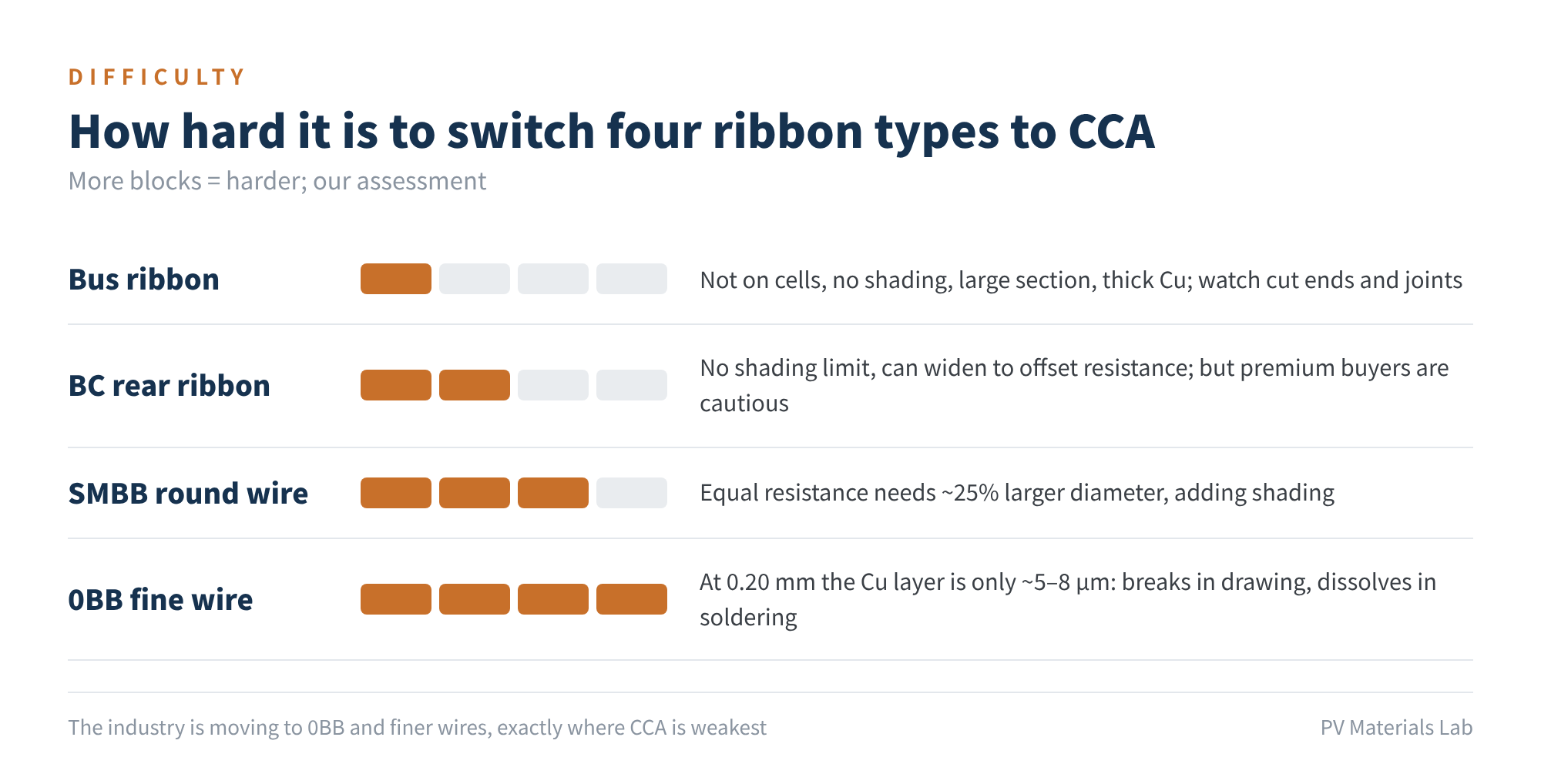
Figure 4 How hard it is to switch four ribbon types to CCA (our assessment)
- Bus ribbon: the easiest place to start. It does not sit on the cells or shade the front, and it has a large cross-section and a thick copper layer. What needs watching is the cut ends and the solder joints with interconnect ribbon and the junction box.
- BC rear ribbon: technically feasible. All the ribbon is on the rear, so there is no shading constraint and it can be widened to make up for resistance. But BC products are premium, and their makers and customers are precisely the most cautious.
- SMBB round wire: squeezed from both sides. To match resistance, the wire diameter must grow by about 25%, which adds shading; without that, resistance goes up.
- 0BB fine wire: the hardest. At 0.20 mm diameter and 10%–15% copper by volume, the copper layer is only 5–8 μm thick, so the wire breaks easily during drawing and can be dissolved through by solder.
There is an uncomfortable fact here: the industry is moving towards 0BB and finer wires, which is exactly where CCA is weakest.
04Four gates before mass production
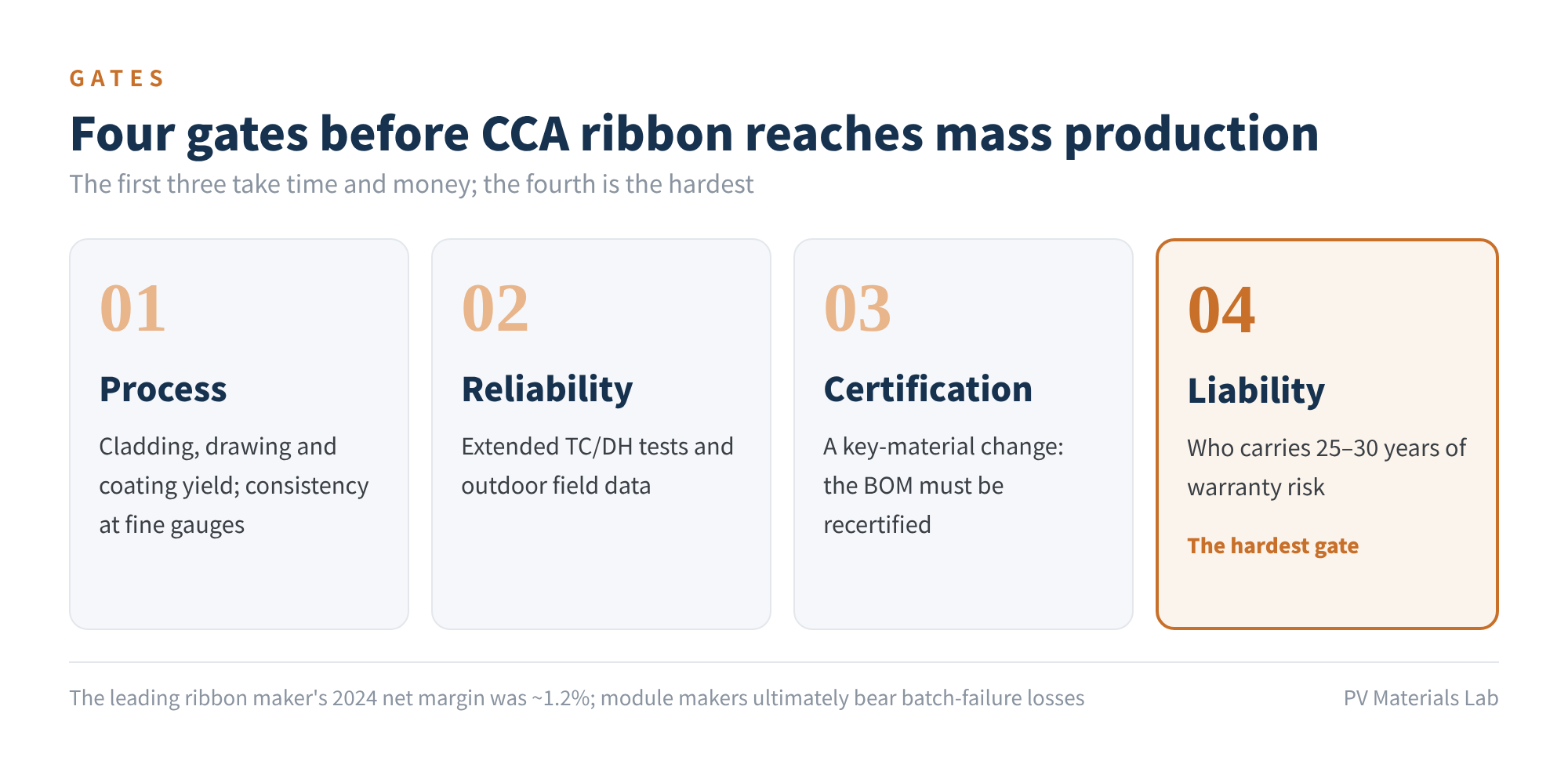
Figure 5 Four gates before CCA ribbon reaches mass production
Of these four gates, the first three can be cleared with time and investment; the fourth is the hardest.
Ribbon makers' margins are thin. Take the industry leader Yubang New Materials: in 2024 it had revenue of about 3.28 billion CNY and net profit attributable to shareholders of about 39 million CNY, a net margin of only around 1.2%. If modules fail in batches outdoors, a ribbon maker simply cannot pay, and the losses end up with the module maker. That is why tier-1s would rather spend a few fen more than be the first to try.
05Looking ahead: three signals and one view
To judge whether CCA ribbon will reach mass production, we suggest watching three signals:
- The copper/aluminium price ratio. Whether it stays above 4× for long. If it falls back, the incentive to cut cost weakens markedly.
- Public data. Whether any tier-1 maker or third-party institution publishes extended-test and outdoor field data on CCA modules.
- Standards. Whether industry or group standards for composite ribbon appear, giving a basis for what counts as "qualified CCA ribbon".
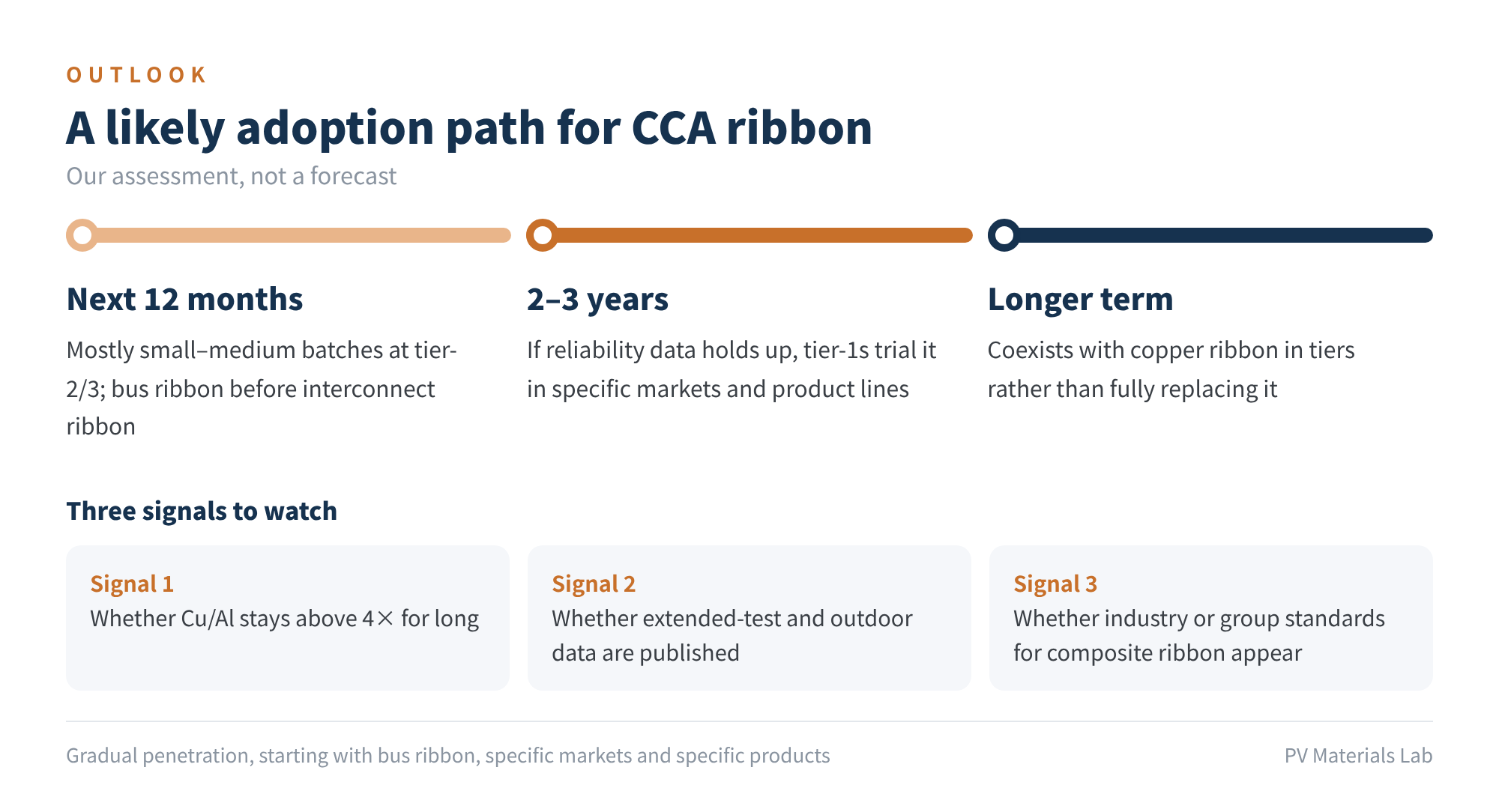
Figure 6 A likely adoption path for CCA ribbon (our assessment)
Our view: over the next year, CCA ribbon will still be used mainly in small to medium batches by tier-2/3 makers, with bus ribbon adopted before interconnect ribbon. Within two to three years, if the reliability data holds up, tier-1s may trial it in small batches in specific markets and product lines. Beyond that, it is more likely to coexist with copper ribbon in tiers than to replace it entirely.
06Final thoughts
The PV industry has no shortage of precedents for replacing expensive metals with cheaper ones; silver-coated copper and copper paste have both gone down this road. Their lesson is that substitution can happen, but only with data first, validated step by step.
CCA ribbon's problem today is not that it saves too little, but that the evidence is not yet solid enough. Until it is, companies that adopt it gain today's cost saving and take on risk that lands years later.
Has your company evaluated or trialled CCA ribbon? Which gate did it get stuck at? We would be glad to hear from you.
References
- Securities Times: "Record high! Copper tops 110,000 CNY/t", 9 Sep 2026 (in Chinese): stcn.com
- Tencent News: "The global copper rush continues: where next after the record high?", 16 Sep 2026 (in Chinese): news.qq.com
- Sina Finance / cngold.org: copper and aluminium spot quotes, 30 Sep 2026; Huxiu: Cu/Al ratio at the start of the year, 14 Jan 2026 (in Chinese)
- Sinolink Securities: PV ribbon industry report, 2024 (in Chinese)
- InfoLink Consulting: weekly review of 8 Jul 2026; late-September module tender price summary
- National Business Daily: "PV ribbon leader plans to terminate 20,000-tonne ribbon project, 183 million CNY already invested", 24 Sep 2026 (in Chinese): nbd.com.cn
- Jiemian: Yubang New Materials 2024 annual results (in Chinese): jiemian.com
A PV R&D and technology team with 10+ years of experience | In-depth technical knowledge sharing
Materials · Reliability · Failure Analysis · Standards & Certification · Products · Processes
Exploring AI + PV; collaboration welcome
Disclaimer:
1. Original content reflects the authors' personal views only, is for reference only and does not constitute investment advice.
2. Reposted and cited content is credited to its source, out of respect for original work.
3. Some content was produced with AI assistance (chart generation, data retrieval, concept explanations, etc.); the core framework and key content were written by our technical team and reviewed by people.
4. If anything is inaccurate or infringes your rights, please leave a message or contact us and we will deal with it.