
"China-Made Pellets" for POE Encapsulants: After Going from Zero to One, How Far Has Localisation Come?
Key points
● China imported about 728 kt of POE in 2025, down 20.3% year on year, the first clear decline in many years; imports fell another 38.7% in January–August 2026 while exports rose almost 120%. But the domestic share is still low and import dependence still high.
● Companies whose industrial plants have produced on-spec product: BeoYi, Wanhua Chemical, Sinopec Maoming, Eastern Shenghong, Dingjide and PetroChina Dushanzi; Sinopec Tianjin and Levima are in trial runs or trial production.
● Domestic growth is mainly in butene-based (C4) grades; octene-based (C8) grades and stable PV-grade supply remain the gap.
● The encapsulant film stage has long been dominated by Chinese companies; "localisation" here means replacing imported pellets in formulations with domestic ones, with long validation cycles and the leaders moving first.
Three years ago, when people in PV talked about POE, the keyword was "scrambling for pellets". Six overseas chemical giants held all the capacity, PV-grade quotes once topped CNY 25,000 per tonne, and whether film makers could get supply directly decided whether n-type modules could be scheduled.
Three years on, the picture looks completely different. Industrial plants at several Chinese companies are producing on-spec product, and nominal capacity reached about 700 kt a year by the end of 2025. The delivered price of PV-grade POE in China fell to around CNY 12,000 per tonne in July 2026. And in September, Sinopec Maoming sold POE to North America for the first time.
But between "being able to make POE" and "being able to supply PV-grade POE reliably" there is still a long way to go. In this article we review localisation progress at both the pellet and the film stage, and finish with a validation approach for introducing domestic pellets, for colleagues working on material introduction and reliability. Data are as of mid-October 2026.
01Why the n-type era cannot do without POE
POE (polyolefin elastomer) is a random copolymer of ethylene and an α-olefin (1-butene, 1-octene, etc.) made with a metallocene catalyst. Unlike EVA, its molecular chain has no vinyl acetate groups, and that one fact accounts for almost all of its advantages and its problems as an encapsulant.
- No acid: EVA hydrolyses under damp heat to form acetic acid, which corrodes fingers and ribbons; POE's backbone is a saturated hydrocarbon with no such pathway.
- Moisture barrier: its water vapour transmission rate is roughly a fraction to a tenth of EVA's.
- Insulation: volume resistivity is typically one to two orders of magnitude higher than EVA's, making ion migration harder and PID resistance better.
TOPCon's fine front metallisation is more sensitive to damp heat and acetic acid, HJT's TCO layer is vulnerable to moisture, and BC cells also place higher demands on encapsulation. It is an industry consensus that n-type modules use POE or EPE on at least one side.
The problems come from the same source. Non-polar POE has poor compatibility with additives, so crosslinkers and coupling agents tend to migrate and bloom; it slips during lamination and cures slowly, lengthening cycle times. Hence EPE, a three-layer co-extruded EVA-POE-EVA film: EVA skins take care of processability and the POE core holds the line on moisture barrier and insulation.
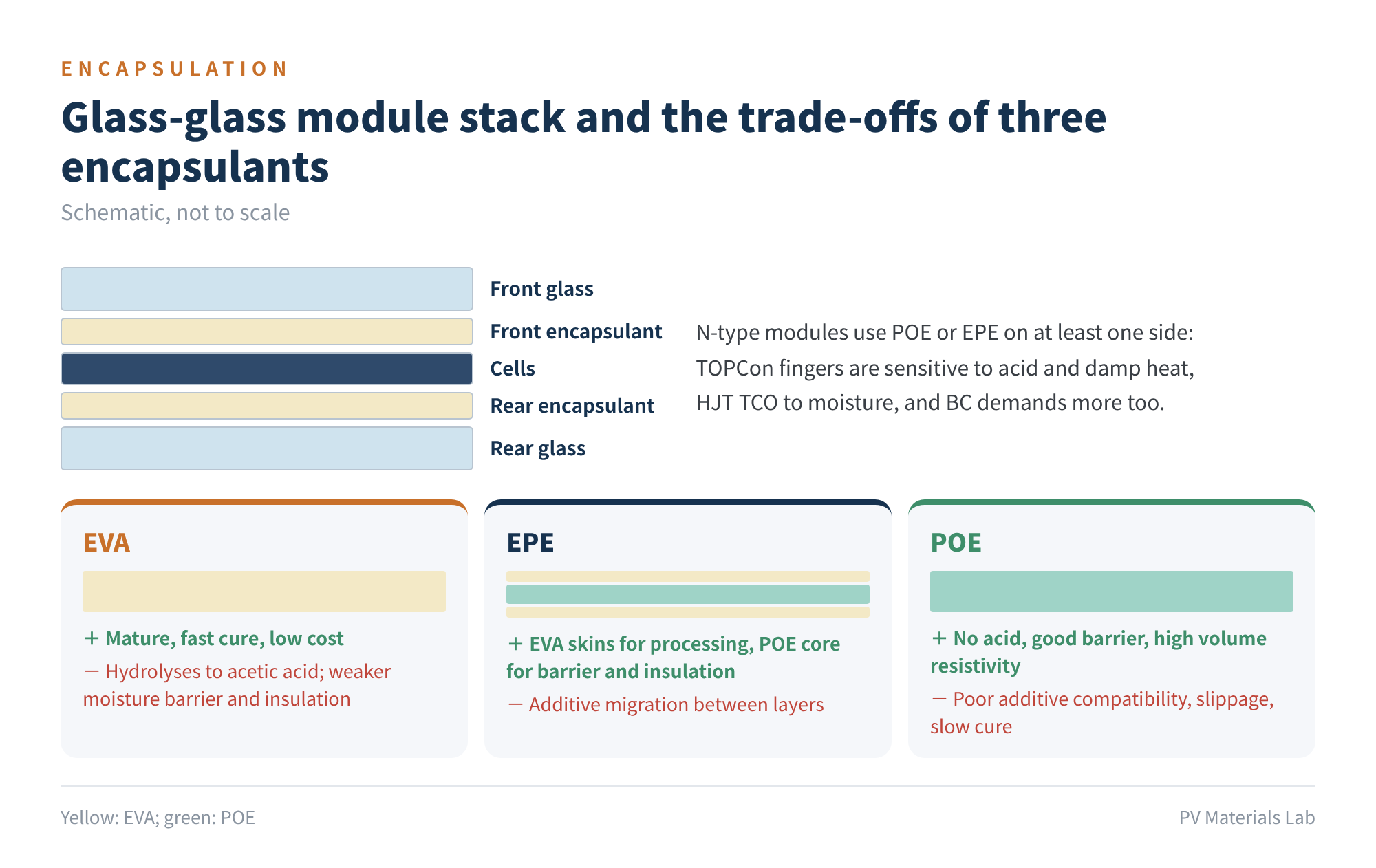
Figure 1 Glass-glass module stack and the trade-offs of three encapsulants (schematic)
The market has already given its answer. According to industry data cited by China Lianhe Credit Rating, transparent EVA film had a share of about 41.6% in 2024, co-extruded EPE rose quickly to about 37.0%, and EPE kept gaining in 2025; pure POE film accounts for another tenth or more (about 13.2% on ChinaIRN's basis). The two sources differ slightly, but the conclusion is the same: POE-containing films are now close to half the encapsulant market.
02Where the bottleneck lies: three barriers
POE was long controlled by six companies: Dow, LG Chem, Mitsui Chemicals, SSNC (a SABIC–SK joint venture), ExxonMobil and Borealis. The difficulty is not any one piece of equipment, but that three things must all be mastered together:
- Metallocene catalysts: single-site catalysts determine comonomer incorporation and molecular-weight distribution, overseas patents are dense, and this is widely seen as the hardest part.
- Higher α-olefins: 1-octene long depended on imports, and around 2022 cost more than twice as much as 1-butene; without in-house supply, both cost and availability are in others' hands.
- High-temperature solution polymerisation and devolatilisation: heat and mass transfer in a highly viscous system, and removal of solvent and monomer, directly determine pellet volatiles, gels and batch consistency.
So almost every Chinese company that has succeeded has the same three-part kit: an in-house catalyst, a matched α-olefin supply and repeated pilot-plant runs. Eastern Shenghong says its 800 t/yr pilot unit was started more than 70 times and modified more than 50 times over two-plus years before its industrial plant started up successfully at the first attempt. PetroChina Dushanzi took a different route, reaching scale production with a gas-phase process that uses about 60% of the energy of the solution process and emits no solvent.
03Pellets: from zero to 700 kt in two years
The timeline is actually very short.
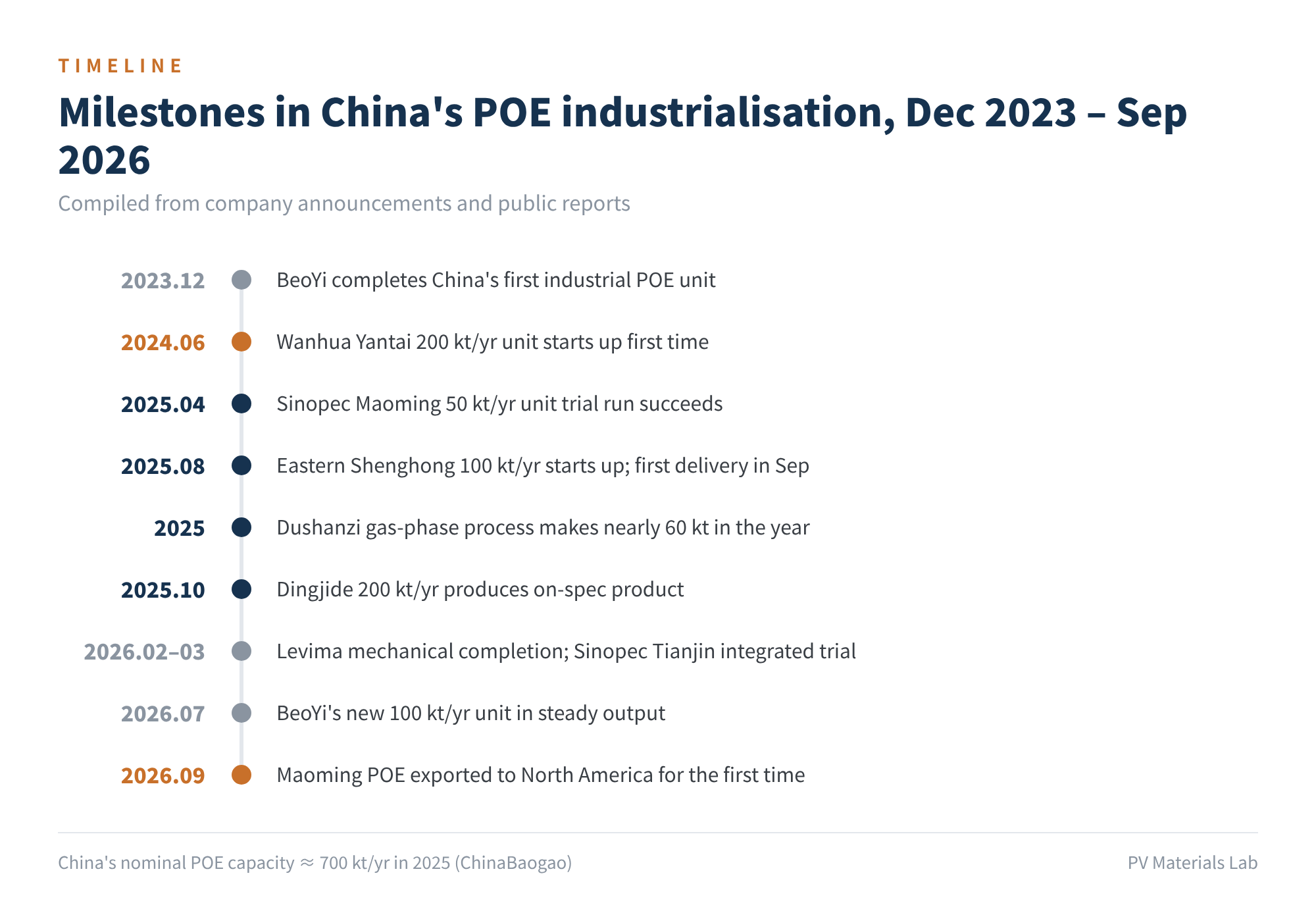
Figure 2 Milestones in China's POE industrialisation (Dec 2023 – Sep 2026)
In December 2023, BeoYi, part of the Jingbo group, completed China's first industrial POE plant. On 29 June 2024, Wanhua Chemical's 200 kt/yr Yantai plant started up at the first attempt and shipped its first batch on 10 July; it was China's first large-scale POE plant using its own technology. The real surge came in 2025: Sinopec Maoming, Eastern Shenghong and Dingjide came on stream in turn, and PetroChina Dushanzi produced nearly 60 kt in the year with China's first gas-phase process. According to ChinaBaogao, China's POE capacity reached about 700 kt a year in 2025, up about 159%.
| Company | Plant and latest status | Highlights |
|---|---|---|
| Wanhua Chemical | Yantai 200 kt/yr, on stream Jun 2024; Penglai phase 2, 400 kt/yr, construction started Mar 2025, originally planned for completion at end-2025 | Own solution process; PV grades WANSUPER 9057 / 9147 |
| Dingjide | Dalian Changxing Island 200 kt/yr, on-spec product Oct 2025 | PV grade focus; matched α-olefin supply |
| BeoYi | First plant on stream Dec 2023; new 100 kt/yr unit in steady output and shipping Jul 2026 | First private company to reach industrial mass production |
| Eastern Shenghong | Lianyungang 100 kt/yr, started 17 Aug 2025; first 320 t delivered in Sep | Own catalyst; supplies both EVA and POE |
| Sinopec Maoming | 50 kt/yr, trial run Apr 2025, load raised to about 80% | Sinopec's own solution process; first export to North America Sep 2026 |
| PetroChina Dushanzi | Revamped unit, nearly 60 kt produced in 2025 | China's first gas-phase process; PetroChina expects >300 kt/yr total POE capacity by end-2026 |
| Sinopec Tianjin | Nangang 100 kt/yr, integrated trial run Mar 2026 | About 99% domestically made equipment |
| Levima | 100 kt/yr, mechanical completion Feb 2026, trial production in Q2 | Own solution process and catalyst |
| Sinopec Zhenhai | 100 kt/yr, under construction | Sinopec's packaged solution-process technology |
| ZPC (Zhejiang Petrochemical) | Zhoushan 4 × 100 kt/yr, design started Jun 2025 | Integrated with refining; parent Rongsheng has piloted 1-octene |
Table 1 Progress of the main Chinese POE plants (compiled from public reports)
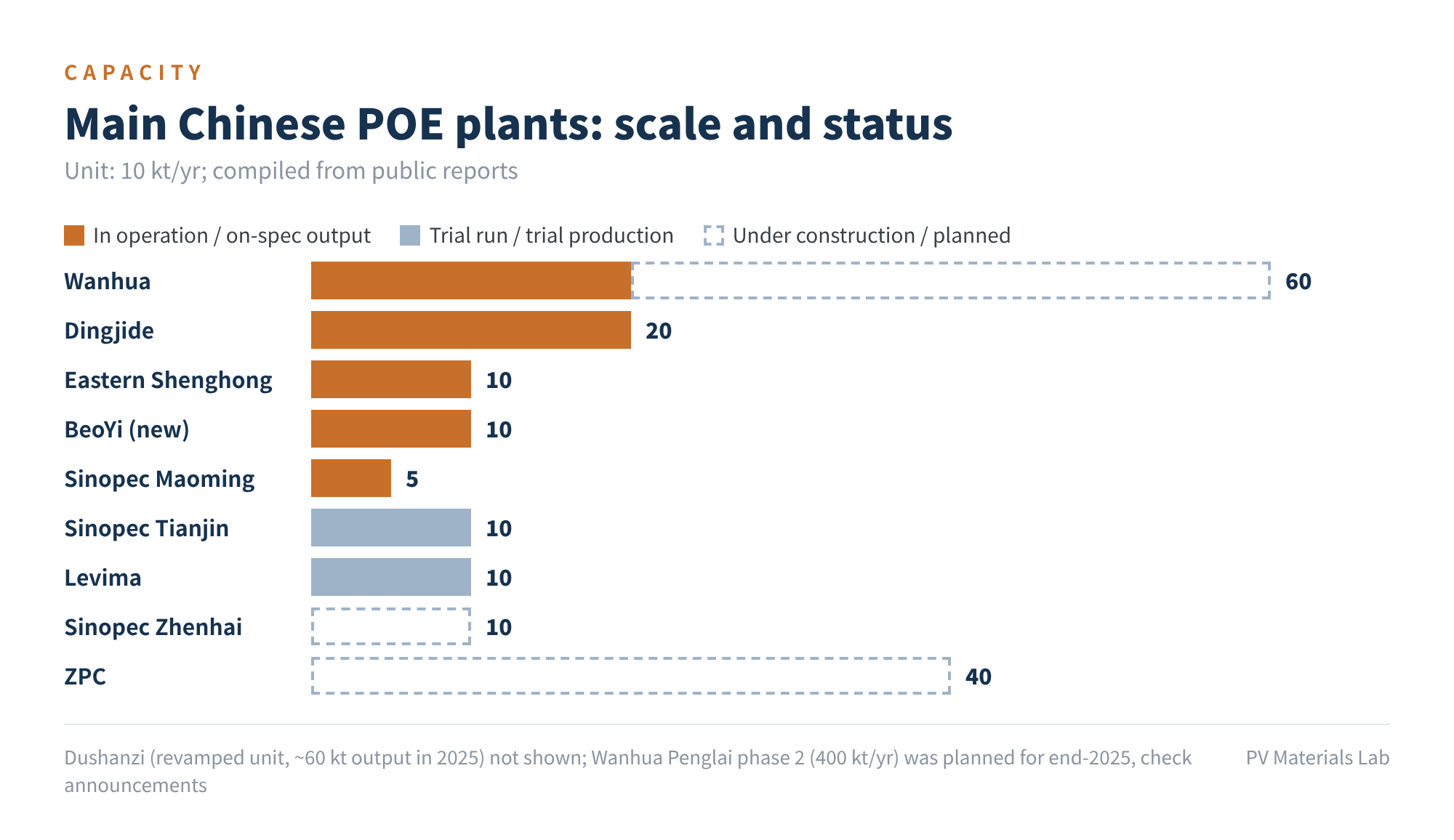
Figure 3 Main Chinese POE plants: scale and status (10 kt/yr, compiled from public reports)
Organisations count "capacity" differently (for example, whether pilot lines and revamped units are included); company announcements take precedence. We could not find a clear company-level disclosure of when Wanhua's Penglai phase 2 actually started up, so only the plan is shown.
04How real is mass production? Four sober facts
First, imports have turned down, but dependence is still high. According to customs data, China imported about 728 kt of POE in 2025, down 20.3% (from 913 kt in 2024), the first clear decline after many years of growth. In January–August 2026 imports were 314 kt, down another 38.7%, while exports rose almost 120%. But against estimated domestic consumption of about 1.11 million tonnes in 2025, imports still made up about two-thirds; an expert from the Chinese Chemical Society put import dependence even higher, at about 95% in the first three quarters of 2025. Subtracting imports from consumption gives an apparent domestic supply of roughly 300–400 kt (before exports and inventory), well short of the 700 kt nominal capacity: new plants need time to ramp up, switch grades and pass downstream qualification.
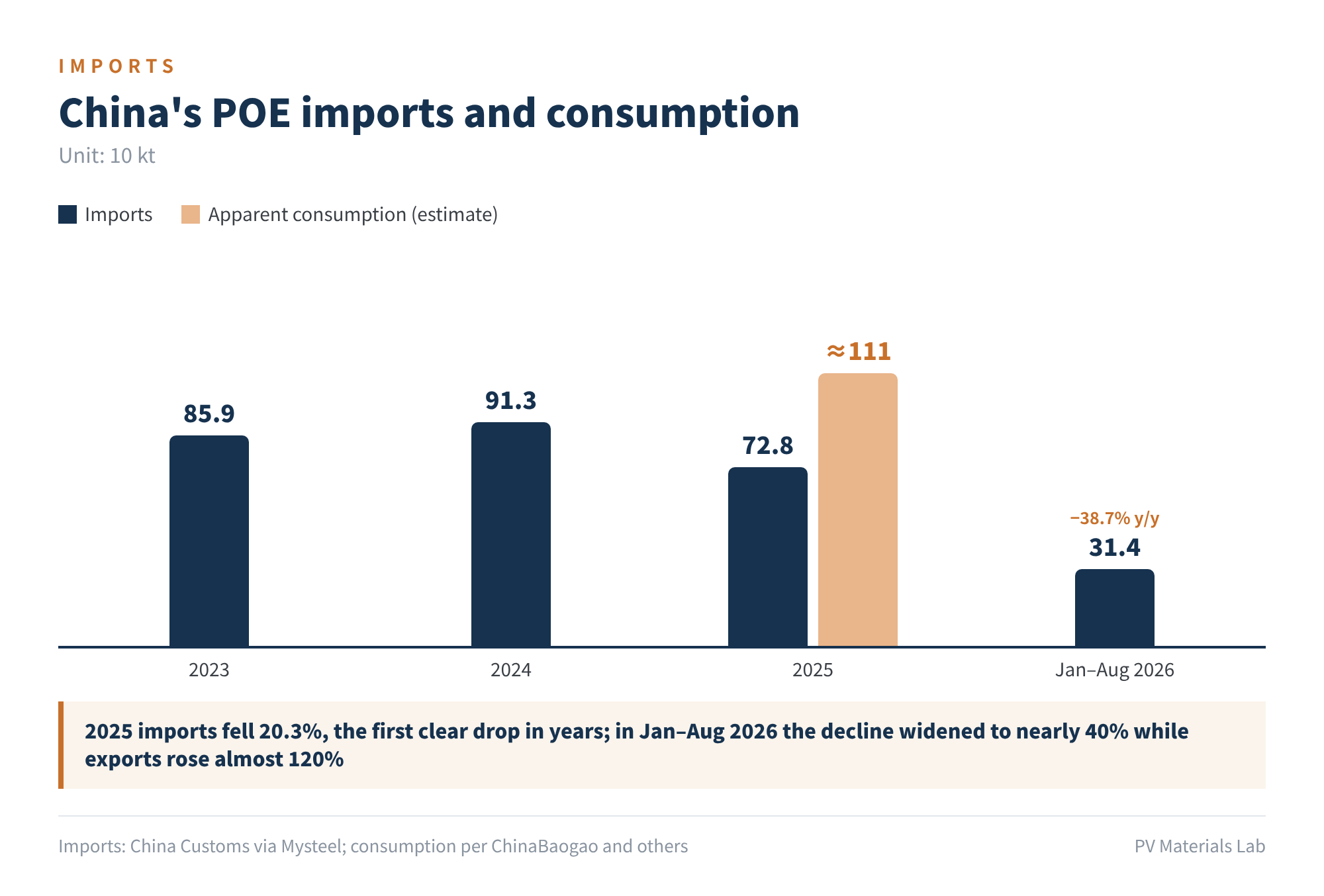
Figure 4 China's POE imports and consumption (10 kt)
Second, growth is mainly C4. Industry tracking data show that new domestic supply in 2025 was mainly butene-based (C4) grades. C4 is cheaper and is the mainstream material in today's PV films; but octene-based (C8) grades for high-end applications still mostly come from imports, and in-house 1-octene supply is the next hurdle.
Third, "PV grade" is a separate exam. Producing on-spec product is only the starting point. PV-grade pellets must pass on gel and fish-eye counts, catalyst residue and ash (which directly affect volume resistivity and yellowing), and batch-to-batch consistency of melt index and molecular-weight distribution (which affects cast-film formation and the crosslinking window). Headline figures disclosed by companies are worth noting, such as Eastern Shenghong's claimed volume resistivity of 10¹⁷ Ω·cm; but for module makers, data from consecutive batches and long-term module-level ageing results are more convincing.
Fourth, prices are no longer shortage-era prices. In the 2022–2023 shortage, PV-grade POE was quoted above CNY 25,000 per tonne; SMM data show a delivered price in China of about CNY 12,000–12,500 per tonne in July 2026. Meanwhile, planned and under-construction capacity in China exceeds 6 million tonnes, against expected consumption of about 1.4 million tonnes in 2026, so the direction of the pellet stage, from "chokepoint" to "cost war", is already clear. That is good news for film and module makers, and a stress test for pellet projects coming later.
05Films: long since local, now "swapping the core"
Unlike pellets, encapsulant films have long been Chinese companies' home ground: about 90% of the world's PV encapsulant film is made by Chinese companies. The structure is a classic "one giant, several strong followers".
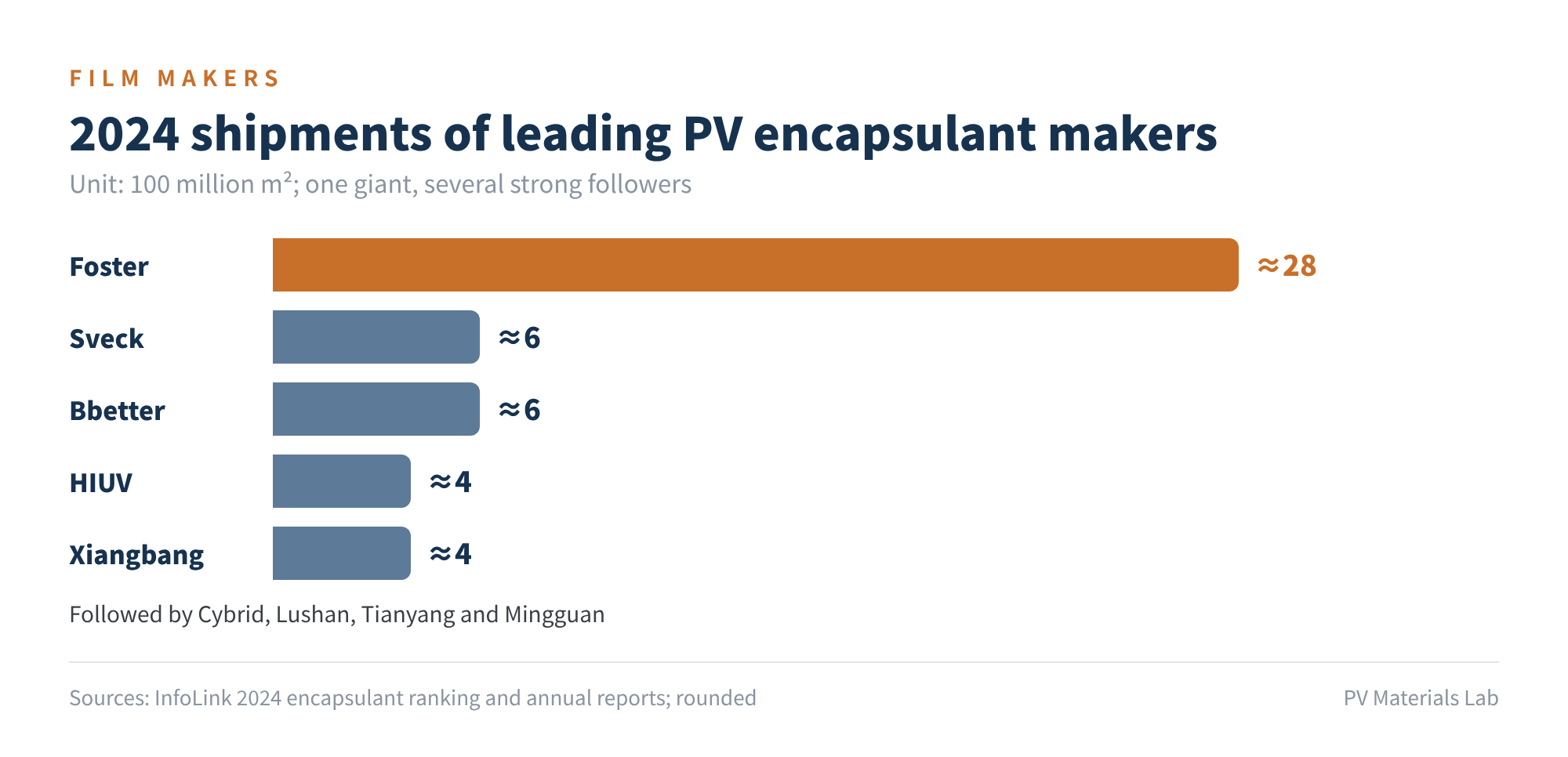
Figure 5 2024 shipments of leading PV encapsulant makers (100 million m²)
Foster shipped about 2.81 billion m² of film in 2025, roughly flat on 2024, keeping a global share above 50%, and its annual report says it supplies more than 70% of the BC cell segment. In the first half of 2026, with module production schedules falling, its film shipments were about 1.22 billion m², down about 12% year on year. In the second tier, Sveck and Bbetter each shipped around 600 million m² in 2024, HIUV and Xiangbang about 400 million m², followed by Cybrid, Lushan, Tianyang and Mingguan.
So "localisation" at the film stage really means replacing imported pellets in formulations with domestic ones. Some public clues:
- Equity ties: Wanhua Chemical, Foster and Trina Solar set up the joint venture Yantai Wanxu New Materials (Wanhua holds 51%), linking pellets, film and modules in one chain.
- Procurement mix: rating reports show the share of domestic PV resin in Foster's purchasing rising steadily.
- Long-term contracts: Eastern Shenghong signed long-term supply agreements at the launch of its POE plant; with 500 kt/yr of EVA capacity as well, it is one of the few suppliers of both EVA and POE.
There are no authoritative public statistics on how much domestic POE each film maker actually uses. We could not find a reliable source for circulating claims such as "leading companies already use 50–60% domestic pellets", so this article does not use them.
06For colleagues: a validation approach for domestic pellets
The risk of a material change lies not in the first samples but in batch variation and long-term reliability. Building on a standard introduction process, we suggest looking at four layers:
- Pellets: melt index, density, DSC melting behaviour; volume resistivity (add a high-temperature point as well as room temperature); ash and volatiles; gels. Focus on the spread across many consecutive batches, not the best single batch.
- Film: additive absorption and blooming (surface condition after storage), degree of crosslinking and its process window, peel strength to glass and backsheet, transmittance and yellowness index; for EPE, also watch additive migration between layers.
- Modules: damp heat (DH), PID, UV, thermal cycling (TC), humidity freeze (HF) and combined-sequence ageing, ideally to a multiple of standard durations, with a same-formulation control using imported pellets. Kiwa PVEL's 2026 data are also a reminder that designs with EPE on both sides and edges squeezed thin carry the highest delamination risk.
- Certification: an encapsulant change is a BOM change, so assess the additional IEC 61215 / 61730 tests required under the IEC TS 62915 retesting rules and confirm with the certification body in advance.
The question about domestic pellets has never been "can they be used?" but "after switching, do you dare sign a 25-year warranty?"
07Final thoughts
Looking ahead, each stage has its own things to watch:
- Pellets: 2026 is still a year of concentrated plant start-ups, and prices will most likely stay low. Competition is shifting from "who starts up first" to "whose PV grades are stable and who has its own α-olefin supply". Exports starting to grow show that some grades have already cleared overseas customers' bar.
- Films: with cheaper pellets, EPE's cost advantage over pure POE will be reassessed, and the two products' share trends are worth tracking; leading film makers' formulation capability and validation databases will set the pace at which domestic pellets scale up.
- Modules: falling encapsulant costs combined with TOPCon and BC iterations mean that which side uses what and at what area weight, in other words how reliability margin is reallocated, will be the next technical topic.
The first half of POE localisation answered "do we have it?"; the second half must answer "is it stable, and is it worth it?"
What has your hands-on experience with domestic pellets been? We would be glad to hear from you.
References
- Sinopec, China Chemical Information Weekly: "POE products exported to North America for the first time" (Sep 2026) (in Chinese)
- Mysteel: "China POE imports decline while exports rise in 2025"; "China's POE trade shifts from import reliance to two-way flow" (22 Sep 2026)
- Science and Technology Daily: scale production of gas-phase POE at Dushanzi Petrochemical (26 Jan 2026) (in Chinese)
- China Lianhe Credit Rating: 2026 and 2025 PV industry analyses and Foster follow-up rating report (in Chinese)
- ChinaBaogao: POE industry research (Mar 2026), PV encapsulant sales statistics (Aug 2025) (in Chinese)
- SMM: PV weekly review (Jul 2026); "Domestic POE Breakthrough" (SMM Analysis)
- Foster 2025 annual report; Soochow Securities note on Foster's 2026 interim results (20 Aug 2026); InfoLink 2024 global PV encapsulant shipment ranking
- Argus: "China's Wanhua starts up polyolefin elastomer unit" (Jul 2024); Yicai Global: Rongsheng's α-olefin pilot plant begins trial production (Aug 2024)
- Announcements and public reports from Eastern Shenghong, Wanhua Chemical, Dingjide, PetroChina and others
A PV R&D and technology team with 10+ years of experience | In-depth technical knowledge sharing
Materials · Reliability · Failure Analysis · Standards & Certification · Products · Processes
Exploring AI + PV; collaboration welcome
Disclaimer:
1. Original content reflects the authors' personal views only, is for reference only and does not constitute investment advice.
2. Reposted and cited content is credited to its source, out of respect for original work.
3. Some content was produced with AI assistance (chart generation, data retrieval, concept explanations, etc.); the core framework and key content were written by our technical team and reviewed by people.
4. If anything is inaccurate or infringes your rights, please leave a message or contact us and we will deal with it.