
Modules Without Glass: Unpacking the KPIs of the EU's SUNRISE Project
Summary: The Horizon Europe-funded SUNRISE project (about €7.27 million total, 12 partners from 8 countries) aims to replace glass with fibre-reinforced polymer (FRP) composites and deliver three demonstrators — VIPV, noise barriers and boat decks — by May 2029. We summarise the project and its quantified targets, then comment from a materials, reliability and certification perspective: weight reduction comes almost for free once the glass is gone; the real test is long-term reliability under damp heat, UV and thermal cycling, and how IEC 61215/61730 — written for glass modules — will apply.
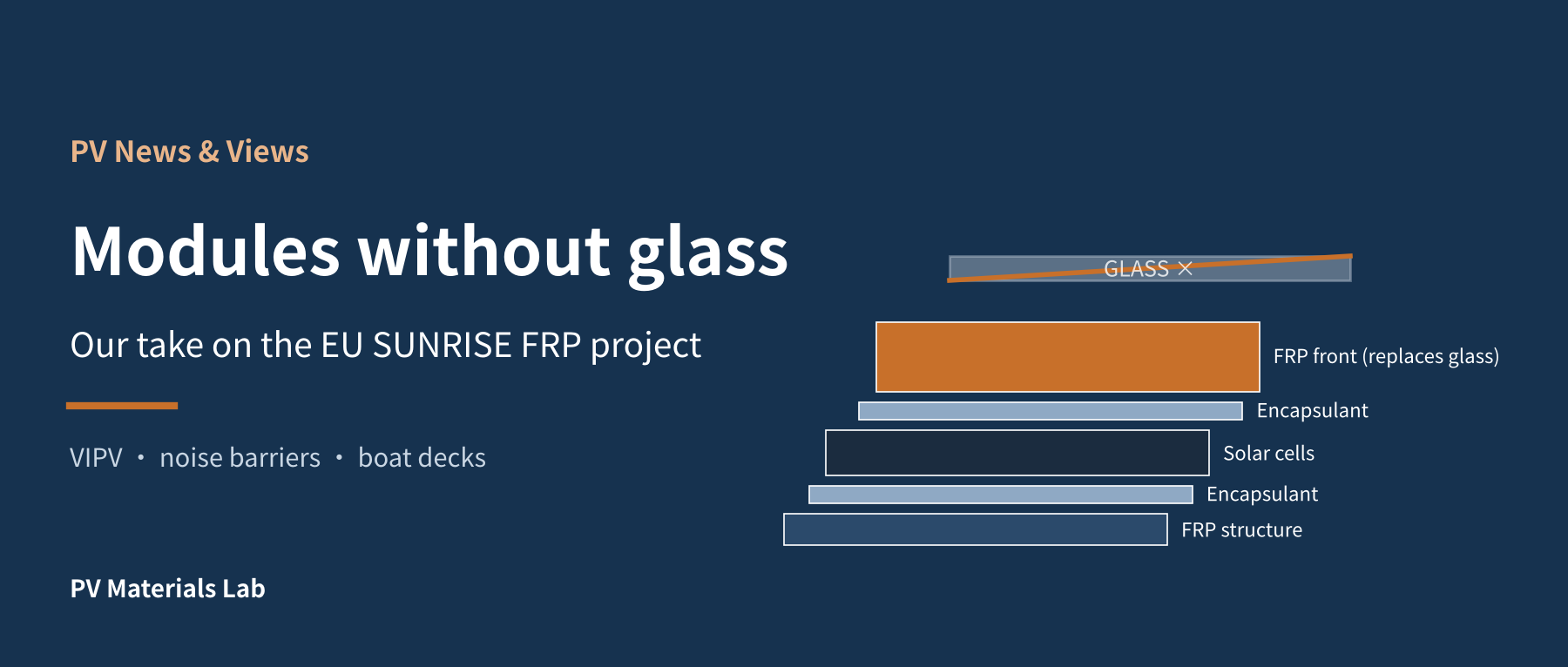
On 24 October, pv magazine reported on the glass-free module project of Europe's SUNRISE consortium. Lightweight, glass-free modules are not new; many groups worldwide have tried them. What makes this one worth a closer look is that, as an EU Innovation Action, it puts measurable numbers on weight, cost, lamination cycle time, efficiency and mechanical load. Below we briefly summarise the news and share our view.
01 The news: an EU project that builds modules from composites
SUNRISE stands for “Sustainable Composites Manufacturing Framework for the Mass Customization of Integrated Solar Photovoltaic Products”. It is funded by Horizon Europe as an Innovation Action, with a total budget of about €7.27 million, of which the EU contributes about €6.43 million. The 36-month project started on 1 June 2026 and ends on 31 May 2029, coordinated by the AIMEN Technology Centre in Spain.
The core idea fits in one sentence: embed the solar cells directly in a fibre-reinforced polymer (FRP) composite structure, so that the composite acts as both cover and structural part — and the glass disappears. The targets are not utility-scale plants but vehicles (VIPV), infrastructure (IIPV, e.g. noise barriers), buildings (BIPV) and boats — applications that need low weight, curved shapes and structural integration.
- Consortium: 12 organisations from 8 countries: 6 research institutes/universities, 5 SMEs and 1 service provider.
- Roles: Fraunhofer ISE handles lamination; AIMEN covers laser cutting/texturing and liquid composite moulding (LCM); Sweden's Sticky Solar Power develops a ribbon-deposition stringer prototype, tested by Italy's Solbian; ISC Konstanz, Lithuania's Solitek and Germany's Forster are also on board.
- Process toolbox: laser-shaped cells; higher-density ribbon interconnection; multifunctional surfaces via laser texturing and roll-to-roll replication (partners reportedly cut total reflection by up to about 50%); single-step lamination and LCM for flat, curved and complex shapes; reversible joints for repair, disassembly and recycling; plus digital twins, inline sensing and a digital product passport.
- Maturity target: all three demonstrators are to reach TRL 7, i.e. a system prototype demonstrated in an operational environment.
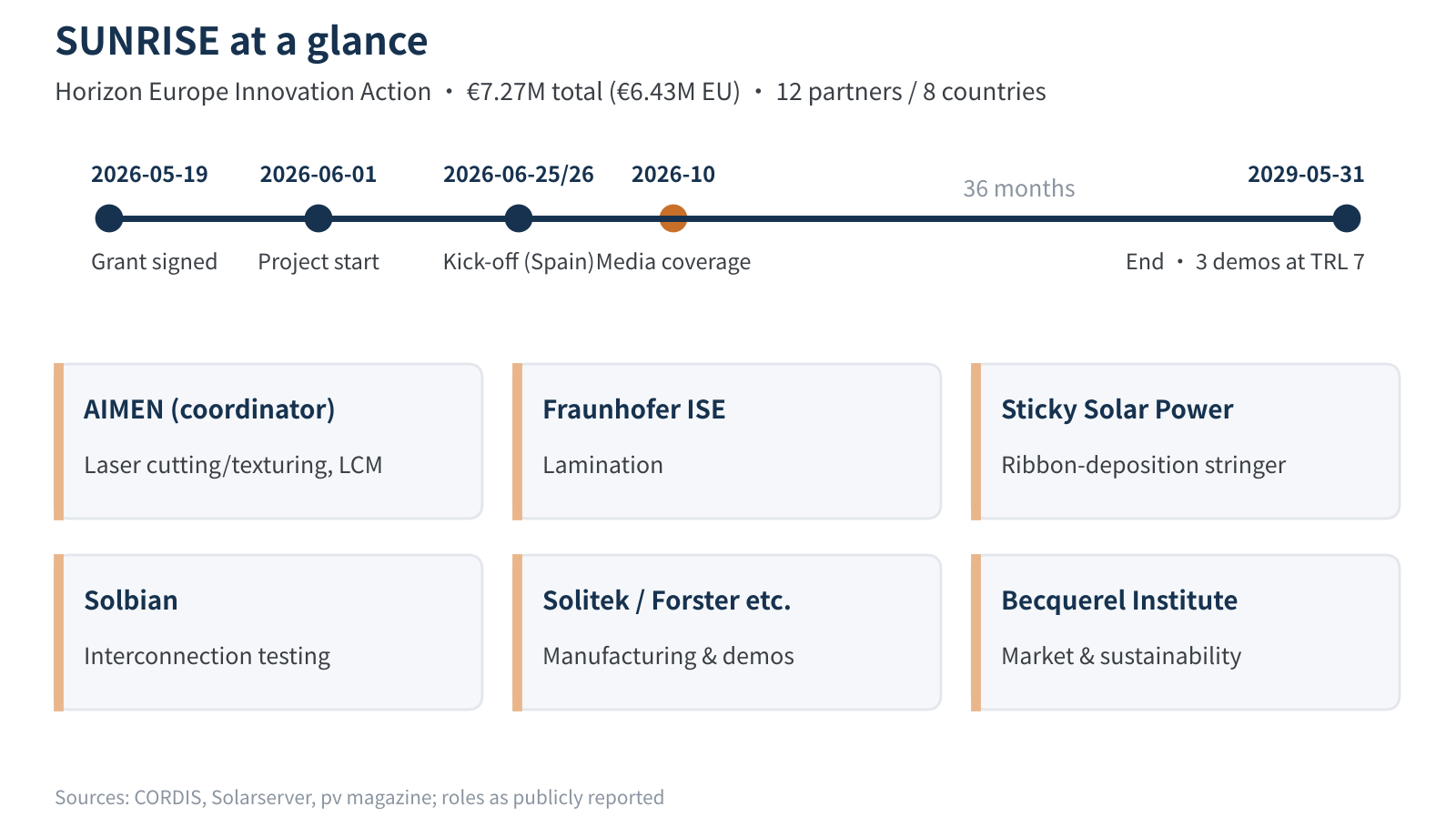
Figure 1 SUNRISE at a glance: timeline and main roles
02 Three demonstrators with very specific KPIs
The most interesting part is the set of quantified targets for the three demonstrators:
| Demonstrator | Application | Key targets (all targets) |
|---|---|---|
| Curved VIPV module | Vehicle integration | Weight −80% or more; system-related cost −30%; lamination time −50% or more |
| Flat noise-barrier module | Infrastructure | Weight −30% or more; 98% of reference TOPCon efficiency; 5,400 Pa static load |
| Integrated boat-deck module | Marine | Flush, seamless and anti-slip; cost more than 20% below conventional |
In addition, all three demonstrators are to undergo durability testing according to IEC 61215 and IEC 61730. That sentence carries a lot of weight, and we come back to it below.
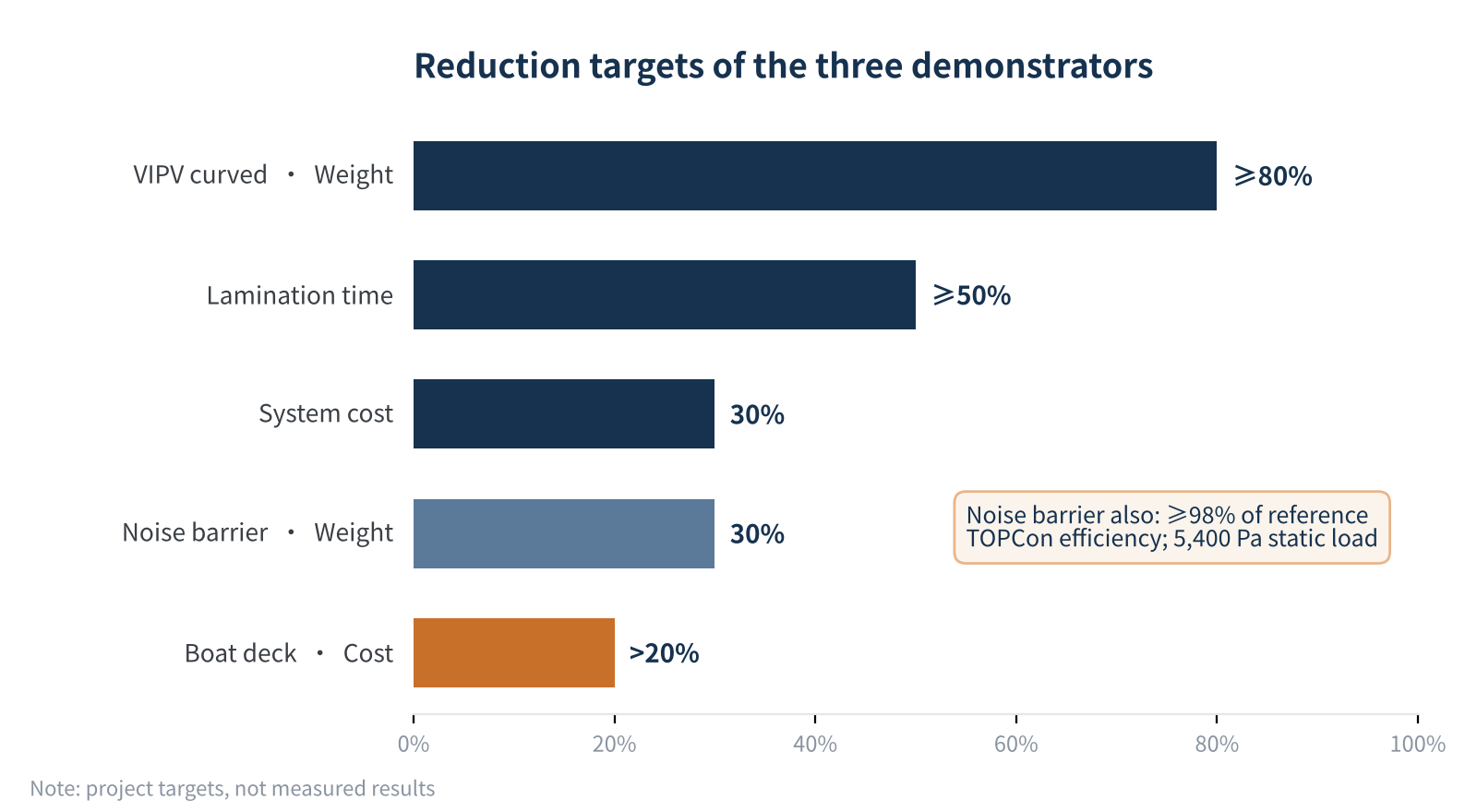
Figure 2 Reduction targets of the three demonstrators (targets, not measured results)
03 Our view (1): which KPIs are easy and which are hard
Start with weight. A conventional glass module weighs roughly 12 kg/m², of which the 3.2 mm front glass alone is about 8 kg. Remove the glass and most of the weight is gone. The VIPV target of −80% works out to about 2.4 kg/m² — a level already seen in published FRP lightweight module research: an imec team reported a carbon-fibre-reinforced backsheet design at about 4.8 kg/m², and Metyx claims its composite vehicle module is 50–80% lighter than glass modules. Weight reduction itself is not the hard part.
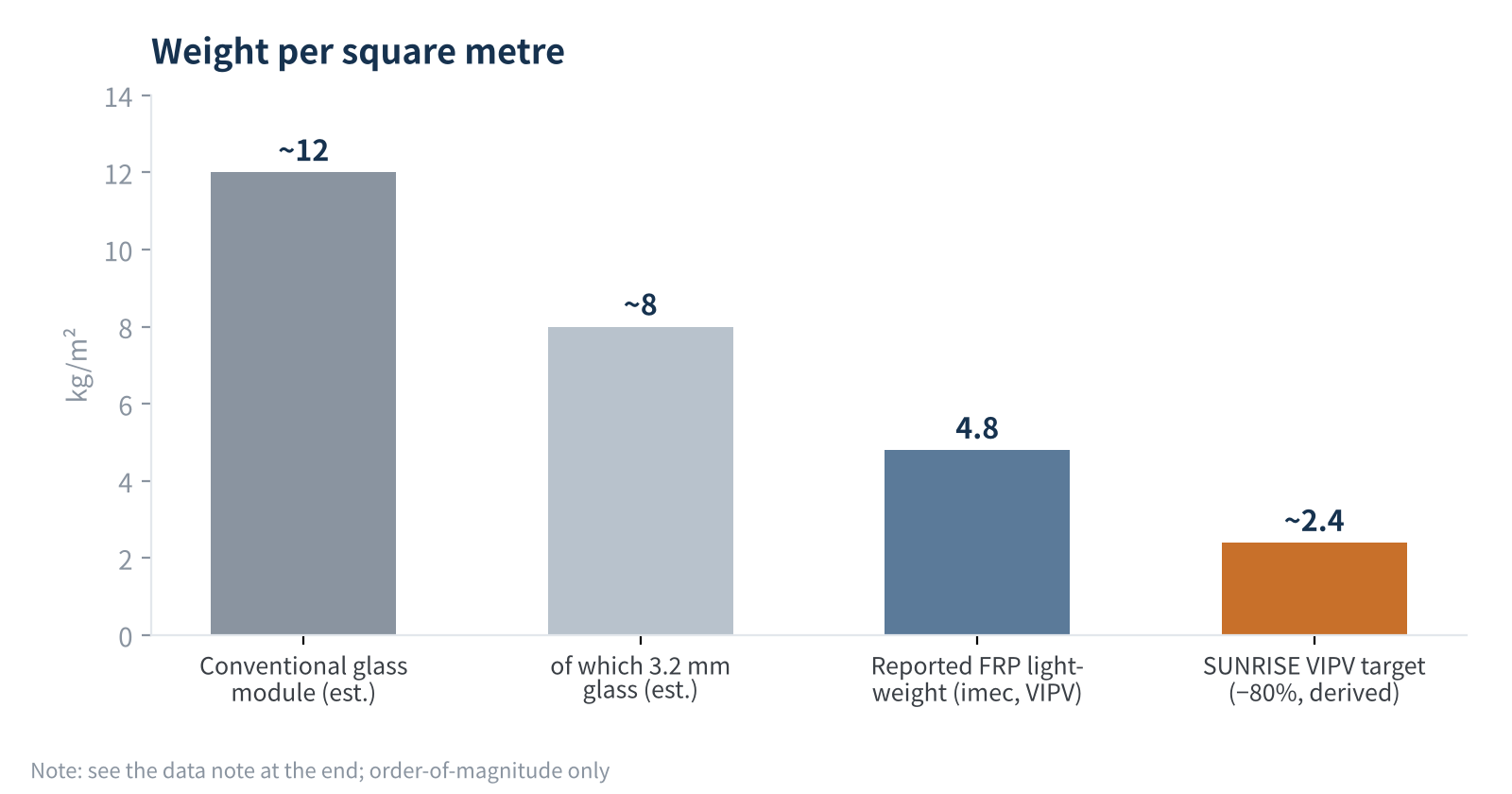
Figure 3 Weight per square metre of different module constructions (estimates, order of magnitude only)
The noise-barrier targets are more down-to-earth: only −30% weight, but 98% of the efficiency of a glass TOPCon reference module and a 5,400 Pa load. 5,400 Pa is a common front-load rating for mainstream modules, so the aim is to match mainstream mechanical performance rather than build a light but fragile niche product. Allowing only a 2% efficiency gap puts hard constraints on front-sheet transmittance, UV cut-off and long-term yellowing.
A 50% shorter lamination time is about the process route. Conventionally, a module is laminated first and then mounted onto a structure; SUNRISE wants single-step lamination or LCM that merges encapsulation and moulding into one step. Good for cycle time, but demanding for the material system: resin cure exotherm and shrinkage stress act directly on cells and ribbons.
Summary: Weight reduction comes free with removing the glass; the real achievement would be holding efficiency, load rating and cycle time at the same time — without glass.
04 Our view (2): the real test is reliability and certification
Glass in a module is far more than a transparent sheet. It is nearly impermeable to moisture, ageing-resistant, stiff, non-combustible and insulating — properties we take for granted that all need to be re-proven with polymer composites. From our reliability and failure-analysis experience, these deserve the closest watch:
- Moisture barrier: polymer front sheets have far higher water vapour transmission than glass. TOPCon is already more sensitive to damp heat and corrosion than PERC, and perovskites even more so; claiming compatibility with TOPCon, IBC, perovskite and tandems is the toughest promise.
- UV ageing: FRP resins and fibre interfaces can yellow or chalk under UV, eating into transmittance. Whether the 98% efficiency target survives ageing is key.
- Thermo-mechanical fatigue: FRP, encapsulant, silicon and copper ribbons have very different thermal expansion coefficients, and curved parts add vehicle vibration. imec observed fatigue fracture of inter-cell wires in glass-fibre-reinforced backsheet modules.
- Impact and load: composites resist impact without shattering, but “not shattered” does not mean “no cracked cells” — EL imaging decides.
- Fire and insulation: vehicles, noise barriers and boats each have their own fire rules, and polymer front sheets must meet the insulation requirements of IEC 61730.
Then certification. As reported, existing standards — especially IEC 61215 and IEC 61730 — were originally developed with conventional glass modules in mind. We fully agree. UV preconditioning dose, crack assessment after hail, and mounting for mechanical load tests all assume a glass-plus-frame construction; for curved FRP modules embedded in structures, how to mount and how to judge pass/fail are open questions. IEC is also working on VIPV standards, and SUNRISE test data may well feed into those discussions.
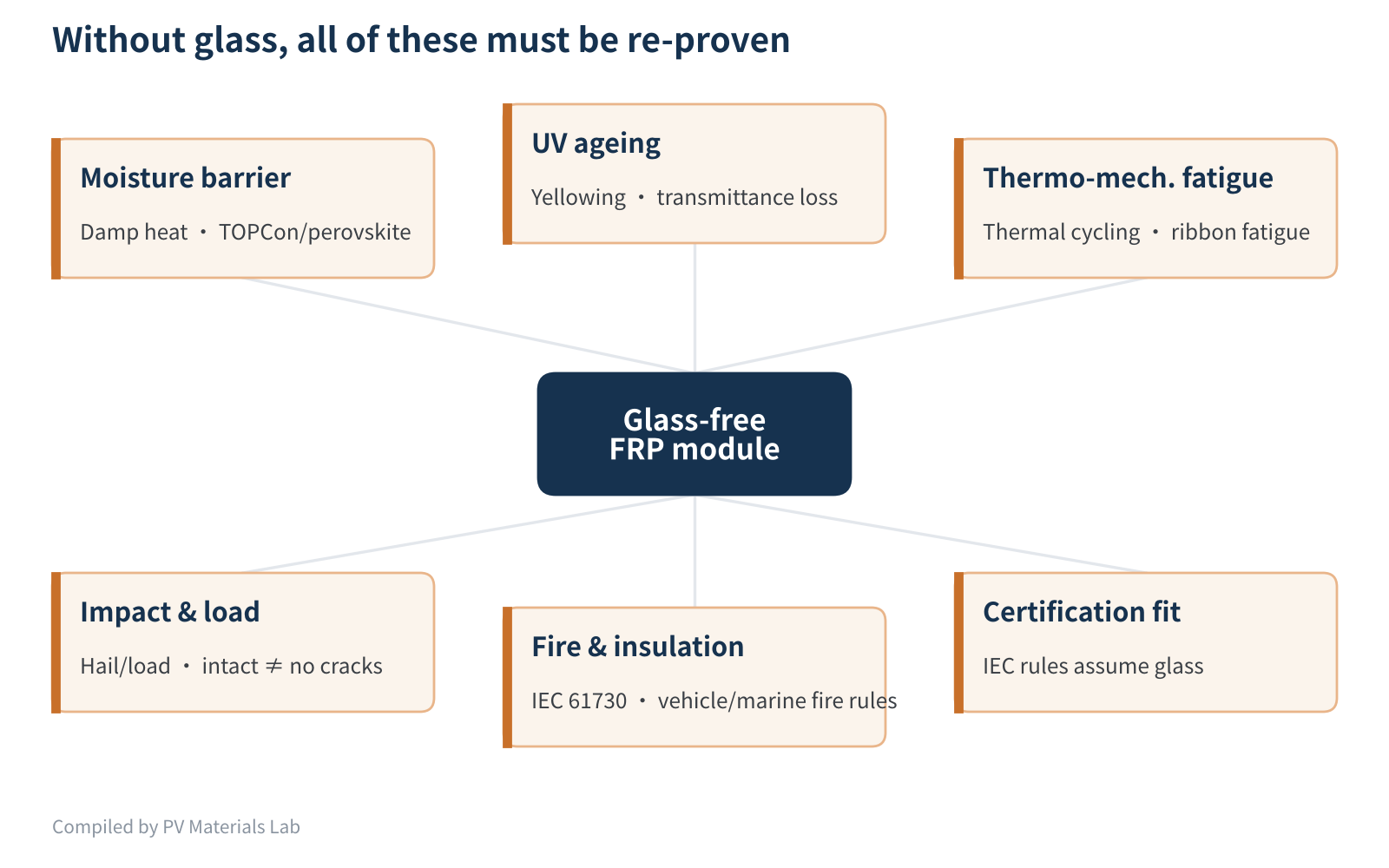
Figure 4 Reliability items that glass-free FRP modules must re-prove
Bottom line: Glass-free modules are not a race to be lightest, but a race to produce long-term reliability evidence that holds up in IEC testing and in the field — without glass as a safety net.
05 What it means for module makers and suppliers
Our take: worth tracking, no need to panic.
- Timing: TRL 7 by 2029 means prototype demonstration in a real environment — still some way from mass production and large-scale vehicle integration.
- Opportunities: the industry already has experience with lightweight/flexible modules, encapsulants, high-transmittance front sheets and ribbon interconnection; FRP front sheets, low-WVTR encapsulation and encapsulants compatible with composite moulding could all become new topics for material suppliers.
- Rules: reversible joints, design for disassembly and a digital product passport are built into the project. For the European integrated-PV market, “dismantlable and traceable” may become as much of an entry ticket as efficiency.
For R&D and certification colleagues, we suggest watching for published damp-heat, thermal-cycling and UV sequence data, and the project's gap analysis against IEC clauses — these will be worth far more than any weight-reduction percentage.
06 Final thoughts
PV modules have used glass for decades because glass has almost no weak spot in transmittance, barrier, weatherability and stiffness. Projects like SUNRISE try to close each of those gaps with composites in specific applications, in exchange for low weight, curvature and integration. We will keep following how far it gets, and in our lightweight/flexible module series we plan to look more closely at encapsulation structures and failure modes of glass-free modules.
Data note
- Conventional glass module weight estimated at about 12 kg/m² (mainstream module of about 2.6 m² and 28–32 kg); order of magnitude only.
- 3.2 mm glass at a density of about 2.5 g/cm³: 3.2 mm × 2.5 g/cm³ ≈ 8 kg/m².
- SUNRISE VIPV target weight = 12 kg/m² × (1 − 80%) ≈ 2.4 kg/m²; the project has not published its baseline, so the result depends on the reference used.
- All project KPIs quoted are targets, not measured results; current efficiency/power data have not been disclosed.
References
- pv magazine Global: Glass-free European photovoltaic modules for vehicles, noise barriers and boats, 2026-10-24
- CORDIS: SUNRISE project fact sheet (Grant agreement ID 101294348)
- Solarserver: SUNRISE entwickelt formbare Photovoltaikprodukte, 2026-09-15
- Luo B. et al.: thermo-mechanical reliability of lightweight multi-wire modules for VIPV (imec / Hasselt University), 2023
- imec-EnergyVille: Development and testing of light-weight PV modules based on glass-fibre reinforcement, EPJ Photovoltaics, 2022
- JEC Composites: Metyx composite PV module for vehicles wins JEC Innovation Award, 2026-01
PV Materials Lab
PV Materials Lab
A PV R&D and technology team with 10+ years of experience | In-depth technical knowledge sharing
Materials · Reliability · Failure analysis · Standards & certification · Products · Processes
Exploring AI + PV — collaboration welcome
Disclaimer:
1. Original content reflects the authors' personal views only, is for reference, and does not constitute investment advice.
2. Reproduced and cited content is attributed to its source, with respect for original work.
3. Some content is AI-assisted (chart generation, data retrieval, concept explanations, etc.); the core framework and key content are written by our technical team and reviewed by humans.
4. For any inaccuracy or infringement, please leave a comment or contact us.