
IEC, UL, GB, Industry and Association Standards: How PV Standards Relate
Key points
① Standards, certification and market access are three different things; ② IEC is the technical base, and EN, UL and GB/T are mostly localised versions of it; ③ Chinese standards are tiered: mandatory national standards set the floor, while association and enterprise standards often set the higher bar; ④ from 2026, PV modules have dedicated mandatory national standards in China.
Tender documents often contain a line like this: "Modules shall meet the requirements of IEC 61215, IEC 61730, UL 61730, GB/T 9535 and relevant industry and association standards."
With a string of codes packed together, which ones are mandatory, which governs which, and which is stricter? In our more than ten years in PV, this is one of the questions we are asked most often, and one of the easiest to get wrong.
This article doesn't cover specific tests. It does one thing: explain how these standards relate to one another.
01First, separate three things: standards, certification, market access
Much of the confusion comes from treating three things as one.
- Standard: a technical document that sets out what to test, how to test it and what counts as a pass. It is written by a standards body.
- Certification: a third party tests to the standard, audits the factory and issues a certificate. It is done by certification bodies and laboratories.
- Market access: laws, electrical codes, grid connection rules or contracts that say "no certificate, no sale or installation". This is where the obligation comes from.
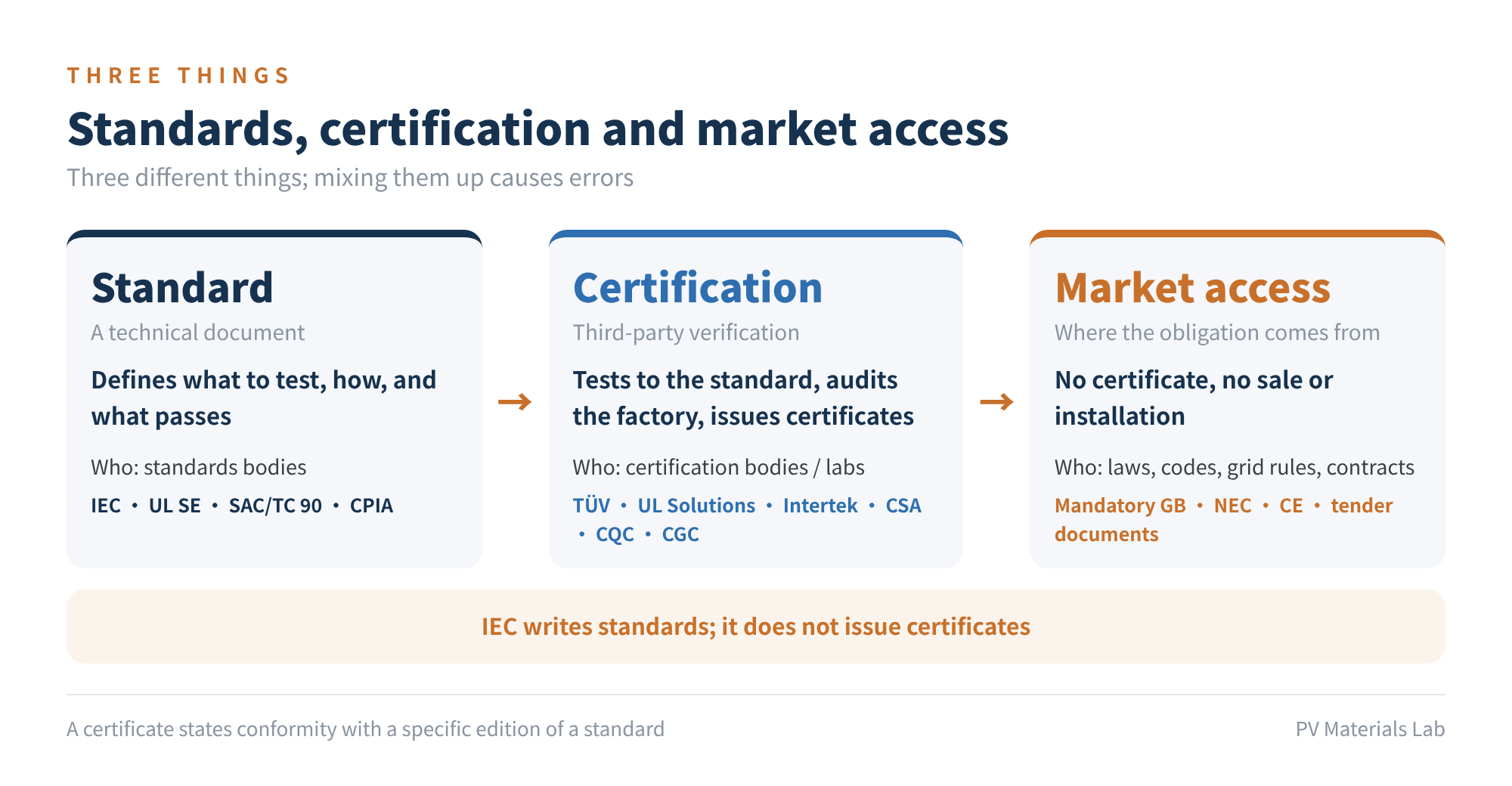
Figure 1 Standards, certification and market access
So strictly speaking, "we have passed IEC certification" is not accurate. IEC writes standards; it does not issue certificates. Certificates are issued by bodies such as TÜV Rheinland, TÜV SÜD, UL Solutions, Intertek, CSA, CQC and CGC, and they state conformity with "a certain edition of IEC 61215 and IEC 61730".
Keep this division of labour in mind and everything that follows is easier to understand.
02IEC: the "common language" of global PV
IEC, the International Electrotechnical Commission, was founded in 1906 and is headquartered in Geneva. PV falls under its TC 82 (Solar photovoltaic energy systems, established in 1981). Experts from many countries draft in working groups, and member countries vote documents through.
There are two pillars for modules:
- IEC 61215 series: design qualification and type approval. It asks "can this design work outdoors over the long term?", covering performance and reliability.
- IEC 61730 series: safety qualification. It asks "can it shock, burn or injure anyone?", covering safety.
Around these two pillars sits a set of supporting documents. IEC documents come in several types, with different force:
| Type | Meaning | PV examples |
|---|---|---|
| IS International Standard | A formal standard; what countries adopt | IEC 61215, IEC 61730 |
| TS Technical Specification | Technology still evolving; a common approach first | IEC TS 62915 (retesting after changes), IEC TS 63126 (high-temperature operation), IEC TS 63209 (extended-stress testing) |
| TR Technical Report | Informative; no requirements | Surveys and data compilations |
One point is often overlooked: IEC standards are voluntary in themselves. No country is obliged to follow them just because "IEC says so". Their weight comes from three places: adoption as national standards, use by certification schemes, and inclusion in buyers' contracts.
Within the IEC system there is also the IECEE CB Scheme, for "test once, accepted in many countries": with a CB certificate and report, you can convert to local certificates at certification bodies in member countries and avoid repeating tests.
03UL: North America's "dialect", and where its force comes from
First, what is UL? It is a private organisation, not a US government agency. Since 2022 it has been split into three entities: UL Standards & Engagement, a non-profit, writes the standards; UL Solutions, a company, does testing and certification.
In other words, "UL standards" and "UL certification" are also two different things. UL is not the only one that can list products to UL standards: Intertek (ETL mark), CSA, TÜV and others can too, as long as they are NRTLs (Nationally Recognized Testing Laboratories) recognised by the US OSHA.
So why does everyone say "you must pass UL to sell in the US"? Look at this chain:
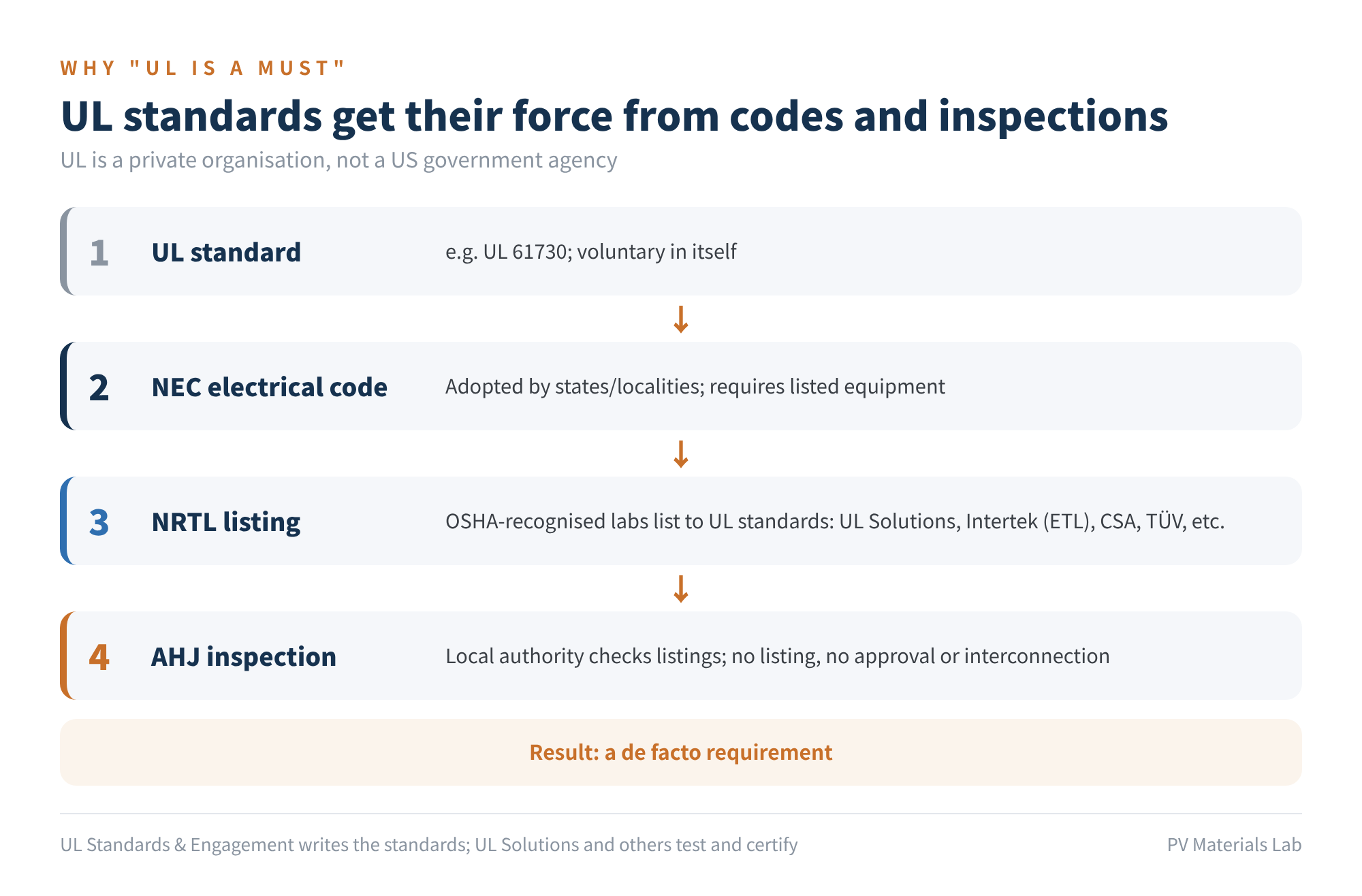
Figure 2 UL standards get their force from codes and inspections
How UL relates to IEC
The two used to go their separate ways. For a long time the North American module safety standard was UL 1703, whose structure and test logic differed considerably from IEC, so exporters had to do two full sets of tests.
The turning point came in December 2017 with the publication of UL 61730-1 and UL 61730-2. They are based on IEC 61730:2016, plus a set of US national differences to meet the NEC, including the North American fire type rating. The UL 61215 series follows the same approach.
On 26 March 2026, UL 61730-1:2026 and UL 61730-2:2026 were published, now based on IEC 61730-1/-2:2023 and marked as MOD (modified adoption). In other words, the North American safety standard has caught up with the latest IEC edition; for the specific differences, refer to the official text.
UL 61730 ≈ IEC 61730 + US national differences
The practical upshot for companies: most tests can be combined, with one set of samples and one round of testing producing two reports; the difference items must still be tested separately and cannot be skipped.
Incidentally, North American PV systems also involve several sibling standards: UL 2703 (mounting and grounding), UL 1741 (inverters), UL 3741 (PV hazard control), UL 4703 (PV wire) and UL 6703 (connectors).
04Chinese standards: five types, six tiers
China's Standardization Law (current version in force since 1 January 2018) divides standards into five types: national, industry, local, association and enterprise standards. National standards are further split into mandatory and recommended; industry and local standards are all recommended.
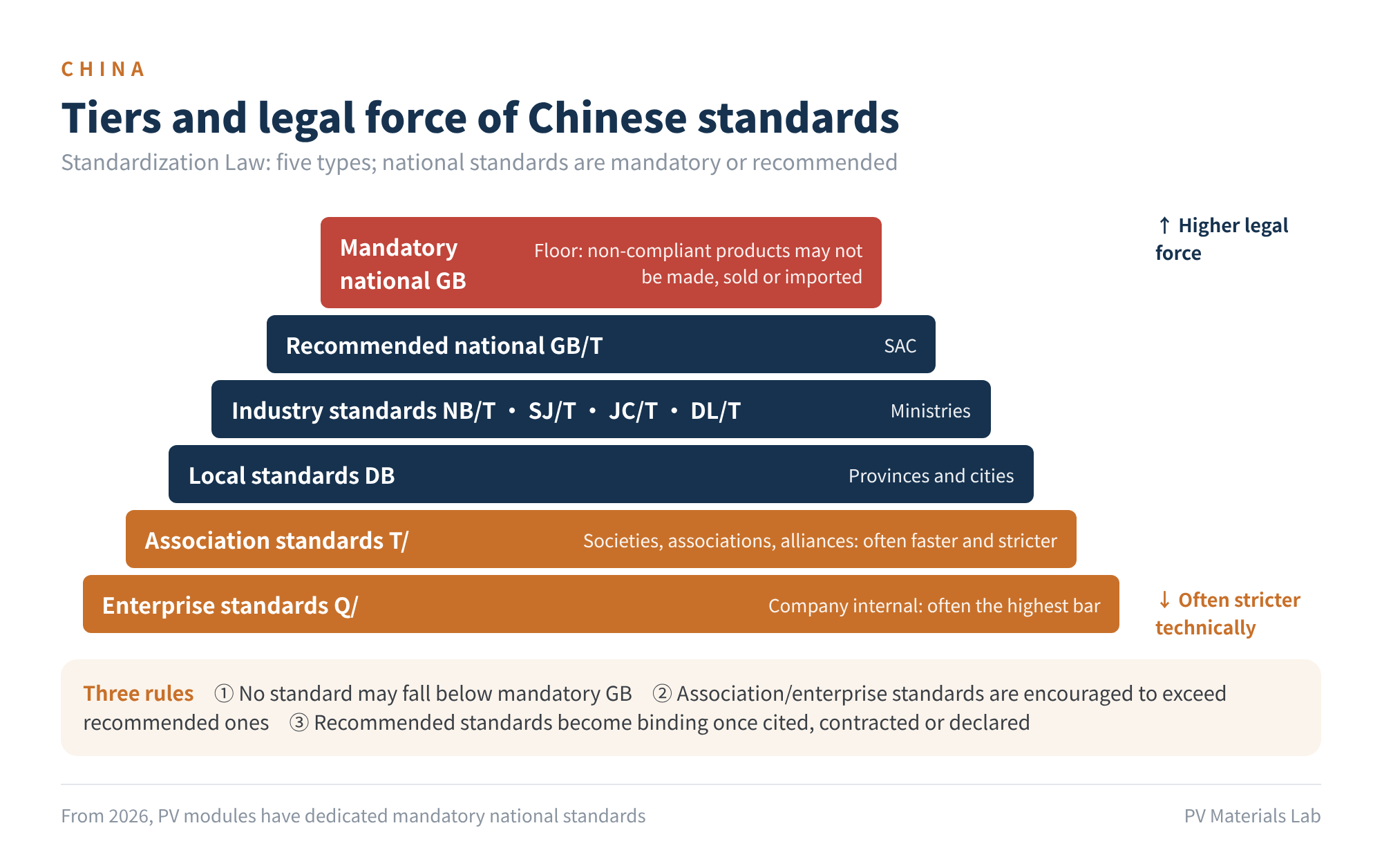
Figure 3 Tiers and legal force of Chinese standards
| Tier | Code | Issued by | PV examples |
|---|---|---|---|
| Mandatory national | GB | Approved or authorised by the State Council | PV module safety requirements, PV module nameplate marking requirements, etc. (published 2026) |
| Recommended national | GB/T | Standardization Administration of China | GB/T 9535.1, GB/T 9535.2 (module design qualification); GB/T 20047.1 (module safety qualification); GB/T 29848 (EVA encapsulant); GB/T 31034 (backsheet) |
| Industry | NB/T, SJ/T, JC/T, DL/T, etc. | Relevant ministries under the State Council | NB/T 32004 (grid-connected inverters); JC/T 2001 (PV glass) |
| Local | DB + region code | Provinces and cities with districts | Mostly for construction and acceptance of distributed PV |
| Association | T/ + body code | Societies, associations, industry alliances | T/CPIA (China Photovoltaic Industry Association), T/CEC (China Electricity Council) |
| Enterprise | Q/ + company code | Companies themselves | Internal standards of module and materials makers |
Three rules govern how the tiers relate, and they are worth remembering:
- The floor rule. The technical requirements of recommended national, industry, local, association and enterprise standards may not be lower than mandatory national standards. Products that don't meet mandatory standards may not be produced, sold or imported.
- The higher-bar rule. The state encourages associations and companies to set standards that exceed recommended standards.
- "Recommended" does not mean "non-binding". Once a recommended standard is cited by regulations, written into a contract or tender, or declared by a company on its product, packaging or manual, it must be met.
Why there are so many industry-standard codes
Because PV spans several industries. Manufacturing falls under electronics (SJ), power plants and grid connection under energy and power (NB, DL), glass under building materials (JC), and building-integrated PV also meets the construction industry (JG). One module, from materials to grid connection, passes through the standards of several ministries.
Why association standards are still needed
In a word: speed. Revision cycles for national and industry standards are usually measured in years, and new cell structures, new encapsulants and new applications can't wait that long. Association standards can first unify "how to test and how to compare", then be raised to industry or national standards, or even taken to IEC, once mature.
So association standards sit low in the hierarchy in terms of legal force, not technical level. Many association standards are stricter and more up to date than national ones.
05National standards and IEC: adoption and the time lag
China's counterpart to IEC/TC 82 is the National Technical Committee for Solar Photovoltaic Energy Systems Standardization (SAC/TC 90). A large share of national standards are converted from IEC, known as "adoption", at two levels:
- IDT, identical: technical content and structure unchanged, with editorial changes only.
- MOD, modified: technical differences exist and are explained clause by clause in the standard.
- NEQ, not equivalent: only indicates a correspondence; not counted as adoption.
The degree of adoption is printed on the cover of a national standard, e.g. "GB/T 20047.1-2006 / IEC 61730-1:2004, IDT". From it you can tell which IEC edition the national standard is based on.
The trouble is the time lag
GB/T 9535 is the classic example. Its 1998 edition corresponds to IEC 1215:1993. IEC 61215 then changed edition three times, in 2005, 2016 and 2021, and the national standard only caught up with GB/T 9535.1-2025 and GB/T 9535.2-2025. GB/T 9535.1-2025 was published on 5 October 2025, took effect on 1 May 2026, and is an identical adoption of IEC 61215-1:2021.
The safety-qualification line is catching up too: GB/T 20047.1-2025, PV module safety qualification – Part 1: Requirements for construction, was published and took effect on 31 December 2025. It is an identical adoption of IEC 61730-1:2023 and replaces the 2006 edition, used for nearly two decades; the national standard for Part 2 (requirements for testing) is still in the drafting plan.
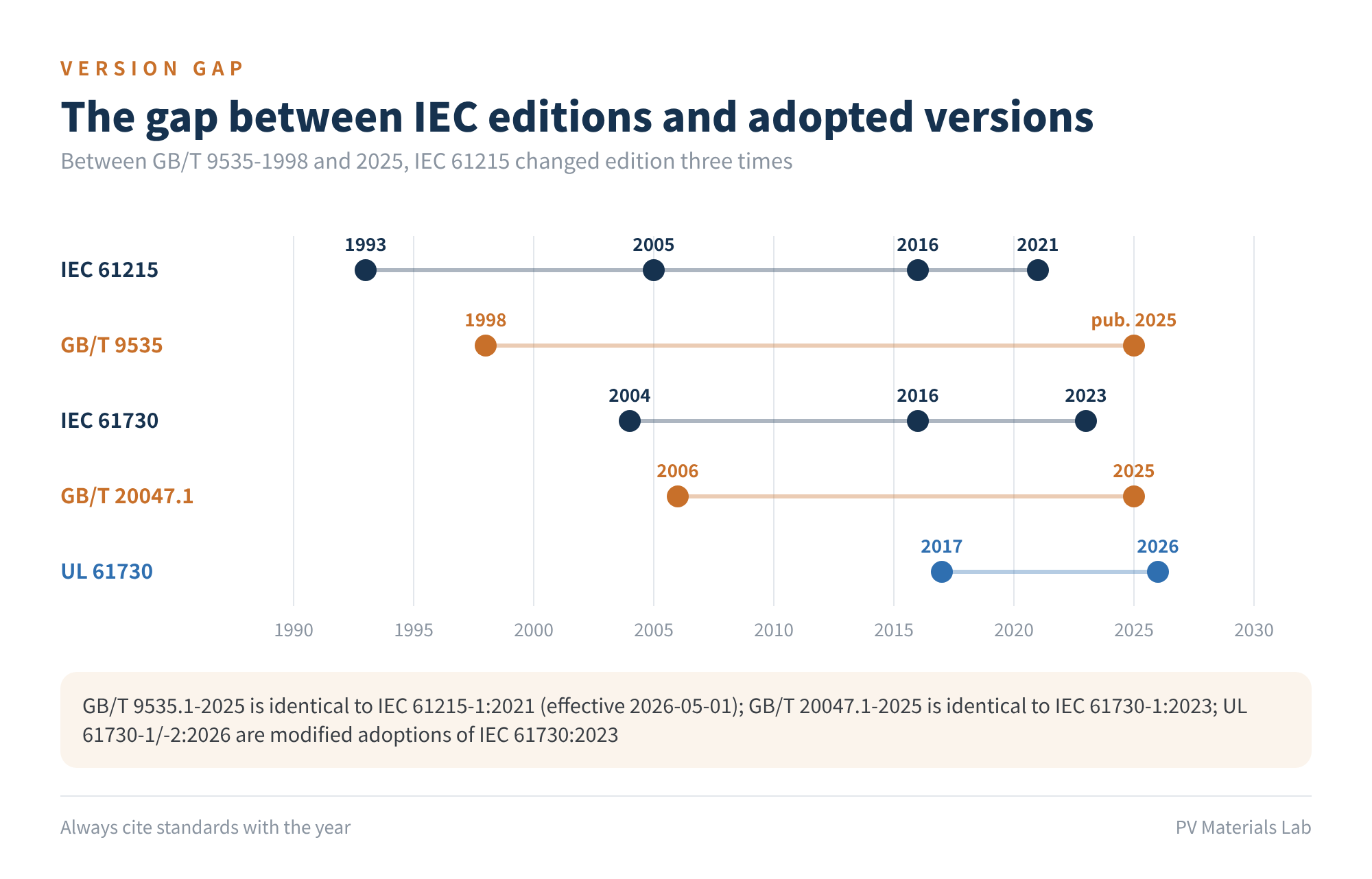
Figure 4 The gap between IEC editions and adopted versions
During those twenty-odd years, certification bodies in practice tested directly to the current IEC edition. That is why Chinese technical agreements often cite both an IEC and a GB/T number.
Putting the previous sections together gives the panorama below.
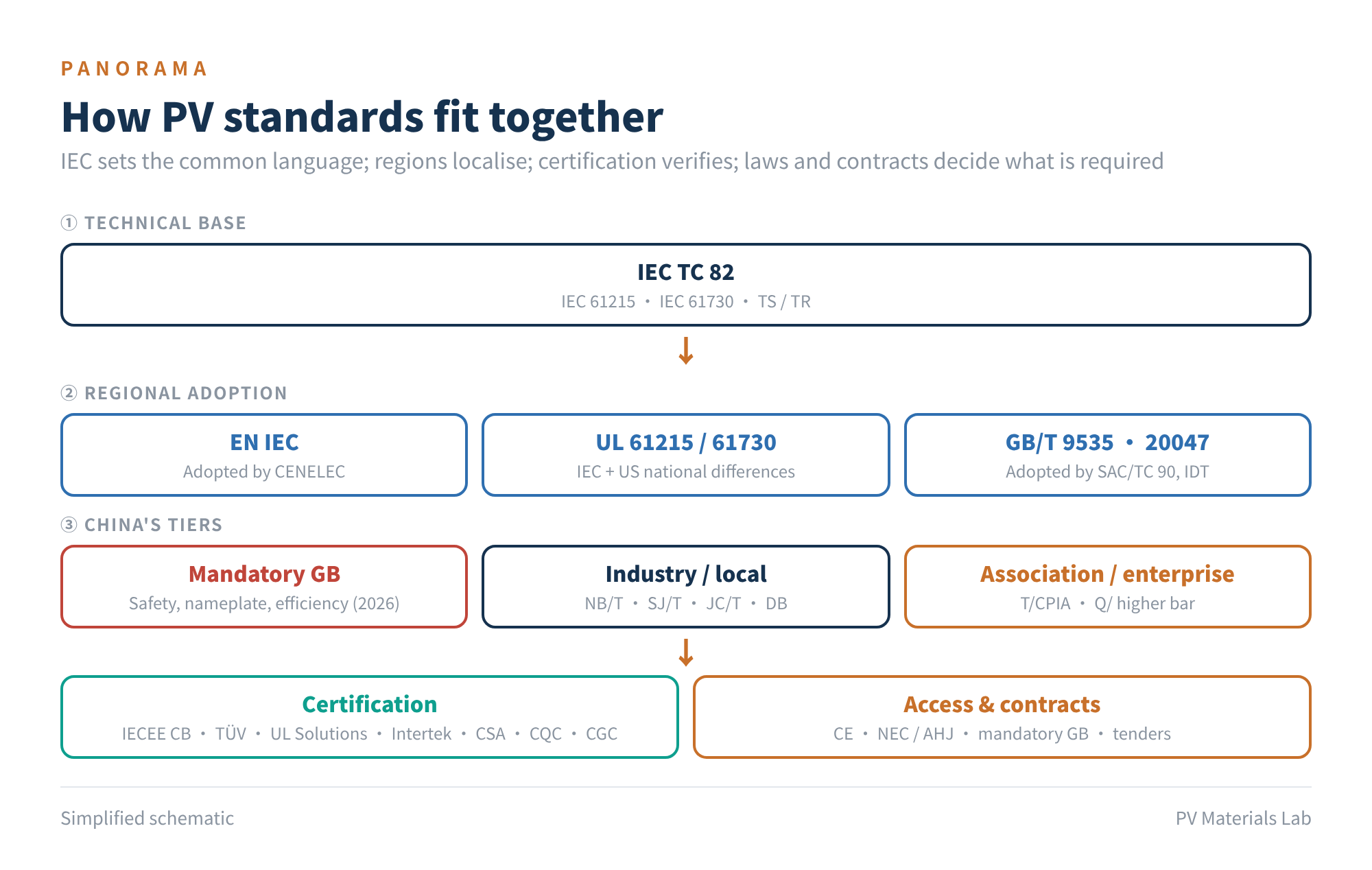
Figure 5 How PV standards fit together
06What changed in 2026: mandatory national standards for modules
For a long time, PV modules in China had essentially no dedicated mandatory national product standards and were not in the CCC compulsory certification catalogue. The quality threshold relied mainly on voluntary certification plus buyer requirements.
In 2026 that changed:
- 25 May: the State Administration for Market Regulation and the Standardization Administration of China approved and published two mandatory national standards, PV module safety requirements and PV module nameplate marking requirements, proposed and administered by the Ministry of Industry and Information Technology (MIIT), taking effect on 1 June 2027. The first covers electrical, mechanical and fire safety and hazardous substance limits, and sets fire ratings, combustion performance levels and flame-retardancy requirements for component materials. The second targets overstated power: it sets the maximum allowable tolerances of nameplate electrical parameters and the verification method, and requires measurement results to be traceable.
- 2 July: MIIT, together with the National Development and Reform Commission and the State Administration for Market Regulation, published three mandatory national standards: Minimum allowable values of energy efficiency and energy efficiency grades for crystalline silicon PV modules and inverters, Norm of energy consumption per unit product of monocrystalline silicon, and Norm of energy consumption per unit product of polycrystalline silicon and germanium, taking effect on 1 January 2027. Efficiency has three grades; grade 3 is the market-entry threshold, and products below it may not be produced, imported or sold. For modules, a degradation-rate indicator under coupled environmental stresses has also been added.
Seen against Figure 3, the meaning is clear: the top tier has gone from essentially empty to solid. Before, "compliance" mainly meant satisfying customers; from now on, the law comes first.
07Five common misconceptions
| Misconception | Reality |
|---|---|
| "We have IEC certification" | IEC does not issue certificates. The accurate wording is "obtained a certificate from body X to a certain edition of IEC 61215 and IEC 61730" |
| "UL is a mandatory US national standard" | UL is a private organisation and its standards are voluntary. The obligation comes from the NEC and local inspections |
| "GB/T is only recommended, so we can ignore it" | Once written into a contract, cited by regulations or declared on a product, it is binding |
| "Association standards are the lowest tier, so their requirements are the lowest" | Tiers describe legal force. Technically, association and enterprise standards are often the strictest |
| "Pass IEC 61215 and it will last 25 years" | Qualification tests find early design and material failures; the standard itself says it is not a lifetime prediction |
08In practice: what to look for in each market
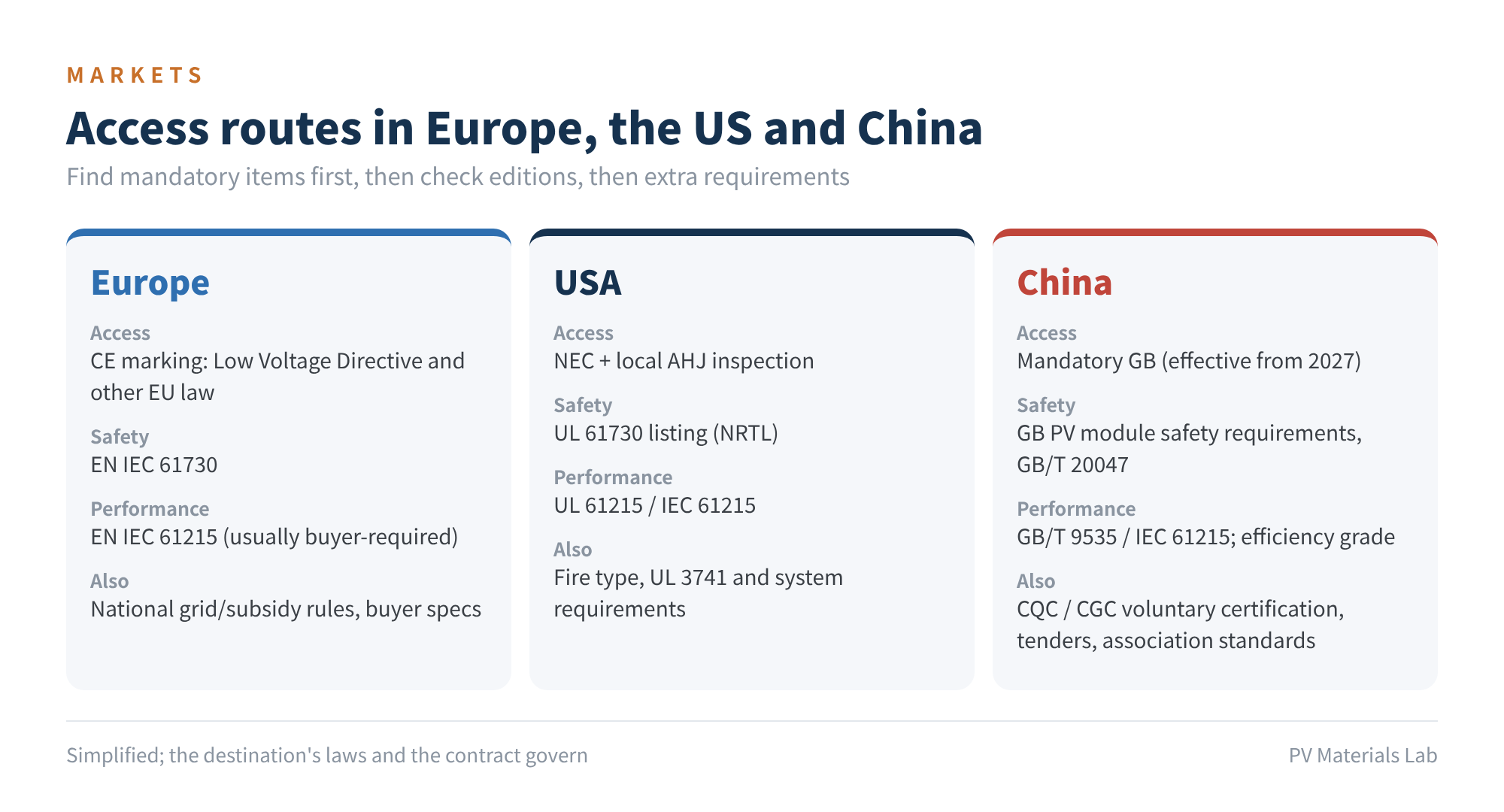
Figure 6 Access routes in Europe, the US and China
When you receive a technical agreement or tender document, we suggest reading it in this order:
- Find the mandatory items first. Laws, mandatory standards and access requirements in the destination country are not negotiable.
- Then check the edition numbers. Which year's edition does the contract cite, and are your certificates and reports to the same edition?
- Finally, look at the extra requirements. Requirements in buyer specifications and association or enterprise standards that exceed general standards are often where the cost and risk lie.
To check whether a standard is current, use these official channels: the National Public Service Platform for Standards Information (national, industry and local standards), the National Platform for Association Standards Information (association standards), and the IEC Webstore (IEC documents and their status).
09Final thoughts
In the end, how standards relate comes down to three questions: who wrote the technical content, who verifies it, and who says it must be done. Keep those three apart and the string of codes in a tender will no longer be confusing.
IEC sets the common language and EN, UL and GB/T localise it; mandatory national standards set the floor, while industry, association and enterprise standards add detail and raise the bar; certification verifies, and laws and contracts decide what is required.
Which standard's edition or applicability gives you the most headaches at work? We would be glad to hear from you.
References
- Standardization Law of the People's Republic of China (revised 2017, in force from 1 January 2018)
- Scope statements of the IEC 61215 series (2021 edition) and IEC 61730 series (2023 edition)
- UL Solutions: UL 1703 / UL 61730 transition notes; Intertek standards update notices
- ANSI Webstore: UL 61730-1:2026 and UL 61730-2:2026 (published 26 March 2026)
- Xinhua: "Two mandatory national standards for PV modules published", 26 May 2026
- 10jqka: "Three energy consumption and efficiency national standards to take effect next year", 3 July 2026
- National Public Service Platform for Standards Information: records for GB/T 9535.1-2025 and GB/T 20047.1-2025
A PV R&D and technology team with 10+ years of experience | In-depth technical knowledge sharing
Materials · Reliability · Failure Analysis · Standards & Certification · Products · Processes
Exploring AI + PV; collaboration welcome
Disclaimer:
1. Original content reflects the authors' personal views only, is for reference only and does not constitute investment advice.
2. Reposted and cited content is credited to its source, out of respect for original work.
3. Some content was produced with AI assistance (chart generation, data retrieval, concept explanations, etc.); the core framework and key content were written by our technical team and reviewed by people.
4. If anything is inaccurate or infringes your rights, please leave a message or contact us and we will deal with it.