
Is Passing IEC 61215 Enough? A Guide to the "Extra Exams" for PV Module Reliability
Key points
① IEC 61215 / 61730 are a standard exam set for a "generic outdoor climate" and do not cover every application; ② beyond that exam, IEC has added standards in four directions: extended stress, scaled-down, accelerated and high temperature; ③ there are a dozen or more specific standards for hail, snow load, salt mist, PID, LeTID and more; ④ a quick-reference table is at the end.
Anyone who works on modules knows three standards well: IEC 61215 for design qualification, IEC 61730 for safety qualification, and IEC TS 62915 for which tests must be repeated after a material or design change. With these three, a module has its passport to mainstream markets.
But a passport is not a guarantee for every situation. The same module faces completely different stresses on a well-ventilated ground mount, flush on a Middle Eastern roof, strapped to a hiking backpack, or in a hail belt. The classic standards are a standard exam that tests the basics under generic conditions.
Over the years IEC has added quite a few "extra exams". This article sorts them by direction: what problem each standard solves, how it relates to the classic standards, and when to use it.
01First, the default assumptions of the standard exam
To understand the supplementary standards, you first need to know what the classic ones assume. The key assumptions:
- It is a qualification test, not a lifetime test. IEC 61215 aims to screen out designs with early-failure risk in reasonable time and at reasonable cost; the verdict is only pass or fail. It does not answer "how many years will it last?".
- It assumes the module doesn't get too hot. The scope of IEC TS 63126 states plainly that the test conditions of 61215, 61730 and related component standards assume a module T98 below 70 °C.
- Its mechanical and impact tests are the basic version. The hail test baseline is a 25 mm ice ball, and load tests use uniform loads.
- It is aimed at modules generating power outdoors for the long term. Testing a small consumer panel expected to last a few years with the same exam is not economical.
Wherever one of these assumptions breaks, there is a supplementary standard.
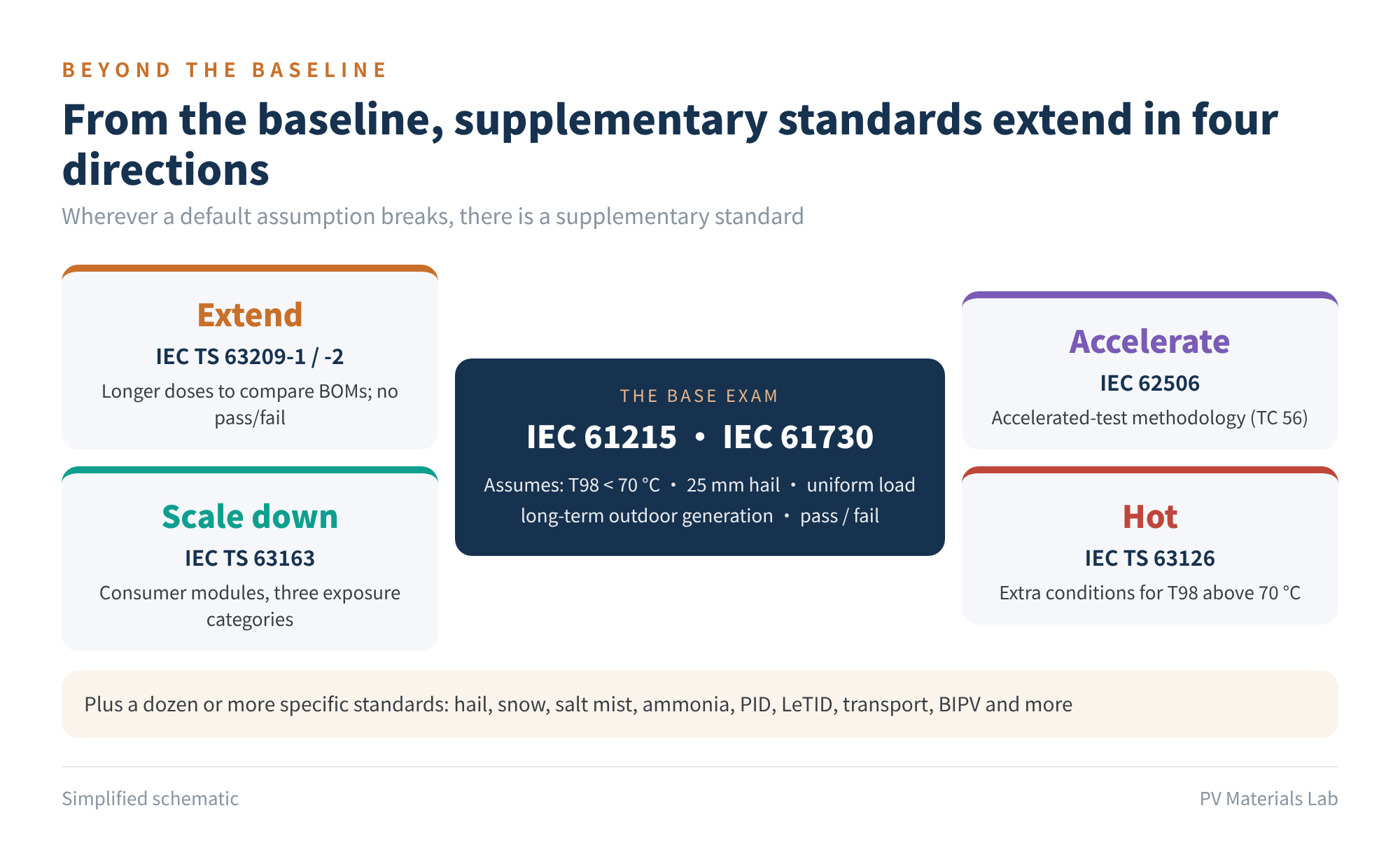
Figure 1 From the baseline, supplementary standards extend in four directions
02Extended stress: IEC TS 63209, a longer exam to see who drops out first
Part 1: Modules (IEC TS 63209-1:2021)
The full title is "Photovoltaic modules – Extended-stress testing – Part 1: Modules". It invents no new test methods; it uses the familiar MQTs of 61215 but with longer doses, arranged into five sequences targeting known failure modes: 600 thermal cycles, a combined mechanical stress sequence, a back-side UV sequence, 2,000 hours of damp heat, and PID at double duration.
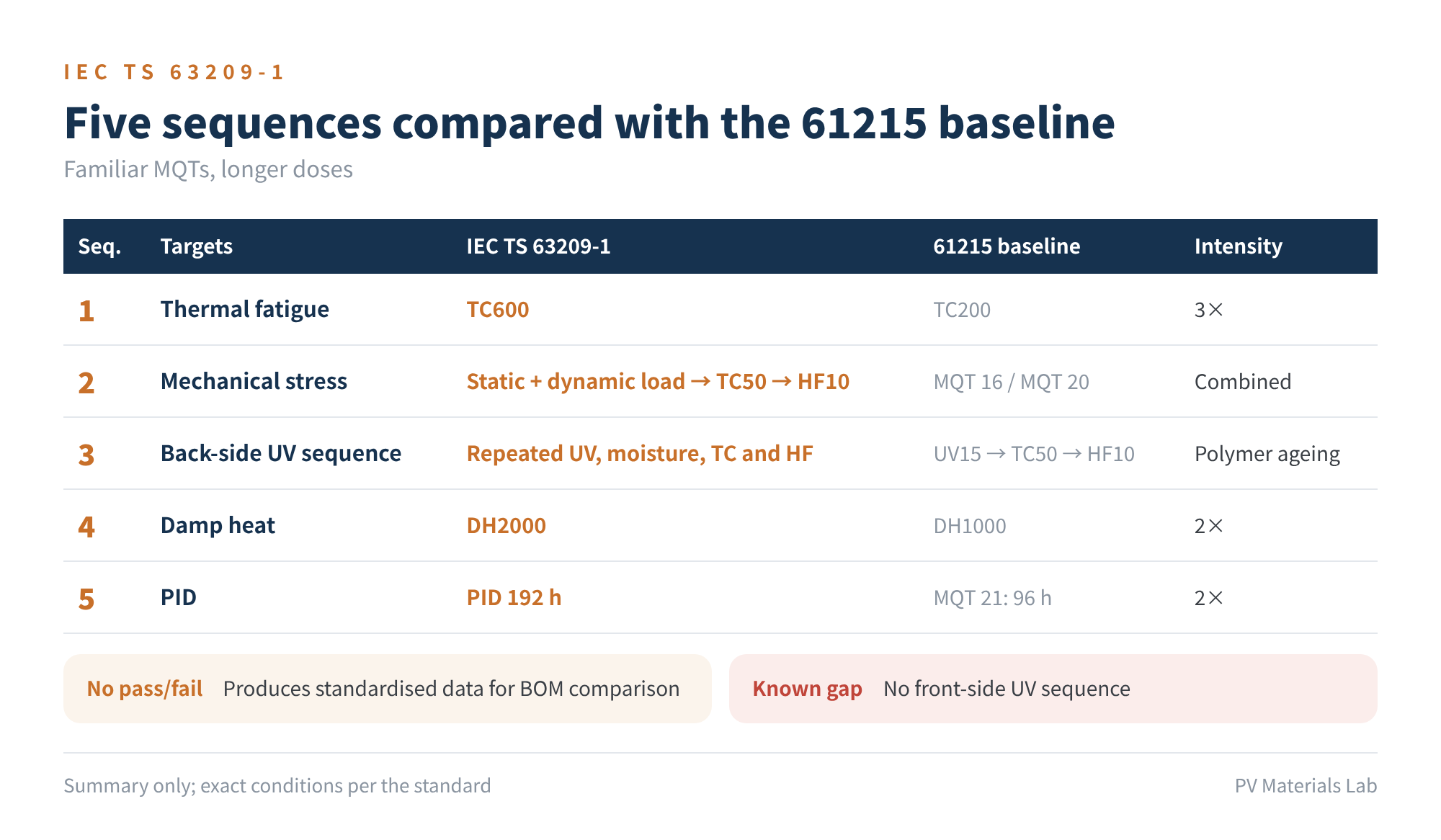
Figure 2 The five sequences of IEC TS 63209-1 compared with the 61215 baseline
The most important thing to understand about this standard: it has no pass/fail verdict. It positions itself as "supplementary information" to a pass/fail qualification such as 61215, producing standardised data for qualitative comparison and reliability risk analysis between different BOMs and products.
So strictly speaking, "passed 63209" is not quite accurate. More accurate is: completed all sequences of 63209-1, with these results for power loss, visual inspection, insulation and EL after each sequence. How to interpret the data and what counts as acceptable is up to the buyer and seller or the tendering party.
Part 2: Polymeric materials (IEC TS 63209-2:2022)
Long-term ageing that Part 1 can't cover is handled at material level in Part 2. It addresses the backsheets and encapsulants in crystalline silicon module laminates, for both glass-glass and glass-backsheet constructions, and offers a "test menu":
- Single-material tests: following IEC 62788 series methods with longer ageing times to reveal trends.
- BOM-specific tests: coupons and mini-modules to study interactions between materials, matching the BOM used for full modules in Part 1.
The logic is simple: small samples can withstand longer ageing and higher UV doses than full modules, at much lower cost. This is not a pass/fail test either, and the standard specifically says the stress levels are meant to represent long-term use, not to drive samples to failure.
03Scaled down: IEC TS 63163, testing consumer modules according to their exposure
Small modules on solar backpacks, folding chargers and garden lights don't justify the cost and time of the full 61215 programme, and they never needed to last twenty or thirty years outdoors anyway.
IEC TS 63163:2021 was written for exactly this. It applies to terrestrial PV modules for consumer products with an expected outdoor service life shorter than that of 61215-qualified modules, and divides them by expected outdoor exposure into Category 1, 2 and 3, for low, medium and high exposure.
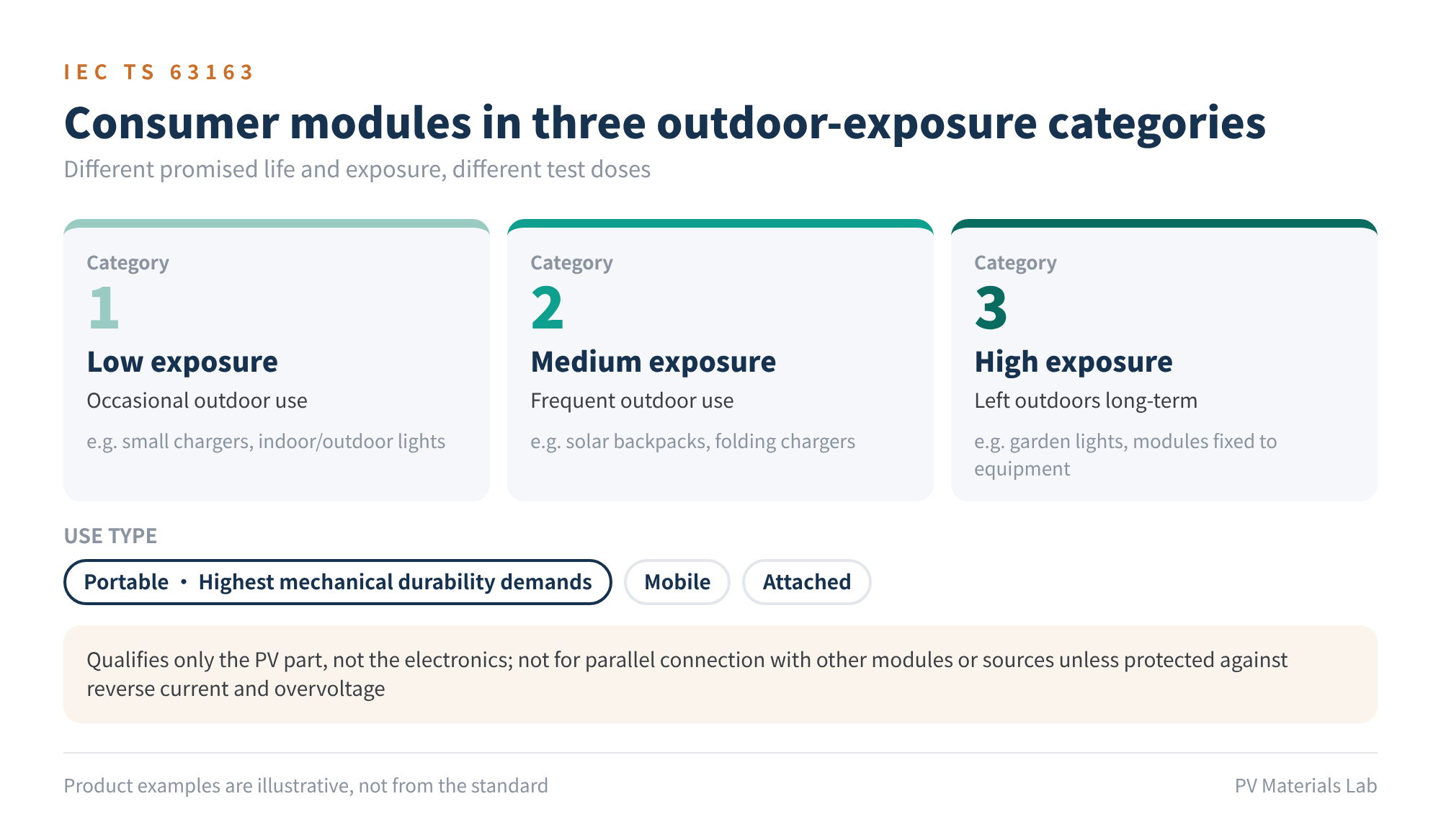
Figure 3 IEC TS 63163 divides consumer modules into three outdoor-exposure categories
Besides exposure, the standard also distinguishes how products are used: portable products are more prone to mechanical damage, so their mechanical durability requirements are higher than for mobile or attached products.
Two boundaries are easy to miss. First, it qualifies only the PV part of the product, not the electronics. Second, such modules are not suitable for parallel connection with other modules or power sources unless the overall design protects against reverse current and overvoltage.
"Scaled down" can be misread as "watered down". A better way to see it is grading by need: different promised lifetimes and exposure conditions call for different test doses.
04Accelerated: IEC 62506, not an exam but how to set one
This one is different in kind from the others. IEC 62506:2023, Methods for product accelerated testing, comes from IEC TC 56 (Dependability), not PV's TC 82. It applies to every industry and sets out the general methodology of accelerated testing; it is now in its second edition.
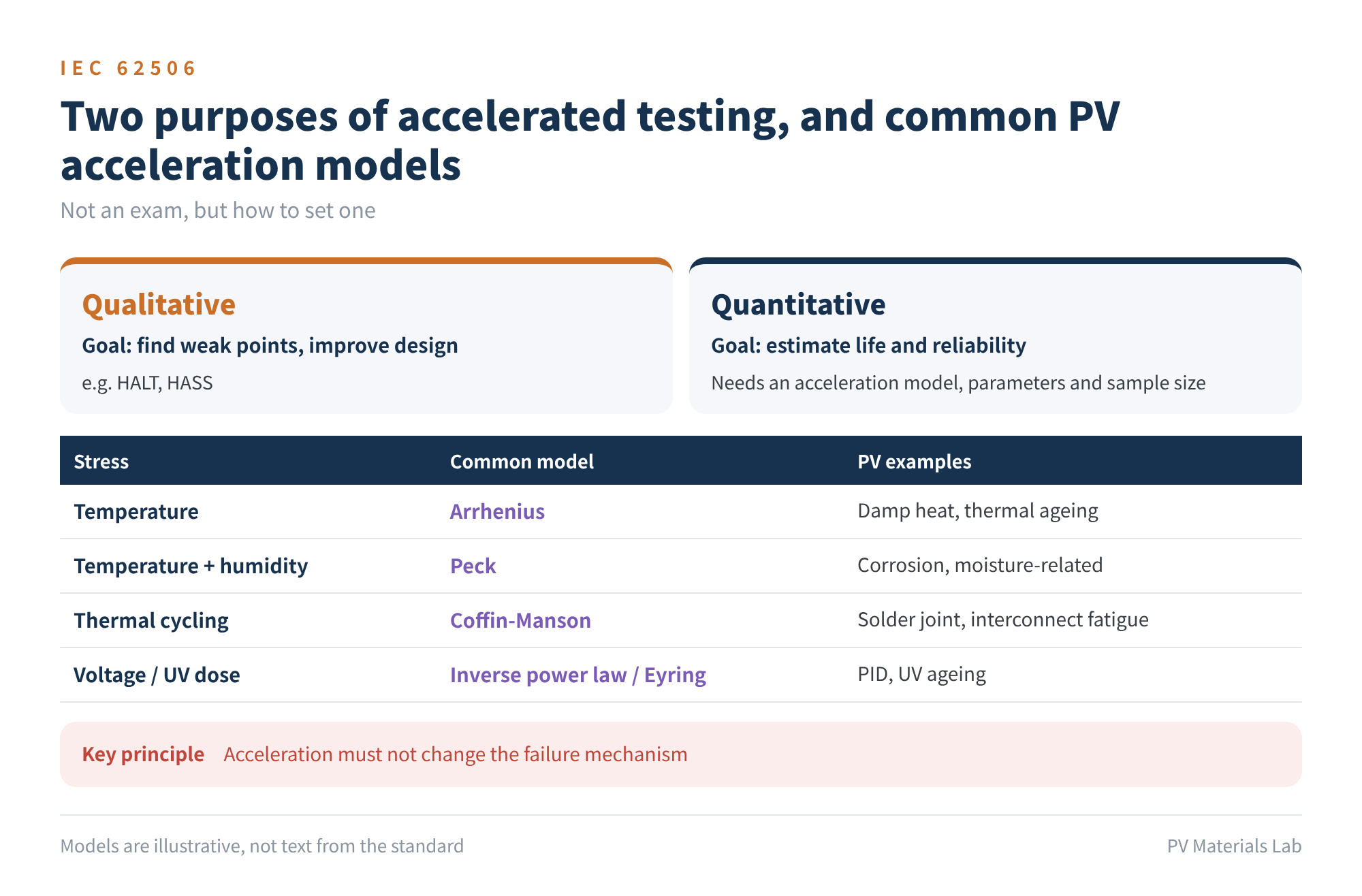
Figure 4 IEC 62506's classification of accelerated tests, and common PV acceleration models
For PV professionals, its value lies in answering three questions:
- What do I want from this test? Finding weak points (qualitative), or estimating life and reliability (quantitative)? Different goals call for completely different test designs.
- Where does the acceleration factor come from? Which model, where the parameters come from, and how large a sample is needed for statistical meaning.
- Where are the limits of acceleration? The standard has a chapter devoted to the limitations of accelerated test methods.
When you want to design in-house tests beyond 61215 and 63209, or judge whether a third-party extended-test report is credible, 62506 provides the framework for judgement. It will not give you a PV certificate.
05High temperature: IEC TS 63126, when modules run hotter than the standards assume
On 14 October 2025, the second edition of IEC TS 63126 was published. Its core concept is T98: the 98th percentile of module temperature, i.e. the temperature exceeded for only about 175 hours a year.
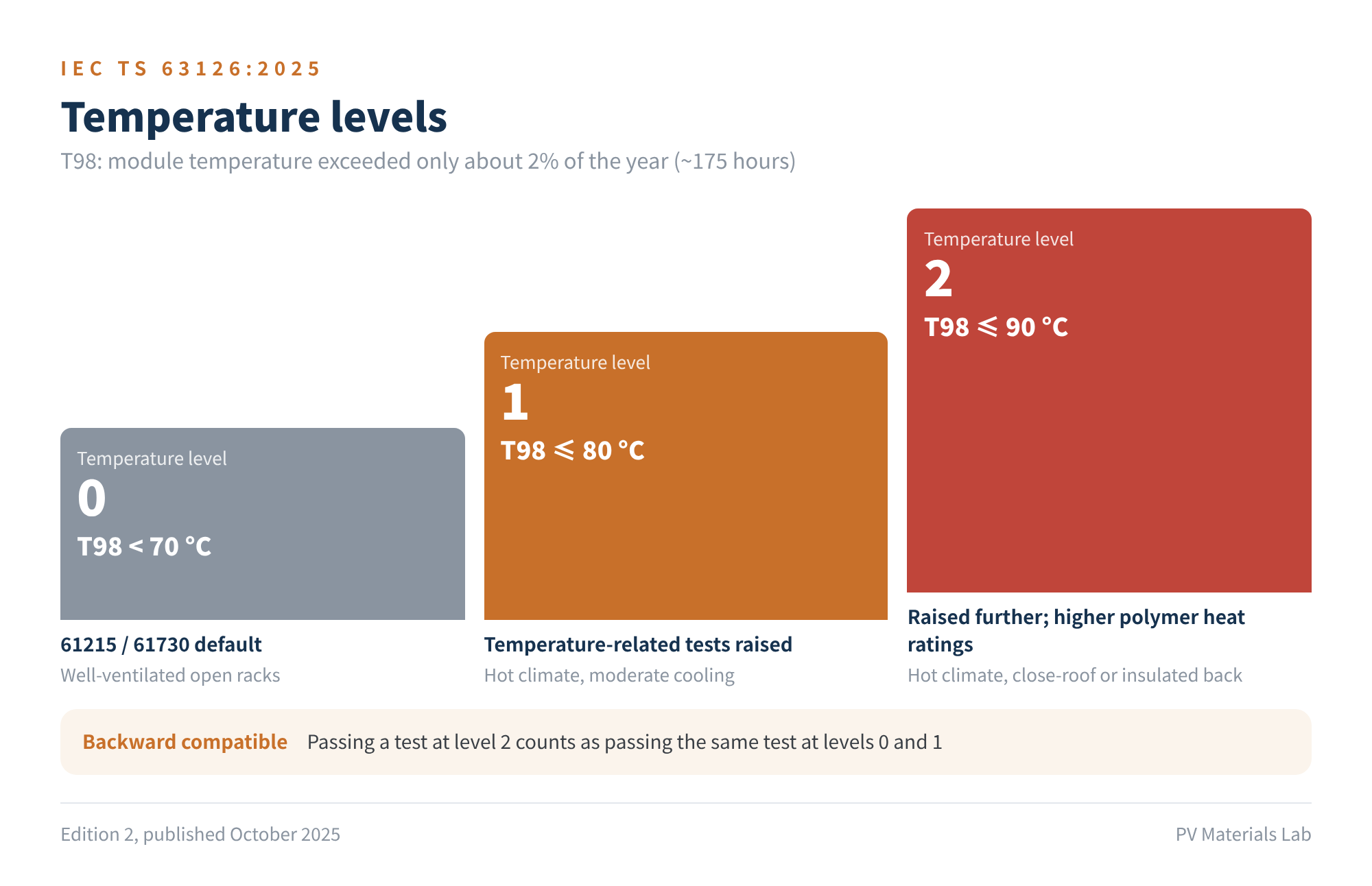
Figure 5 Temperature levels in IEC TS 63126
The classic standards assume T98 below 70 °C. In general, well-ventilated open racks meet this in most regions. But when high irradiance, high air temperature and poorly ventilated mounting combine, for example close-to-roof installation in hot regions or a module back blocked by insulation, T98 can exceed 70 °C.
63126 divides such cases into two levels: temperature level 1 (T98 up to 80 °C) and temperature level 2 (T98 up to 90 °C), and sets additional test conditions for each on top of 61215, 61730 and the component standards for encapsulants, backsheets, junction boxes, connectors and so on. The general approach: raise the test temperature of temperature-related tests accordingly, and raise the heat-resistance requirements for polymer materials.
The annexes also explain how to determine which level applies, including reference module temperatures worldwide for different mounting types and examples such as Riyadh.
Higher levels are backward compatible. Passing a test at temperature level 2 counts as passing the same test at levels 0 and 1.
06Beyond the list: other "extra exams"
Besides the four directions above, the following standards also supplement the classic ones and appear fairly often in real projects. Grouped by scenario and failure mechanism:
Specific climates and environments
- IEC TS 63397:2022: guidelines for qualifying improved hail resistance. For high hail-risk regions, it uses larger ice balls, followed by dynamic mechanical load, thermal cycling and so on, to see whether cracks grow.
- IEC 62938:2020: non-uniform snow load testing, for uneven loading when snow slides down tilted modules and piles up at the lower edge.
- IEC 61701:2020: salt mist corrosion testing, a common requirement for coastal and offshore projects.
- IEC 62716:2013: ammonia corrosion testing, for livestock farm roofs and similar settings.
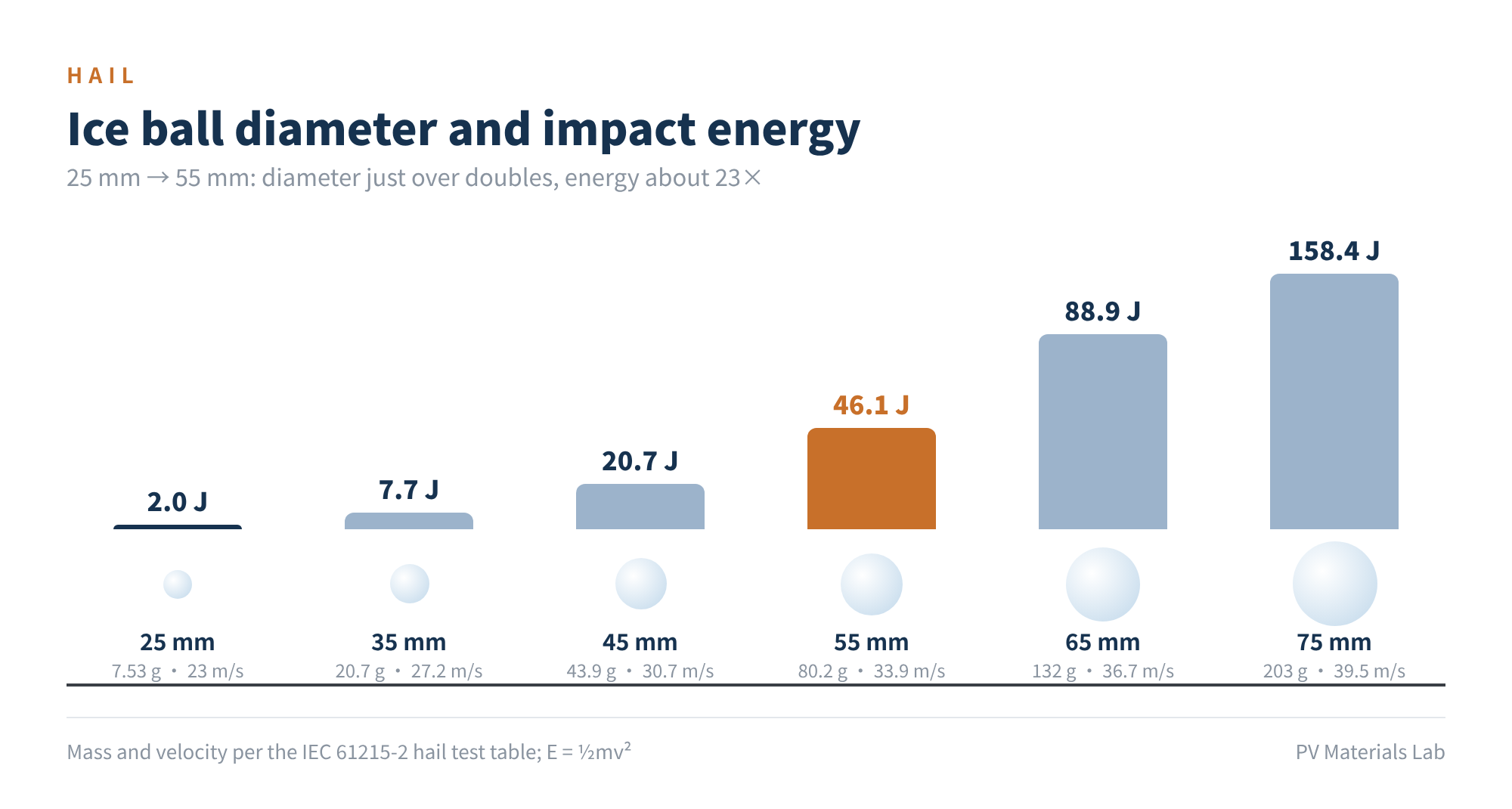
Figure 6 Ice ball diameter and impact energy: just over double the diameter, about 23 times the energy
Specific failure mechanisms
- IEC TS 62804-1:2025: PID test methods for crystalline silicon modules, second edition. Besides the dark test for PID shunting, it adds tests with UV light targeting PID polarisation, and a polarisation recovery test under UV. For thin-film modules, see IEC TS 62804-2:2022.
- IEC TS 63342:2022: LeTID (light and elevated temperature induced degradation) detection for crystalline silicon modules, using current injection at elevated temperature. It reveals whether samples are sensitive to LeTID, but the standard notes that it cannot give an accurate figure for field degradation.
- IEC TS 63140:2021: partial shading endurance testing for monolithically integrated thin-film modules.
Thermomechanical and transport
- IEC 62892:2019: extended thermal cycling test procedure.
- IEC 62759-1:2022: transportation testing, simulating vibration and shock on full packaging units in transit, followed by environmental tests.
- IEC TS 62782:2016: dynamic mechanical load testing. This has been absorbed into IEC 61215-2:2021 as MQT 20, a classic example of an "extra exam" becoming part of the main exam.
- IEC TR 63279:2020: sequential and combined accelerated stress testing, a technical report on approaches that stack or chain several stresses.
Specific applications
- IEC 63092-1 / -2:2020: requirements for building-integrated PV (BIPV) modules and systems.
- IEC 62109-3:2020: safety requirements for electronic devices integrated with PV modules.
- Floating PV and vehicle-integrated PV: IEC TC 82 has related projects in progress, including design guidelines for floating plants, a qualification guide for modules on floating platforms and technical documents for vehicle-integrated PV. As of writing, check the IEC website for their latest status.
07How to choose: match your scenario
| Your scenario | Standard to check first |
|---|---|
| Ground-mounted plant, comparing the long-term durability of two BOMs | IEC TS 63209-1, with 63209-2 at material level |
| Rooftop or close-mount projects in hot regions such as the Middle East and North Africa | IEC TS 63126; first estimate T98 using the annex |
| Hail-prone regions | IEC TS 63397 |
| High-latitude, heavy-snow regions | IEC 62938 |
| Coastal, offshore, fishery-PV | IEC 61701 |
| Livestock farm roofs | IEC 62716 |
| High system voltage, PID concerns | IEC TS 62804-1 |
| Consumer products such as backpack or folding panels | IEC TS 63163 |
| Designing your own in-house accelerated tests | IEC 62506 as the methodology basis |
08Three common misconceptions
- Misconception 1: a TS is mandatory certification. TS stands for Technical Specification and TR for Technical Report. In the IEC system, technical specifications are generally used for subjects where technology is still developing or the consensus needed for an International Standard has not yet been reached. Whether they must be done depends essentially on buyers, tender documents or the target market.
- Misconception 2: completing extended tests proves a 25- or 30-year life. It doesn't. 63209-1 itself lists the potential weaknesses of each sequence in an annex. Extended tests can build confidence and reveal differences, but converting test duration to field years needs a known failure mechanism, a reliable acceleration model and validation against field data; all three are indispensable.
- Misconception 3: the higher the multiple, the better. After TC600 some go on to TC800 or TC1000, and DH3000 is not unusual. But overdoing stress can trigger failures that never occur in the field, misleading design decisions. This is exactly the principle IEC 62506 stresses again and again: acceleration must not change the failure mechanism.
09Final thoughts
If the classic standards are a standard exam, what these supplementary standards tell us is that whether a module is reliable depends on where it is used and how long it is meant to last.
Ask about the scenario first, then choose the standard, and only then look at the numbers in the report. Do it the other way round and you can easily end up with a pile of extended-test reports and no clear idea of what they prove.
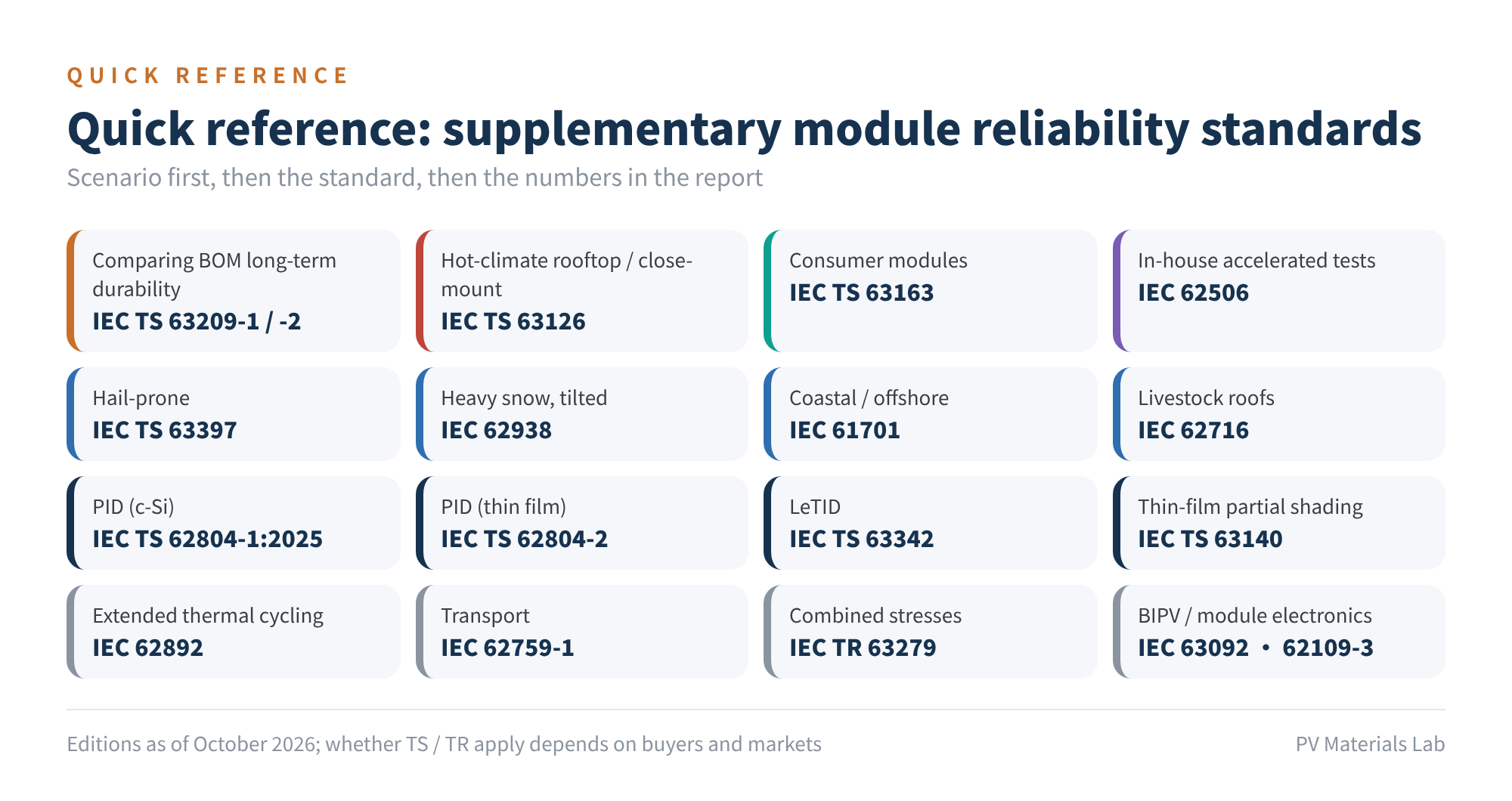
Figure 7 Quick reference: supplementary module reliability standards
Which "extra exam" are you most often asked to run on projects? We would be glad to hear from you.
References
- IEC TS 63209-1:2021, Photovoltaic modules – Extended-stress testing – Part 1: Modules (VDE Verlag preview)
- IEC TS 63209-2:2022, Photovoltaic modules – Extended-stress testing – Part 2: Polymeric component materials
- IEC TS 63126:2025 (edition 2, 14 October 2025), Guidelines for qualifying PV modules, components and materials for operation at high temperatures
- IEC TS 63163:2021, Terrestrial photovoltaic (PV) modules for consumer products – Design qualification and type approval
- IEC 62506:2023, Methods for product accelerated testing
- IEC 61215-2:2021 (MQT 17 hail test, MQT 20 dynamic mechanical load)
- DMEGC: press release on IEC TS 63209-1 extended-stress testing
- National Public Service Platform for Standards Information: plan and publication record of GB/Z 117.101-2026
A PV R&D and technology team with 10+ years of experience | In-depth technical knowledge sharing
Materials · Reliability · Failure Analysis · Standards & Certification · Products · Processes
Exploring AI + PV; collaboration welcome
Disclaimer:
1. Original content reflects the authors' personal views only, is for reference only and does not constitute investment advice.
2. Reposted and cited content is credited to its source, out of respect for original work.
3. Some content was produced with AI assistance (chart generation, data retrieval, concept explanations, etc.); the core framework and key content were written by our technical team and reviewed by people.
4. If anything is inaccurate or infringes your rights, please leave a message or contact us and we will deal with it.