
DiCaprio's Third Bet on Solar Still Isn't on Modules
News source
TaiyangNews, "Sweden's Elvy Adds Leonardo DiCaprio As Investor", by Anu Bhambhani, published 9 October 2026. Leonardo DiCaprio has invested in Swedish energy-subscription company Elvy. The money is small but the signal is not: capital is moving towards "services plus finance" downstream in PV, and long-term asset owners will put module reliability back on the table.
On 9 October, PV trade media TaiyangNews reported that Swedish energy-tech company Elvy had announced Hollywood actor and environmental activist Leonardo DiCaprio as an investor.
A celebrity investing in solar looks at first like entertainment news. But put this investment back in its industry context and it lands right on several turning points in European home solar, which makes it worth a closer look for PV professionals.
01What the news says
First, the facts. The following comes mainly from TaiyangNews' report:
- What Elvy does: "energy as a service". It bundles solar modules, storage batteries and heat pumps; users pay nothing upfront and no installation fee, just a fixed monthly fee. Elvy operates the equipment and manages it with its in-house AI engine.
- How much it raised: a SEK 70 million round completed in May 2026, with investors including Daft Capital and Essential Capital. According to Swedish business outlet Breakit, DiCaprio came in through a subsequent SEK 16 million extension; Dealroom, relaying Swedish reports, says he took "a large part" of it. Elvy has not disclosed how much he personally invested.
- How big it is: starting with 100 customers in 2024, it reached 1,000 households in February 2026; according to Dealroom's October report, sign-ups have grown to about 1,800 households. The company says 2025 revenue grew tenfold year on year, that it saves households 60% of energy on average, and that it has built 23 MW of distributed energy assets in about a year and a half.
- How big it wants to be: CEO Johan Outinen says it plans to invest more than SEK 10 billion over three years to secure 600 MW. The company forecasts 2026 revenue of about USD 48.4–60.4 million and says subscriptions and installations are growing by around 25% a month.
- What else launched the same day: a customer referral platform.
"Elvy is demonstrating that energy efficiency can be both measurable for homeowners and scalable as a business." — Leonardo DiCaprio, as reported by TaiyangNews
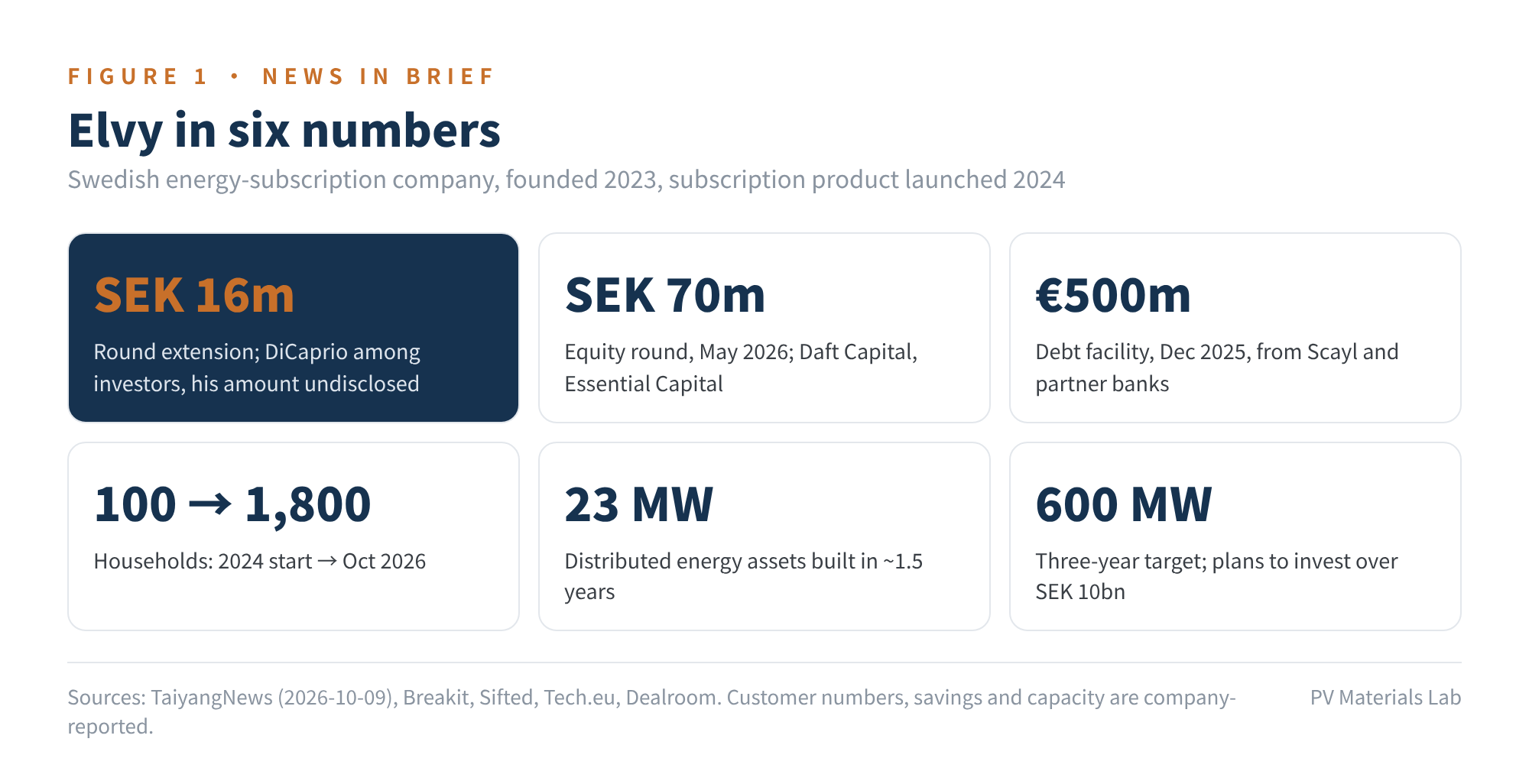
Figure 1 Elvy's key numbers (customer numbers, savings and capacity are company-reported)
02Observation 1: little money, lots of attention
How much is SEK 16 million? At roughly SEK 10.9 to the euro, about EUR 1.5 million, and that is the size of the whole extension, not his stake alone.
Now another number: according to Sifted and Tech.eu, in December 2025 Elvy secured a EUR 500 million credit facility from Swedish debt-financing platform Scayl and its partner banks, intended to fund installations for up to about 15,000 households. This equity extension is only about 0.3% of the debt facility.
So this is not "a celebrity pouring in money" but "a celebrity lending his name".
More telling is the timing: the investor announcement and the referral platform launch happened on the same day. Anyone who has worked in home solar knows that the most expensive thing in this market is often not the modules but customer acquisition, won one household at a time. A world-famous environmental celebrity plus a referral scheme target the same thing: lowering the cost of acquiring customers.
In investors' eyes, the bottleneck in home solar has long ceased to be hardware; it is "how to sell it".
03Observation 2: three bets, one business
This isn't DiCaprio's first link to solar. Lay out the timeline and the pattern is obvious:
- 2020, Enpal (Germany): the Princeville Climate Technology fund, which he advises, invested. Enpal provides home solar on a rental model, with users paying monthly over the long term.
- 2024, SolarMente (Spain): he joined as an individual investor. This company is also subscription-based, with packages including solar and storage and optional EV chargers and heat pumps.
- 2026, Elvy (Sweden): solar, storage and heat pump bundled for a fixed monthly fee.
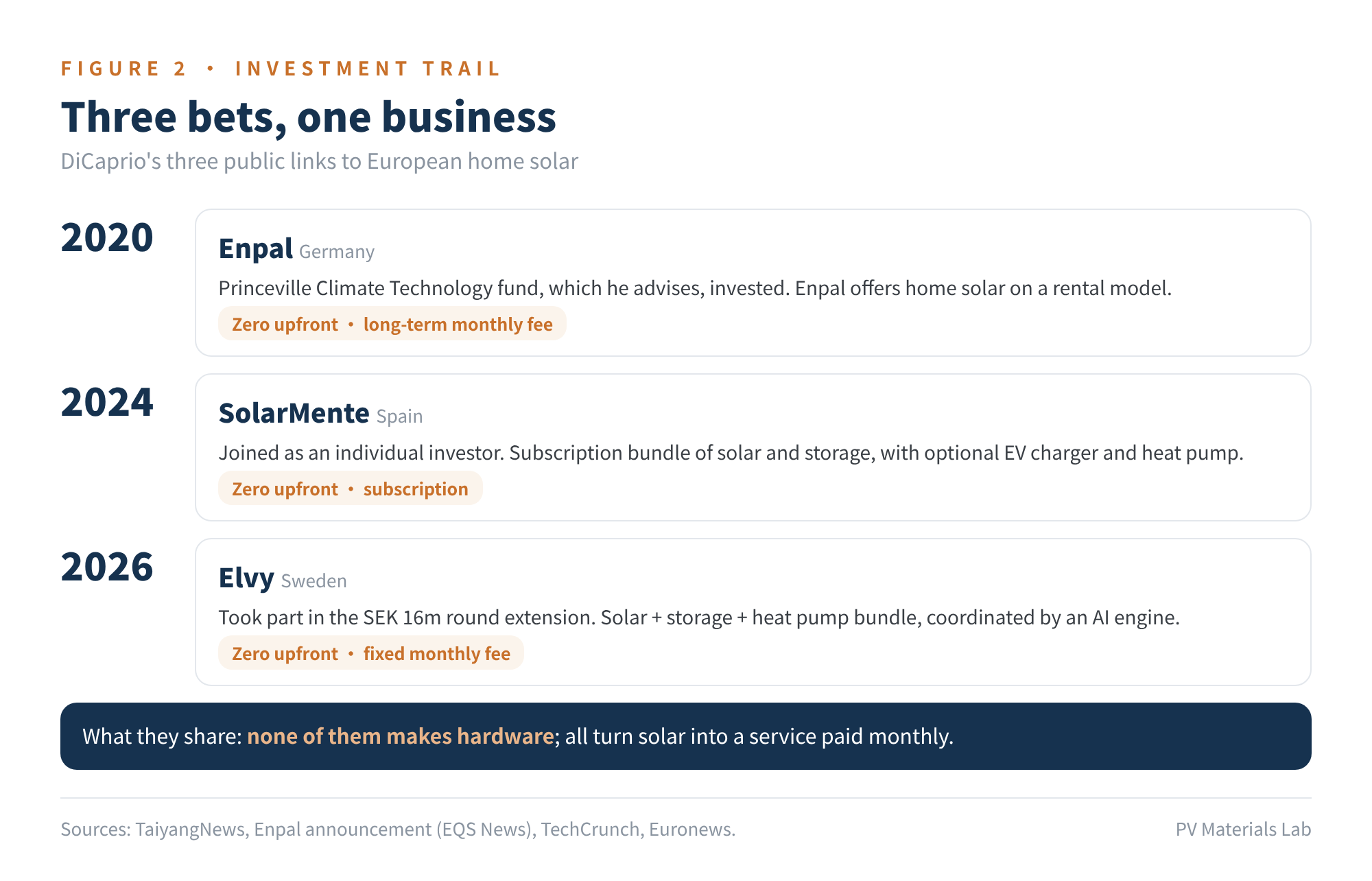
Figure 2 DiCaprio's three public links to European home solar
The three companies have one thing in common: none of them makes any hardware. They all do the same thing, turning solar from "equipment you pay a lot for upfront" into "a service you pay for monthly".
The value centre of the industry chain is moving downstream. Modules are highly commoditised and prices are transparent, so premiums keep thinning; the combination of "finance + service + software" can still tell a new story. Manufacturers won't like hearing it, but it is probably true.
04Observation 3: subscriptions are a response to market pressure
Why are such companies springing up in Europe one after another? One set of data explains it.
According to SolarPower Europe, residential rooftop solar's share of annual new EU installations was 28% in 2023, 19% in 2024 and only 14% in 2025. In two years it halved. Over the same period, the EU installed 65.1 GW in 2025, the first year-on-year decline in a decade, and utility-scale solar exceeded half of the total for the first time.
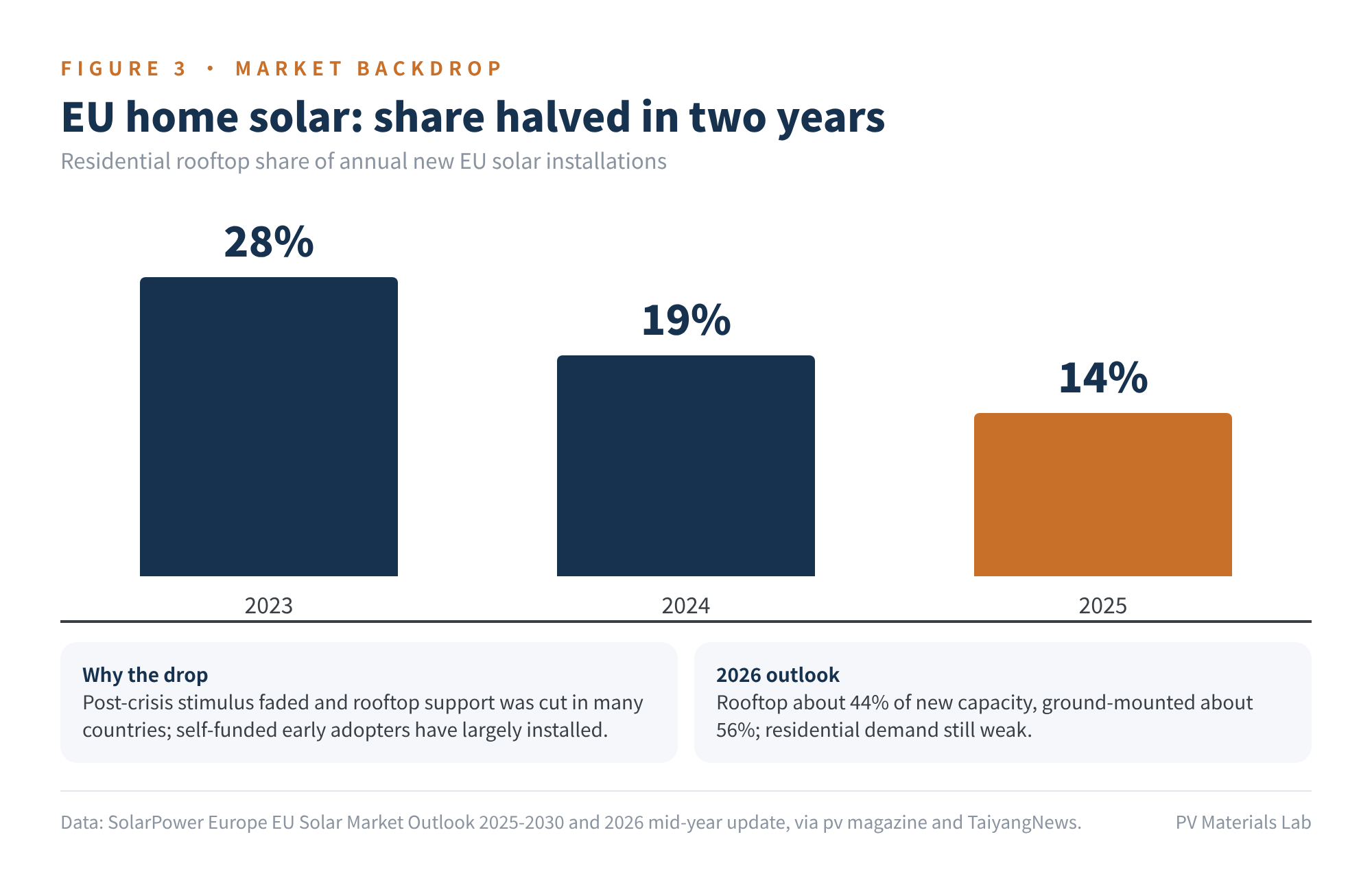
Figure 3 Residential share of new EU solar installations (source: SolarPower Europe)
The association's explanation: after the energy crisis, many countries cut rooftop solar support, households felt less pressure from power prices, and the residential market failed to move beyond early adopters. In its 2026 mid-year update, it expects rooftop solar to account for only 44% of new capacity this year and ground-mounted plants for 56%, with residential demand still weakening in several markets; meanwhile, negative prices, grid bottlenecks and a lack of storage are constraining further solar growth.
In plain terms: the households willing to pay thousands or tens of thousands of euros for solar themselves have largely done so. The rest either can't afford it or can't be bothered. Zero-upfront subscriptions are aimed squarely at them.
Then look at the product. Why bundle storage and heat pumps? Because once subsidies are cut and negative prices become frequent, surplus power sold to the grid is worth less and less, and value shifts to "generate it yourself, use it yourself". Storage moves midday power to the evening, and heat pumps turn heating into electrical load, both to raise self-consumption.
So what is being sold has changed too: no longer "a system of so many kilowatts", but "what your household's annual energy bill will be".
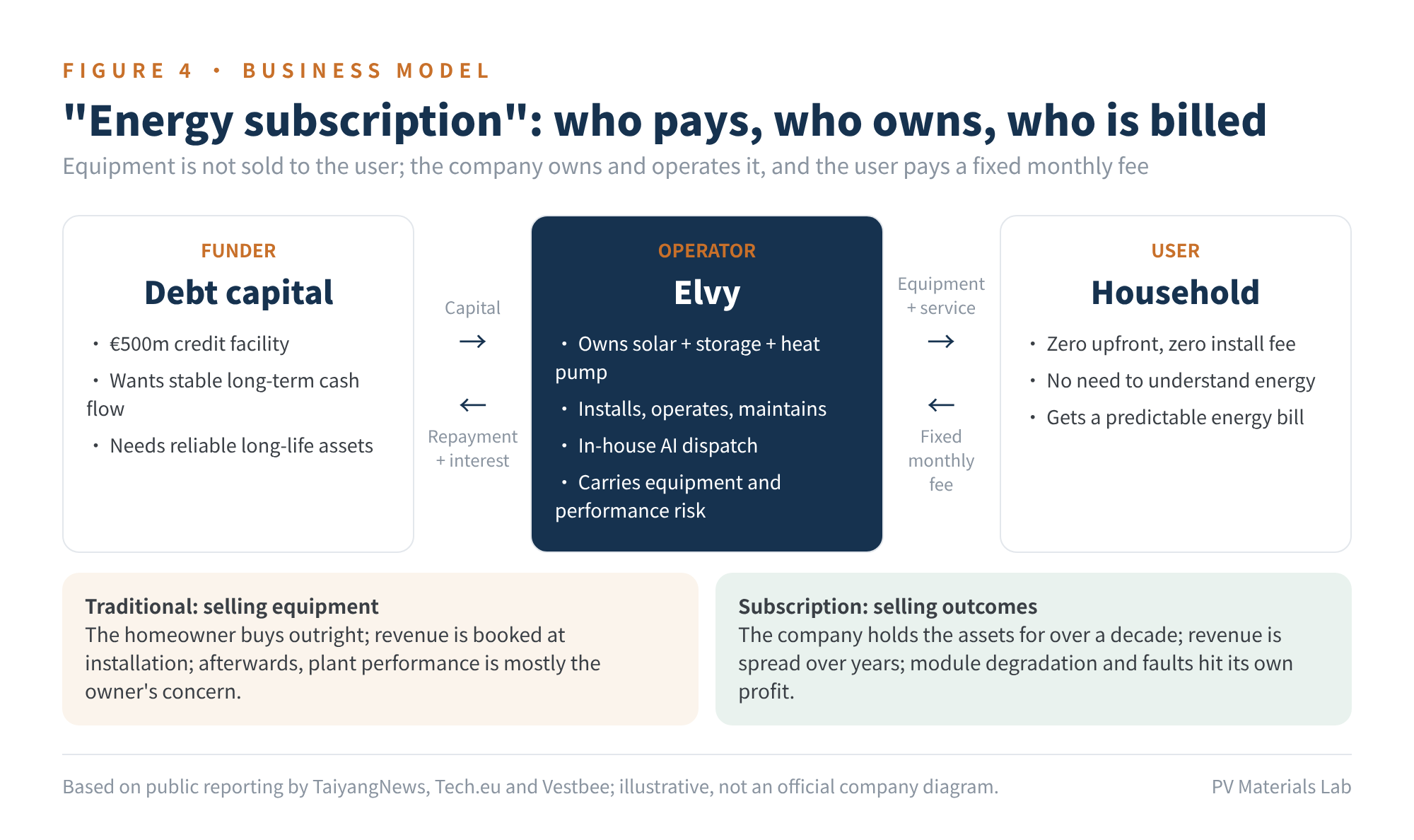
Figure 4 The energy subscription model (compiled from public reporting; not an official company diagram)
05A sober look: three question marks over the model
A story that makes sense isn't necessarily a business that works. At least three points deserve a question mark:
- First, asset-heavy and highly leveraged. The equipment sits on the company's own balance sheet, financed mainly by debt. If interest rates, customer defaults or equipment life disappoint, cash flow takes a direct hit. The US offers cautionary tales: established home solar company SunPower filed for bankruptcy protection in August 2024, and Sunnova, known for its leasing model, did so in June 2025. Elvy has had a taste of this itself. According to Sifted, because its debt financing arrived two and a half months late, the company cut its 2025 revenue forecast from up to SEK 500 million to about SEK 100 million. In this business, the accelerator is under the financiers' feet.
- Second, how the numbers are counted. 23 MW across 1,000 to 1,800 customers works out at roughly 13 to 23 kW per household, while typical home solar systems range from a few kilowatts to a little over ten. The two figures date from different times, so this is only a rough calculation; but it is reasonable to infer that "23 MW" is not pure module capacity and probably includes storage, heat pumps and so on. "60% average savings" is likewise company-reported; for a system with a heat pump, the reports don't break down how much comes from solar and how much from replacing the old heating.
- Third, the Swedish sun. Sweden lies at high latitude, and heating demand peaks exactly when solar output is lowest. Batteries shift energy within a day but can't bridge summer and winter. That means systems still rely heavily on the grid in winter; if the fixed monthly fee includes electricity, the risk of winter price swings falls on the company.
06What it means for PV professionals in China
First, zero-upfront isn't new. China's residential leasing and co-development models scaled up long ago, at a volume far beyond Elvy's. The difference is that China's model has long been built on "selling power to the grid", whereas this generation of European products is built on "the customer's energy bill". With all new-energy grid electricity in China now moving into the power market, the logic of earning returns on feed-in tariffs alone is changing; moving towards the customer side and towards integrated solar, storage and heating, Europe's experiments are a useful reference.
Second, and in our view most important: the buyer has changed.
In the past, the buyers of residential modules were installers, or homeowners buying outright. Once installed and accepted, the transaction was essentially over. Now the buyer is an operating company that will hold the assets for ten or twenty years, with creditors standing behind it.
This kind of buyer purchases differently. It looks not only at saving a few cents per watt but at the cost and risk per kilowatt-hour over the full life. First-year and linear degradation, PID, damp-heat ageing, hot spots, junction box and connector failures, encapsulant and backsheet lifetime: to an installer these are "after-sales issues", but to an asset owner every one of them is cash flow. Whether the warranty can be honoured when the time comes will also become a hard selection criterion.
As solar moves from "selling equipment" to "selling a service", reliability turns from a cost item into a profit item. For those working on materials and reliability, the number of buyers willing to pay a premium for "long-term reliability" is growing.
07Final thoughts
DiCaprio didn't invest much this time. But three times in a row he has placed his chips in the same spot: the end of the chain closest to the people under the roof and furthest from the factory.
That doesn't necessarily mean downstream is easier than upstream; the subscription model has plenty of pitfalls. But it reminds us at least that the next stage of competition in PV is not only about cost per watt, but also cost per customer, and how each module performs over twenty years.
What do you make of the subscription model for home solar? We would be glad to hear from you.
References
- TaiyangNews: Sweden's Elvy Adds Leonardo DiCaprio As Investor, 2026-10-09 (news source for this article)
- Breakit: Leonardo DiCaprio går in med miljoner i svenska Elvy
- Dealroom: Leonardo DiCaprio backs Sweden's Elvy in $1.6M round extension, 2026-10-08
- BeBeez: Swedish company welcomes Leonardo DiCaprio as investor after 10x revenue growth, 2026-10-13
- Sifted: Flat-rate energy startup Elvy raises €500m to fuel European expansion, 2025-12-12
- Tech.eu: Elvy raises €500M to power its next-generation energy solution, 2025-12-12
- EQS News: Enpal secures investment from Leonardo DiCaprio backed climate technology fund Princeville
- Euronews: How does subscription solar work? (SolarMente), 2024-04-06
- pv magazine / Mercom: EU installs 65.1 GW of solar in 2025 (SolarPower Europe report)
- TaiyangNews: SolarPower Europe Lifts 2026 EU Solar Forecast After H1 Growth, 2026-09-08
A PV R&D and technology team with 10+ years of experience | In-depth technical knowledge sharing
Materials · Reliability · Failure Analysis · Standards & Certification · Products · Processes
Exploring AI + PV; collaboration welcome
Disclaimer:
1. Original content reflects the authors' personal views only, is for reference only and does not constitute investment advice.
2. Reposted and cited content is credited to its source, out of respect for original work.
3. Some content was produced with AI assistance (chart generation, data retrieval, concept explanations, etc.); the core framework and key content were written by our technical team and reviewed by people.
4. If anything is inaccurate or infringes your rights, please leave a message or contact us and we will deal with it.