
How Many Gates Does a New Encapsulant Have to Pass? Encapsulant Selection, Qualification and Incoming Inspection from the Buyer's View
In brief
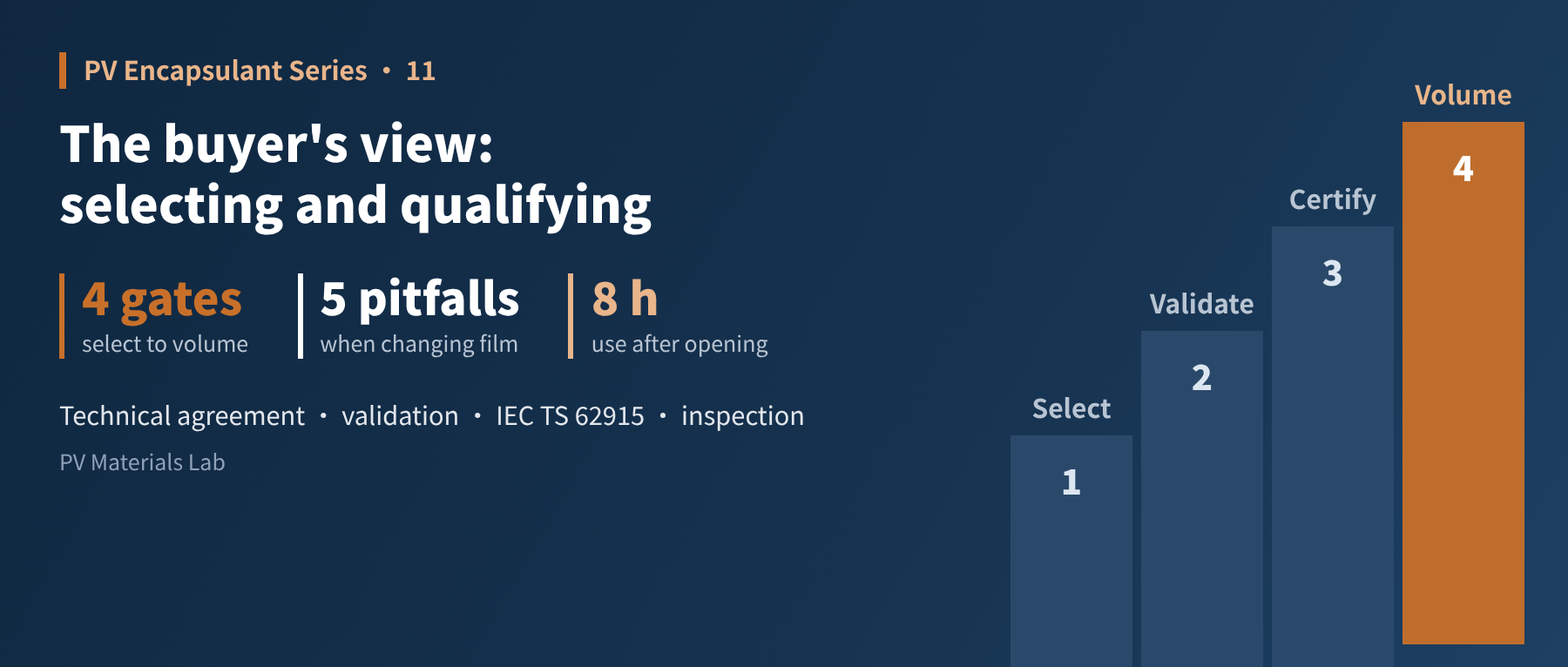
The first ten articles were about the encapsulant itself; this one takes the module maker's seat: what gates must a new encapsulant pass between selection and volume use? In this eleventh article of our PV encapsulant series, we walk through four stages (selection, validation, certification and volume-production control), set out what to check and test at each, explain how material tests, module reliability tests and BOM certification relate, and what IEC TS 62915 requires for material changes, and finally sum up the five most common pitfalls when changing encapsulants.
Anyone who handles material qualification at a module factory has probably heard this request: "This encapsulant is a few cents cheaper. Can we bring it in quickly?"
Qualifying an encapsulant looks simple: samples, tests, purchase order. But the previous ten articles have shown that the encapsulant works together with cells, ribbons, glass and the lamination process, and that once something goes wrong it can hardly be repaired. So changing an encapsulant is never as simple as changing a supplier. In this article we take the buyer's position and break the process down.
01Four gates: from selection to volume production
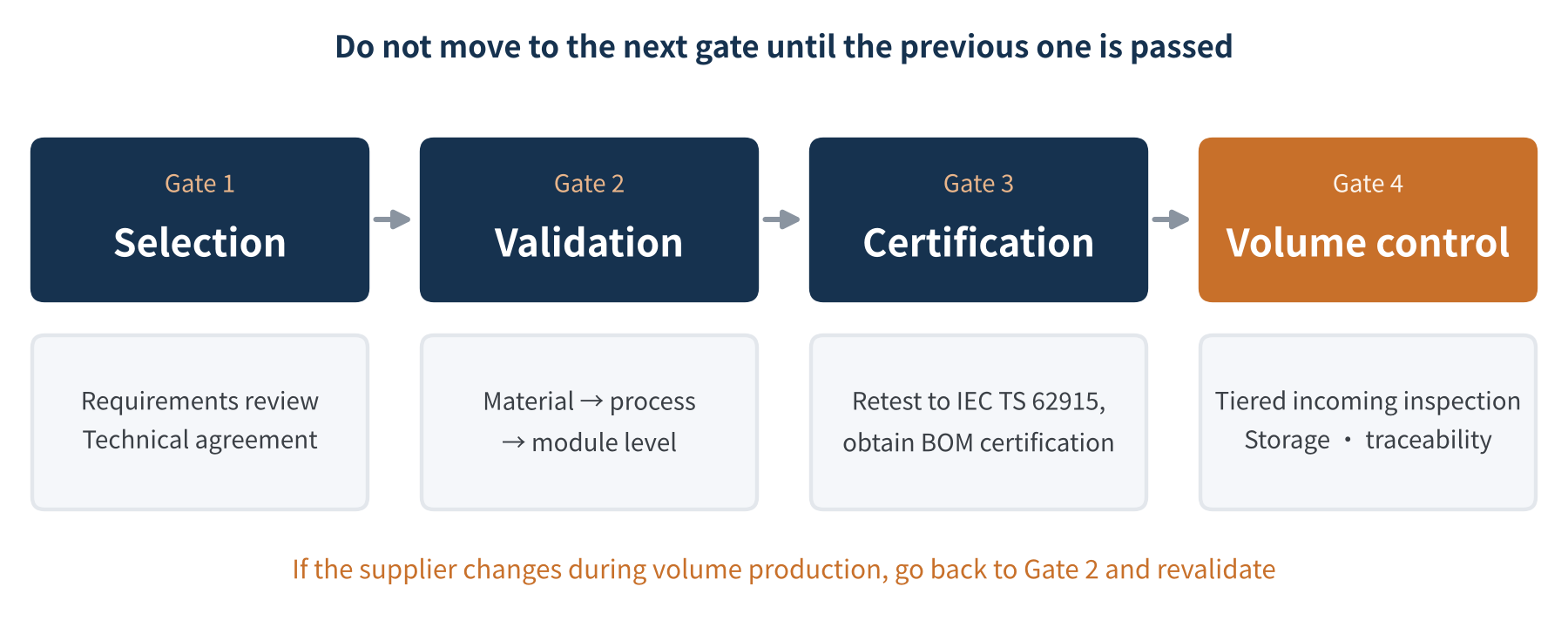
Figure 1 Four stages of encapsulant qualification and their key outputs (schematic)
From first consideration to volume use, a new encapsulant passes roughly four gates: selection, validation, certification and volume-production control. Each gate has clear outputs, and you should not move to the next gate until the previous one is passed. Let us take them one by one.
02Gate 1: Selection — be clear about what you need
Selection starts not with the encapsulant but with the module. Answer a few questions before looking at suppliers' products:
- Cells and structure: TOPCon, HJT or BC? Glass-backsheet or glass-glass? What must the front and rear encapsulants each do (Article 7)?
- Application: Standard ground-mount, hot and humid, coastal, floating or rooftop? Requirements for PID resistance, water barrier and UV resistance differ.
- Process fit: Is it compatible with existing laminators and lamination profiles? Are processes such as 0BB or thin wafers involved that are sensitive to encapsulant flow and shrinkage (Article 6)?
- Cost target: Within the reliability floor, how much cost room is there (Article 8)?
Turning these needs into a technical agreement is the most important output of the selection stage. At minimum the agreement should cover: product model and structure, grammage/thickness and tolerances, key performance indicators and test methods (Article 5), post-ageing performance requirements, packaging and storage requirements, and change-notification clauses. The most often overlooked point is spelling out test methods and conditions: the same gel content test gives different results with different extraction times. Where possible, cite national and industry standards and the IEC 62788-1 series of encapsulant test methods, so both sides speak the same language.
03Gate 2: Validation — from material to module
Validation has three levels, each larger in scale:
- Material level: Fully test the encapsulant against the technical agreement, focusing on gel content, peel strength (initial and after ageing), transmission and UV cut-off curve, volume resistivity, water vapour transmission rate and shrinkage.
- Process level: Laminate a small batch on your own line, look for bubbles, shifting and squeeze-out, and confirm the lamination window; measure gel content at several points in the module to assess the effect of hot-plate temperature differences.
- Module level: Build modules with the target BOM and run damp heat, thermal cycling, humidity freeze, UV and PID reliability tests (Article 10), plus extended tests where needed.
A common mistake is to go straight into production once material tests pass. As Article 10 explained, an encapsulant that performs well at material level can still fail in a module, because it works together with cells, ribbons and glass. Kiwa PVEL's preliminary 2026 analysis even found that gel content and peel force were not direct predictors of delamination, while factors "outside the encapsulant" such as flux recipe and encapsulant width mattered a lot. Module-level validation cannot be skipped, and the BOM used for validation should match the production BOM as closely as possible.
Another often overlooked detail is the baseline for comparison. A new encapsulant is best validated side by side with the current one, using the same batch of cells, the same line and the same test conditions. Without a control group, it is hard to say whether the new encapsulant is actually better or worse.
04Gate 3: Certification — material changes are not your call alone
IEC, UL and other module certifications are granted for a specific BOM. Once the encapsulant changes, whether the existing certification still covers the product depends on the extent of the change.
IEC TS 62915 sets out the retest requirements for certified modules after design or material changes. The current second edition of 2023 (with a corrigendum published in 2024) replaced the 2018 first edition. The main changes include: a new matrix summarising retest requirements for each material and design change; added retest requirements for dynamic mechanical load (MQT 20) and PID (MQT 21); separate retest requirements for IEC 61215 and IEC 61730; references to the IEC 62788-1/-2 component standards; and removal of specific process-change entries in favour of a requirement for a consistent quality management system under IEC 62941. Amendment 1 to the standard is still under development.
By its definition, materials that differ in chemical composition, type or specification are all "different materials"; the same material from a different supplier or manufacturing location is not considered a different material only if it can be clearly demonstrated to be identical. The standard also requires module makers to disclose changes of materials, components and their manufacturers, and changes of parameters outside the nominal tolerance may also be treated as changes.
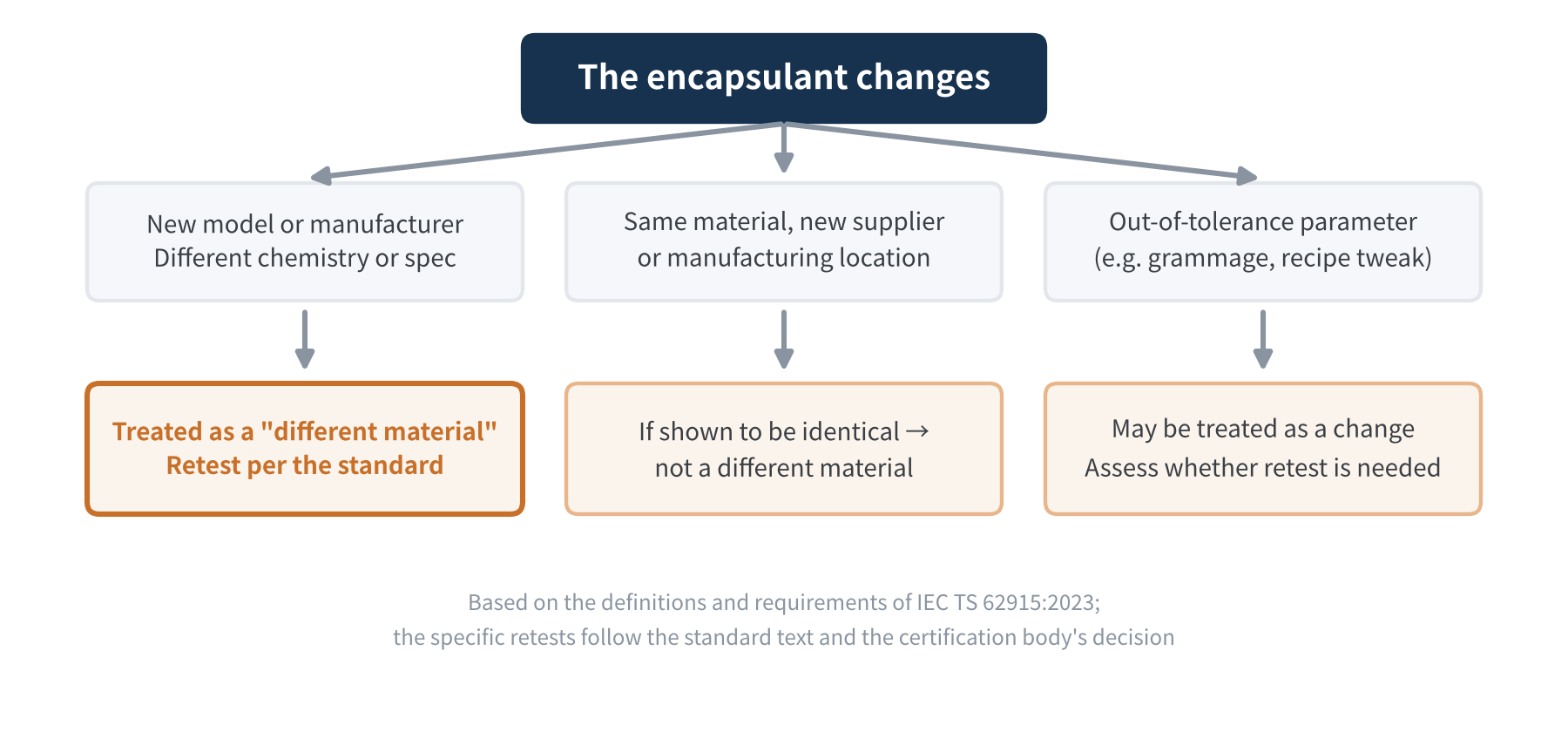
Figure 2 How encapsulant changes relate to certification (schematic)
Put simply: changing the encapsulant model or manufacturer usually requires the corresponding retests under the standard, and the new encapsulant can be used in certified products only after BOM certification is obtained. Which tests are required depends on the text of IEC TS 62915 and the certification body's decision.
05Gate 4: Volume-production control — how to do incoming inspection
Certification is only the start; in volume production, consistency matters more. We suggest a tiered incoming inspection:
| Tier | Frequency | Suggested items | Purpose |
|---|---|---|---|
| Every lot | Every delivery | Visual, grammage, thickness, shrinkage, gel content (DSC quick method possible) | Catch obvious anomalies |
| Periodic sampling | Monthly or rotating by lot | Peel strength, transmission and UV cut-off, volume resistivity | Monitor performance drift |
| Periodic type tests | Quarterly or half-yearly | Material-level ageing (UV, damp heat), module reliability sampling | Monitor long-term reliability |
| Change trigger | When the supplier notifies a change | Revalidate through the qualification process | Prevent "silent changes" |
Table 1 Suggested tiered incoming inspection for encapsulants
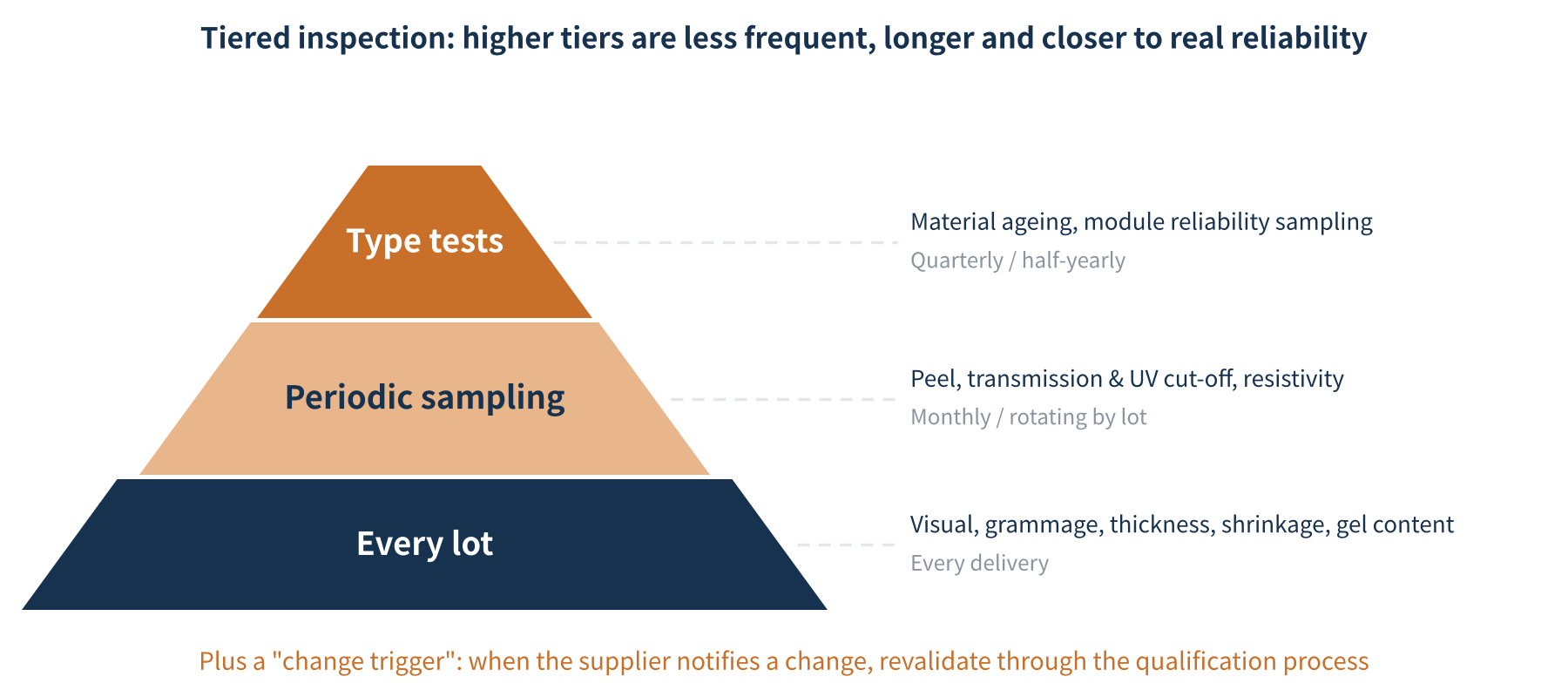
Figure 3 Tiered incoming inspection (schematic)
Besides testing itself, three other things matter just as much:
- Storage: Encapsulants are sensitive to moisture, heat and light (Article 4). T/CPIA 0071—2024 requires co-extruded encapsulants to be stored indoors at 0–30 °C and below 60% relative humidity, away from direct sunlight and heat sources; once a box is opened the film should be used within 8 hours, and the shelf life is at least 120 days from production. By comparison, T/CPIA 0004—2017 requires EVA film to be used within 24 hours of opening, with a shelf life of six months — co-extruded films are clearly stricter on time after opening, so material staging on the line must be adjusted when switching.
- First in, first out: Use strictly in order of production date; film that is expired or has been open too long must be quarantined and assessed, not "used anyway".
- Traceability: Encapsulant lot numbers must be traceable to module serial numbers, so that if problems appear in a plant the scope can be pinned down quickly.
06The five most common pitfalls when changing encapsulants
- Pitfall 1: Looking only at unit price, not the total bill. An encapsulant a few cents cheaper may bring lower lamination yield, slower takt time and even later warranty risk (Article 8). In the Kiwa PVEL 2026 Scorecard, 61% of BOMs had at least one test failure, and cost-driven BOM changes are one of the reasons under close scrutiny.
- Pitfall 2: Good samples, poor batches. Samples are often hand-picked; batch consistency is the real test. Tighten inspection for the first few lots after qualification.
- Pitfall 3: Inconsistent test conditions. When supplier reports and in-house data do not match, it is often because extraction time, lamination parameters or glass type differ (Article 5).
- Pitfall 4: Keeping the old lamination profile. A new encapsulant may crosslink and flow differently, so the lamination profile must be re-confirmed (Article 6).
- Pitfall 5: Ignoring "silent changes". A supplier switches resin source or adjusts the formulation without notice. Write the obligation to notify changes into the technical agreement, and rely on periodic sampling to catch it in production.
Changing an encapsulant is not changing a supplier; it is a small product change. Selection defines the needs, validation looks at the system, certification safeguards compliance, and volume control keeps things consistent — four gates, and none can be skipped.
07Final thoughts
From the buyer's side, encapsulant management comes down to one word: control. The technical agreement keeps needs under control, tiered validation keeps risk under control, certification keeps compliance under control, and incoming inspection keeps consistency under control. Every point covered in the previous ten articles ultimately has to land in these concrete processes and tables.
In the next article we step back further to the encapsulant industry landscape: the operations and shipments of China's main encapsulant makers, the supply of upstream EVA and POE resins, and progress in domestic POE production.
Which indicators matter most to you when qualifying an encapsulant, and which pitfalls have you hit? We would be glad to hear from you.
References
- IEC TS 62915:2023 Photovoltaic (PV) modules – Type approval, design and safety qualification – Retesting (incl. COR1:2024), https://www.evs.ee/en/iec-ts-62915-2023
- IEC 61215-1/-2:2021 Terrestrial photovoltaic (PV) modules – Design qualification and type approval
- T/CPIA 0071—2024, Co-extruded Encapsulant Films for PV Modules (光伏组件封装用共挤胶膜), China Photovoltaic Industry Association, https://www.ttbz.org.cn/Home/PdfFileStreamGet/c3QsMTE4NjQ2
- T/CPIA 0004—2017, Ethylene-Vinyl Acetate Copolymer (EVA) Film for PV Modules (光伏组件封装用乙烯-醋酸乙烯酯共聚物(EVA)胶膜), China Photovoltaic Industry Association, https://www.ttbz.org.cn/Home/PdfFileStreamGet/c3QsMjIyMjY(eq)
- Kiwa PVEL: 2026 PV Module Reliability Scorecard – Executive Summary, https://www.kiwa.com/globalassets/germany/downloads-temporary/intersolar-2026/2026-pv-module-reliability-scorecard-executive-summary-1.pdf
- Kiwa PVEL: 2026 Scorecard failures (EU PVSEC 2026), https://www.kiwa.com/globalassets/us/pvel/news/kiwa-pvel-2026-eupvsec-scorecard-failures.pdf.pdf
A PV R&D and technology team with 10+ years of experience | In-depth technical knowledge sharing
Materials · Reliability · Failure Analysis · Standards & Certification · Products · Processes
Exploring AI + PV; collaboration welcome
Disclaimer:
1. Original content reflects the authors' personal views only, is for reference only and does not constitute investment advice.
2. Reposted and cited content is credited to its source, out of respect for original work.
3. Some content was produced with AI assistance (chart generation, data retrieval, concept explanations, etc.); the core framework and key content were written by our technical team and reviewed by people.
4. If anything is inaccurate or infringes your rights, please leave a message or contact us and we will deal with it.