
The First PV Modules Are Retiring. What Happens Next?
In brief
PV modules are generally designed for a 25-year life. The modules installed on rooftops and in deserts around 2000 are now reaching "retirement age". Will they become a new kind of waste, or a new kind of mine? This article looks at the state, market and future of module recycling.
01Why talk about recycling now?
PV modules are usually designed and warranted for a 25-year life. Count back 25 years and you reach the turn of the century: the first modules installed then are now at the end of their term.
To be honest, installations back then were small, and modules reaching end of life on schedule could not support an industry on their own. What has really heated up the recycling debate are two other forces:
- Early retirement: older plants are being repowered, replacing low-power modules with high-efficiency new ones; add damage from hail and typhoons, and many modules leave service well before 25 years.
- Exponential growth in installations: PV installations have doubled again and again over the past decade or so. The more we install today, the more we will have to take down in twenty or thirty years. The answer to that sum is already written.
For China, industry bodies give forecasts on different bases: cumulative retired capacity of about 10 GW in 2025, about 30 GW in 2030 and about 148 GW in 2035. The China Photovoltaic Industry Association forecasts about 253 GW of cumulative retirements by 2040, roughly 20 million tonnes. The numbers differ considerably, but the trend is the same: the curve gets steeper over time.
The global picture is even clearer. A report published by the International Renewable Energy Agency (IRENA) in August 2026 expects annual end-of-life modules worldwide to exceed 3 million tonnes by 2035 and 25 million tonnes by 2050, with the cumulative total exceeding 200 million tonnes. And more than 80% of that volume arises between 2040 and 2050.
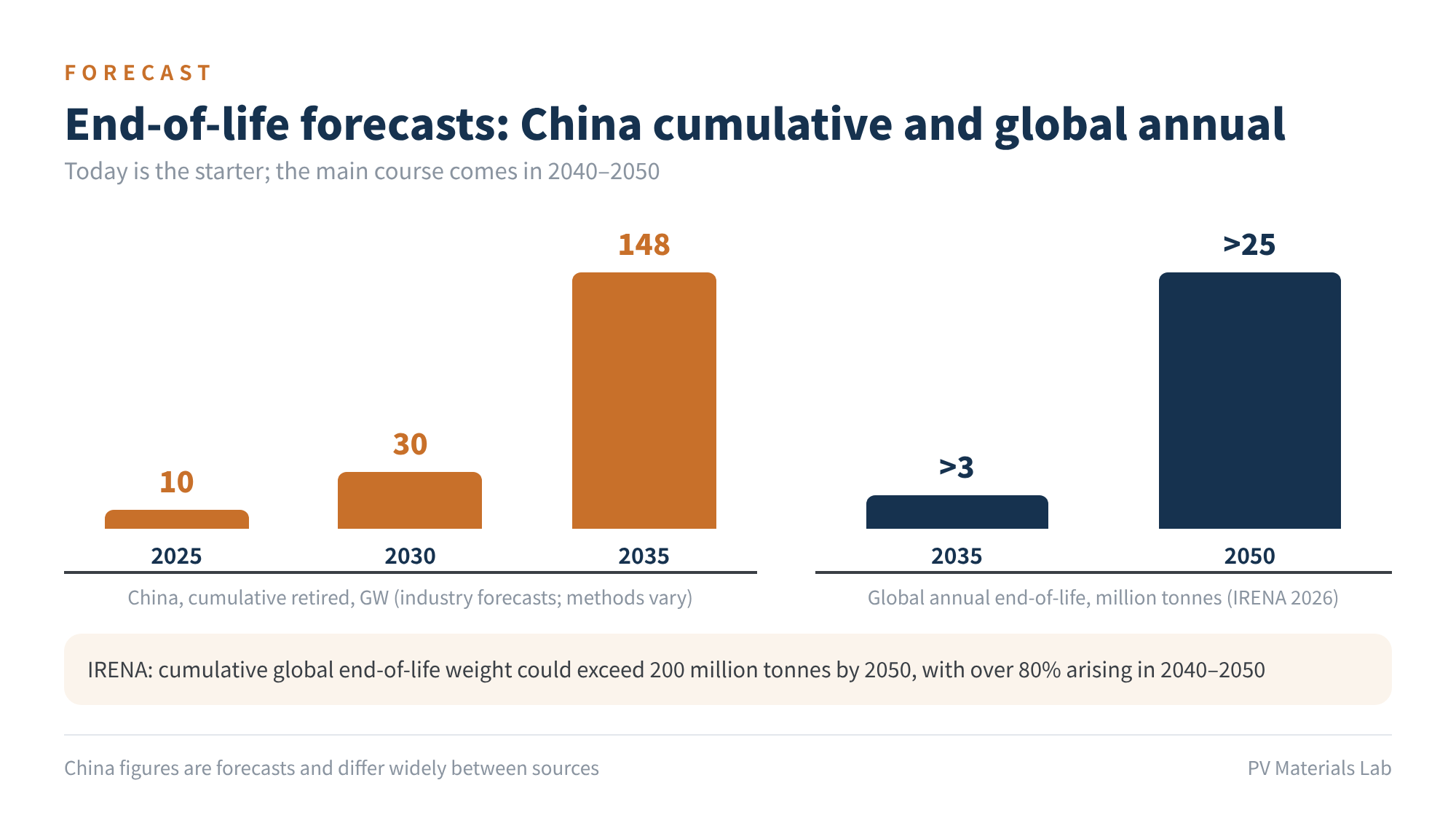
Figure 1 End-of-life forecasts: China cumulative and global annual
In other words, today is just the starter; the main course is still to come.
02Are old modules waste, or a mine?
Break a crystalline silicon module down by weight and its make-up is actually quite "plain":
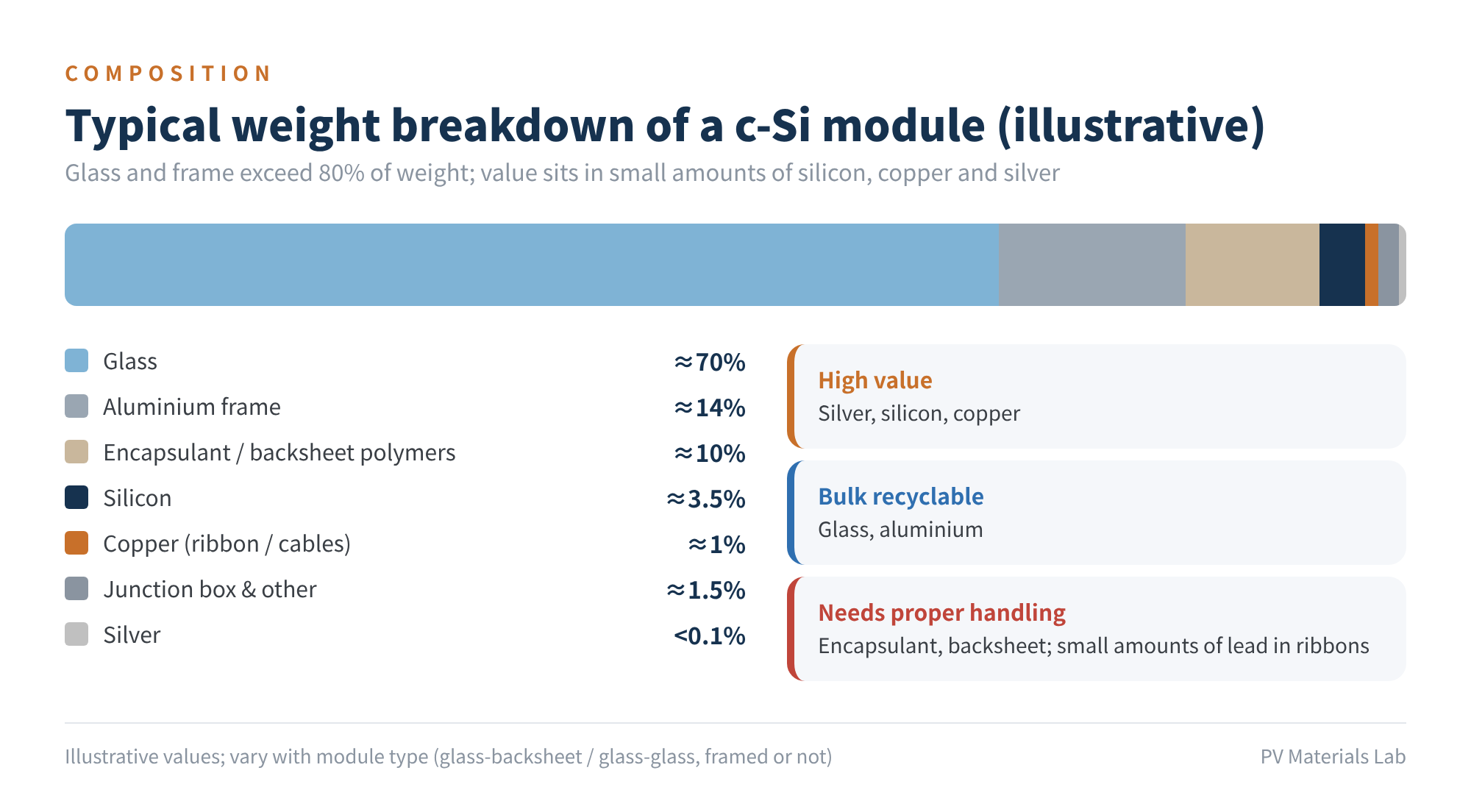
Figure 2 Typical weight breakdown of a c-Si module (illustrative)
Glass and the aluminium frame together account for more than 80% of the weight, and both are mature recyclable materials. The real value lies in the small remainder: silicon, copper and above all silver. Silver makes up less than one part in a thousand of a module, yet it is a major source of recycling value. IRENA estimates the annual value of recoverable materials from end-of-life modules worldwide at more than USD 810 million in 2030, about USD 6 billion in 2040 and more than USD 20 billion in 2050.
Conversely, landfilling or dumping modules without recycling not only wastes these resources; polymers such as encapsulants and backsheets, and the small amount of lead in ribbons, can also pose environmental risks.
As the industry puts it: retired modules are an "urban mine" in the wrong place.
03How is a module taken apart?
Recycling can be roughly divided into three steps: dismantle, separate, recover.
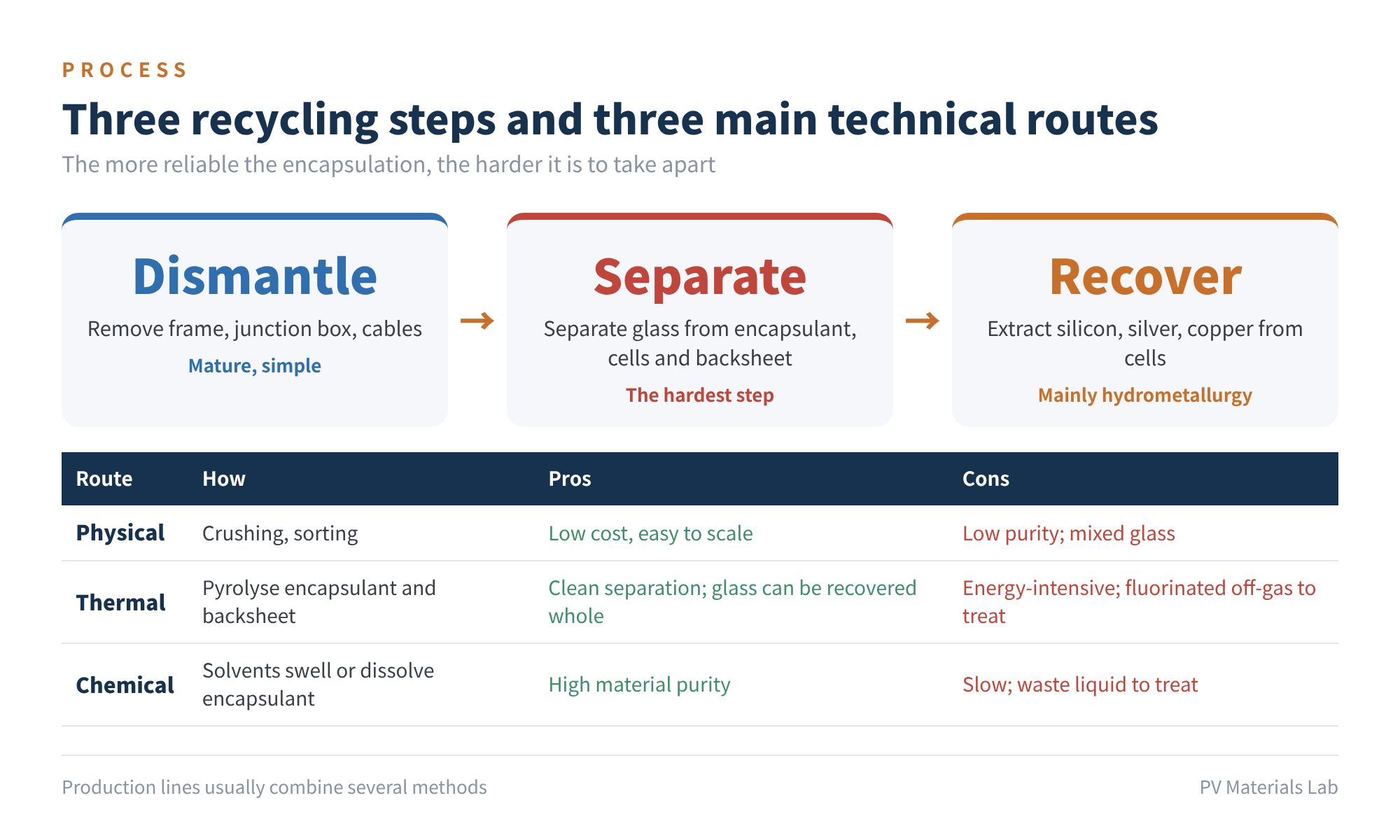
Figure 3 Three recycling steps and three main technical routes
The first and last steps are not too difficult; the hardest is the middle one, separation.
Modules are designed from the factory with "25 years of sun and weather without delamination" in mind: glass, cells and backsheet are bonded firmly into one piece by the encapsulant. The more reliable the encapsulation was back then, the harder it is to take apart today. This may be the most interesting "contradiction" in the PV industry.
The main routes today are physical, thermal and chemical, each with strengths and weaknesses. In practice, production lines often combine several of them.
04Where does the industry stand?
In a sentence: policy is running ahead, and the industry is just getting started.
Policy first. Over the past three years, national documents have come one after another, and they are getting "harder":
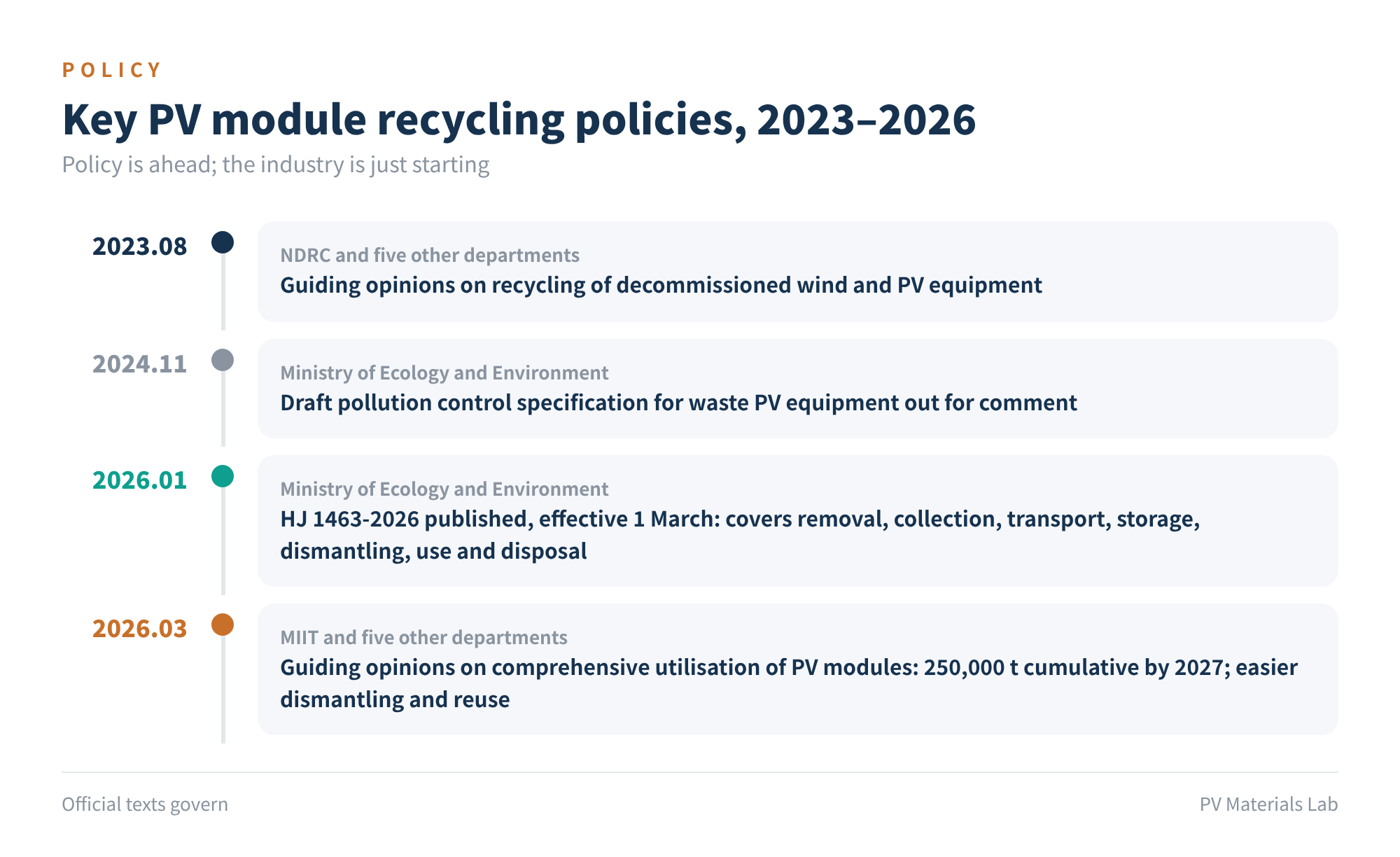
Figure 4 Key PV module recycling policies, 2023–2026
- August 2023: the National Development and Reform Commission and five other departments issued guiding opinions on recycling decommissioned wind and PV equipment, setting up the overall framework.
- From 1 March 2026: the Ministry of Ecology and Environment's Technical specification for pollution control of waste PV equipment recycling and treatment (HJ 1463-2026) took effect, setting pollution control requirements across removal, collection, transport, storage, dismantling, utilisation and disposal.
- March 2026: the Ministry of Industry and Information Technology and five other departments issued guiding opinions on promoting the comprehensive utilisation of PV modules, targeting 250,000 tonnes of cumulative module utilisation by 2027 and encouraging non-destructive dismantling and recovery of silver from cell fingers.
Then the industry. There are roughly three kinds of players. First, module makers such as Jinko, Trina and Yingli, building their own demonstration recycling lines. In September 2024, Trina Solar announced the "world's first fully recycled PV module", whose cells use 100% recycled silicon, with 20.7% efficiency and over 645 W, about 2 percentage points below its mass-produced modules. Second, state-owned energy groups such as CECEP and China Energy, building treatment lines with capacities of ten thousand tonnes and more. Third, specialist recycling companies.
Behind the buzz, though, the industry faces three hurdles it can't avoid:
- Collection. Retired modules are scattered across the country in small, dispersed batches. Many end up in informal workshops that only strip the aluminium frames and junction boxes, leaving formal recyclers short of feedstock.
- Economics. Transport and processing costs are high, while the recovered material is mostly low-value glass. And as silver consumption in new modules falls year by year, future old modules may contain even less of value.
- Harder to dismantle. Glass-glass modules, new encapsulants, fluorinated backsheets... module structures keep changing, and recycling processes must keep up.
05Four directions to watch
- Market size: from niche to tens of billions. A white paper from the PV recycling committee of the China Green Supply Chain Alliance estimates that, allowing for early retirement, China's cumulative PV recycling market will reach about CNY 26 billion by 2030, growing further with the retirement peak.
- Reuse first, then recycle. Many retired modules can still generate power. After testing and grading, using them where power requirements are modest (second-life use) is more economical and lower-carbon than dismantling them straight away.
- Designing for recycling from the start. The six-department guidance explicitly calls for modules that are easier to dismantle and reuse, and for a higher share of recycled materials. Future modules may have to answer "how will this be taken apart in 25 years?" at the design stage.
- Responsibility and formal channels. The guidance calls for orderly scrapping and retirement of modules, steering them to formal buyers, and developing industry standard conditions. As these rules take effect, more old modules will flow into formal channels.
06Final thoughts
PV is called green energy, but that green is only complete once the last link, retirement, is in place. Module recycling is still a tough business today, but the direction is clear: the volumes will come, the rules are being built, and the technology is improving.
Over the next 25 years, the PV industry has to learn not only how to make modules, but also how to take them back properly.
Module recycling is a business where "the volume will come but the numbers are hard": get collection channels and dismantling technology right first, then talk about scale.
How does your company or plant handle retired modules? We would be glad to hear from you.
References
- International Renewable Energy Agency (IRENA): report on end-of-life management of PV panels for a circular economy, August 2026; SolarQuarter coverage, 24 August 2026
- Xinhua: coverage of the MIIT-led six-department guiding opinions on promoting comprehensive utilisation of PV modules, 3 March 2026
- Solid Waste and Chemicals Management Center, Ministry of Ecology and Environment: publication of HJ 1463-2026, Technical specification for pollution control of waste PV equipment recycling and treatment, March 2026
- National Development and Reform Commission et al.: Guiding opinions on promoting the recycling of decommissioned wind and PV equipment, August 2023
- Jiemian: coverage of PV module utilisation (CPIA retirement forecasts; market estimate from the 2024 China PV Recycling and Utilization White Paper), 4 March 2026
- National Business Daily: interview on Trina Solar's fully recycled module, December 2024
A PV R&D and technology team with 10+ years of experience | In-depth technical knowledge sharing
Materials · Reliability · Failure Analysis · Standards & Certification · Products · Processes
Exploring AI + PV; collaboration welcome
Disclaimer:
1. Original content reflects the authors' personal views only, is for reference only and does not constitute investment advice.
2. Reposted and cited content is credited to its source, out of respect for original work.
3. Some content was produced with AI assistance (chart generation, data retrieval, concept explanations, etc.); the core framework and key content were written by our technical team and reviewed by people.
4. If anything is inaccurate or infringes your rights, please leave a message or contact us and we will deal with it.