
Junction Box Series 13 | Under RMB 1 Gross Profit per Set: The Cost of a Junction Box — Where You Can Cut and Where You Cannot
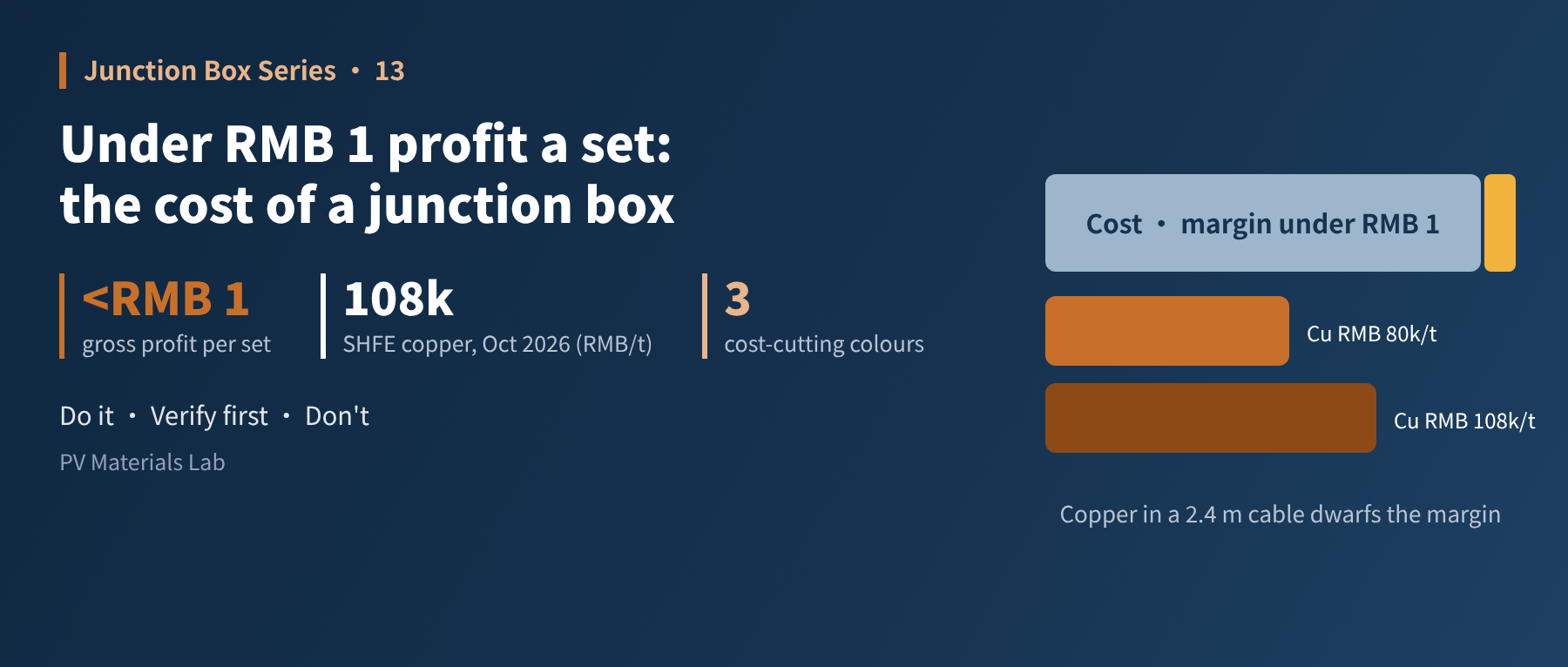
In brief
A price of a little over RMB 10, gross profit under RMB 1, and copper still rising. We lay out the cost of a junction box and sort cost-cutting paths into three colours: do it, verify first, and don't. This is the thirteenth article in our junction box series (Market and Trends: cost structure and cost-reduction paths).
The conclusion of the last article was that junction box gross margins have fallen below 7%. With profit this thin, cost reduction is no longer a nice-to-have but a matter of survival.
But a junction box is a safety component. Every reliability issue covered in the previous twelve articles — diode thermal margin, terminal heat dissipation, sealing — corresponds to a cost.
This article lays the costs out and answers two questions: where does the money go, and where can you cut without causing trouble?
01First, the per-set numbers
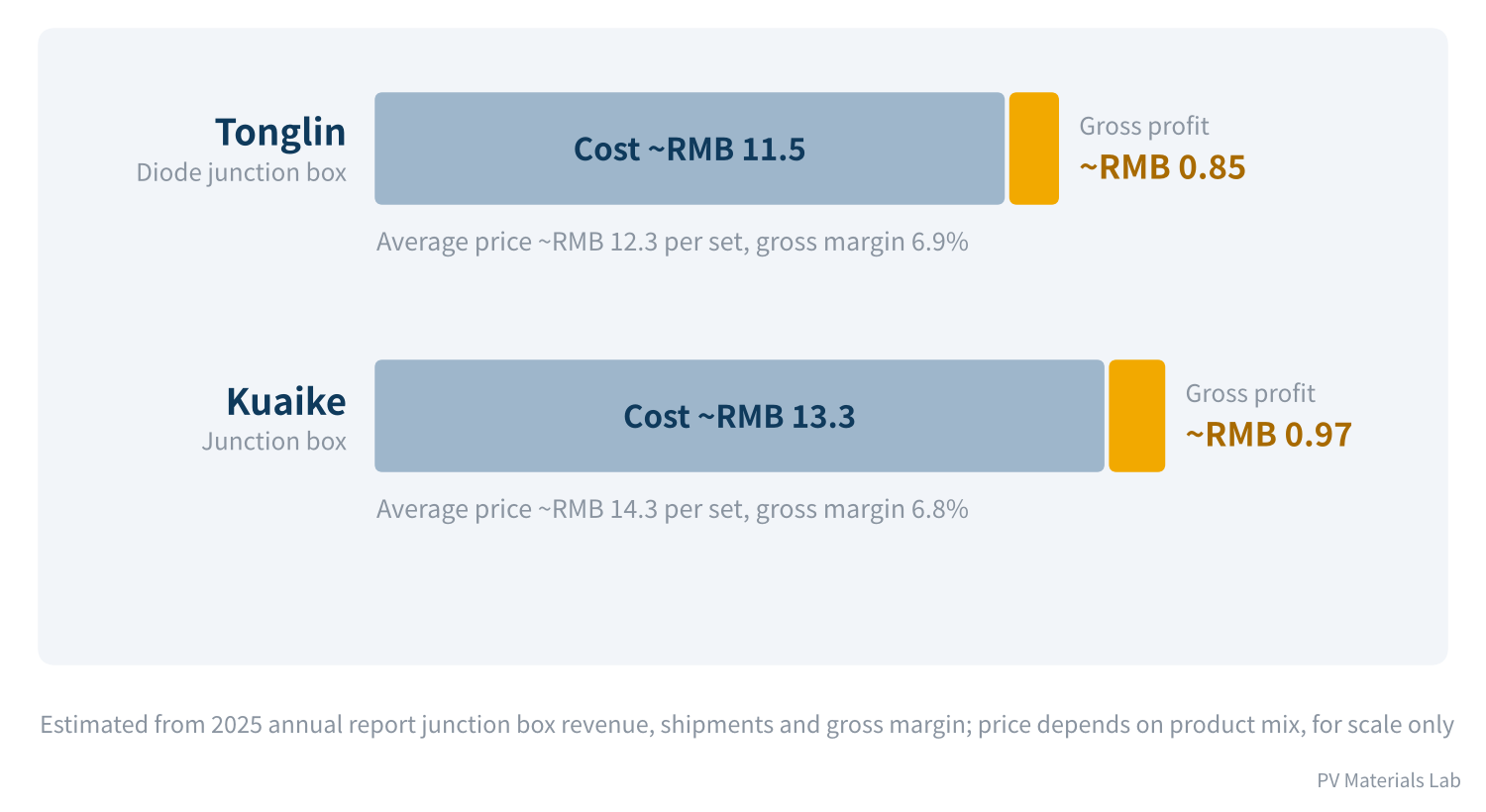
Figure 1 Per junction box set: a price a little over RMB 10, gross profit under RMB 1
Using the financial data from the last article, we can estimate the economics of one set: a price a little over RMB 10, cost taking more than 90%, and gross profit under RMB 1. Selling, administrative, R&D and financial expenses all have to come out of that less-than-one yuan.
This figure defines the basic character of junction box cost reduction: the units are fen and jiao (hundredths and tenths of a yuan). A measure that saves 10 or 20 fen per set is a substantial improvement in this industry.
02The cost map: where the money goes
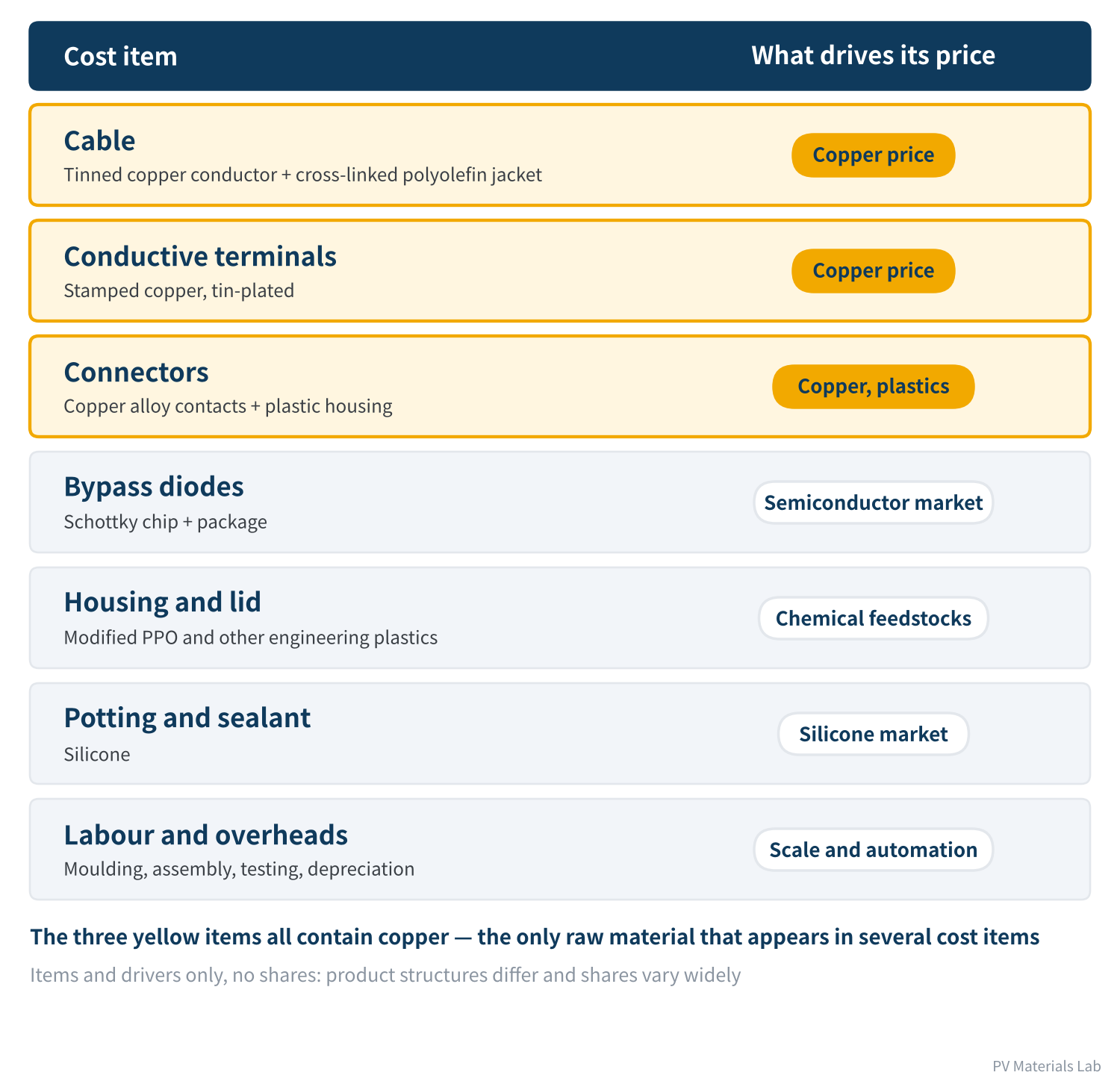
Figure 2 The junction box cost map: where the money goes
A junction box is a typical "material-intensive" product: most of the cost is purchased raw materials, with labour and manufacturing overheads only a small part. In its IPO prospectus, Zeron listed its main raw materials as cable, diodes, connectors and plastic pellets.
Mapping these materials onto the eight parts we took apart in article 2 gives the cost map in Figure 2. Two points stand out:
- The bulk sits outside the box: the two "external" parts, cables and connectors, together are often worth more than the box itself. A junction box is sold as a connection system, not just a box.
- Copper is everywhere: cable conductors, conductive terminals and connector contacts — three cost items — are all copper. When copper moves, the whole set's cost moves with it.
We found no verifiable public figures for the share of each material, so Figure 2 lists only items and price drivers, without percentages. Actual shares also vary by product: cable length, integrated or split design and diode package all change the proportions noticeably.
03Copper: the biggest variable
How much copper matters can be calculated directly.
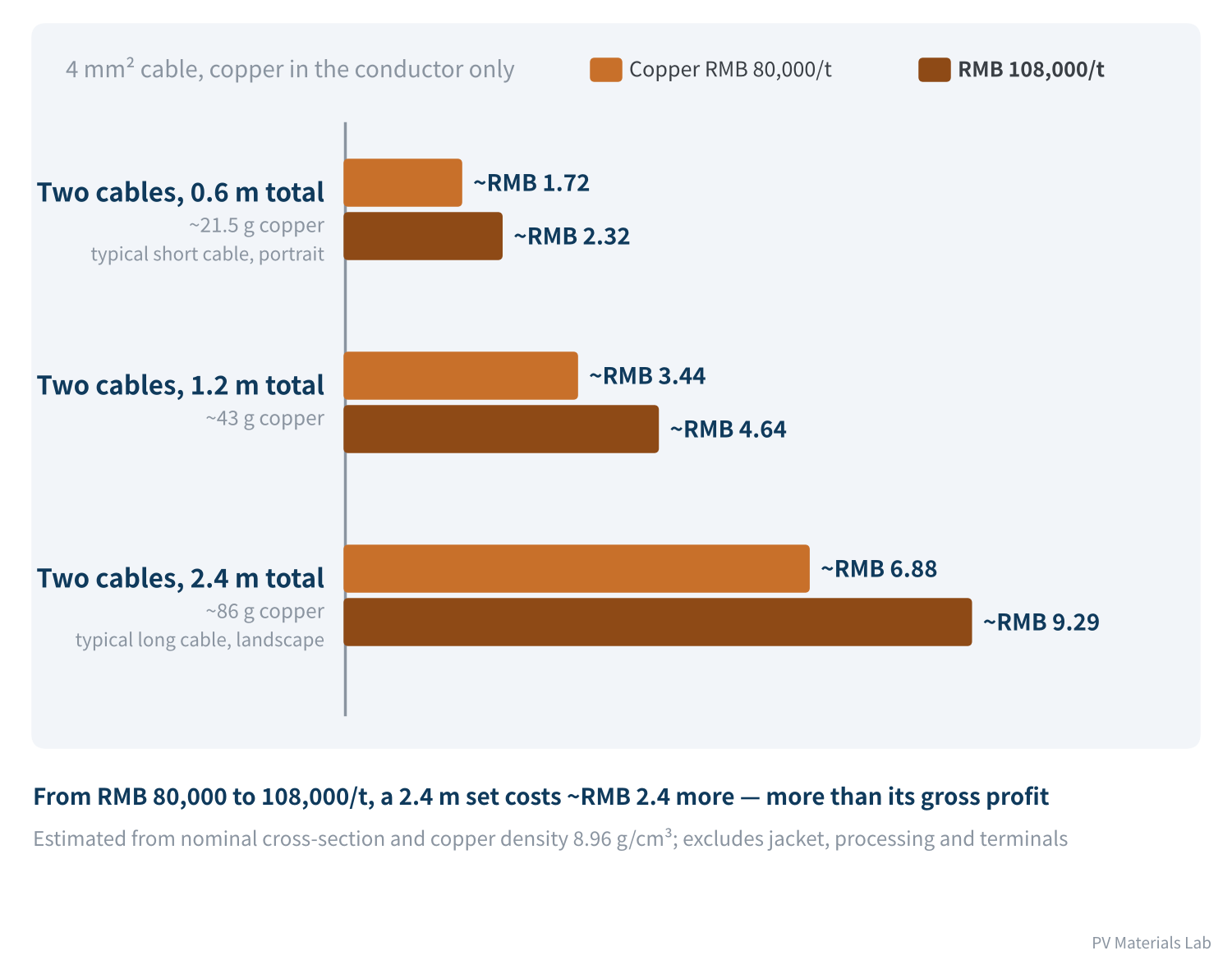
Figure 3 How much copper is in the cables of one junction box set
A 4 mm² cable has 4 cm³ of conductor per metre. At a copper density of about 8.96 g/cm³, that is about 36 g of copper per metre.
Two cables totalling 1.2 m: 36 × 1.2 ≈ 43 g; at RMB 80,000/t that is about RMB 3.4, and at RMB 108,000/t about RMB 4.6.
Totalling 2.4 m (the long cables common for landscape mounting): about 86 g; about RMB 6.9 at RMB 80,000/t and about RMB 9.3 at RMB 108,000/t.
The whole junction box set sells for only a little over RMB 10.
In other words, for a set with long cables, the copper in the cable conductors alone may account for half the selling price or more — before counting the copper in terminals and connectors.
A little more on copper, a lot less margin
In 2025 the average price of the main Shanghai Futures Exchange (SHFE) copper contract was about RMB 80,000/t, against about RMB 74,800/t the year before, up about 7%, with a high above RMB 93,000/t during the year.
In 2026 copper kept climbing sharply: LME three-month copper hit a record USD 14,875/t on 10 September, and in late October the main SHFE contract was still around RMB 108,000/t (about RMB 108,400/t intraday on 30 October), more than 30% above the 2025 average.
| Total cable length | Copper content | Added cost per set, RMB 74,800 → 80,000/t | Added cost per set, RMB 80,000 → 108,000/t |
|---|---|---|---|
| 0.6 m | ~22 g | ~RMB 0.11 | ~RMB 0.60 |
| 1.2 m | ~43 g | ~RMB 0.22 | ~RMB 1.20 |
| 2.4 m | ~86 g | ~RMB 0.45 | ~RMB 2.41 |
Table 1 Effect of copper price changes on cable cost per set (cable conductor only)
The 2025 rise in copper ate 10 to 45 fen of a gross profit under RMB 1 per set; the 2026 rise, in the cable conductor alone, can exceed the entire gross profit per set. This is the scale of the "cost squeeze" mentioned in the last article.
That is why the copper pass-through mechanism is the single most important issue in running a junction box business: whether prices are linked to copper, how long the lag is, and whether copper is hedged with futures directly determine how stable profit is. At 2026 copper prices, fixed-price orders without a link to copper are almost bound to lose money.
04The other costs
- Bypass diodes: as covered in article 3, packages have moved from axial to SMD to modules, with better heat dissipation and higher cost. It is the most technology-intensive item, and its price follows semiconductor supply and demand.
- Housing plastics: modified PPO and other engineering plastics are priced by weight. Wall thickness and box size set the quantity used, and the regrind ratio sets the real material cost.
- Potting and sealant: sometimes supplied by the junction box maker, sometimes bought by the module maker, depending on the agreed scope of supply. The quantity depends on the cavity volume; a smaller box uses less.
- Labour and overheads: a small share, but closely tied to automation and capacity utilisation. When plants run below capacity, depreciation per set rises noticeably.
05Three colours of cost reduction
Cutting cost is neither right nor wrong in itself. The difference is whether what you save is waste or margin.
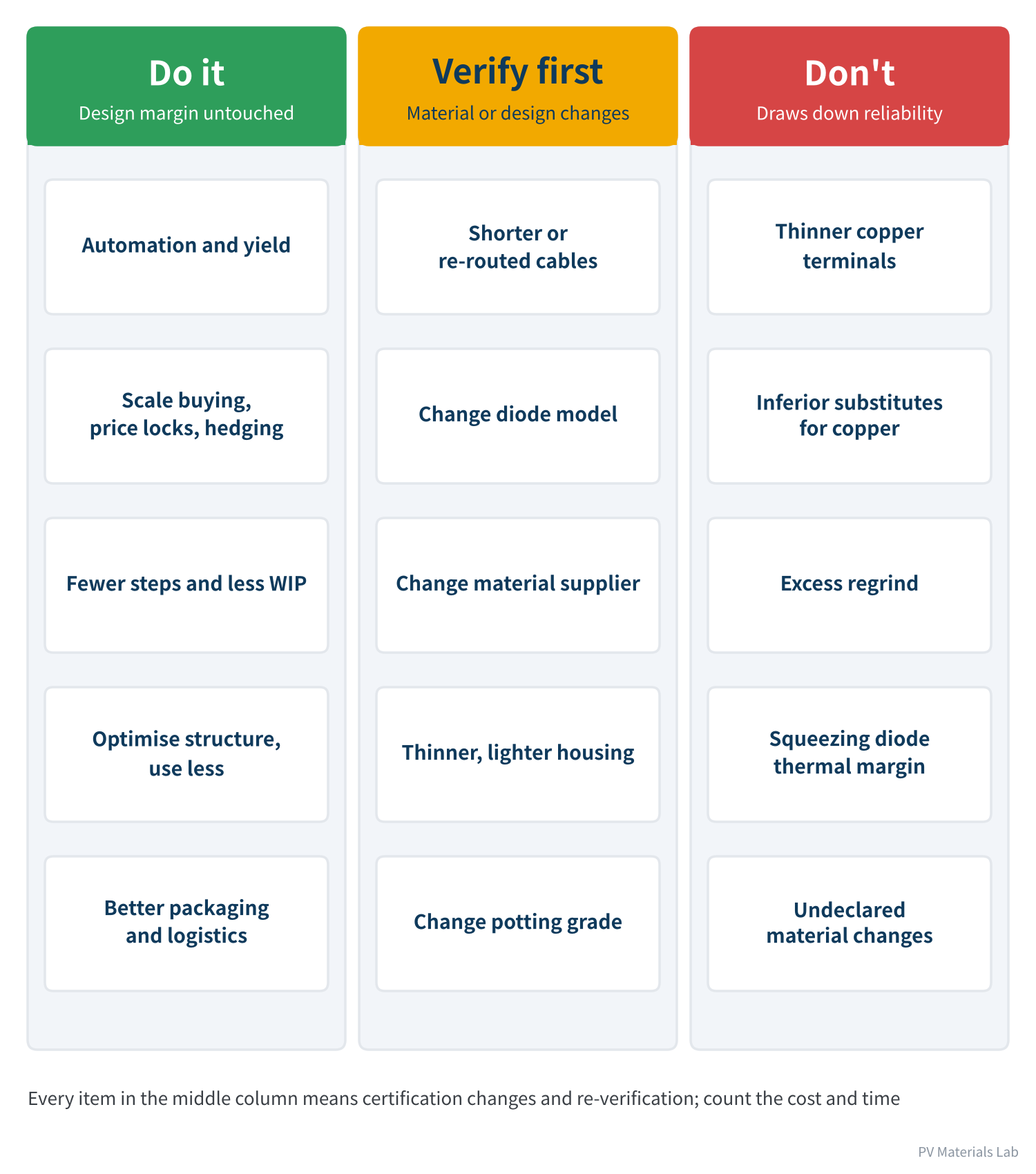
Figure 4 Three colours of cost reduction
Green: do it
These measures leave the product's design margin unchanged and save "waste":
- Automation and yield: less labour, fewer defects and less rework.
- Purchasing: scale buying, pricing linked to copper, and hedging.
- Structural optimisation: using less material through better design with no loss of performance. The split junction box is an example: shorter ribbons and internal routing, a smaller box, less potting, and better heat dissipation as well.
The best cost reduction is the kind that "improves performance along the way". Moving from integrated to split boxes and from axial to module diodes — most of the industry's technology changes that have really stood the test belong here.
Yellow: verify first
These measures change materials or design. They are not necessarily a problem, but they must be verified:
| Measure | Where it saves | What to verify |
|---|---|---|
| Shorter cables | Copper, the most direct effect | Whether it still suits the mounting method; whether cables end up under tension |
| Change diode model | Component price | Thermal performance and thermal runaway (see article 3) |
| Change material supplier | Purchase price | Material properties, compatibility, certification changes |
| Thinner, lighter housing | Plastic use | Mechanical strength, creepage distance, flammability |
| Change potting compound | Potting price | Curing, adhesion, thermal conductivity, compatibility |
Table 2 "Verify first" cost-reduction measures
Shorter cables deserve a closer look. It is the most effective measure because it saves copper, and it has a sound side too: a shorter cable means lower resistive loss. But cable length is set by the mounting method: portrait mounting needs only short cables, landscape mounting needs long ones. Trim the cables to barely long enough to save cost, and they end up pulled tight during installation, bringing in the mechanical stress problems covered in article 10.
As articles 8 and 9 explained, every item in this column involves certification changes, and changing junction box-related materials may trigger retesting for module certification. The cost and time of verification must be included in the cost-reduction sums.
Red: don't
What these measures save is not waste but safety margin:
- Thinner terminal copper, or substitutes with lower conductivity: as article 2 explained, terminals are both conductors and heat sinks. Thinner copper means higher resistance and worse heat dissipation, both pushing temperature up.
- Excessive regrind: as article 5 explained, more regrind weakens both flame retardancy and strength.
- Squeezing diode thermal margin: choosing a diode that "just passes the test" leaves the thermal runaway risk from article 3 to the field.
- Undeclared material substitution: as article 8 explained, a certificate covers a specific combination of materials. Swap materials quietly and the certificate no longer describes the product.
These share one trait: outgoing inspection cannot catch them. Slightly thinner copper or a bit more regrind still passes routine electrical tests; the problems show up only after a few years outdoors. Precisely because they cannot be caught at the factory gate, they must be guarded by factory audits, incoming sampling and material consistency checks. The higher copper goes, the greater the temptation to cut these corners.
06An asymmetric account
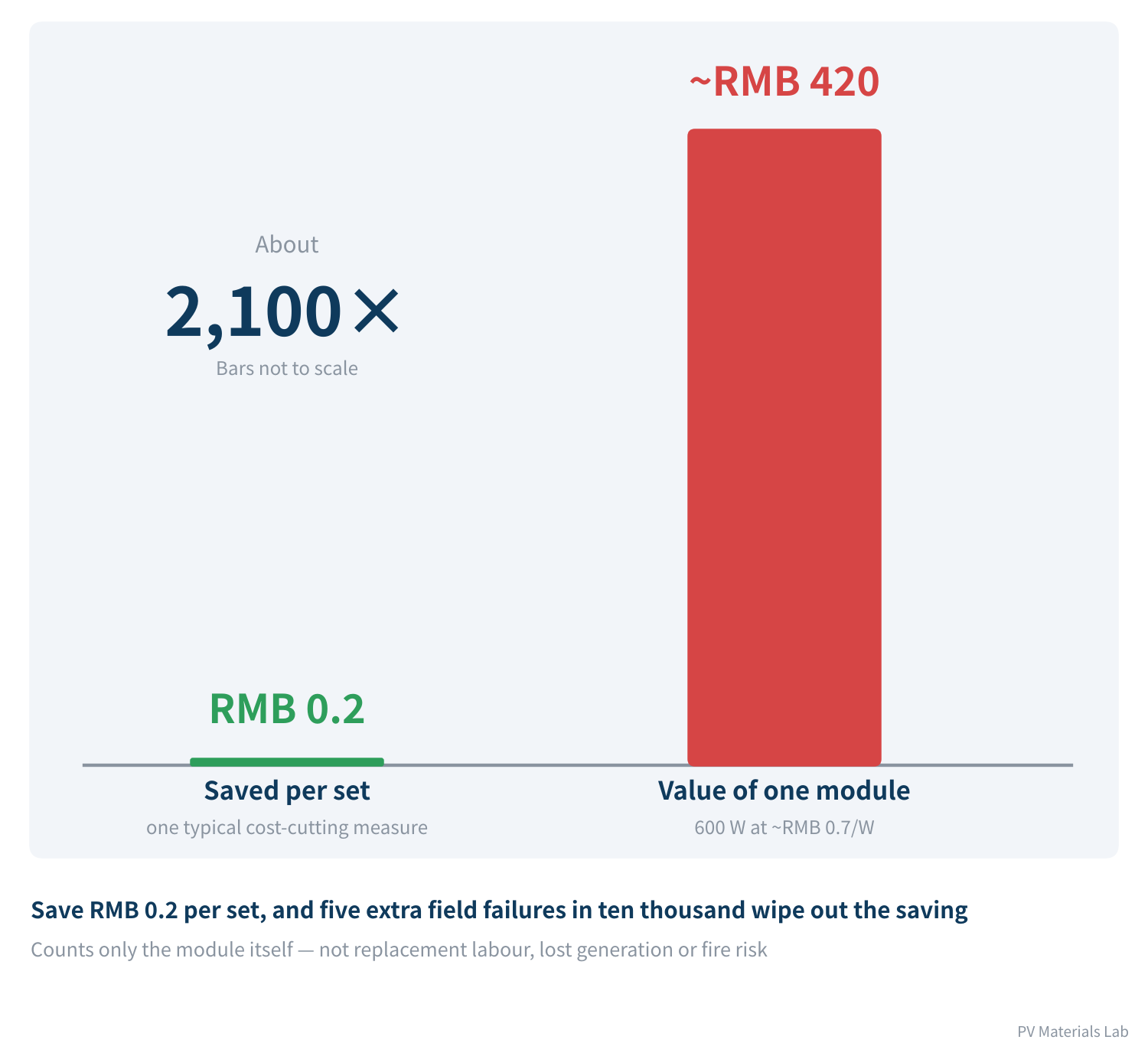
Figure 5 What you save and what you may lose are not on the same scale
Suppose a cost-reduction measure saves RMB 0.2 per junction box set.
A 600 W module at about RMB 0.7/W (the average Chinese TOPCon module price in late October 2026 was about RMB 0.72/W) is worth about RMB 420. A junction box selling for a little over RMB 10 is only about 3% of the module's value.
If the measure leads to field failures that require module replacement, then a failure-rate increase of just 0.2 ÷ 420 ≈ 5 in 10,000 wipes out the entire saving.
That counts only the module itself — not the labour of replacing it on a roof, lost generation, and certainly not the consequences of a fire.
The meaning of this account: the junction box is a small part of module cost, but when it fails, the loss is the whole module or more. There is a huge asymmetry between cost and risk.
So for module makers, chasing the lowest purchase price for junction boxes is one of the worst-value cost-cutting directions. The same effort spent confirming that suppliers are holding the red lines pays back far more.
07Five recommendations for buyers
- Ask about the copper in the quote: what copper price the quote is based on, and whether there is a pass-through mechanism. A quote clearly below the cost of its copper content is a risk signal in itself.
- Write critical materials into the technical agreement: terminal material and thickness, diode model, housing material grade and the maximum regrind ratio should all be specified.
- Test the "invisible" parameters at incoming inspection: terminal thickness, loop resistance and diode forward voltage reveal tampering better than appearance does.
- Set cable length by mounting method: do not choose a barely sufficient length to make the unit price look good.
- Put verification costs into the total: the real cost of changing a supplier or material is the price difference minus verification, certification-change costs and potential risk.
08Final thoughts
1. A junction box set sells for a little over RMB 10 with gross profit under RMB 1; cost reduction is measured in fen and jiao.
2. Raw materials are the bulk of cost, and cables and connectors are often worth more than the box itself.
3. Copper appears in cables, terminals and connectors and is the biggest cost variable; with copper around RMB 108,000/t in 2026, the rise in cable conductor cost alone can exceed gross profit per set, making copper pass-through a condition for survival.
4. Cost reduction comes in three kinds: saving waste — do it; changing materials and design — verify first; drawing down safety margin — don't.
5. The red measures share one trait: outgoing inspection cannot catch them, so they must be guarded by factory audits and material consistency checks.
6. The junction box is about 3% of module value, but failure costs the whole module: cost and risk are highly asymmetric.
Within the existing technical framework, there is little cost-reduction room left. The industry's next way forward lies more in upgrading the product itself. That is the topic of the next article.
In the next article, Junction Box Series 14 compares smart and standard junction boxes: what problems optimisers, rapid shutdown devices and monitoring each solve, and why they are seen as the next growth area.
With copper soaring this year, have your junction box purchase prices moved with it? We would be glad to hear from you.
References
- Price and gross profit per set: estimated from junction box revenue, shipments and gross margin disclosed in the 2025 annual reports of Tonglin and Kuaike (in Chinese)
- Main raw materials: IPO prospectus of Jiangsu Zeron New Energy Technology Co., Ltd. (in Chinese)
- 2025 copper prices: Mysteel, 2025 copper market review and 2026 outlook (in Chinese)
- Sina Finance: copper price quotes, 30 October 2026 (in Chinese), https://finance.sina.com.cn/money/future/fmnews/2026-10-30/doc-iniwysmu5555578.shtml
- NetEase: copper above USD 14,482 (29 October 2026, including the 10 September LME record) (in Chinese), https://www.163.com/dy/article/LAD3MN0M05568W0A.html
- InfoLink Consulting: PV spot prices (28 October 2026), https://www.infolink-group.com/spot-price/
- Copper content of cables and module value are our estimates based on public physical constants and stated assumptions
A PV R&D and technology team with 10+ years of experience | In-depth technical knowledge sharing
Materials · Reliability · Failure Analysis · Standards & Certification · Products · Processes
Exploring AI + PV; collaboration welcome
Disclaimer:
1. Original content reflects the authors' personal views only, is for reference only and does not constitute investment advice.
2. Reposted and cited content is credited to its source, out of respect for original work.
3. Some content was produced with AI assistance (chart generation, data retrieval, concept explanations, etc.); the core framework and key content were written by our technical team and reviewed by people.
4. If anything is inaccurate or infringes your rights, please leave a message or contact us and we will deal with it.