
The Cost of Flux: Small Savings, Whole-Module Risk
In brief
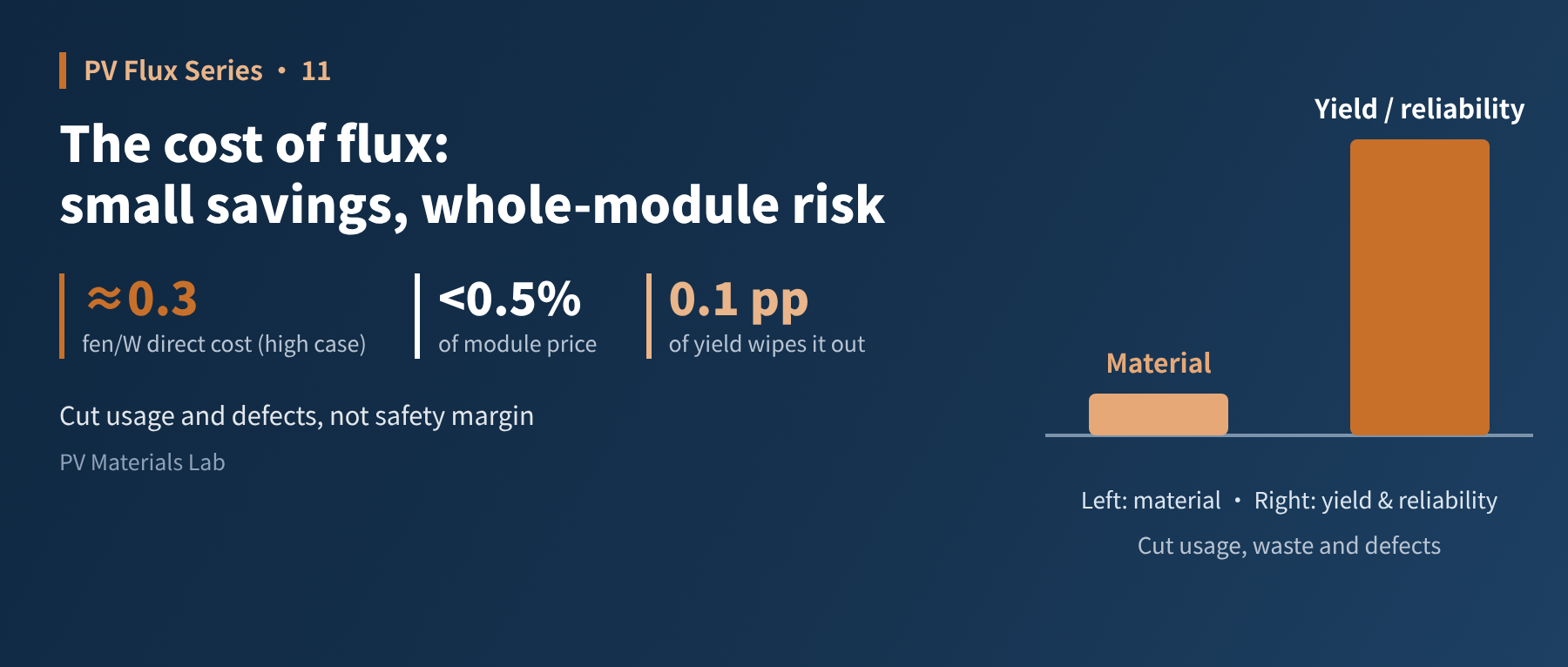
Under pressure to cut module costs, almost every consumable gets squeezed on price again and again, and flux is no exception. But how much does flux really cost? Using a simple estimation framework, this article shows that even with high assumptions, the direct cost of flux is only about 0.3 fen/W (1 fen = CNY 0.01), less than 0.5% of the module price, while the loss from a small swing in yield can be just as large. On that basis we look at what makes up the price of flux, where hidden costs come from, the cost-reduction paths that actually work, and several red lines that should never be crossed to save money.
In the previous article we covered flux selection and qualification, and noted that cost reduction is the most common reason for changing flux. This article works through the numbers: how much of module cost does flux really account for? How much room is there to save? Which money is worth saving, and which must never be saved?
01Direct cost first: a simple estimation framework
The direct material cost of flux can be estimated with a very simple formula:
Flux cost per watt = flux usage per module × flux price ÷ module power
Public data on flux consumption and price is scarce, and it varies widely between companies and processes. To avoid numbers that look precise but have no basis, we run a sensitivity estimate over a range: flux usage of 5, 10 and 20 g per 600 W module, and a price of CNY 30, 60 and 100 per kg.
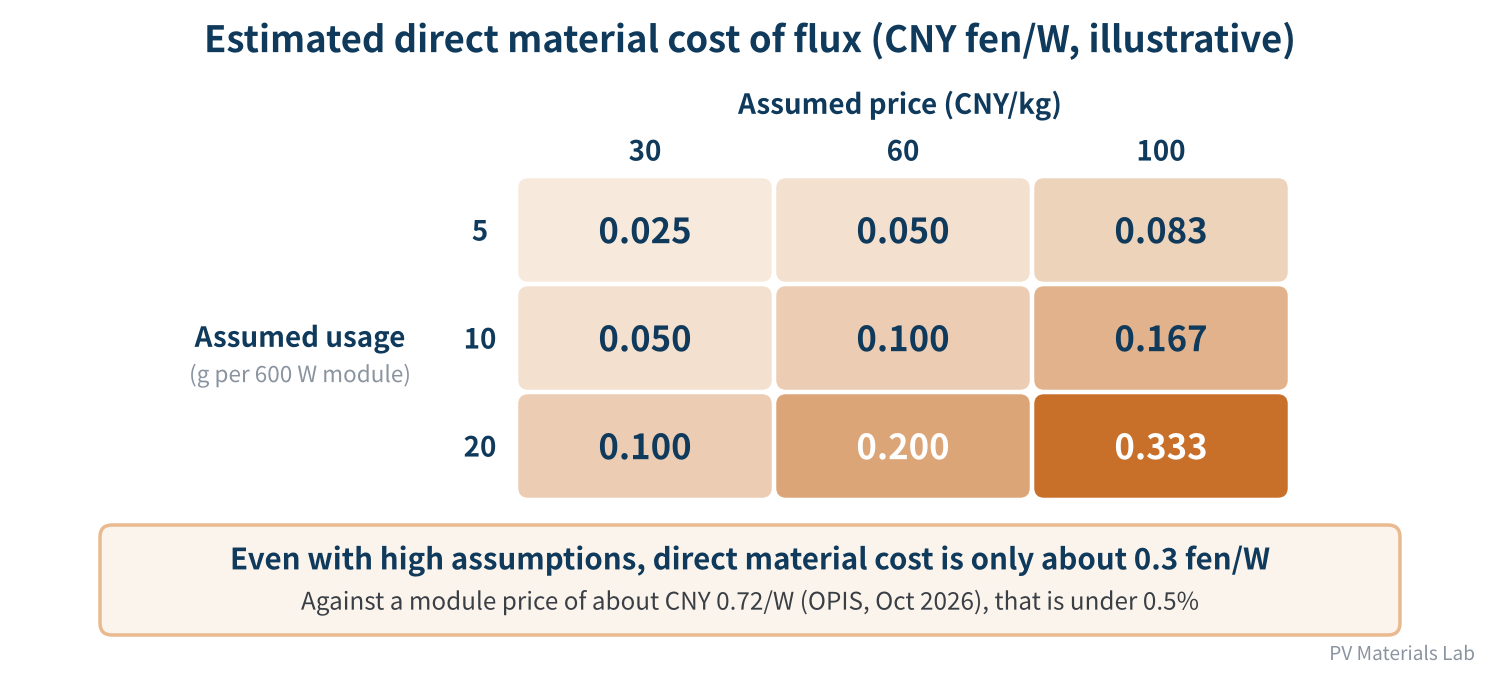
Figure 1. Estimated direct material cost of flux (fen/W, illustrative)
The results range from 0.025 to 0.33 fen/W. For reference, the OPIS Chinese Module Marker for TOPCon modules published on 20 October 2026 was about USD 0.107/W (FOB China, unchanged week on week). At the end-October central parity of about 6.71 CNY per USD, that is about CNY 0.72/W. Even with the highest assumption, the direct cost of flux is only about 0.46% of the module price, under 0.5%.
The implication: squeezing the unit price of flux contributes very little to total module cost. Cutting the price by 20% saves only about 0.02 fen/W under the middle assumption.
02What makes up the price of flux
If direct cost is so low, why do prices still differ noticeably between products? The answer lies in how flux prices are built up:
- Solvent: makes up most of the formula by mass (see article 02). Its price tracks commodity chemicals such as alcohols and forms the cost "base".
- Activators and functional additives: a small share by mass, but the core of the formula. Low-halogen, low-corrosion formulas with a wide process window usually depend on more refined activator and additive systems.
- R&D and validation: developing formulas for new needs such as TOPCon, HJT and fine round-wire ribbon, and supporting module makers with cell-level damp heat and compatibility testing, are costs built into the price.
- Quality control and stability: lot-to-lot consistency, raw material control and change management determine long-term product stability, and also the supplier's management cost.
- Storage, transport and safety: alcohol-based flux is a flammable liquid, so transport, storage and use must meet hazardous chemical requirements. This cost is not negligible.
So the price gap between two fluxes is usually not "the same thing sold for more", but differences in activator system, validation effort and quality stability. Before comparing prices, compare what you are actually buying.
03Hidden costs are the big ones
Compared with direct material cost, the hidden costs flux brings are usually far larger. They are simply spread across different departments' books and are hard to see:
- Yield: rework of cold joints, failed peel tests and breakage all eat directly into output.
- Capacity: downtime for cleaning and bath changes caused by clogged nozzles or abnormal baths takes up equipment time.
- Bath losses: waste from evaporation, water uptake and premature bath changes is often more than the flux the ribbon actually carries away.
- Reliability risk: the corrosion, delamination and power loss discussed in articles 07 and 09 cost far more than the material itself once they show up at the customer.
Using the same module price for comparison: each 0.1 percentage point drop in yield costs about 0.072 fen/W, and a 0.5 percentage point drop about 0.36 fen/W.
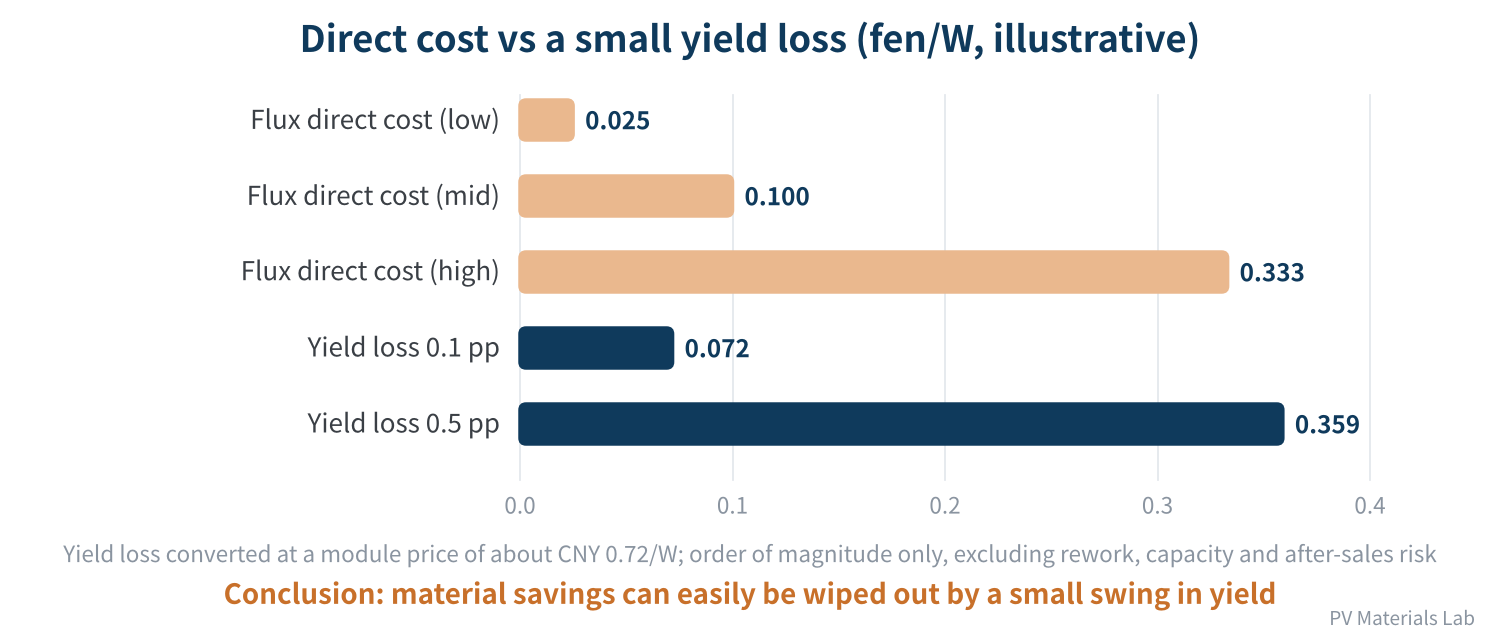
Figure 2. Direct cost vs a small yield loss (fen/W, illustrative)
In other words, to save a few hundredths of a fen per watt in material, a yield swing of just 0.1 percentage point wipes out the saving. That is before counting rework labour, lost capacity and after-sales risk.
The main battlefield for flux cost reduction is not unit price but "using it well": yield, consumption and reliability each have more leverage than price.
04Cost-reduction paths that actually work
If unit price is not the main battlefield, where should flux cost reduction start?
- Cut consumption: precise application, drying and blow-off before soldering, and less over-application and overflow reduce actual usage per module (see article 05). This also lowers residue and reliability risk, a double win.
- Reduce waste: cover the bath, control shop-floor temperature and humidity, and standardise top-ups to reduce evaporation and water uptake. Monitor the bath mainly by acid value (see article 03) and decide bath changes from data rather than a fixed schedule, avoiding waste from changing too early.
- Raise yield: prefer products with a wide process window at qualification (see article 10) to reduce cold joints and rework caused by fluctuation.
- Local substitution: domestic Chinese fluxes often have advantages in value and service responsiveness, but only after full qualification, not by comparing price and basic properties alone.
- Look at system cost: in routes such as 0BB with film interconnection, flux may no longer be needed at all (see article 06), but cost shifts to encapsulant, ribbon and equipment. When evaluating a technology route, look at system cost rather than a single consumable.
05Red lines not to cross for cost reduction
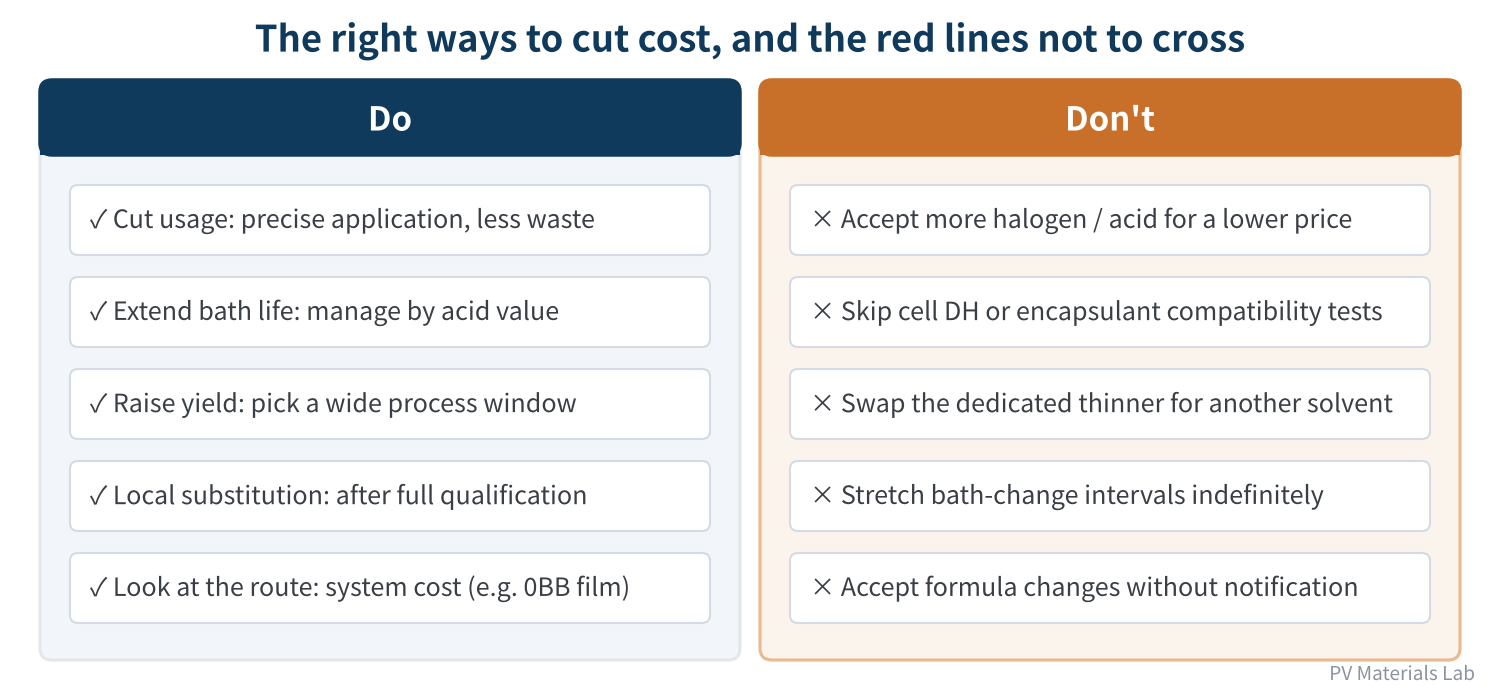
Figure 3. The right ways to cut cost, and the red lines not to cross
Cost reduction is fine, but there are a few red lines we recommend never crossing, however strong the cost pressure:
- Don't accept higher halogen or acid value for a lower price: this bears directly on corrosion risk for TOPCon and HJT cells (see articles 06 and 09).
- Don't skip key validation: cell-level damp heat and encapsulant compatibility tests are the most effective way to expose long-term risk. Skip them and you save the test fee but gamble with module life.
- Don't replace the dedicated thinner with a non-recommended solvent: it looks like a saving on thinner, but it actually changes the formula, with unpredictable results.
- Don't stretch bath-change intervals indefinitely: as the bath ages, concentration drifts out of control and impurities accumulate, making both soldering quality and residue worse.
- Don't accept formula changes without change notification: a supplier quietly switching raw materials to save cost is the most hidden source of risk, so the technical agreement must require change notification (see article 10).
Cutting flux cost means cutting consumption, waste and defects, not safety margin. You save fractions of a fen, but you may be gambling the whole module.
06Final thoughts
Three things to remember about the cost of flux:
- Direct cost is small: even with high assumptions it is only about 0.3 fen/W, so squeezing unit price does little for module cost;
- Hidden costs are large: a yield swing of 0.1 percentage point can wipe out the entire price saving, and reliability risk is even harder to quantify;
- Aim cost reduction correctly: cut consumption, reduce waste, raise yield, substitute locally only after full qualification, and hold the red lines on halogens, validation and change management.
Speaking of local substitution, a natural question follows: who are the players in the PV flux market today? What are the technology routes and competitive landscape of domestic and international suppliers? In the next article we look at the PV flux industry and its suppliers.
Roughly how much flux does your line use per module? What pitfalls have you hit while cutting costs? We would be glad to hear from you, and corrections to our assumptions are welcome.
References
- pv magazine: China solar module prices steady as proposed price floors meet skepticism, 2026-10-23 (OPIS Chinese Module Marker data), https://pv-magazine-usa.com/2026/10/23/china-solar-module-prices-steady-as-proposed-price-floors-meet-skepticism/
- China Foreign Exchange Trade System: CNY/USD central parity (2026-10-30, 6.7138), as reported by cnfin.com, https://www.cnfin.com/kx/detail/20261030/4488624_1.html
- MacDermid Alpha: Kester SF800-LR and ALPHA SF828-MBB PV flux technical data (reference for solids content and other parameters)
- pv magazine Australia: UNSW study shows impact of soldering flux on TOPCon solar cell degradation, 2025
- Articles 02, 03, 05, 06, 07, 09 and 10 of this series
A PV R&D and technology team with 10+ years of experience | In-depth technical knowledge sharing
Materials · Reliability · Failure Analysis · Standards & Certification · Products · Processes
Exploring AI + PV; collaboration welcome
Disclaimer:
1. Original content reflects the authors' personal views only, is for reference only and does not constitute investment advice.
2. Reposted and cited content is credited to its source, out of respect for original work.
3. Some content was produced with AI assistance (chart generation, data retrieval, concept explanations, etc.); the core framework and key content were written by our technical team and reviewed by people.
4. If anything is inaccurate or infringes your rights, please leave a message or contact us and we will deal with it.