
Taking a New Flux into Mass Production: Selection, Validation, Switchover and Change Management
In brief
Cost cuts, local substitution, a change of cell technology, a supplier reformulation: module makers change flux for many reasons, but it is never as simple as swapping one drum of liquid for another. This article breaks flux qualification into five stages: requirements, supplier evaluation, lab validation, line validation, and reliability and switchover. It focuses on three things: what the spec and technical agreement should contain, why the line DOE should look for a "process window" rather than an "optimum", and the most common pitfalls in switchover and later change management.
With this article we move into the industry part of the series. Over the previous nine articles we covered what flux does, its composition, indicators, tests, process, cell compatibility, encapsulant compatibility, soldering defects and reliability. Putting it all together leads to a very practical question: how should a module maker choose a flux, and how can it bring that flux safely into mass production?
01Why change flux?
Module makers usually change flux for one of these reasons:
- Cost reduction and local substitution: replacing the current product with one that offers better value. This is the most common motive.
- Technology change: cells move from PERC to TOPCon, HJT or BC, or ribbon changes to fine round wire or low-temperature ribbon, and the existing flux no longer fits (see article 06).
- Forced change: the supplier discontinues the product, adjusts the formula, or changes raw materials or production site. Even if the product name stays the same, the product has in fact changed.
- Problem-driven: the current flux shows problems in reliability testing or on the line, and a replacement is needed.
Whatever the reason, the same qualification process applies. The difference is that cost-driven projects usually face the most time pressure and are the most tempting places to "skip a step", and the skipped steps are usually where problems appear later.
02Five stages of qualification
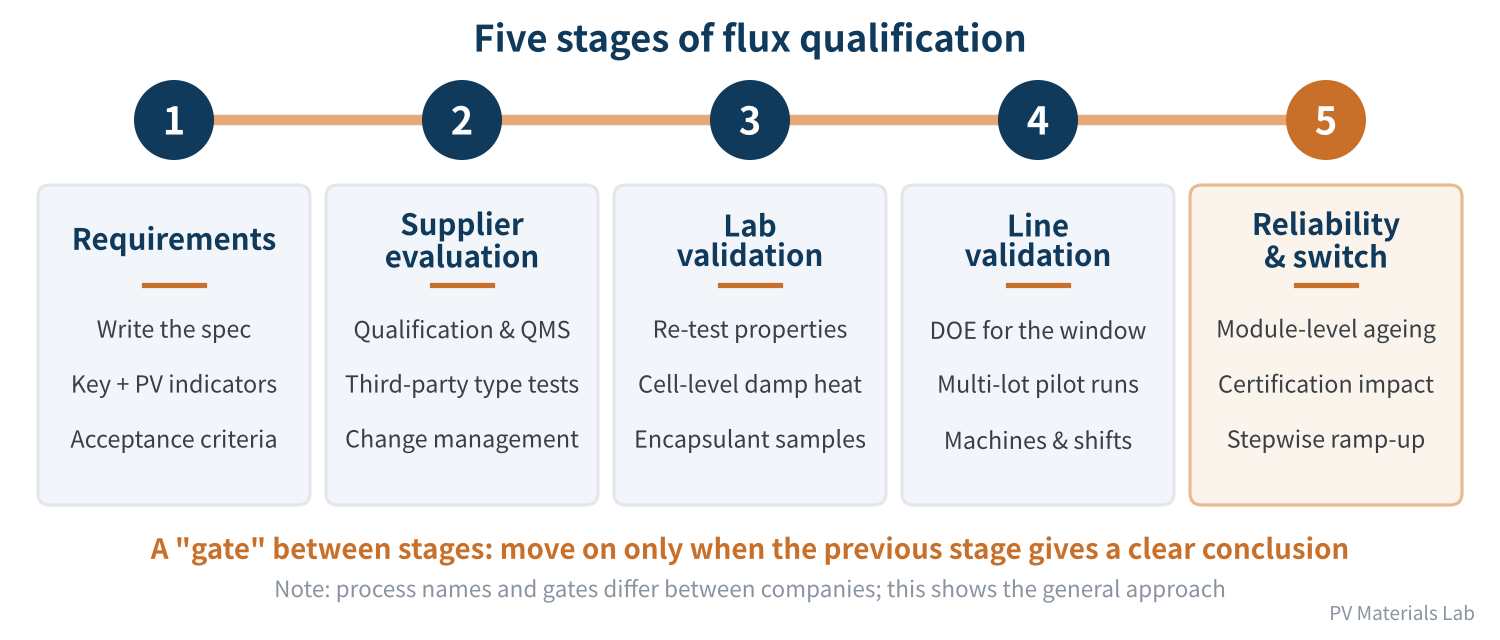
Figure 1. Five stages of flux qualification
- Stage 1, requirements: first write down what you need. The spec should include the key physical and chemical indicators with upper and lower limits (article 03) and the type-test requirements (article 04), plus PV-specific requirements: encapsulant compatibility, cell-level damp-heat performance, compatible ribbon and cell types, recommended application method and temperature window.
- Stage 2, supplier evaluation: look at qualifications and the quality system, third-party type-test reports (with standard version and date), capacity and delivery stability, and also technical support and change-management capability. Whether a supplier will promptly notify formula and raw material changes matters more for long-term risk than price.
- Stage 3, lab validation: re-test the key properties and compare with supplier data; run cell-level damp-heat comparisons to screen out products that are unkind to cells; make flux–encapsulant compatibility samples (article 07) to expose yellowing and delamination risks early.
- Stage 4, line validation: run a DOE on the actual stringer to find the process window, then run pilot batches with several flux lots, several machines and several shifts to confirm stability.
- Stage 5, reliability and switchover: once module-level ageing tests (DH, TC, HF and so on, tightened as needed) are passed, assess the impact on module certification, then switch to mass production step by step.
Put a "gate" between the stages: move on only when the previous stage has reached a clear conclusion. A product already screened out by cell-level damp heat in the lab does not need to take up line resources for a DOE.
03Line DOE: find the "window", not just the "optimum"
The core of line validation is the DOE. Typical factors and responses are:
| Category | Typical content |
|---|---|
| Factors | Flux dosage or concentration, preheat temperature, soldering temperature or power, soldering time; different ribbon and cell lots if needed |
| Responses | Peel strength (mean and scatter), EL defect rate, breakage rate, appearance (residue, white spots, solder balls), ribbon offset |
| Control | The current flux tested in parallel under the same conditions as a baseline |
Table 1. Typical factors, responses and control in a line DOE
Many DOEs end with a single sentence: "the best parameters are X". For mass production, though, how wide the pass zone is matters more than the optimum.
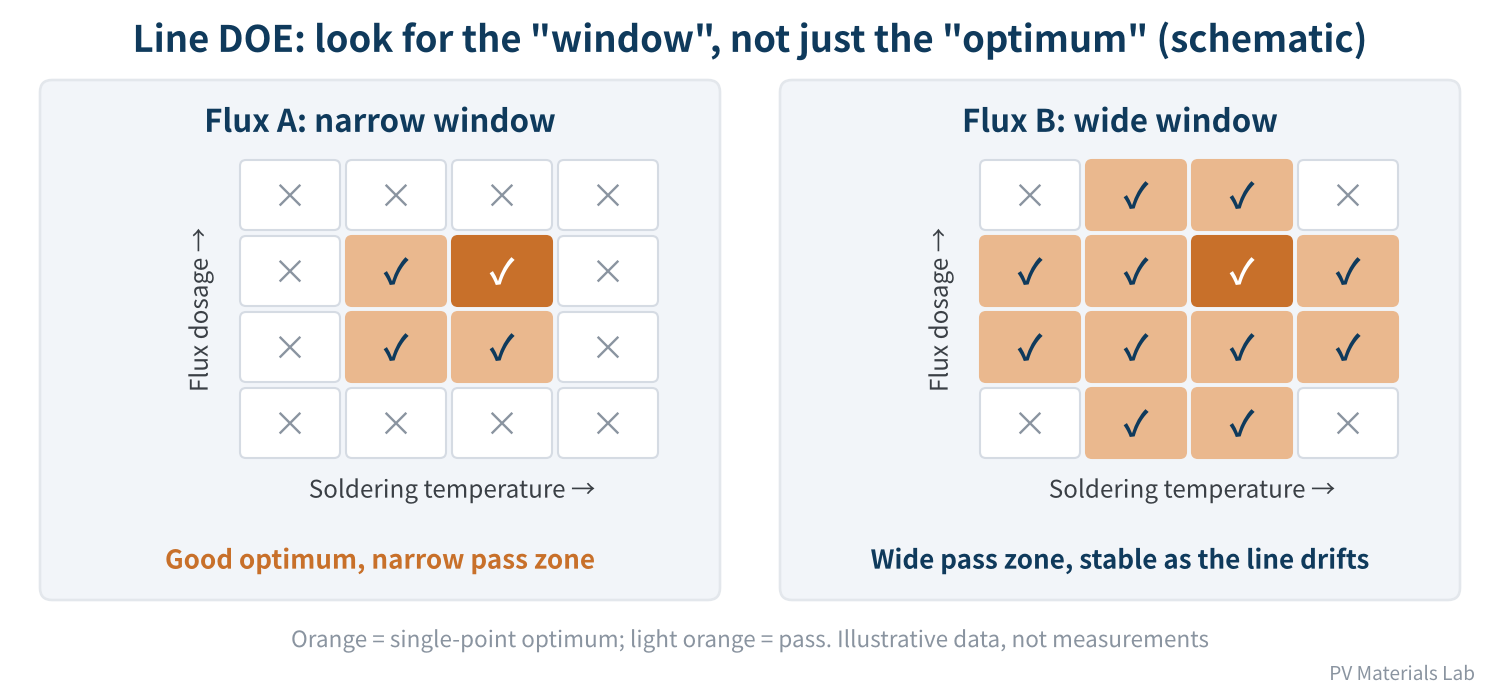
Figure 2. Line DOE: look for the "window", not just the "optimum" (schematic)
On the line, bath concentration drifts, heating power decays, and every lot of ribbon and cells is slightly different. A flux may perform very well at its optimum, but if its pass zone is narrow, the slightest fluctuation will make it "fall off". A product with a wide window, even with a slightly weaker optimum, is often more stable in production. So when evaluating, ask: if dosage and temperature each move one step, does the result still pass?
The goal of a qualification DOE is not to find "the best single point" but to confirm that "the passing area" is wide enough to cover everyday fluctuation on the line.
04Switchover: three "don'ts"
With lab and pilot runs passed, the final step is switching mass production. It looks simple but is where problems most often arise:
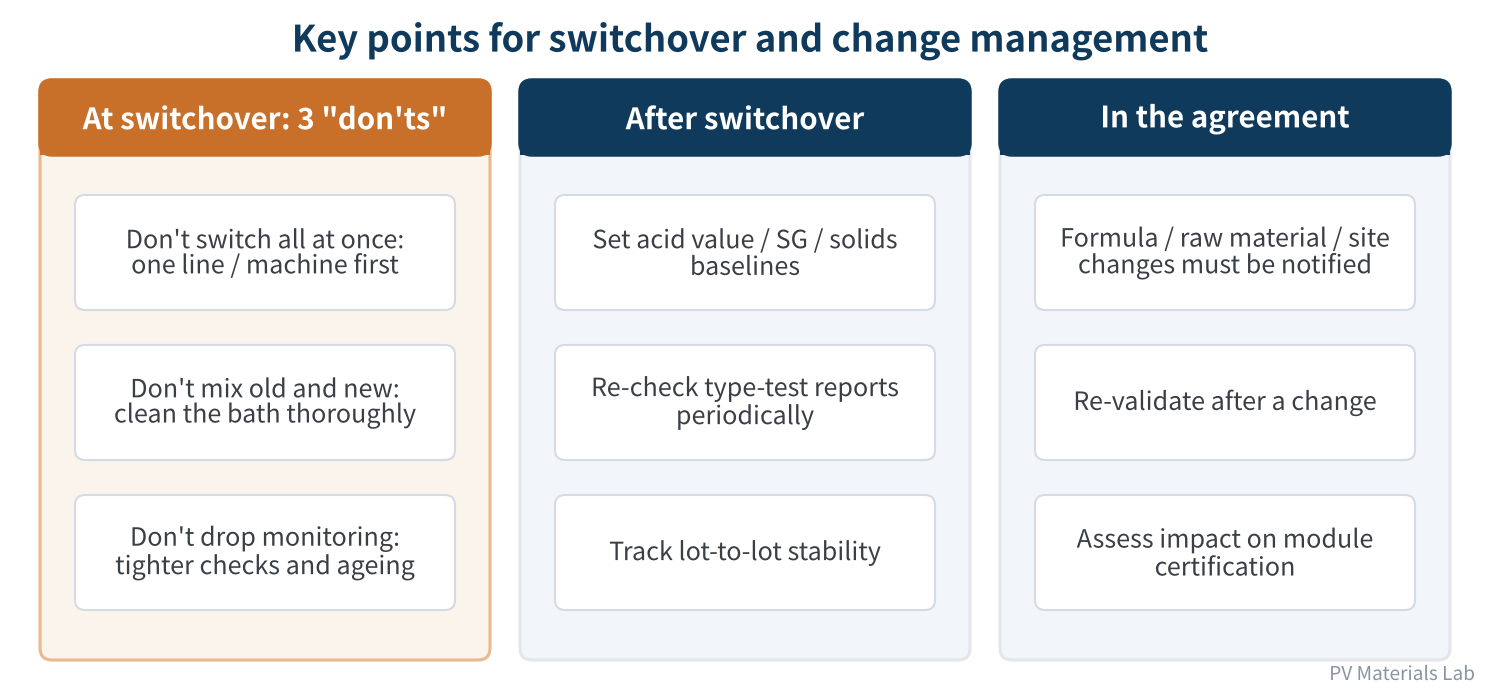
Figure 3. Key points for switchover and change management
- Don't switch everything at once: switch one line or one machine first, run it stably for a while, then roll out step by step, so any problem stays contained.
- Don't mix old and new: fully empty and clean the bath, lines and nozzles during the switch; never top up an old bath with the new flux. How different formulas behave when mixed cannot be predicted.
- Don't drop monitoring: tighten incoming inspection and in-process sampling early on, and periodically pull production modules for ageing tests to confirm production matches the validated state.
At the same time, following article 03, build your own acid value, specific gravity and solids baselines and control limits for the new flux, and update work instructions and bath management rules.
05Change management: qualification is only the beginning
Finishing qualification does not mean the job is done for good. Much of the risk from flux comes from "quiet changes" after qualification:
- Spell out change notification in the technical agreement: require the supplier to give advance written notice (PCN) of any change to formula, raw materials, production site or process, with before-and-after comparison data.
- Re-validate after changes: depending on the extent of the change, repeat part or all of the qualification. Do not assume no impact just because the product name is unchanged.
- Review periodically: request updated type-test reports regularly, track lot-to-lot stability, and watch long-term drift in acid value, solids and halogen content.
- Assess certification impact: retest requirements after module design and material changes are set by IEC TS 62915. Its second edition was published in September 2023 (and incorporates the July 2024 corrigendum). It summarises the retests required for each type of material and design change in a matrix, and it removed some specific process-change items from the earlier edition, replacing them with a requirement to establish and maintain a consistent quality management system under IEC 62941. In other words, changes to "process materials" such as flux increasingly rely on the module maker's own quality system to keep them under control. Whether a flux change needs retesting, and which tests, should be confirmed with the certification body against the latest edition of the standard, with full validation records kept.
Qualification controls how a flux "comes in"; change management makes sure it "doesn't quietly change". Only with both in place is the flux truly under control.
06Final thoughts
Three things to remember about flux selection and qualification:
- Skip no steps: requirements, supplier evaluation, lab validation, line validation, reliability and switchover, passing each gate in turn;
- Look for the window in the DOE: the width of the pass zone matters more than the optimum, because it determines production stability;
- Keep changes under control: spell out change notification in the agreement, re-validate after changes, and assess the impact on module certification.
This article kept returning to cost reduction as a common reason for changing flux. So how much of module cost does flux really account for? What makes up its price? How much room is there for savings, and which risks must not be taken? In the next article we work through the cost numbers for flux.
When you qualify a new flux, which step most often gets "skipped"? We would be glad to hear from you.
References
- IEC TS 62915:2023, Photovoltaic (PV) modules — Type approval, design and safety qualification — Retesting (Edition 2.0, 2023-09-15), https://webstore.ansi.org/standards/iec/iects62915eden2023
- IEC 62941, Terrestrial photovoltaic (PV) modules — Quality system for PV module manufacturing
- IEC 61215-2:2021, Terrestrial photovoltaic (PV) modules — Design qualification and type approval — Part 2: Test procedures
- pv magazine Australia: UNSW study shows impact of soldering flux on TOPCon solar cell degradation, 2025 (recommendation for cell-level damp-heat screening)
- AIM Solder: NC263UR liquid flux technical data sheet (concentration control for low-solids flux)
- Articles 03, 04, 06 and 07 of this series
A PV R&D and technology team with 10+ years of experience | In-depth technical knowledge sharing
Materials · Reliability · Failure Analysis · Standards & Certification · Products · Processes
Exploring AI + PV; collaboration welcome
Disclaimer:
1. Original content reflects the authors' personal views only, is for reference only and does not constitute investment advice.
2. Reposted and cited content is credited to its source, out of respect for original work.
3. Some content was produced with AI assistance (chart generation, data retrieval, concept explanations, etc.); the core framework and key content were written by our technical team and reviewed by people.
4. If anything is inaccurate or infringes your rights, please leave a message or contact us and we will deal with it.