
Passes Every Lab Test, Cracks on the Roof: Environmental Stress Cracking of PPO Junction Box Housings
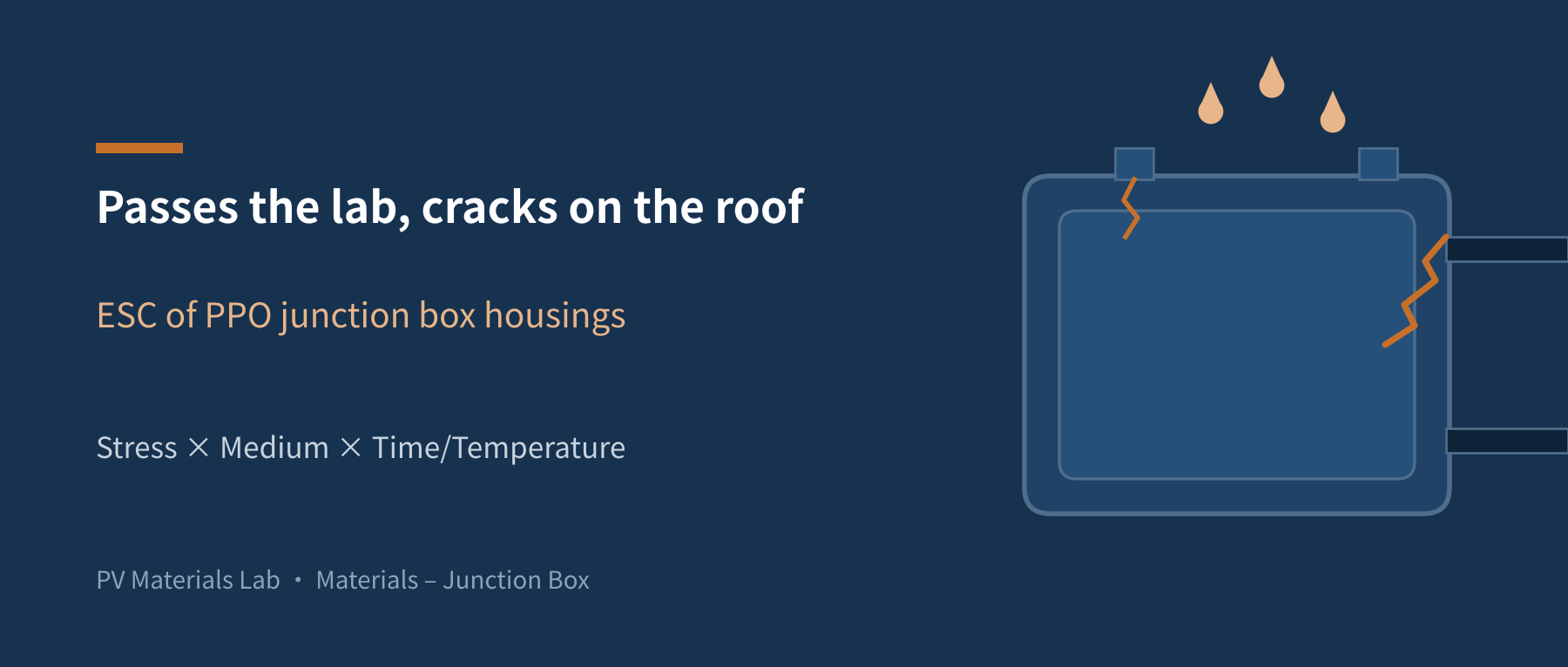
A batch of rooftop C&I PV systems started throwing ground-fault alarms after one or two years in service. On the roof, the junction boxes looked almost intact, just slightly yellowed. But pressing on a snap-fit revealed a ring of fine cracks at its root; a hairline crack ran across the corner of the cable entry, and water stains sat on the potting surface inside. The junction box certification report? Thermal cycling, damp heat, humidity freeze, UV — all passed. So what went wrong? In this article we look at an easily overlooked failure mode: environmental stress cracking (ESC).
01 Why junction boxes favor PPO/PPE
The most common housing material is modified PPO — polyphenylene ether (PPE) — usually sold as a blend of PPE with high-impact polystyrene (HIPS). Its popularity is well earned:
- Electrical insulation: high dielectric strength, suited to double-insulated designs for 1500 V systems;
- Hydrolysis resistance: very low water uptake, stable dimensions and mechanics in damp heat;
- Halogen-free flame retardancy: FR grades are generally free of bromine and chlorine;
- Light and dimensionally stable: low density, low warpage and creep, so snap-fits and sealing faces keep their fit.
It does have a temperature ceiling: a DuPont case study notes that a bypass diode under reverse-current conditions can approach 100 °C, roughly the relative temperature index (RTI) of PPO [6]. We will come back to that in a later article.
But it also has a well-known weak spot: PPE/HIPS blends are amorphous. SABIC's chemical resistance guide states that amorphous polymers are more susceptible to chemical attack than crystalline and semi-crystalline ones, and that resistance depends on time, temperature and stress [1]. In other words, the weakness is not sunlight or water — it is being stressed while in contact with certain chemicals.
02 What ESC is: stress + medium + time
Environmental stress cracking is brittle fracture of a plastic part, caused by contact with a chemical medium, at a stress far below its fracture strength in air. Key features:
- The medium need not dissolve the polymer: many ESC agents leave an unstressed bar virtually unchanged in weight and strength;
- The fracture is brittle: little plastic deformation, often preceded by crazing;
- There is a critical strain: below it, no cracking even after long exposure; above it, time to crack drops sharply with increasing strain.
The most widely accepted mechanism is local plasticization: medium molecules diffuse into the tensile surface layer, making chain segments slip more easily and greatly lowering the stress needed to form crazes; the craze fibrils then break and grow into cracks. A NASA-funded ESC study measured critical strains of several polymers including PPO in various solvents, and its results support the plasticization mechanism [2].
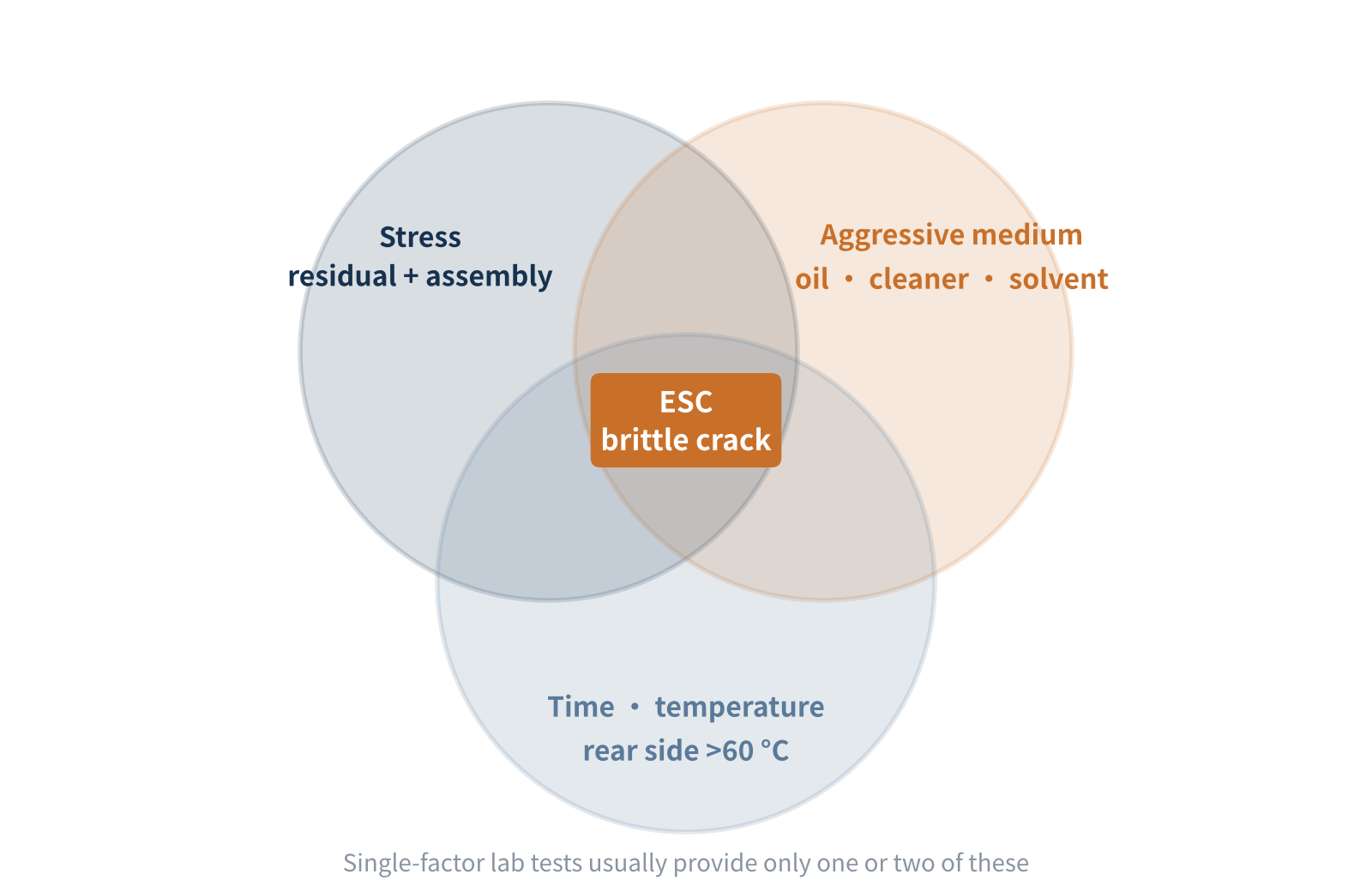
Fig. 1 The three ingredients of ESC: remove one and nothing cracks
This solves the opening puzzle: single-factor lab tests usually provide only one or two of the three ingredients. A UV chamber has light and heat but no chemical medium; a damp-heat chamber has moisture, but water is essentially harmless to PPE. Without all three, the samples come out "intact".
Takeaway
ESC is not ageing. It is rapid brittle fracture that happens when stress, an aggressive medium and time/temperature are present together. Remove any one and it will not happen; stack all three and even a strong housing gives way.
03 Where the stress hides: snap-fit roots and cable-entry corners
Stress in a junction box housing comes from two sources.
First, molded-in (residual) stress. PPE melts are highly viscous and orient strongly during filling. Uneven cooling, excessive holding pressure, abrupt wall-thickness changes and areas near the gate all "freeze" stress into the part, and sharp inside corners add geometric stress concentration. The standard advice for this material family is to eliminate sharp corners and other stress raisers in design and to mold parts as stress-free as possible [8].
Second, assembly and service stress. Typical examples:
- Snap-fit roots: the snap-fit bends when the lid is closed, leaving its root under sustained tensile strain;
- Cable entries / glands: a compressed cable seal applies continuous hoop tension to the entry wall, concentrated at the corners;
- Lid locking and sealing faces: reaction force from the pre-compressed gasket;
- Temperature cycling: CTE mismatch between housing, potting, backsheet and cable produces day-night cyclic stress.
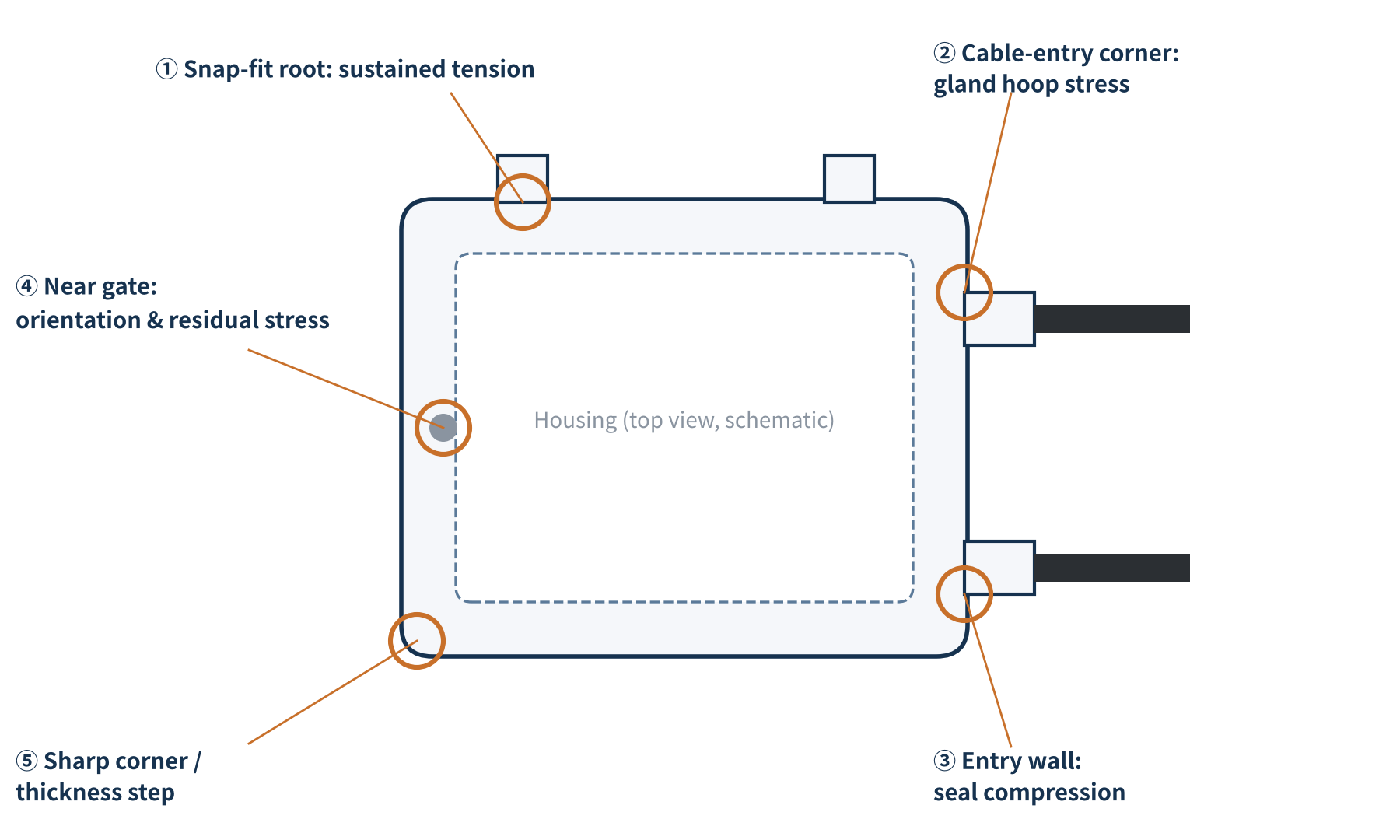
Fig. 2 Typical stress-concentration sites on a junction box housing (schematic)
These are exactly the critical links in the sealing chain. A cracked snap-fit loosens the lid; a cracked cable entry lets water run along the cable into the box — IP68 does not degrade gradually; it drops straight to zero.
04 Where the "medium" comes from on a roof
Absent in the lab, aggressive media are not rare on commercial rooftops:
- Cooking fumes and grease: near exhaust outlets of restaurants and food plants, oil mist condenses on module rear sides and junction boxes;
- Chemical vapors: roofs over chemical, painting and printing shops see long-term aromatic, ketone and amine vapors;
- Fuel and engine oil: vehicle exhaust and oil under PV carports;
- Cleaning agents: chemical cleaners with surfactants and acidic/alkaline additives are increasingly used to boost cleaning; Fraunhofer CSP has warned that commercial cleaners carry high damage potential for modules [5];
- Factory cleaning solvents: some junction box assembly instructions list isopropanol, acetone or methyl ethyl ketone as options for cleaning the box base [9]; whether these suit a given housing must be checked against the material's chemical resistance data first.
SABIC's public data compare the relative tensile retention of three NORYL families after immersion [1]:
| Medium | PPE+HIPS (amorphous) | PPE+PA (semi-crystalline) | PPE+PP (semi-crystalline) |
|---|---|---|---|
| Alcohols | Good | Good | Good |
| Alkalis | Good | Good | Good |
| Detergents / cleaners | Fair–Good | Very good | Good |
| Oils / greases | Fair–Good | Good | Good |
| Petrol | Poor | Good | Good |
| Aromatic hydrocarbons | Poor | Good | Good–Fair |
| Ketones | Poor | Fair | Good–Fair |
| Amines | Poor–Fair | Poor | Good–Fair |
| Condensates & fumes | Poor | Poor | Good |
| Hot water (<80 °C) | Very good | Poor | Poor–Fair |
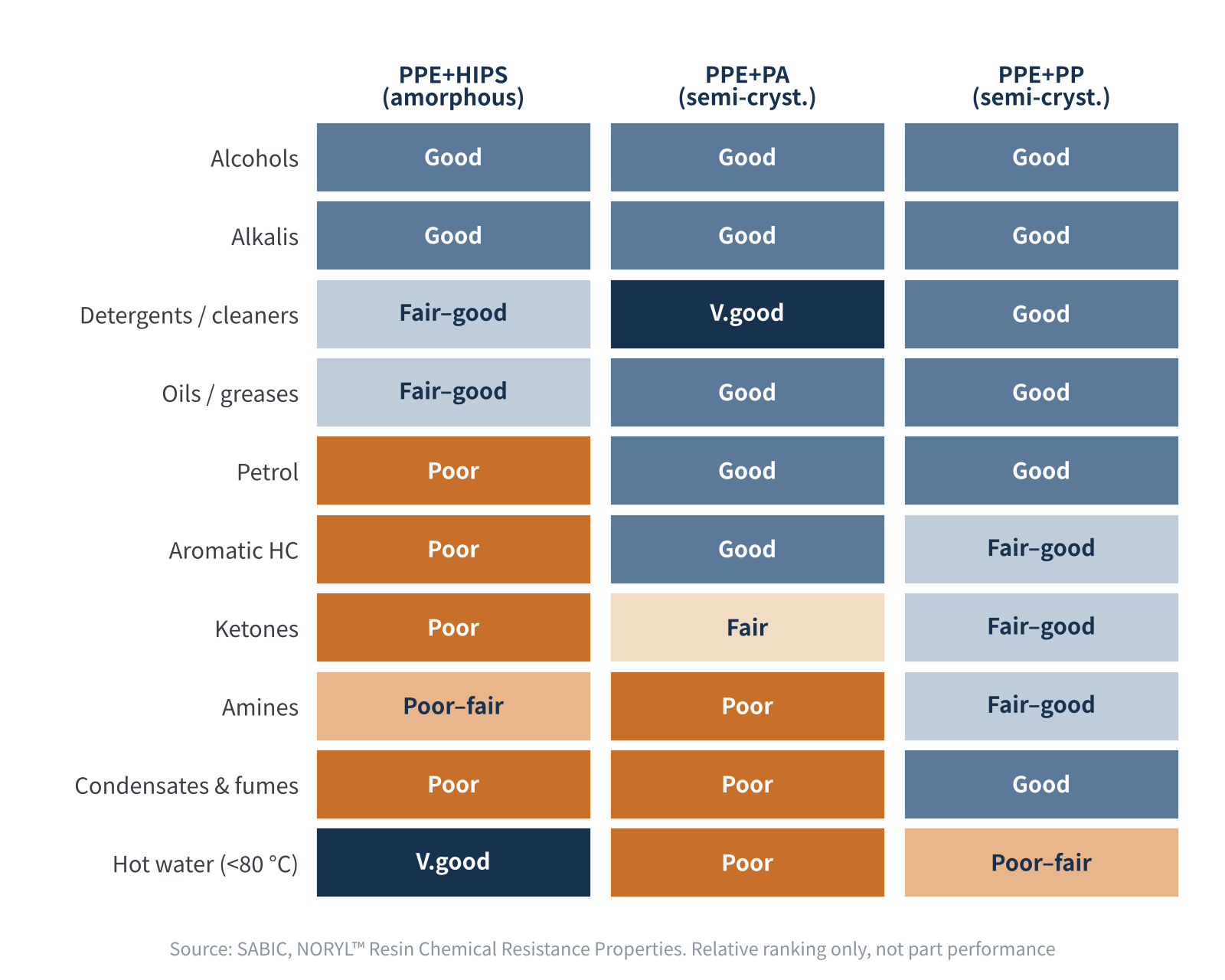
Fig. 3 Relative chemical resistance of three NORYL resin families (compiled from SABIC public data)
Two points stand out. First, for PPE+HIPS — the most common junction box grade — cleaners and oils rate only "fair to good", and combined with high stress and heat they can slide to "poor". Second, no material does everything: PPE+PA resists oils and solvents but dislikes hot water.
UV plays accomplice. On its own, PPE keeps its mechanical properties well under UV — SABIC rates its mechanical retention highly [1] — which is why pure UV tests pass. But photo-oxidation creates aldehyde and quinone groups at the surface [7], yellowing and embrittling the skin and creating countless micro-defects. That brittle skin both seeds crazes and lets polar media wet and penetrate more easily. Add rear-side module temperatures that often exceed 60 °C — and resistance drops as temperature rises [1] — and all three ingredients are amplified at once.
To be fair, the junction box sits on the rear side, where direct UV dose is much lower than on the front. But on highly reflective roofs such as white membranes, with bifacial modules, and during open-air storage before installation, rear-side UV exposure is not negligible.
05 Why certification tests miss it
IEC 62790, the product standard for PV junction boxes, specifies thermal cycling, damp heat, weather resistance, humidity freeze, IP protection, wet leakage current and more [4]. These target light, heat, humidity and mechanical stress; we did not find a test sequence combining "contact with oil or cleaner while under strain". That is not an oversight but a matter of scope: the standard sets a general safety baseline and cannot enumerate every rooftop's chemistry.
The plastics industry already has ESC methods. ISO 22088-3, the bent strip method, clamps a specimen on a fixed-curvature jig to impose constant flexural strain, exposes it to a chemical agent, and checks for cracking or property change [3]. The standard itself notes that it is essentially a ranking test, not a source of design data or lifetime prediction [3].
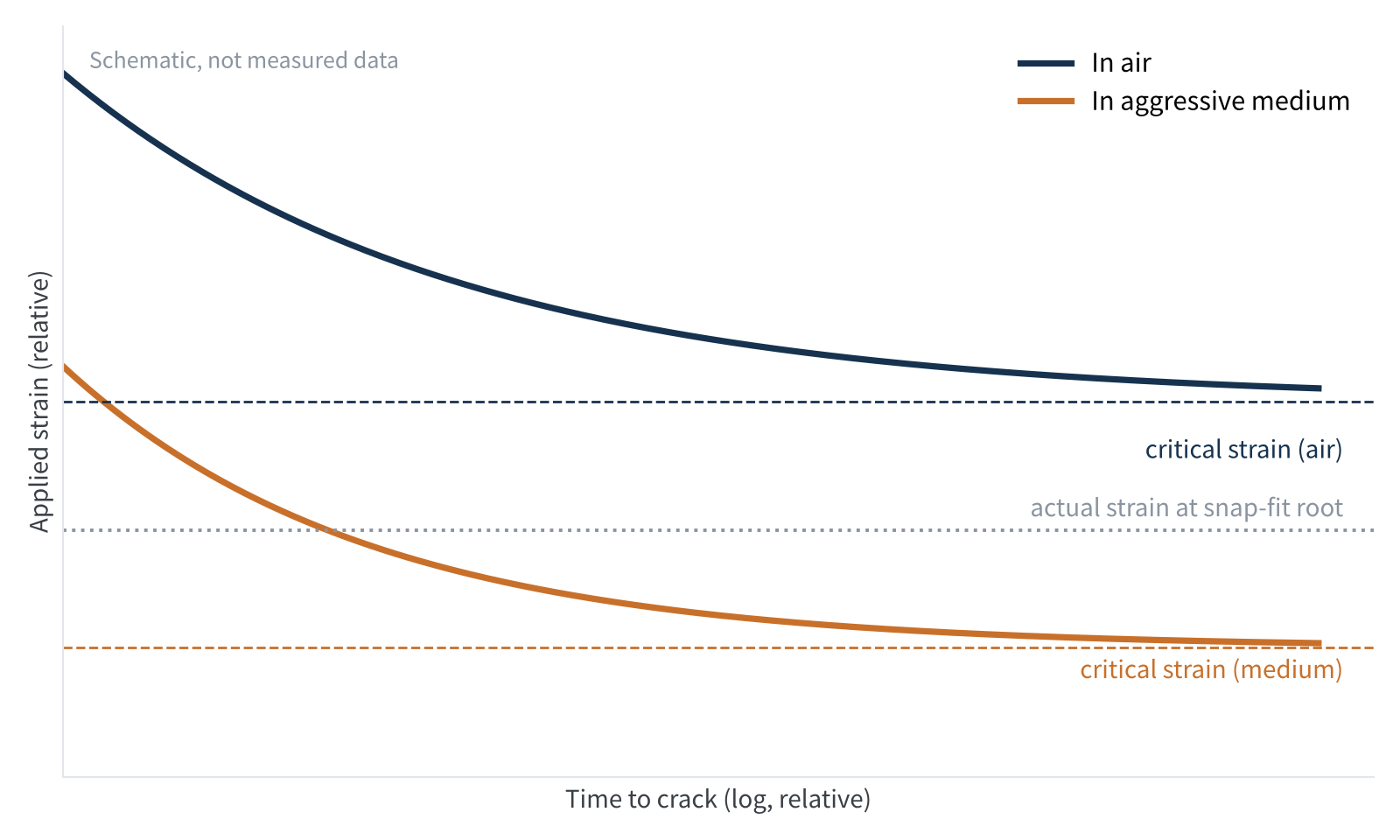
Fig. 4 The critical-strain concept: the same strain is harmless in air but cracks quickly in a medium (schematic, not measured data)
Once cracking starts, failure follows a clear chain:
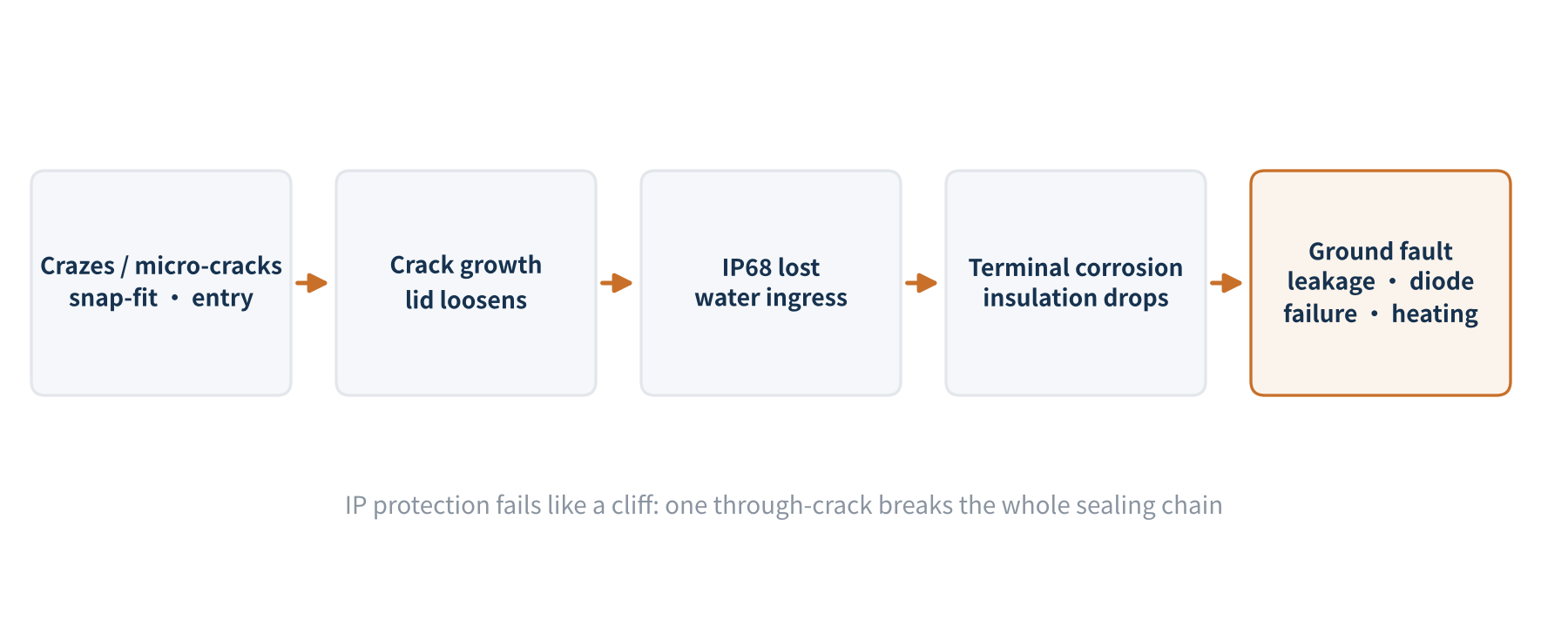
Fig. 5 Failure chain from micro-crack to system fault
06 Countermeasures: five links, each with a job
- Design: radius every inside corner and avoid abrupt wall-thickness changes; size snap-fit allowable strain not from dry data but from the critical strain in the target medium, with margin; thicken cable-entry walls and control gland compression.
- Molding: control mold temperature, holding pressure and time; keep gates away from snap-fits and cable entries; anneal if needed. In production, sample molded-in stress with the solvent-immersion method recommended by the resin supplier — polarized light is of little use on opaque black parts.
- Material selection: for high-risk sites such as kitchen-exhaust or chemical areas, evaluate semi-crystalline blends with better chemical resistance (e.g. PPE+PA, PPE+PP), while verifying water uptake, dimensional stability, flame retardancy and RTI — never judge on one property.
- Test methods: beyond routine certification, add targeted combined tests: UV pre-conditioning, then bent-strip tests at several strain levels using the actual cleaner (concentrate and dilution), cooking oil and grease collected on site; finally, coat finished boxes with snap-fits engaged, hold at elevated temperature, and re-test IP.
- O&M: assess material compatibility before approving a cleaner; avoid aiming high-pressure jets at junction boxes and rear sides; for kitchen-exhaust or chemical-area projects, write junction box chemical resistance into the technical specification at the design stage.
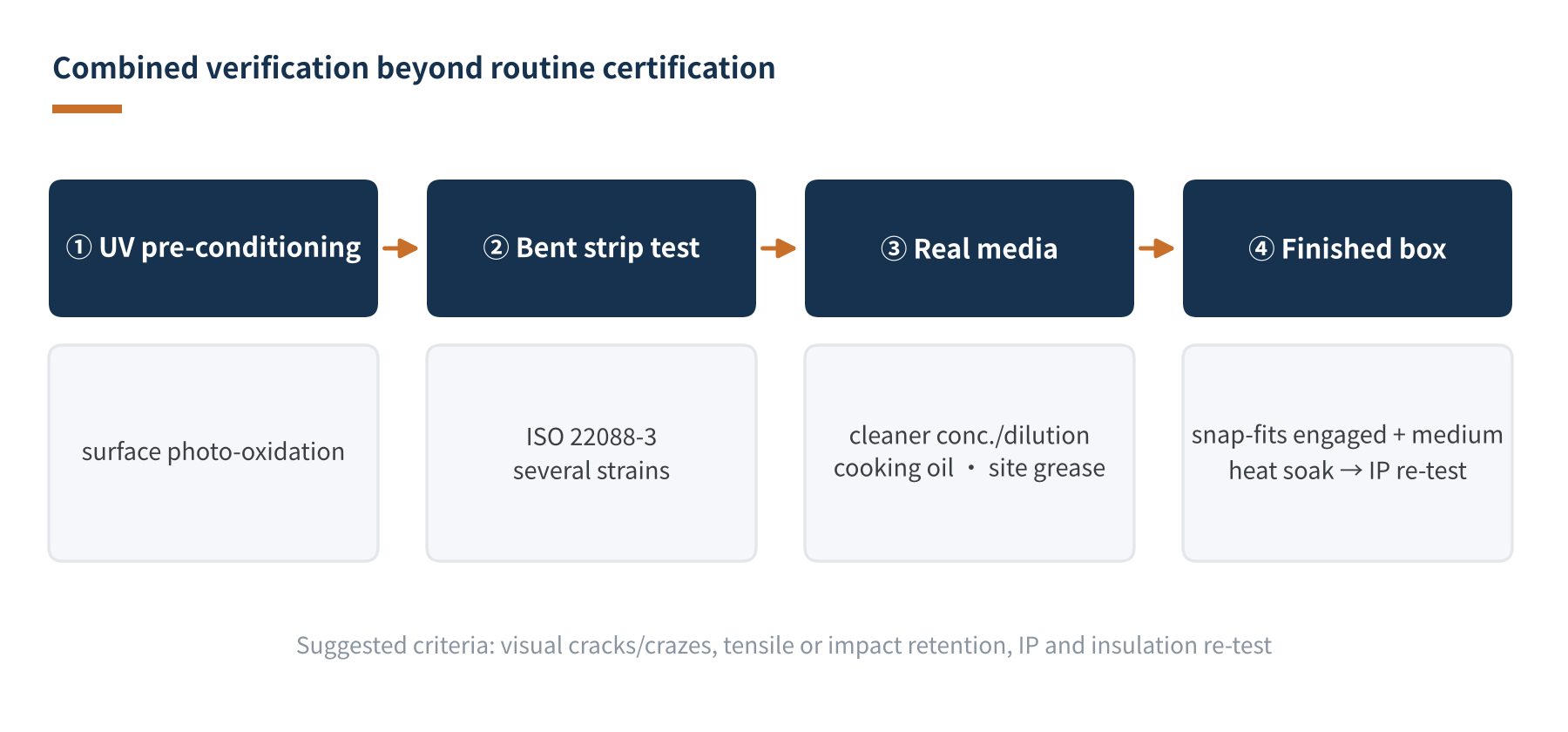
Fig. 6 Suggested "strain + medium" combined verification flow
07 Final thoughts
Environmental stress cracking of junction box housings is, at heart, a conspiracy of stress, medium and time/temperature. Passing every single-factor lab test only shows that the box can withstand light, heat and humidity; the oil and cleaners that really exist on rooftops are the missing variable.
For module makers: add "medium exposure with snap-fits engaged" to incoming-material qualification. For plant owners: include cleaner compatibility in O&M rules. Two small steps that can prevent a good share of later ground faults and safety risks.
In one sentence
Cracking of PPO junction box housings is not ageing but brittle fracture when residual stress, a chemical medium and time/temperature meet; passing certification does not mean safe on the roof.
Next in our junction box series: compatibility between the housing and potting compounds and sealants.
References
- SABIC. NORYL™ Resin Chemical Resistance Properties (SABIC-PLA-9430-EN), 2019.
- Mahan K. I. Environmental Stress Cracking of Polymers. Final Report, NASA Contract NSG-806, University of Southern Colorado.
- ISO 22088-3:2006 Plastics — Determination of resistance to environmental stress cracking (ESC) — Part 3: Bent strip method.
- IEC 62790:2020 Junction boxes for photovoltaic modules — Safety requirements and tests.
- Fraunhofer CSP. How cleaning agents can damage photovoltaic modules (press release), 2023.
- DuPont. Cost-effective photovoltaic junction box housings (case study).
- Amadelli R., Scoponi M. A reappraisal of the photo-oxidation mechanism at short and long wavelengths for poly(2,6-dimethyl-1,4-phenylene oxide), 1996.
- Wikipedia. Noryl.
- Stäubli. Junction box set MC4 for PV modules, Assembly instructions MA263.
PV Materials Lab
PV Materials Lab
A PV R&D and technology team with 10+ years of experience | Hard-core professional knowledge sharing
Materials · Reliability · Failure Analysis · Standards & Certification · Products · Processes
Exploring AI + PV — collaboration welcome
Disclaimer:
- Original content reflects the author's personal views only, is for reference, and does not constitute investment advice.
- Reproduced and cited content is credited to its source, with respect for original work.
- Some content is AI-assisted (chart generation, data retrieval, concept explanations, etc.); the core framework and key content are written by our technical team and reviewed by humans.
- For any inaccuracy or infringement, please leave a comment or contact us.