
Tin–Lead Perovskites Go Outdoors: POE Lamination Keeps ~80% After 12 Days, Epoxy Loses All Output Within 6
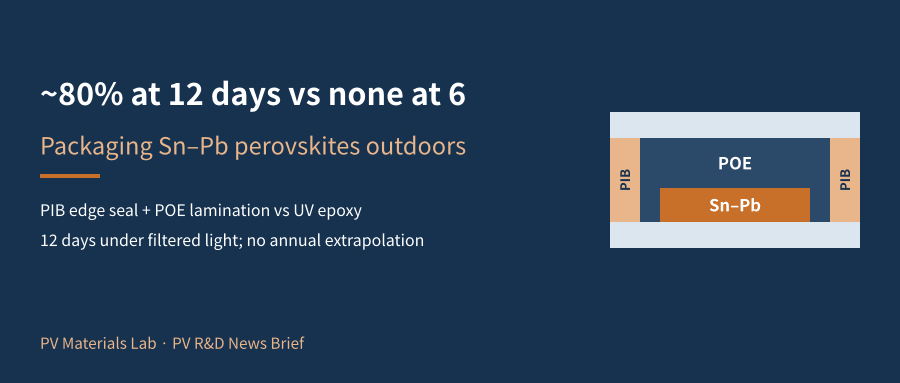
Tin–lead perovskites are the key bottom-cell absorber for all-perovskite tandems, but they are extremely sensitive to oxygen. An NLR team encapsulated Sn–Pb cells with a PIB edge seal and vacuum-laminated POE. Under outdoor light filtered to mimic a top cell, laminated devices kept about 80% of their efficiency after 12 days, while epoxy controls had no output after 6. We review the data and what it can and cannot show: the accelerated test was a visual screen, and 12 days cannot be extrapolated to an annual degradation rate.
Tin–lead (Sn–Pb) perovskites are the key absorber for the bottom cell of all-perovskite tandems, but their sensitivity to oxygen has kept stability studies indoors. A team at the National Laboratory of the Rockies (NLR, formerly NREL) reports in ACS Energy Letters that it encapsulated Sn–Pb cells with a PIB edge seal and vacuum-laminated POE, then ran them outdoors in Colorado for 12 days: laminated devices kept about 80% of their efficiency, while epoxy controls had no output after 6 days. The data are striking, but their limits need to be stated just as clearly.
01 Why Sn–Pb cells struggle to get outdoors
Sn²⁺ in these perovskites oxidizes easily to Sn⁴⁺, creating tin vacancies and deep-level defects that trap carriers. The paper gives a vivid figure: an unencapsulated film in laboratory air at about 22 °C and 40% RH retained less than 10% of its photoluminescence (PL) intensity after 8 minutes.
Surface chemistry (XPS) agrees. After air exposure, the unencapsulated film was 69% Sn⁴⁺. A laminated film, opened under inert atmosphere, was 20% Sn⁴⁺, close to the 17% of a fresh film. The authors describe this as, to their knowledge, the first outdoor demonstration of Sn–Pb devices; we could not independently verify that claim.
02 The approach: bringing module packaging to small cells
The cells use an inverted stack: glass/TCO/PEDOT:PSS/Cs₀.₀₅FA₀.₇MA₀.₂₅Sn₀.₅Pb₀.₅I₃/C₆₀/SnO₂/Ag, in a small-area pixel layout. The two packages differ as follows:
- Desiccant-containing PIB edge seal: Applied around the device perimeter in a nitrogen glovebox. It mainly blocks lateral moisture ingress and also helps limit oxygen entry at the edge.
- POE encapsulant: Full-area coverage, providing conformal contact, adhesion to the cover glass and mechanical support. The authors avoided EVA because it can generate acidic products under damp heat, and rigid materials such as Surlyn because they can promote delamination.
- Epoxy control: UV-curable epoxy is dispensed onto the cell in a glovebox, then covered with glass and cured, a common laboratory method.
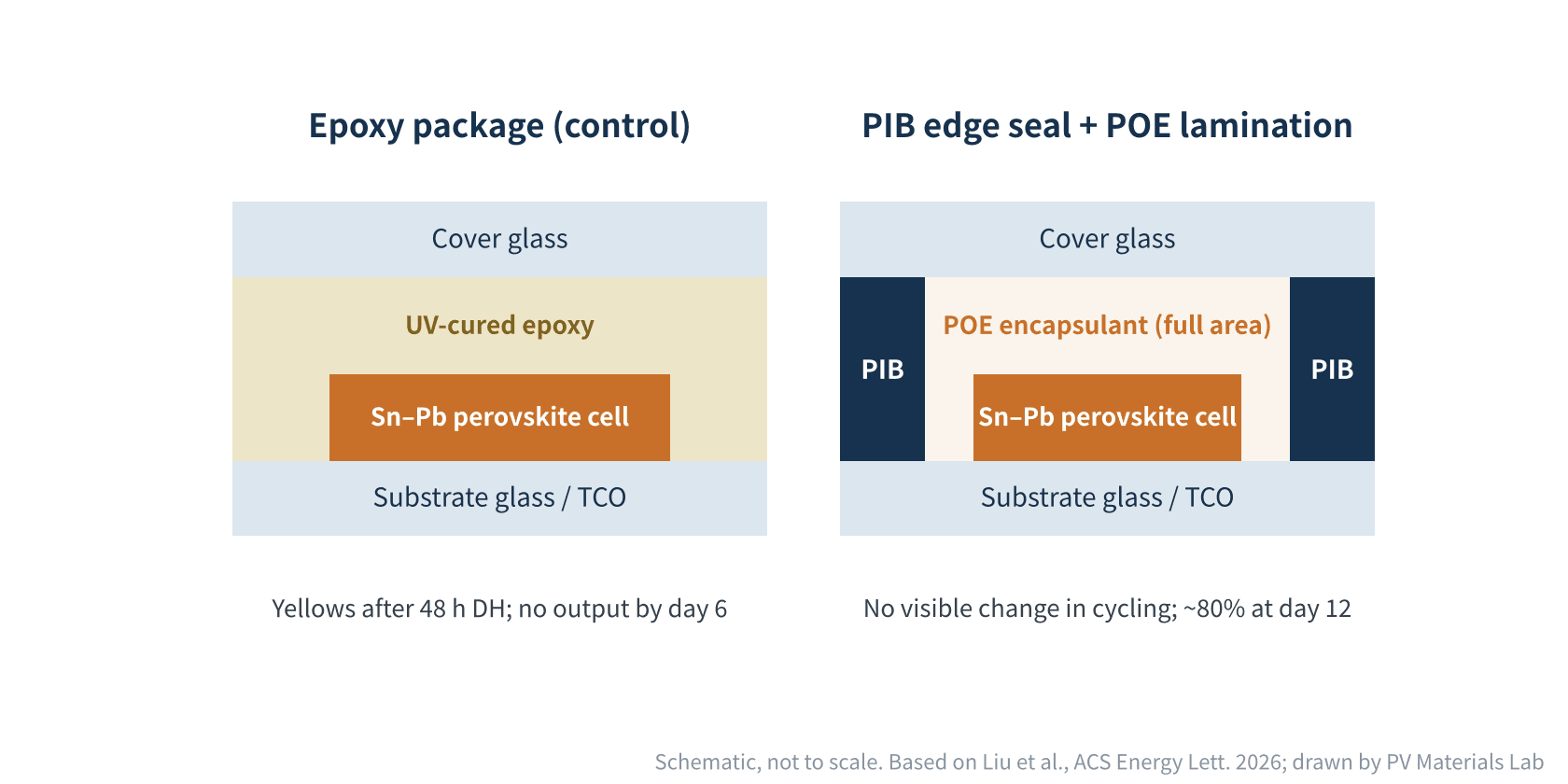
Figure 1 Schematic comparison of the two package structures
Does lamination damage the cell? The authors measured eight pixels across four substrates:
| Parameter | Before lamination | After lamination |
|---|---|---|
| Voc (V) | 0.85±0.01 | 0.84±0.01 |
| Jsc (mA/cm²) | 32.69±0.49 | 33.23±0.38 |
| FF | 0.76±0.01 | 0.72±0.02 |
| PCE (%) | 20.91±0.20 | 20.14±0.45 |
The authors call this a negligible loss. On the mean values, PCE falls by 0.77 percentage points (about 3.7% in relative terms), mainly through FF. That is acceptable for research cells, but it is not loss-free. Lamination temperature and time are not given in the main text.
03 Accelerated aging: epoxy yellows at the first step
Drawing on IEC TS 63209-1, the authors built a package-oriented screen: 48 hours of damp heat, then thermal cycling and humidity freeze, with the last two steps repeated three times, for a total of 150 thermal cycles and 30 humidity-freeze cycles.
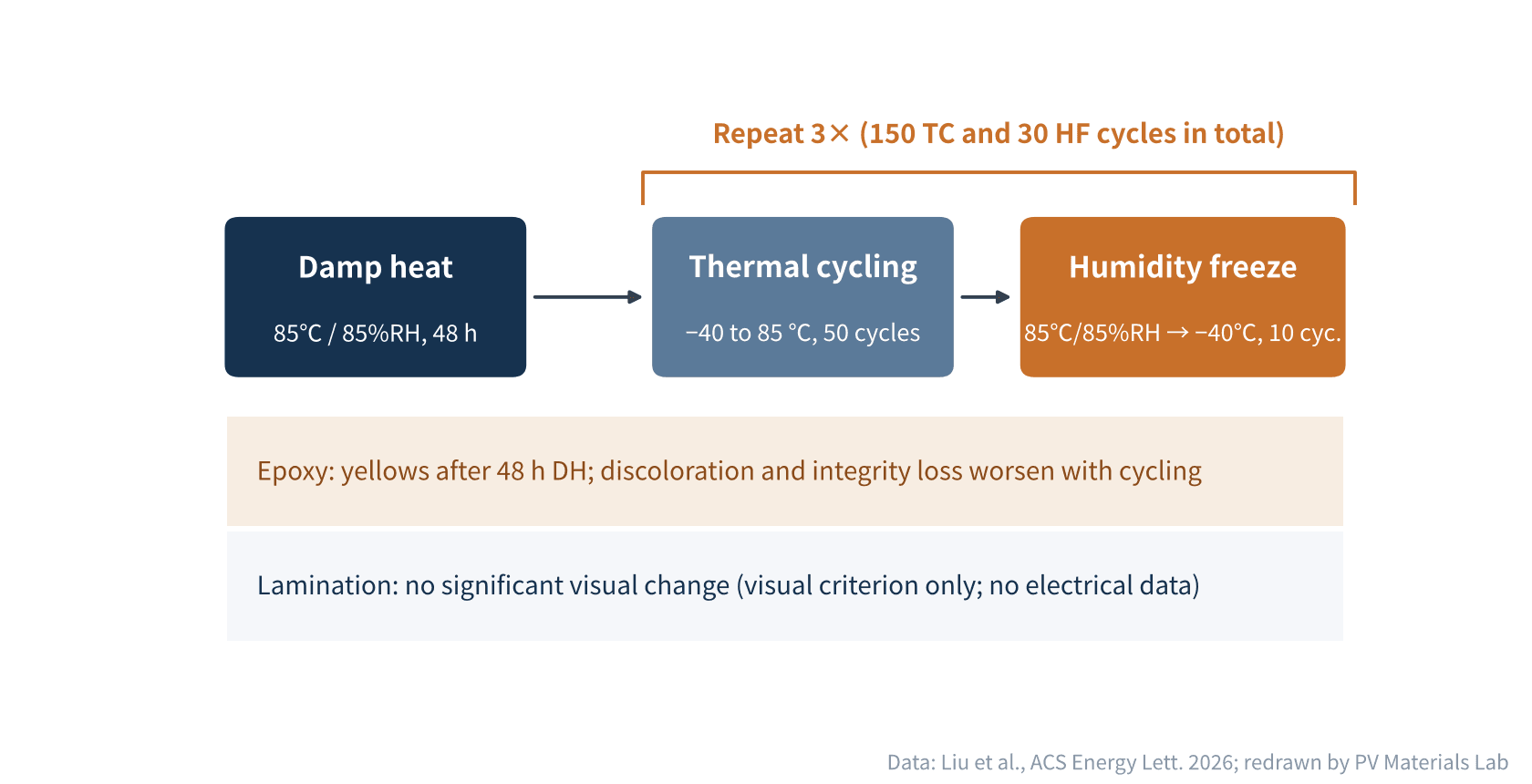
Figure 2 Package-oriented accelerated aging sequence and results
After 48 hours of damp heat, the perovskite in the epoxy package was visibly yellowing; further cycling brought more discoloration and loss of device integrity. The laminated package showed no significant visual change throughout. Three cautions apply:
- The criterion is qualitative: Pass or fail is based on visible absorber degradation, and the main text gives no post-aging electrical data. An intact appearance does not mean no power loss.
- Damp heat is short: 48 hours is far from the 1,000 hours of IEC 61215 MQT 13. This is a screen, not a certification.
- UV is excluded: The authors deliberately left out UV so that absorber photodegradation would not be confused with package failure.
Takeaway: Neither package showed obvious PL loss during 8 minutes in air or 12 days of laboratory storage. Mild indoor tests cannot separate good packages from bad ones; damp heat and temperature cycling can.
04 Twelve days outdoors: 80% versus no output
Testing took place at NLR's Outdoor Test Facility in Golden, Colorado. A wide-bandgap perovskite film of about 1.8 eV was placed over each cell to approximate the light a tandem bottom cell receives. Cells ran under a resistive load close to maximum power point (ISOS-O-1) and were brought indoors for J–V measurements at set times.
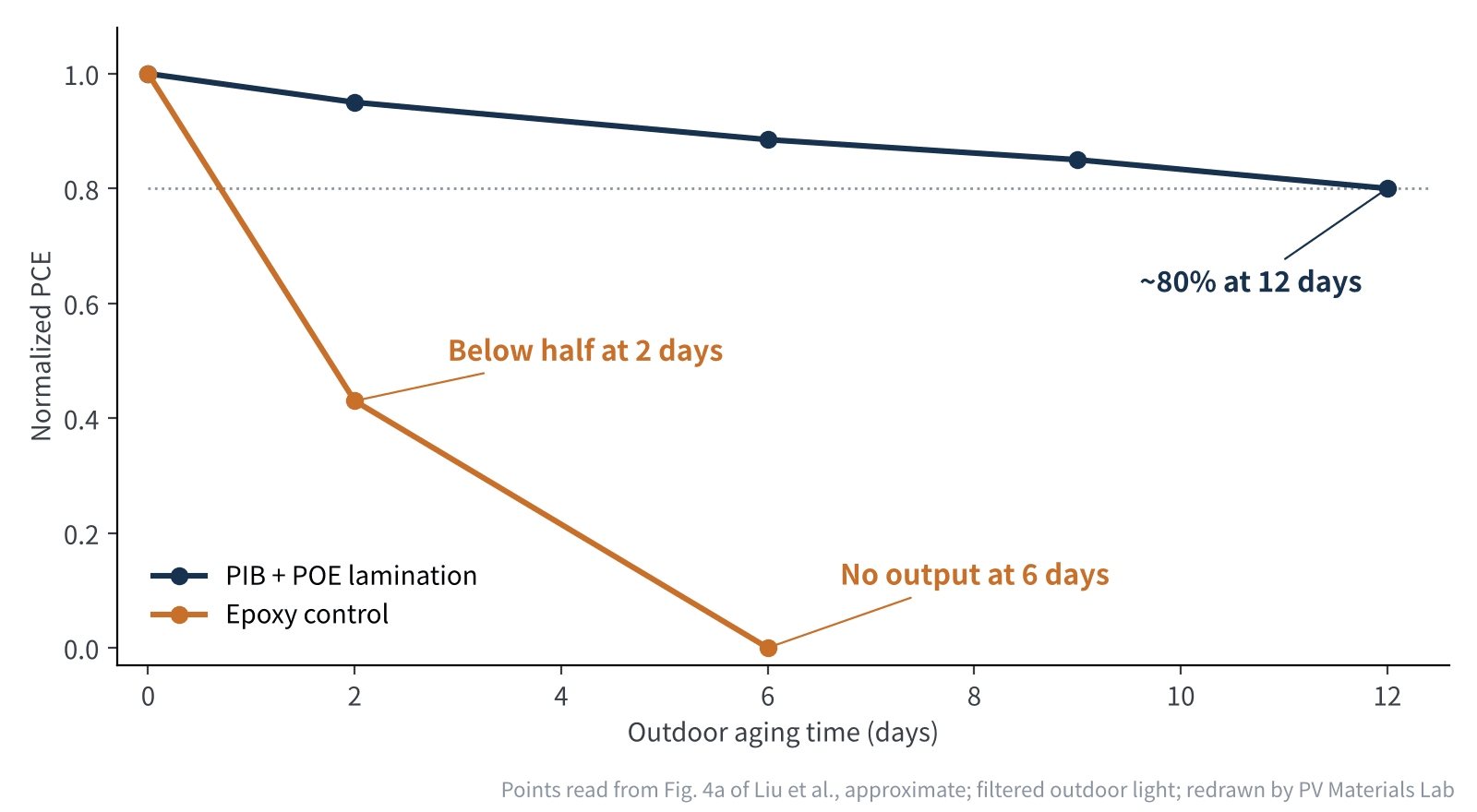
Figure 3 Normalized efficiency during outdoor aging
Epoxy devices fell below half of their initial value after 2 days and had no measurable output after 6. Laminated devices kept about 80% after 12 days: a representative device went from 19.77% to 16.04% (the representative epoxy device started at 19.12%).
05 Where did the remaining 20% go?
Breaking down the laminated device before and after 12 days: Voc went from 0.85 V to 0.82 V, Jsc from 32.57 to 30.91 mA/cm², and FF from 0.71 to 0.63. All three fell, but FF had the largest relative loss, about 11.3%.
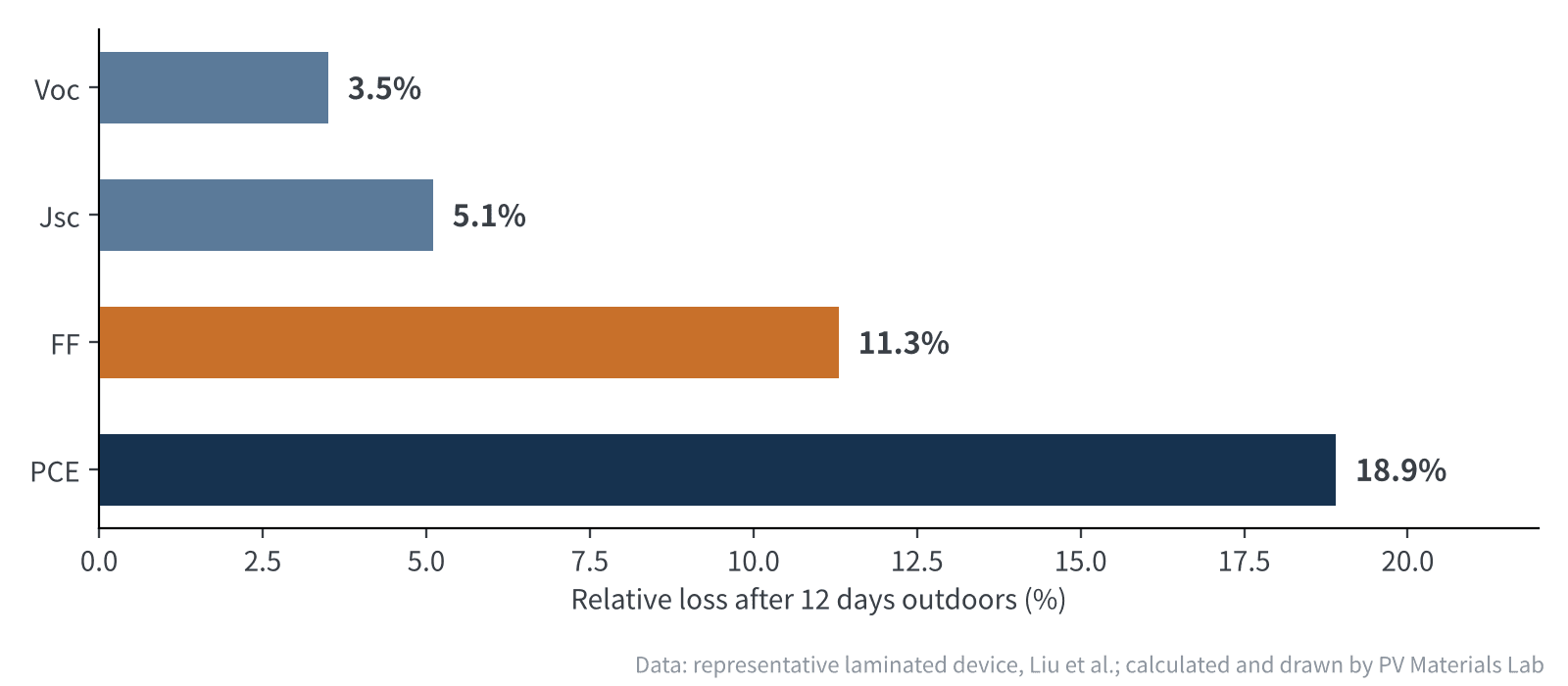
Figure 4 Relative parameter losses of the laminated device after 12 days outdoors
As a control, an identical laminated device stored in the laboratory for 12 days showed negligible PCE change. Combining this with PIB moisture-ingress modeling (breakthrough on the order of decades) and literature reports of oxygen-diffusion failure only after more than 200 days, the authors conclude that this loss more likely reflects intrinsic Sn–Pb degradation than ingress through the package.
We find this reasonable, but the evidence is indirect. Laboratory storage involves no illumination, heating or electrical load, and outdoor heat also speeds gas permeation. Neither timescale was measured directly on these Sn–Pb devices. Settling the question would take chemical analysis after outdoor aging, or a hermetically sealed control.
06 Our view
- Value: Using manufacturable materials and processes, Sn–Pb cells can now run outdoors long enough for degradation to be studied, providing a platform for failure analysis.
- The novelty is outdoors: A glass package with a polyolefin encapsulant and butyl rubber edge seal had already taken Sn–Pb cells through 85 °C/85% RH damp heat, with 95% efficiency retained after 1,000 hours. Those devices had replaced PEDOT:PSS, a sign that cell design matters as well.
- A weak control: The comparison is with a laboratory UV epoxy, not a mature module package.
- Not a real tandem: This is a single-junction bottom cell under a filter. A Jsc of 32.57 mA/cm² suggests J–V was measured without the filter: aged under filtered light, evaluated under the full spectrum.
- Oxygen remains the long-term issue: PIB is mainly a moisture barrier, while Sn–Pb is most vulnerable to oxygen. The authors acknowledge that multiyear deployment will require better intrinsic stability and oxygen barriers.
| Open question | What the main text says |
|---|---|
| Initial efficiency | Representative devices: laminated 19.77%, epoxy 19.12% |
| Cell area | Described only as small-area pixels; no value given |
| Filter and site | ~1.8 eV wide-bandgap perovskite film; NLR Outdoor Test Facility |
| Accelerated aging | DH 48 h + (TC 50 + HF 10) × 3; no UV |
| Lamination damage | Mean PCE 20.91% → 20.14%; lamination temperature not given |
Bottom line: PIB + POE lamination gets Sn–Pb cells onto an outdoor rack; the lifetime question has only just begun. A loss of about 20% in 12 days cannot be converted into an annual degradation rate.
07 Final thoughts
For packaging and reliability engineers, the paper offers two practical reminders. First, do not choose a package on the basis of mild, short indoor tests. Second, packages for Sn–Pb bottom cells need to be designed specifically for oxygen barrier performance rather than borrowed from lead-based cells.
What we most want to see next is accelerated aging with electrical tracking, longer outdoor campaigns, and real two-terminal tandems in the same package.
Calculation notes / data basis
- PCE retention: 16.04 ÷ 19.77 ≈ 81.1%; the paper states about 80%.
- Relative losses after 12 days: Voc (0.85→0.82) 3.5%, Jsc (32.57→30.91) 5.1%, FF (0.71→0.63) 11.3%, PCE (19.77→16.04) 18.9%. These are for a representative device and were calculated by us.
- Mean values before and after lamination: PCE down 20.91 − 20.14 = 0.77 percentage points, or 3.7% relative; FF down 5.3% relative.
- Cumulative accelerated aging: thermal cycles 50 × 3 = 150; humidity-freeze cycles 10 × 3 = 30. Calculated by us.
- Data points in Figure 3 were read from Figure 4a of the paper and are approximate. About 80% at 12 days, below half at 2 days and no output at 6 days are stated in the paper's text.
- That J–V was measured without the filter is our inference from the Jsc value; the main text does not state it explicitly.
- We did not obtain the Supporting Information, so cell area, lamination parameters, the filter transmission spectrum and outdoor weather data are subject to it. The 1,000 hours for IEC 61215 MQT 13 is the standard's usual condition.
References
- Liu T., Chen L., Schutt K., et al. Enabling Outdoor Operation of Tin–Lead Perovskite Solar Cells via Lamination-Based Encapsulation. ACS Energy Letters, 2026. https://doi.org/10.1021/acsenergylett.6c02375
- Prasanna R., et al. Design of low bandgap tin–lead halide perovskite solar cells to achieve thermal, atmospheric and operational stability. Nature Energy, 2019. https://www.nature.com/articles/s41560-019-0471-6.pdf
- Stability of Tin-Lead Halide Perovskite Solar Cells. OSTI record 1604591. https://www.osti.gov/biblio/1604591
- U.S. Department of Energy. Energy Department Renames NREL “National Lab of the Rockies”, 2025. https://www.energy.gov/eere/articles/energy-department-renames-nrel-national-lab-rockies
PV Materials Lab
https://pvmaterialslab.com
PV Materials Lab
A PV R&D and technical team with 10+ years of experience | In-depth technical knowledge sharing
Materials · Reliability · Failure Analysis · Standards & Certification · Products · Processes
Exploring AI + PV — collaboration welcome
Disclaimer:
- Original content reflects the authors' personal views only, is for reference, and does not constitute investment advice.
- Reposted and cited content is credited to its source, with respect for original work.
- Some content is AI-assisted (chart generation, data retrieval, concept explanations, etc.); the core framework and key content are written by our technical team and reviewed by humans.
- For any inaccuracy or infringement, please leave a message or contact us.