
Rolled or Float, Tempered or Heat-Strengthened? PV Glass Classification at a Glance
In brief
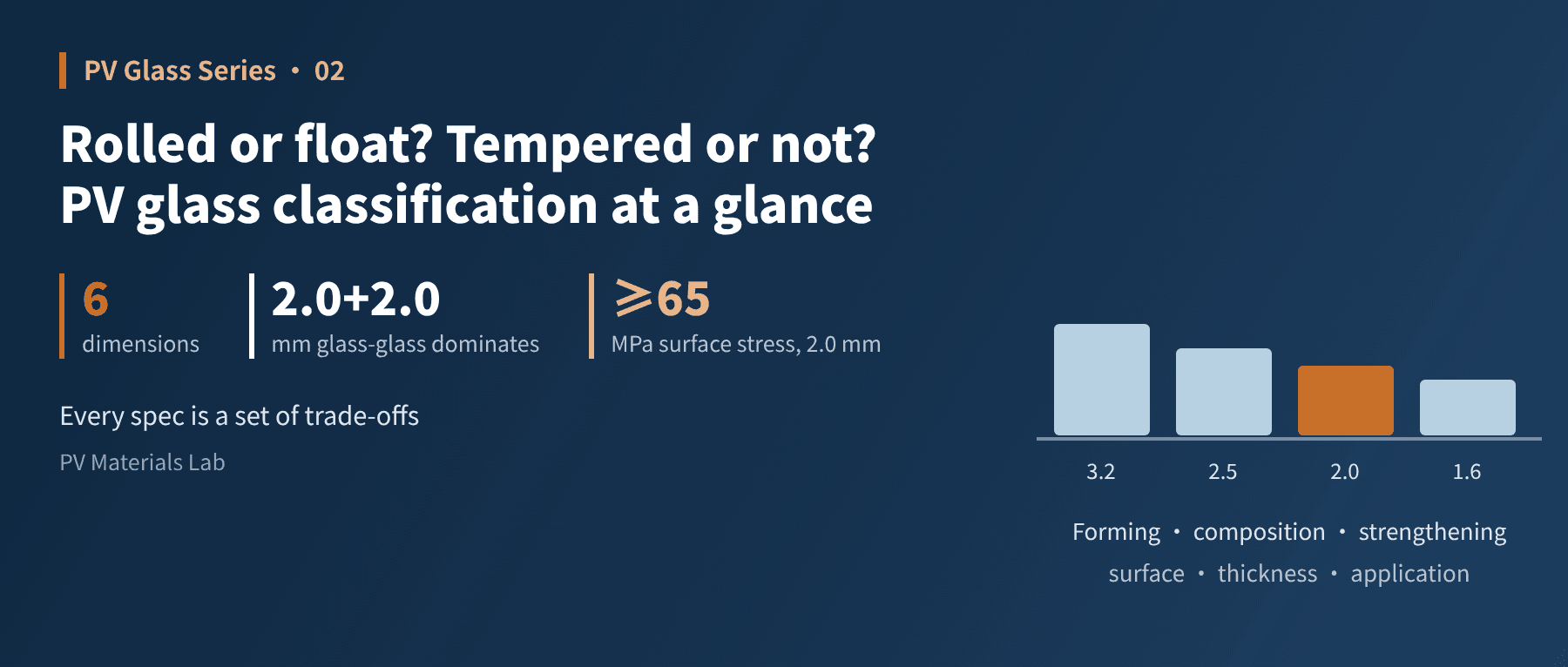
Rolled and float, fully tempered and heat-strengthened, coated and glazed, 3.2 mm and 2.0 mm: PV glass goes by a bewildering range of names, but they are all cuts along six dimensions: forming process, composition, strengthening, surface treatment, thickness and application. This article uses a classification map to put each concept in its place and explains the technical trade-offs behind each category.
In the previous article we covered the four roles PV glass plays in a module. This one takes a different angle: what do terms on a purchase order such as "2.0 mm rolled, coated, heat-strengthened", "rear grid glass" or "TCO glass" actually mean? The names look messy, but they are simply labels attached to the same sheet of glass along different dimensions. Once the dimensions are clear, any specification can be read at a glance.
01Start with a classification map
We sort the common names for PV glass into six dimensions: forming process, composition, strengthening, surface treatment, thickness and application. A specific sheet of glass has one value on each dimension, and together they make up its full specification.
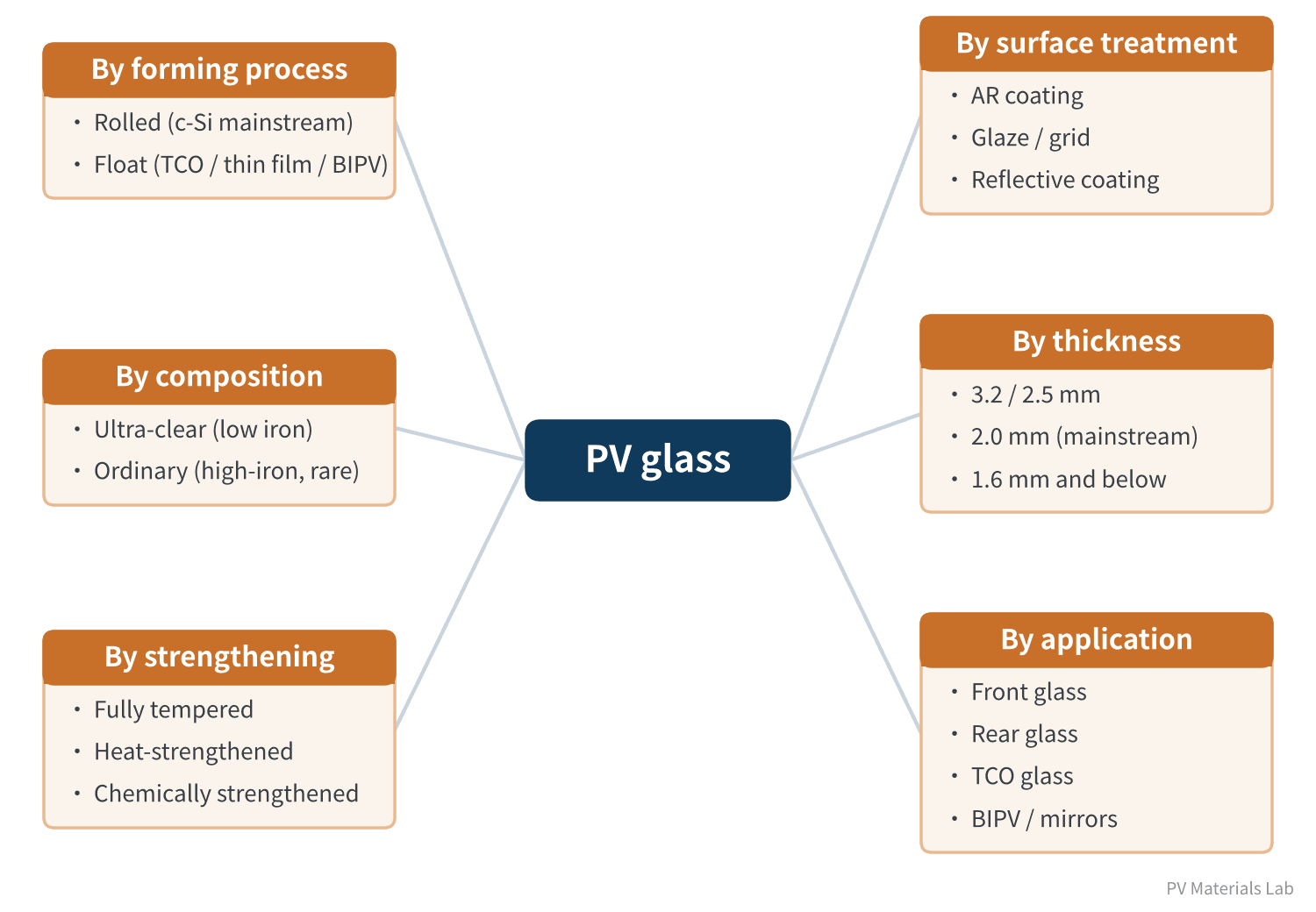
Figure 1. Six dimensions for classifying PV glass
Take today's most common front glass for glass-glass modules. Read with this map, it is: rolled, ultra-clear, heat-strengthened, single- or double-layer AR-coated, 2.0 mm, front glass. Composition holds no surprises, since modules all use ultra-clear low-iron glass, as explained in the previous article, so below we look at the other dimensions.
02By forming process: rolled and float
How molten glass leaving the furnace is turned into a flat sheet determines whether it is rolled glass or float glass.
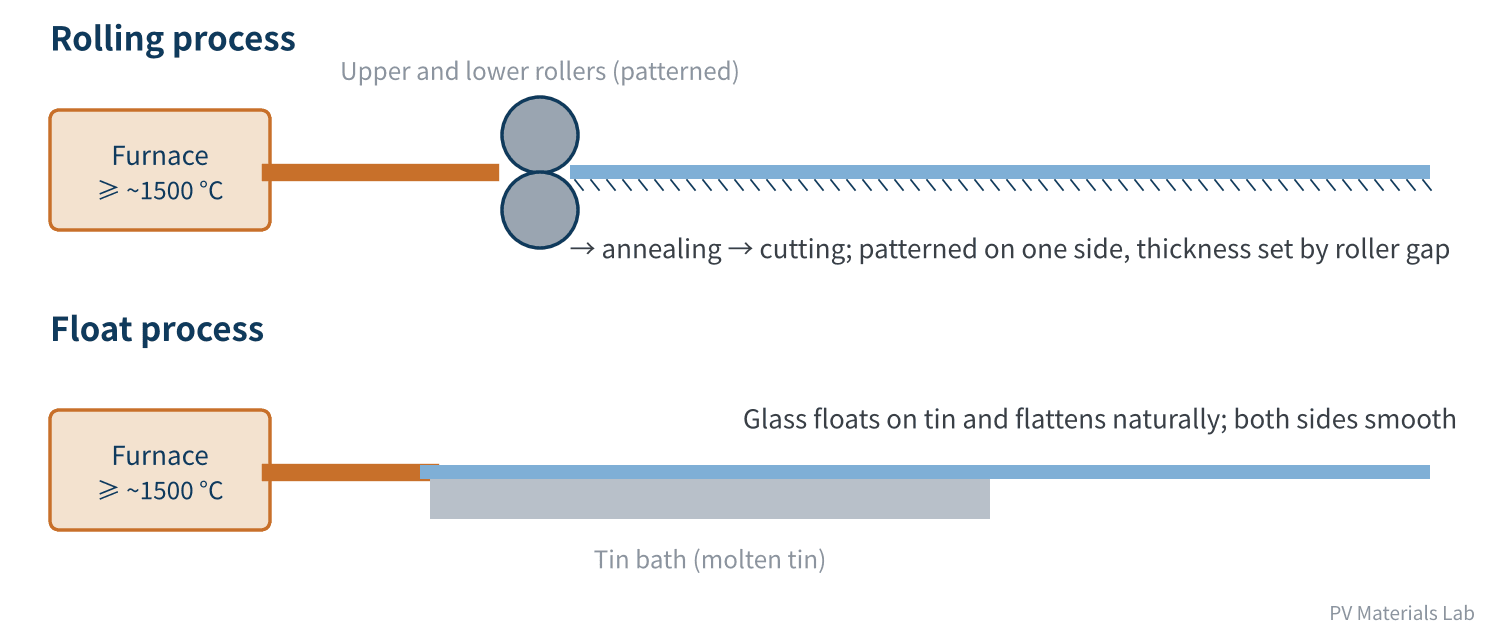
Figure 2. Rolling and float forming processes compared (schematic)
- Rolled: molten glass passes between a pair of upper and lower rollers and is "rolled out" into a sheet, with the roller pattern imprinted on the surface. Thickness is set by the roller gap, and one furnace usually feeds several lines, suiting large-scale, low-cost production. The vast majority of PV glass for crystalline silicon modules is rolled glass.
- Float: molten glass flows onto molten tin and spreads flat under gravity and surface tension, giving two smooth, flat faces. Its flatness and surface quality are better, making it the ideal substrate for conductive coatings. It is used mainly for TCO glass in thin-film and perovskite cells and in BIPV.
| Item | Rolled glass | Float glass |
|---|---|---|
| Surface | Patterned on one side, relatively flat on the other | Smooth on both sides |
| Flatness | Moderate | High |
| Common thickness | About 1.6–3.2 mm | Wider range |
| Main uses | Front and rear glass for c-Si modules | TCO glass, thin-film / perovskite modules, BIPV |
| Industry position | The overwhelming mainstream of PV glass | Niche; drawing attention with perovskites |
Table 1. Rolled glass and float glass compared
Why do crystalline silicon modules choose rolled glass that is "not flat enough"? Partly cost and scale; partly because the patterned surface is useful in itself: it increases the bonding area with the encapsulant and scatters light to reduce reflection. For c-Si modules, the "weakness" of rolled glass is actually a strength.
03By strengthening: fully tempered, heat-strengthened and chemically strengthened
Raw glass is not strong enough and must be strengthened before it can be used in a module. The mainstream method is thermal tempering: the glass is heated to near its softening point above 600 °C and then quenched with air, "freezing" a layer of compressive stress into the surface. Depending on the cooling intensity and final stress level, it is either fully tempered or heat-strengthened. A third route, chemical strengthening, works by ion exchange.
| Item | Fully tempered | Heat-strengthened | Chemically strengthened |
|---|---|---|---|
| Principle | Rapid quench gives high surface compression | Slower cooling, lower stress level | Ion exchange: larger ions squeezed into the surface |
| Typical thickness | 3.2 mm and above | Thin glass such as 2.0 mm and 1.6 mm | Ultra-thin glass (around 1 mm and below) |
| Breakage pattern | Small granules | Large radial cracks; fragments stay in place | Depends on the stress layer |
| Spontaneous breakage risk | Present (nickel sulphide, etc.) | Very low | Very low |
| PV use | Front glass of glass-backsheet modules | Mainstream for glass-glass front and rear | Small volumes; lightweight-module trials |
Table 2. Fully tempered, heat-strengthened and chemically strengthened glass compared
Here is a detail worth noting for insiders. Under architectural glass definitions, heat-strengthened glass has a surface stress of roughly 24–60 MPa, whereas the PV industry requires 2.0 mm "heat-strengthened" glass to have a surface stress of at least 60 MPa at any point and at least 65 MPa on average. In other words, the 2.0 mm glass in modules is actually pushed to the top of the heat-strengthened range, and even slightly above the architectural window, which is why the industry also calls it "lightweight thermally strengthened glass".
The fundamental reason thin glass is hard to temper fully is that thermal tempering relies on a temperature difference between the surface and the core. The thinner the glass, the harder it is to build up that difference during cooling, and the less compressive stress can be "frozen in". This is the toughest hurdle on the road to thinner glass, and we will cover it in detail in the process articles.
Fully tempered glass is stronger but risks spontaneous breakage; heat-strengthened glass rarely breaks spontaneously but has less strength margin. The glass-glass era chose heat-strengthened glass, essentially trading structural symmetry for part of the lost strength.
04By surface treatment: AR coating, glaze and reflective coatings
The same rolled, heat-strengthened glass serves completely different purposes depending on its surface treatment.
- AR coating: used on front glass. A porous silica-based layer is applied to the air side and then cured in the tempering furnace. There are single-layer and double-layer versions; double-layer coatings give higher transmittance but cost more and need tighter process control.
- Glaze / grid: used on rear glass. White ceramic glaze is printed in the areas behind the gaps between cells and fired during tempering, reflecting light that falls through the gaps back onto the cells and raising front-side power. Glass printed with white glaze over the whole surface can replace a traditional white backsheet in monofacial glass-glass modules.
- Reflective coatings: also used on glass-glass rear sheets, these raise reflection in specific areas to balance front-side gain against rear-side light transmission. A dedicated association standard now exists: T/CPIA 0028.2—2024, published in December 2024.
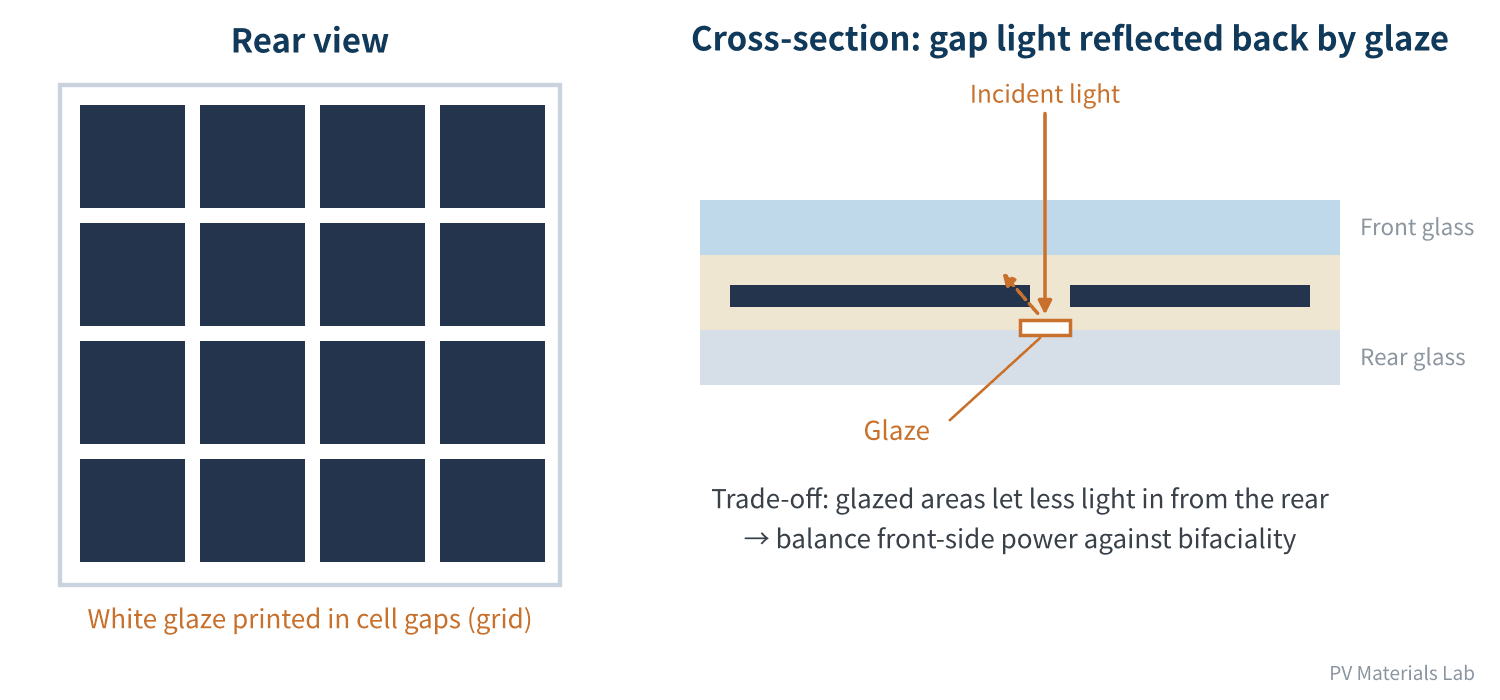
Figure 3. How grid-glazed rear glass works (schematic)
Glazing rear glass is essentially a trade-off between front-side power and bifaciality: the more glaze, the larger the front-side gain, but the less light can enter from the rear. Utility plants with good ground albedo may value bifaciality more; on distributed rooftops, where almost no light reaches the rear, grid or even full glazing pays off better.
05By thickness: from 3.2 mm to 2.0 mm, and on towards 1.6 mm
Thickness is the most "visible" specification of PV glass, and its evolution is almost a history of module structure.
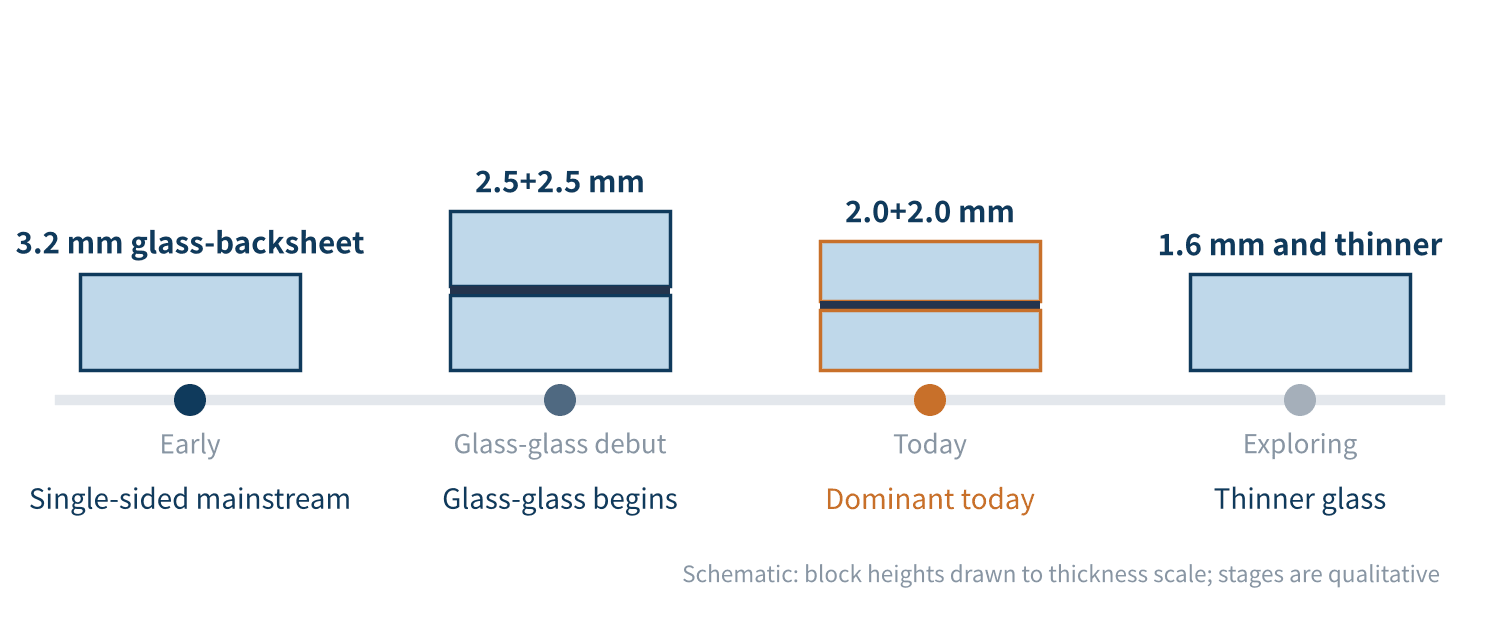
Figure 4. Evolution of PV glass thickness and module structure (schematic)
- 3.2 mm glass-backsheet: the standard of the monofacial era, one fully tempered front sheet plus a polymer backsheet. Still used in some glass-backsheet products and in designs for hail-prone regions.
- 2.5 + 2.5 mm glass-glass: an early glass-glass design after bifacial cells took off; reliable, but heavy and relatively costly.
- 2.0 + 2.0 mm glass-glass: found the balance between weight, cost and strength, and is now the overwhelming market mainstay.
- 1.6 mm and thinner: the direction for further weight and cost reduction, but with higher demands on strengthening, frames and mounting. In early 2024 a tempering-equipment maker announced stable volume production of 1.6 mm heat-strengthened PV glass at a customer's plant, but overall this remains at the exploration and small-volume stage.
Each step thinner saves glass and transport cost and gives up strength margin. So what we see is not "thinner is better" but choosing thickness by application: in high-wind, heavy-snow and hail regions, the front glass is often made somewhat thicker.
06By application: front, rear and a few "non-mainstream" types
Finally, application. Front and rear glass are the two main uses in crystalline silicon modules, and we have already covered how they differ in coating and glazing. Beyond these, several other kinds of PV glass matter in specific fields:
- TCO conductive glass: ultra-clear float glass coated with a transparent conductive oxide, commonly fluorine-doped tin oxide (FTO) or indium tin oxide (ITO). It is both the light-entry surface and an electrode of the cell, a key material for cadmium telluride and perovskite cells.
- BIPV glass: used in building-integrated photovoltaics, commonly as coloured, laminated or insulated glass. Besides generating power, it must meet building requirements for safety, insulation and appearance.
- Mirror glass: used in concentrated solar thermal power to reflect and focus sunlight onto receivers. Strictly speaking it is not part of PV modules, but it belongs to the same national standard family for "solar glass".
The three parts of China's national standard GB/T 30984 "Solar glass" correspond exactly to ultra-clear patterned glass, TCO glass and mirror glass, which also reflects how the work is divided among these glass types.
07Final thoughts
Back to the question at the start: "2.0 mm rolled, coated, heat-strengthened" is simply a combination of four dimensions: thickness, forming process, surface treatment and strengthening. Once you understand the dimensions, a specification sheet is no longer a string of hard-to-remember terms.
More importantly, each dimension hides a trade-off: rolled versus float trades cost against flatness; fully tempered versus heat-strengthened trades strength against spontaneous-breakage risk; glazing trades front-side power against bifaciality; thickness trades cost against strength margin. When we turn to process, reliability and selection, we will keep coming back to these trade-offs.
PV glass classification is essentially a combination of six dimensions, and every choice along each dimension is a trade-off between performance and cost.
In the next article we go back to the source: raw materials. Why does low-iron quartz sand set the ceiling for PV glass? What roles do soda ash and fining agents play? Stay tuned. We would be glad to hear from you.
References
- China Photovoltaic Industry Association: T/CPIA 0028.1—2024 Glass for photovoltaic modules — Part 1: Front plate anti-reflective coated glass, 2024, https://www.ttbz.org.cn/Home/PdfFileStreamGet/c3QsMTM5NzQ4
- China Photovoltaic Industry Association: T/CPIA 0028.2—2024 Glass for photovoltaic modules — Part 2: Reflective-coated rear glass for glass-glass modules, 2024, https://www.ttbz.org.cn/Home/PdfFileStreamGet/c3QsMTM5NzQ3
- GB/T 30984.1—2015 Solar glass — Part 1: Ultra-clear patterned glass; GB/T 30984.2—2014 Solar glass — Part 2: Transparent conductive oxide coated glass; GB/T 30984.3—2016 Solar glass — Part 3: Mirror glass
- GB 15763.2—2005 Safety glazing materials in building — Part 2: Tempered glass; GB/T 17841 Heat-strengthened glass; GB/T 34328—2017 Lightweight thermally strengthened glass
- Glassonweb: NorthGlass Achieved Stable Quantity Production of 1.6mm Photovoltaic Glass, 2024-01-30, https://www.glassonweb.com/news/northglass-achieved-stable-quantity-production-16mm-photovoltaic-glass
- Guanyan Report: Current state of the PV glass industry and comparison of rolled and float glass, 2024-11
- Jiemian News: Reports on Jinjing Technology's TCO conductive coated glass
https://pvmaterialslab.com
A PV R&D and technical team with 10+ years of experience | In-depth technical knowledge sharing
Materials · Reliability · Failure Analysis · Standards & Certification · Products · Processes
Exploring AI + PV — collaboration welcome
Disclaimer:
1. Original content reflects the authors' personal views only, is for reference, and does not constitute investment advice.
2. Reposted and cited content is credited to its source, with respect for original work.
3. Some content is AI-assisted (chart generation, data retrieval, concept explanations, etc.); the core framework and key content are written by our technical team and reviewed by humans.
4. For any inaccuracy or infringement, please leave a message or contact us.