
Perovskites, Lightweighting and Recycling: What Comes Next for PV Glass
In brief
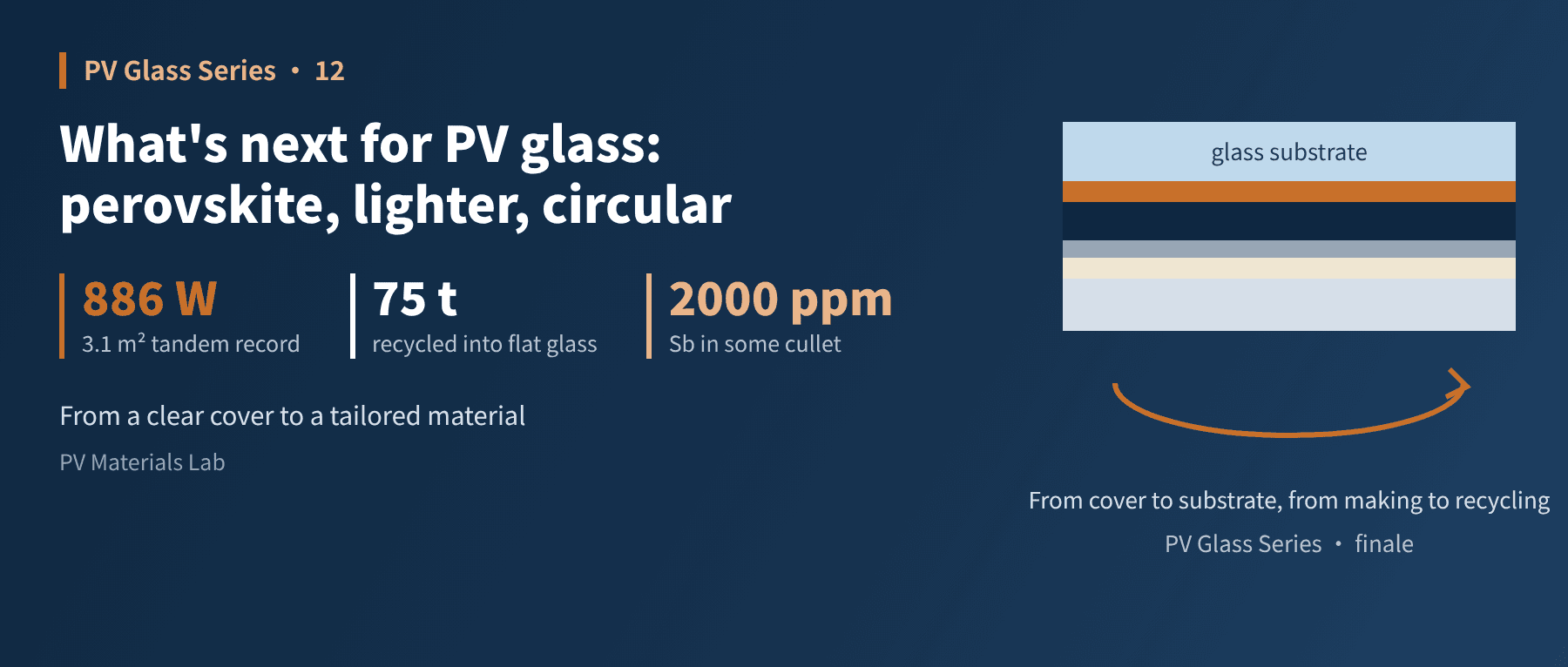
In the final article of our PV glass series, we look at four directions for PV glass: perovskites turn glass from a cover into a substrate and create new demand for TCO glass; glass keeps getting thinner and stronger; lightweight and special applications push some modules to go glass-free; and antimony-free formulations and recycling decide whether PV glass can be truly green. We close with a look back at the whole series.
In the previous eleven articles we talked almost entirely about glass in crystalline silicon modules. But PV technology is changing, and so is the role of glass. In this last article of the series we look ahead: what kind of glass do perovskites need? Will modules go glass-free? Where does PV glass go at the end of its life?
01Four directions in one picture
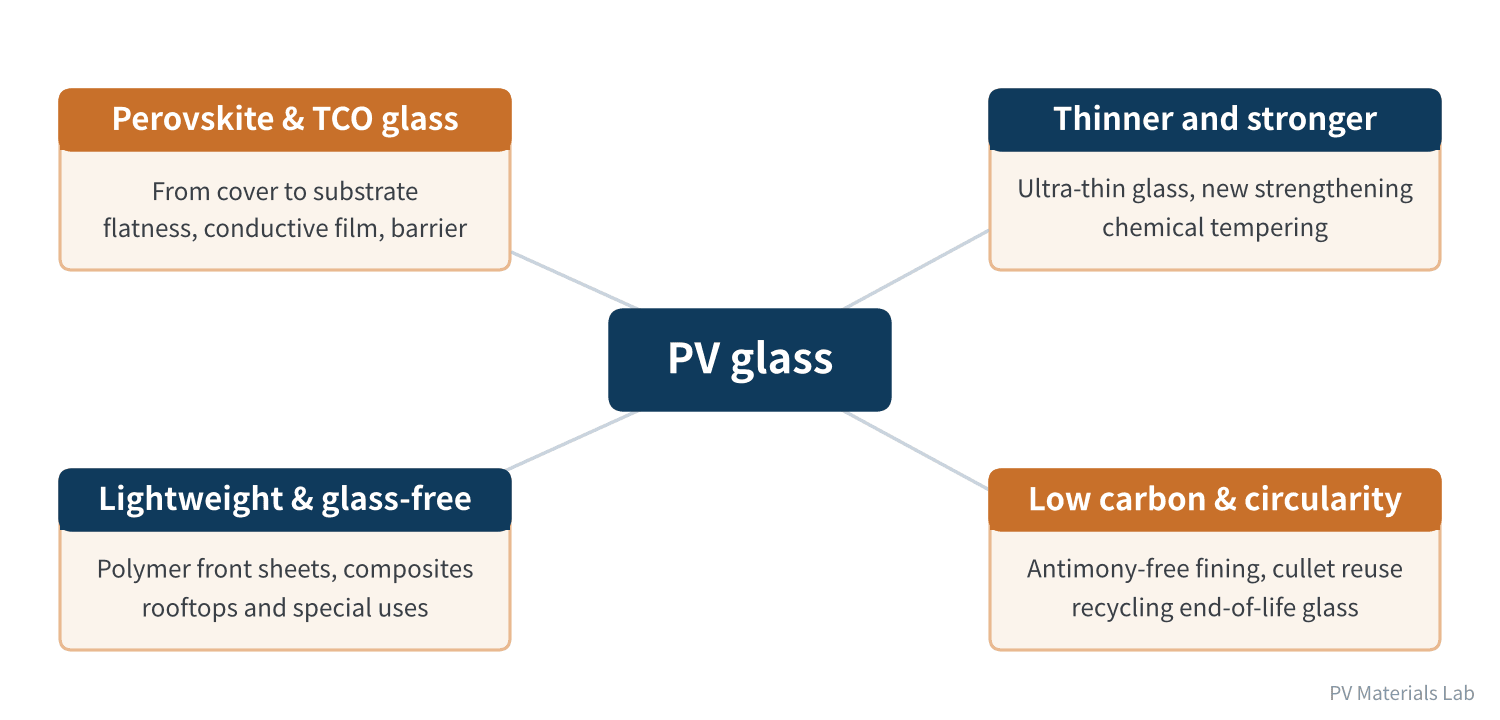
Figure 1 Four directions for PV glass
We group the future of PV glass into four directions: perovskites and TCO glass, thinner and stronger glass, lightweighting and glass-free modules, and low carbon and circularity. The first two are about how glass itself evolves; the last two are about where glass may be replaced and what happens to it at end of life.
02Perovskites: glass goes from cover to substrate
The biggest change perovskite cells bring to PV glass is a change of role.
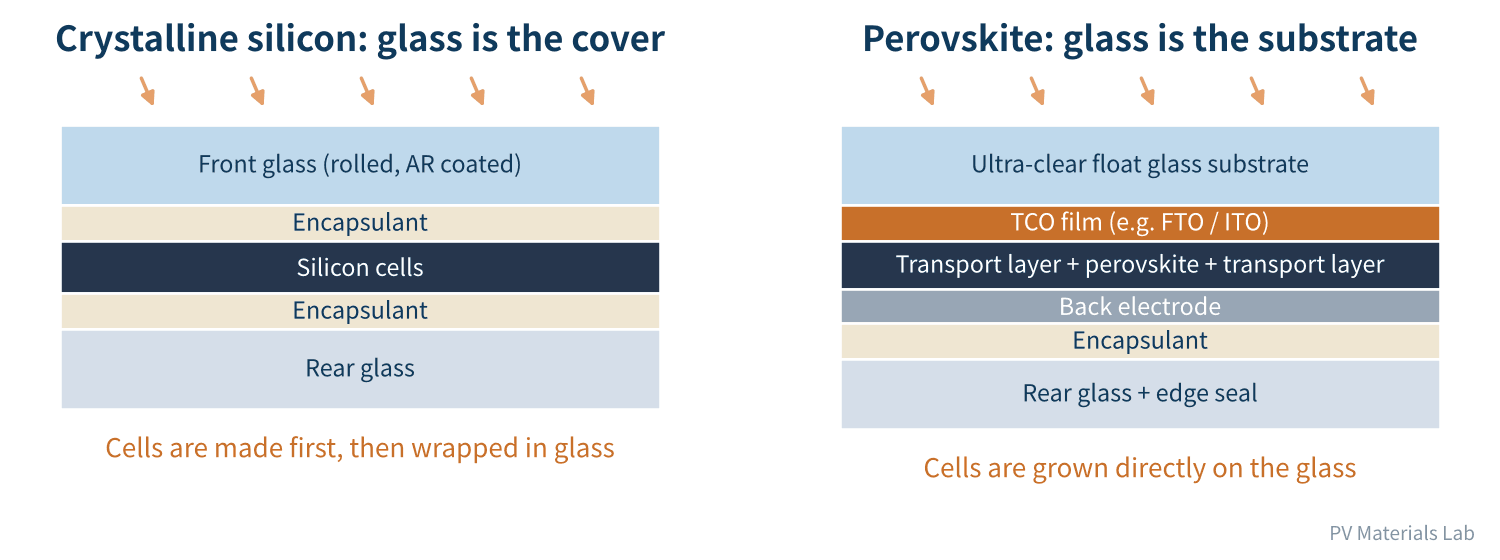
Figure 2 The role of glass in crystalline silicon versus perovskite modules (schematic)
In a crystalline silicon module the cells are made first and the glass wraps them up: it is a cover. In a perovskite module the cell is deposited layer by layer directly on the glass. A transparent conductive oxide (TCO) is coated on the glass first, followed by the transport layers, the perovskite absorber and the back electrode. The glass becomes the cell's substrate, and part of an electrode as well.
A new role brings new requirements:
- Flatness: The films are only hundreds of nanometres to a few microns thick, so any unevenness in the substrate affects film quality. Perovskites therefore mostly use ultra-clear float glass that is smooth on both sides, rather than the rolled glass common in crystalline silicon. This is exactly where the float glass from Article 2 comes in.
- TCO film: Common options include fluorine-doped tin oxide (FTO) and indium tin oxide (ITO). Conductivity has to be balanced against transparency, and the film's sheet resistance, haze and uniformity directly affect cell efficiency.
- Barrier and encapsulation: Perovskites are extremely sensitive to moisture and oxygen. They usually use a glass-glass structure with butyl or similar edge seals, and the encapsulation demands are far higher than for crystalline silicon.
- Temperature resistance and cleanliness: Deposition and annealing set requirements for the glass's temperature resistance, surface cleanliness and alkali leaching.
Glass also carries more weight in perovskite module cost. A broker estimate cited by the media puts materials at about 76% of perovskite module cost, with glass at about 29% and encapsulation at about 25%; another research firm puts TCO glass at about a third of manufacturing cost. The bases differ, but the conclusion is the same: in a perovskite module, glass is the largest single cost item.
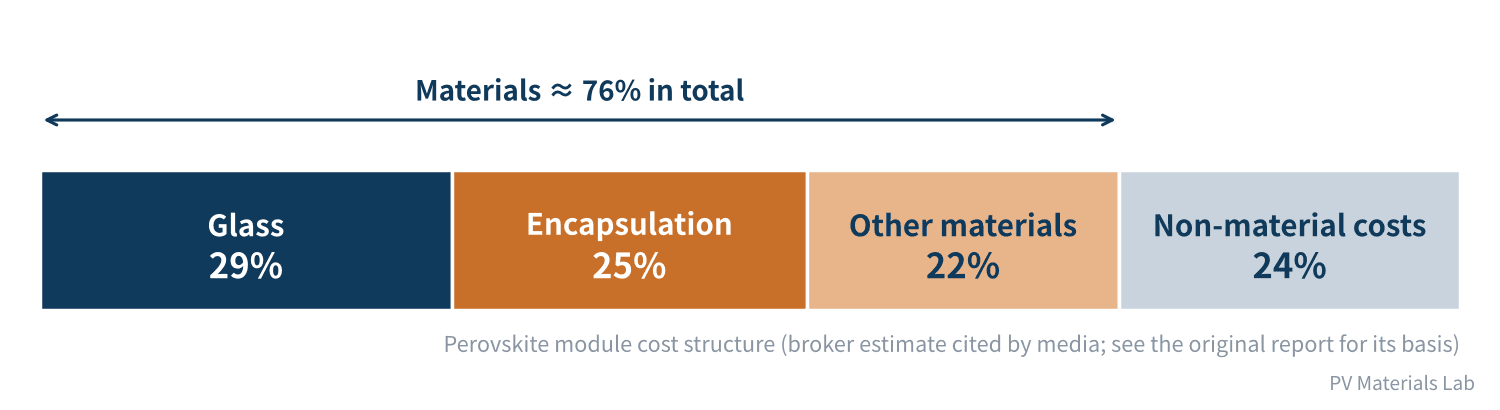
Figure 3 Perovskite module cost structure (broker estimate cited by media)
The industry is moving much faster than a few years ago:
- TCO glass: At its 2026 interim results briefing in August, Jinjing Technology said that once the cold repair and upgrade of its Ningxia line is complete it will have three TCO glass lines with annual capacity of up to 45 million m², and that its TCO glass is already being introduced in volume at several leading Chinese perovskite companies.
- Tandem modules: In January 2026, Trina Solar's State Key Laboratory of Photovoltaic Science and Technology announced 886 W from a 3.1 m² perovskite/silicon tandem module, beating its own earlier 865 W record certified by TÜV SÜD.
- Production lines: On 18 September 2026, GCL Optoelectronics completed its gigawatt-scale perovskite module line, and its roughly 2 m² single-junction perovskite module has passed third-party IEC 61215 certification.
For PV glass makers, TCO glass and glass for tandem modules may be the next point of differentiation.
In the crystalline silicon era, glass competed on transparency, strength and price. In the perovskite era, it must also compete on flatness, conductivity and barrier performance.
03Thinner and stronger: thinning has further to go
As Article 5 explained, the strength from thermal tempering is limited by thickness, and thinner glass is harder to temper. To keep glass of 1.6 mm or less strong enough, the industry is working along several lines:
- Better thermal tempering: More effective heating and cooling, such as air-flotation heating and high-pressure quench grids, to raise surface stress as far as possible without sacrificing flatness.
- Chemical strengthening: Ion exchange replaces sodium ions in the glass surface with larger potassium ions, squeezing a compressive stress layer into the surface. It is not limited by thickness and can achieve high strength in glass of about 1 mm or thinner, but it is expensive and slow, so it is mainly used in high-value applications today.
- Structural synergy: The co-design of encapsulant, frame and glass discussed in Article 9 is essentially about using structure to make up for limited material strength.
Thinning will clearly continue, but its pace depends on the cost of strengthening technologies and on whether the industry can give plant owners convincing answers on hail and breakage. In Kiwa PVEL's 2026 scorecard, 61% of breakages in 45 mm hail tests were 2+2 dual-glass modules, so that question is not settled yet.
04Lightweighting: will modules go glass-free?
In a 2382 × 1134 mm module with two sheets of 2.0 mm glass, the glass weighs about 27 kg, or roughly 70% of the module. That is no problem at large ground-mounted plants, but it becomes a hard limit in some settings: commercial and industrial roofs with limited load capacity, building facades, carports, and mobile and portable devices. These have given rise to lightweight modules that replace glass with polymers. Common solutions include transparent fluoropolymer films, transparent polymer sheets and fibre-reinforced composite substrates.
Removing the glass cuts weight sharply, but the four roles described in Article 1 then have to be taken on by other materials: impact resistance, weathering resistance, moisture barrier and fire safety, all of them weak points for polymers. So for now lightweight modules mostly complement glass modules, replacing them in specific applications rather than across the board.
A more extreme case is space PV. Cover glass for spacecraft cells is usually ultra-thin glass on the order of a hundred microns, often doped with cerium to resist darkening from space radiation. This shows that glass does not have to be thick and heavy; the key is tailoring the glass to the application.
05Low carbon and circularity: the second life of PV glass
PV glass is produced in enormous volumes, and its carbon footprint and end-of-life handling are becoming issues the industry cannot avoid.
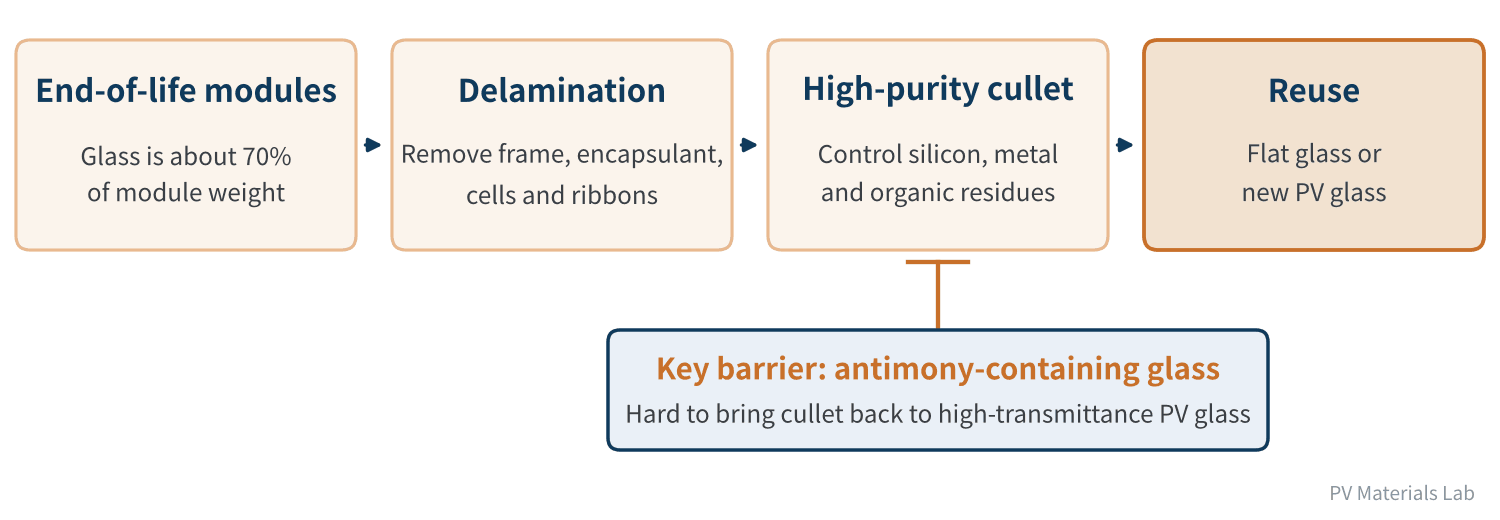
Figure 4 The PV glass recycling chain (schematic)
- Lower carbon in production: Oxy-fuel combustion and electric boosting, discussed in Article 4, along with more cullet recycling, all cut energy use and emissions per unit.
- Antimony-free glass: As Article 3 explained, antimony fining agents are common in PV glass, but antimony is also one of the biggest obstacles to recycling. Wolfram Palitzsch, CEO of Germany's Luxchemtech, told pv magazine that he did not know of a flat glass producer in Europe that could process cullet with around 2,000 ppm of antimony. Moving to low- or zero-antimony formulations is both an environmental requirement and a way to clear the path for recycling.
- High-value recycling: Glass makes up most of a module's weight. At EU PVSEC in Rotterdam in September 2026, Dutch glass recycler Maltha presented results from the European PHOTORAMA project: advanced delamination produced high-purity cullet, 75 tonnes of which has gone into industrial production of new flat glass, and modules made with recovered glass performed on par with modules using new glass. Maltha also noted that antimony in some solar glass remains a key challenge.
For the Chinese industry, as early plants reach retirement, recycling PV glass will go from optional to essential, and the answer to that question depends largely on how today's glass formulations are designed.
06Final thoughts
This brings our PV glass series to a close. Across twelve articles, we started from the role of a sheet of glass in a module and worked through raw materials, processing, testing, reliability, failure, design, the industry and cost, before finally looking ahead. Here is a recap:
| No. | Topic | In one sentence |
|---|---|---|
| 01 | Functions | Glass is the heaviest part of a module, a structural and functional part that governs output and lifetime |
| 02 | Classification | A combination of six dimensions, each one a trade-off |
| 03 | Raw materials | Raw materials set the transmittance ceiling, and iron control is the main thread |
| 04 | Raw sheet production | A furnace that cannot stop shapes both quality and the price cycle |
| 05 | Processing | The conflict between thin and strong is sharpest at tempering |
| 06 | Indicators and testing | Standards ensure compliance; distributions, edges and trends ensure reliability |
| 07 | Module reliability | Compliant glass is only the start; system matching is what matters |
| 08 | Failure analysis | Find the origin, read the pattern, and turn inference into evidence with tests |
| 09 | Selection | Thickness is only the starting point; encapsulant, frame, mounting and site decide the answer |
| 10 | Industry landscape | In the end, it is a competition on cost |
| 11 | Cost and efficiency | Put every measure on the same balance sheet, then weigh it against risk |
| 12 | Future directions | From cover to substrate, from making to recycling |
Table 1 The twelve articles of the PV glass series
Thank you to everyone who has read this far. PV glass is the most "ordinary" material in a module, yet one of the most worth looking at closely. If this series has helped you, please share it with colleagues. If you run into glass-related questions in your work, we would be glad to hear from you.
The next stop for PV glass is a move from "a clear cover sheet" to "a functional material tailored to the application", and ultimately to a circular one.
References
- Wallstreetcn: Reporting on the perovskite supply chain (citing broker research), https://wallstreetcn.com/articles/3673166
- ChinaBaogao: Perovskite cell industry analysis (TCO glass share of cost), 2023-12, https://www.chinabaogao.com/market/202312/677974.html
- 10jqka: Jinjing Technology: TCO glass positioned for green energy, 2026-08-27, https://stock.10jqka.com.cn/20260827/c679362847.shtml
- National Business Daily: Trina Solar perovskite/silicon tandem module sets another world record, 2026-01-15, https://www.nbd.com.cn/articles/2026-01-15/4221062.html
- PV Tech: Trinasolar sets new tandem cell efficiency and module power output records, 2025-12-29, https://www.pv-tech.org/industry-updates/trinasolar-sets-new-tandem-cell-efficiency-and-module-power-output-records/
- Science and Technology Daily: GCL Optoelectronics' GW-scale perovskite line fully connected, 2026-09-19, https://www.stdaily.com/web/gdxw/2026-09/19/content_584085.html
- glassonweb: Solar Panel Glass Recycling: Maltha Presents Breakthrough at EU PVSEC 2026, 2026-09-18, https://www.glassonweb.com/news/solar-panel-glass-recycling-maltha-presents-breakthrough-eu-pvsec-2026
- pv magazine: Solar recycling's glass ceiling, 2024-09-21, https://www.pv-magazine.com/2024/09/21/solar-recyclings-glass-ceiling/
- pv magazine: End-of-life module recycling unviable if material diversity is not considered, 2026-07-11, https://www.pv-magazine.com/2026/07/11/end-of-life-module-recycling-unviable-if-material-diversity-is-not-considered/
- ESMC: Recommendation on addressing uncertain antimony content in solar glass for recycling, 2023
- EPFL: Glass-free lightweight PV building elements: solutions to minimize weight and maximize durability
- pv magazine: Kiwa PVEL's 2026 solar module reliability scorecard reveals high failure rates, 2026-05-28
https://pvmaterialslab.com
A PV R&D and technical team with 10+ years of experience | In-depth technical knowledge sharing
Materials · Reliability · Failure Analysis · Standards & Certification · Products · Processes
Exploring AI + PV — collaboration welcome
Disclaimer:
1. Original content reflects the authors' personal views only, is for reference, and does not constitute investment advice.
2. Reposted and cited content is credited to its source, with respect for original work.
3. Some content is AI-assisted (chart generation, data retrieval, concept explanations, etc.); the core framework and key content are written by our technical team and reviewed by humans.
4. For any inaccuracy or infringement, please leave a message or contact us.