
Frame Surface Treatment: Choosing Between Anodizing, E-Coating and Powder Coating
PV Module Frame Series · 03
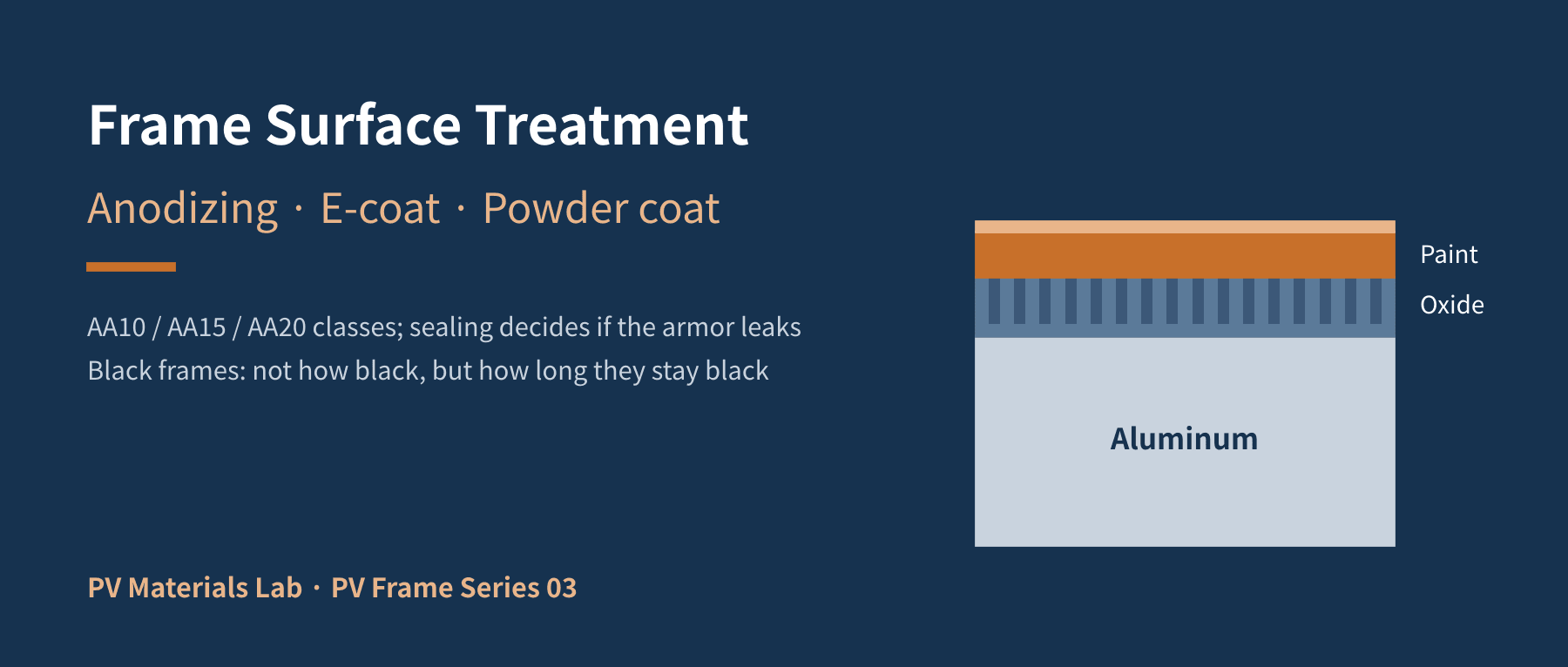
An aluminum frame stands outdoors for two to three decades, and that depends not only on 6063 alloy but on a surface film only about ten-odd microns thick. In the third article of our frame series, we explain how anodizing, electrophoretic coating and powder coating work and differ, decode film-thickness classes such as AA10 and AA15 and sealing quality, unpack the ways black frames are made and their fading risk, and map the frame's weakest corrosion points and the usual verification tests.
In the previous article we explained why frames use 6063 aluminum alloy. Once the material is right, the frame still needs the right “clothes”. A frame stands outdoors for two to three decades, facing sun, rain, salt mist, ammonia and sand. That relies not only on the alloy itself but on a surface film only about ten-odd microns thick. In this article we look at anodizing, electrophoretic coating and powder coating, plus easily overlooked details such as film thickness, sealing and black frames.
01 Why an aluminum frame needs “clothes”
Aluminum does protect itself: exposed to air, it naturally forms a layer of aluminum oxide. But this natural oxide film is only nanometers thick. In humid, salty or ammonia-laden environments it is easily damaged, and the surface gradually turns dull, develops white spots or even pits.
Surface treatment deliberately gives the aluminum a thicker, denser and more controllable protective film. It does four jobs:
- Corrosion resistance: blocks moisture, salt, ammonia and other corrosive agents, protecting the aluminum substrate;
- Appearance: provides a uniform silver, black or other color, which matters especially in residential and rooftop markets;
- Wear resistance: resists friction and scratches from handling, installation, clamps and windblown sand;
- Insulation: both anodic films and paint films are non-conductive, which directly affects grounding design, as covered in Article 01.
Three surface treatments are common on frames today: anodizing, electrophoretic coating (e-coating) and powder coating.
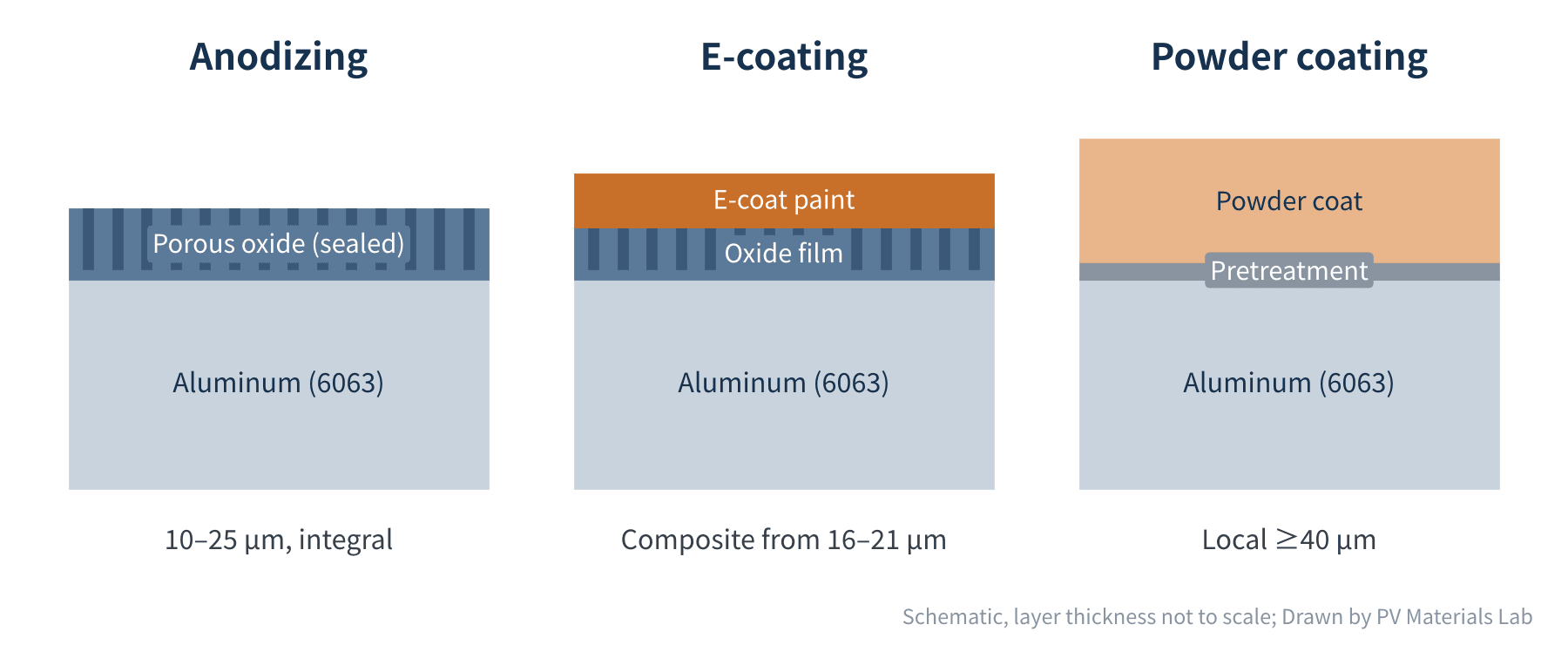
Figure 1 Layer structure of the three surface treatments
02 Anodizing: the mainstream choice for frames
Anodizing makes the aluminum profile the anode in an electrolyte such as sulfuric acid and passes current so that an aluminum oxide film “grows” on the surface. Unlike a sprayed coating, this film is converted from the aluminum substrate itself, so it is integral with the substrate and does not peel or flake like paint.
A freshly grown anodic film looks, under the microscope, like a dense honeycomb full of nanoscale pores. These pores cut both ways: they can absorb dyes for coloring, but if left untreated, moisture and contaminants can also seep in. So anodizing must be followed by sealing, which closes the pore mouths.
Film thickness is the core anodizing specification. Under GB/T 5237.2, anodic films are graded by average thickness into AA10, AA15, AA20 and AA25, where the number is the minimum average thickness in μm:
| Class | Average (μm) | Local (μm) | Typical use in frames |
|---|---|---|---|
| AA10 | ≥10 | ≥8 | Normal environments, standard ground-mounted plants |
| AA15 | ≥15 | ≥12 | A common requirement at many module makers |
| AA20 | ≥20 | ≥16 | Coastal, high-humidity, highly corrosive environments |
| AA25 | ≥25 | ≥20 | Severe corrosive environments, rarely used |
A thicker film resists corrosion and wear better, but takes longer to grow, uses more electricity and costs more. Which class to choose depends on the project's environmental category and the customer's requirements.
Even more often overlooked than thickness is sealing quality. A poorly sealed film develops white spots and chalking in damp-heat and salt-mist environments, losing much of its corrosion resistance, and this is hard to spot by appearance alone. The industry commonly assesses it with the acid dissolution mass-loss method (GB/T 8753.1): the sample is immersed in a phosphoric-chromic acid solution, and the poorer the sealing, the more film dissolves and the greater the mass loss.
Takeaway: Anodizing comes down to two numbers: thickness decides how thick the armor is, and sealing decides whether the armor has holes. Checking thickness without sealing buys only half the insurance.
03 E-coating and powder coating: one more layer on top
Electrophoretic coating starts from an anodic film and then electrodeposits a layer of acrylic or similar resin paint, forming an “oxide + paint” composite film. The paint further seals the pores of the oxide film, giving better corrosion resistance, alkali resistance and gloss than anodizing alone. GB/T 5237.3 grades the composite film into classes A, B and S, which correspond in GB/T 6892 to codes such as EA21, EA16 and ES21, where the number is the minimum local thickness of the composite film.
Powder coating electrostatically sprays a thermosetting powder onto the profile and then cures it at high temperature. It gives the thickest coating (code GA40 in GB/T 6892, corresponding to a local thickness of at least 40 μm) and the widest color choice, almost any color.
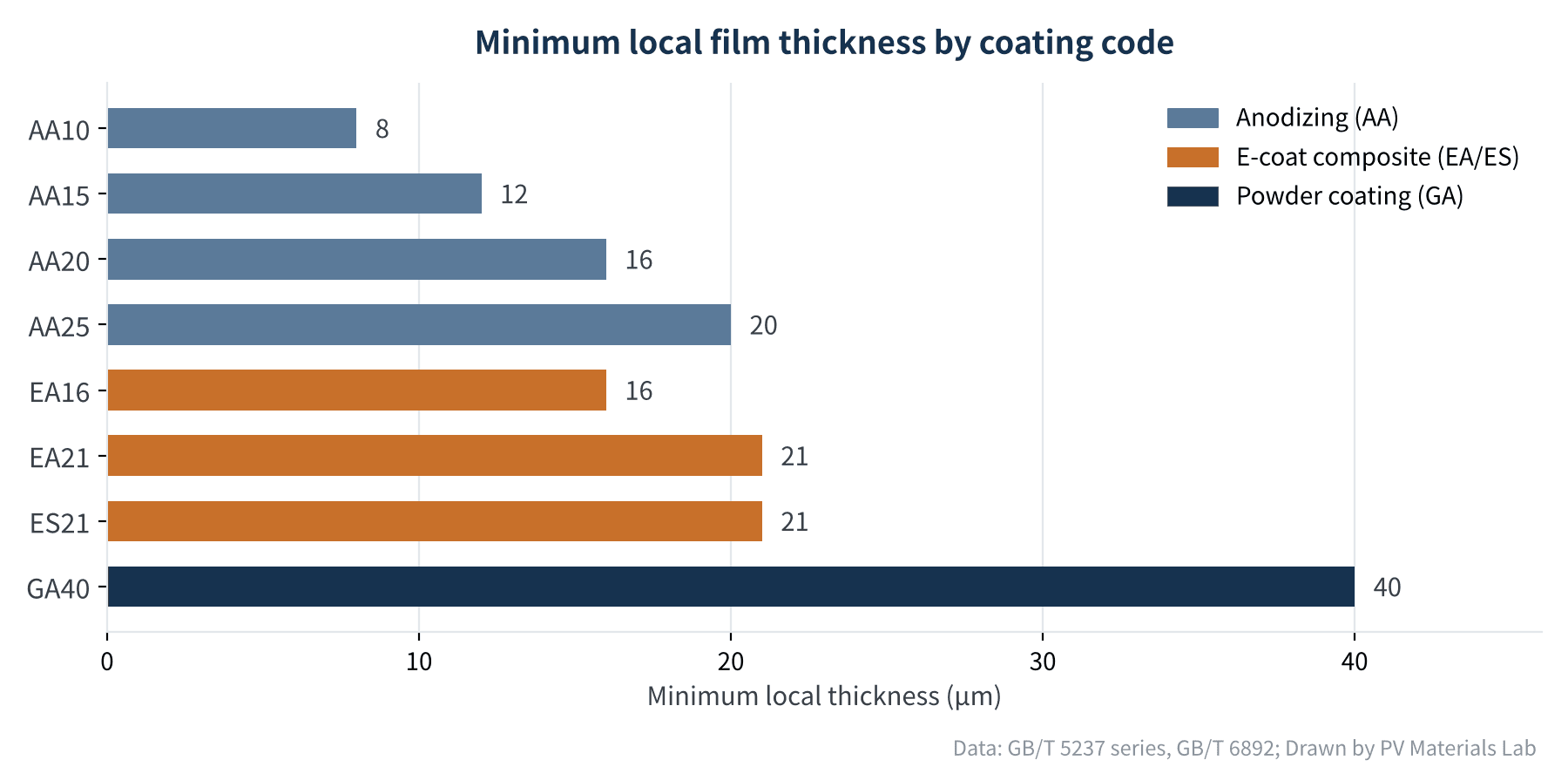
Figure 2 Minimum local film thickness of common coating codes
The three options compare as follows:
| Item | Anodizing | E-coating | Powder coating |
|---|---|---|---|
| Layer structure | Oxide film (integral with substrate) | Oxide film + paint film | Pretreatment + powder coat |
| Typical thickness | 10–25 μm | Composite from 16–21 μm | Local ≥40 μm |
| Corrosion resistance | Good; depends on thickness and sealing | Better | Good; depends on adhesion |
| Wear resistance | Good; hard film | Fairly good | Moderate; softer |
| Color | Mainly silver; can be colored | Silver, black and others | Almost any color |
| Cost | Low | Medium | Medium |
Note that the thicker the coating, the stronger its insulation. Grounding points on e-coated and powder-coated frames often need dedicated masking or coating removal, otherwise grounding washers can hardly pierce through. This must be considered at the design stage.
04 Black frames: what lies behind the look
Residential rooftops and the European market favor all-black modules, so demand for black frames is growing. But there is more than one way to make “black”, and outdoor durability varies widely:
- Organic dyed black: after anodizing, the profile is dipped in organic dye that enters the pores, then sealed. It is cheap and deep in color, but with an unsuitable dye or poor sealing it may fade under strong UV, turning purplish or brownish;
- Electrolytically colored black: metal salts are electrodeposited at the bottom of the pores. As an inorganic coloring, it usually has better light fastness than organic dyes, but demands tighter process control;
- E-coated or powder-coated black: the color comes from a black paint film or powder coating. Color consistency is good, but the coating is thick and strongly insulating, so grounding points and adhesion need attention.
For black anodizing, film thickness and sealing also decide how long the color lasts: the thicker the film and the better the sealing, the less dye is lost. So when qualifying black frames, besides the usual corrosion tests, it is wise to add an accelerated light-fastness test under artificial light to see how the color changes after long UV exposure.
Bottom line: The risk with black frames is not whether they are black, but how long they stay black. Ask how the color is produced, and let a light-fastness test decide.
05 Where corrosion starts: the frame's weak points
Even with a compliant film, a frame has a few natural weak points. The reason is simple: profiles are usually surface-treated as full lengths and then cut, punched and assembled, so the parts machined afterwards have no film protection.
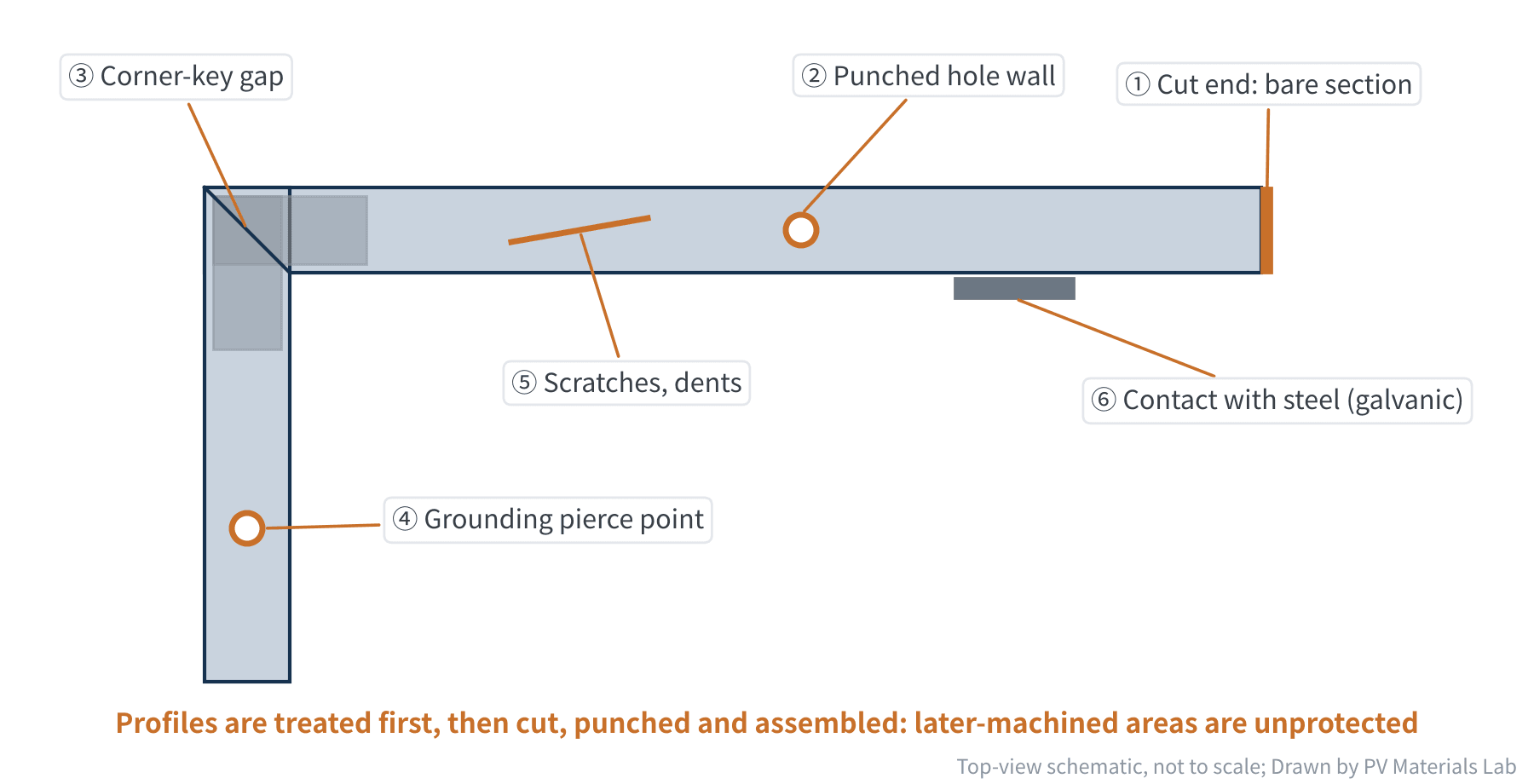
Figure 3 Weak points where frame corrosion tends to start
- Cut ends and punched holes: cut faces and hole walls are bare aluminum and are often the first to show white corrosion products in salt mist and damp heat;
- Corner-key gaps: gaps between the corner key and the profile trap water and salt, causing crevice corrosion;
- Grounding pierce points: once a grounding washer pierces the anodic film, the local bare metal needs protection;
- Scratches and dents: scratches during handling, framing and installation open gaps in the film;
- Dissimilar-metal contact: direct contact between the frame and steel racking or stainless-steel bolts can cause galvanic corrosion in humid conditions, which we will cover in Article 08 on failure analysis.
Common methods for verifying surface-treatment quality include eddy-current thickness gauging, acid dissolution mass loss for sealing, cross-cut testing for paint adhesion, and neutral salt spray or copper-accelerated acetic acid salt spray (CASS) for corrosion resistance. At module level, IEC 61701 salt-mist testing and IEC 62716 ammonia corrosion testing verify how the frame and the whole module perform in coastal, agrivoltaic and livestock settings.
06 Final thoughts
To wrap up this article:
- Anodizing: the mainstream choice; the film is integral with the substrate, and what matters is thickness class and sealing quality;
- E-coating: adds a paint film over the oxide for better corrosion resistance, at the cost of price and grounding treatment;
- Powder coating: the thickest coating and freest color choice, but watch adhesion, wear resistance and insulation;
- Black frames: the coloring method and light fastness are key; how long they stay black matters more than how black they are;
- Weak points: cut ends, punched holes, corner-key gaps and scratches are where corrosion appears first.
Surface treatment decides how long a frame can last; cross-section design decides how much load it can bear. In the next article we turn to frame structural design: the mechanics behind the C-cavity, Face B height and different long- and short-side designs. Stay tuned.
Calculation notes / data basis
- The local thickness values for AA classes and the minimum thicknesses for EA/ES/GA codes are compiled from the GB/T 5237 series and the coating codes in GB/T 6892; for ordering and inspection, follow the current standards and the technical agreement between the parties.
- Usage descriptions such as “AA15 is common at many module makers” are our summary based on industry experience; requirements vary between companies and markets.
References
- GB/T 5237.2 铝合金建筑型材 第2部分:阳极氧化型材 / Aluminium alloy extruded profiles for architecture – Part 2: Anodized profiles
- GB/T 5237.3 铝合金建筑型材 第3部分:电泳涂漆型材 / Part 3: Electrophoretic coating profiles
- GB/T 5237.4 铝合金建筑型材 第4部分:喷粉型材 / Part 4: Powder coating profiles
- GB/T 6892 一般工业用铝及铝合金挤压型材(膜层代号 AA、EA、ES、GA 等)/ Wrought aluminium and aluminium alloy extruded profiles for general engineering
- GB/T 8753.1 铝及铝合金阳极氧化 氧化膜封孔质量的评定方法 第1部分:酸浸蚀失重法 / Assessment of sealing quality of anodic oxidation coatings – Part 1: Acid dissolution mass loss
- GB/T 10125 / ISO 9227 人造气氛腐蚀试验 盐雾试验 / Corrosion tests in artificial atmospheres – Salt spray tests
- IEC 61701 Photovoltaic (PV) modules – Salt mist corrosion testing
- IEC 62716 Photovoltaic (PV) modules – Ammonia corrosion testing
- 广州市市场监督管理局. 铝合金型材(含工业铝型材)产品质量监督抽查实施细则. https://www.gz.gov.cn/attachment/0/81/81517/5816228.docx
- Pioneer Metal Finishing. Black Finishes for Aluminum Products: Black Is Not Always Just Black. https://www.pioneermetal.com/blog/pioneer-metal-finishing-black-finishes-for-aluminum-products-black-is-not-always-just-black/
PV Materials Lab
https://pvmaterialslab.com
PV Materials Lab
A PV R&D and technical team with 10+ years of experience | In-depth technical knowledge sharing
Materials · Reliability · Failure Analysis · Standards & Certification · Products · Processes
Exploring AI + PV — collaboration welcome
Disclaimer:
- Original content reflects the authors' personal views only, is for reference, and does not constitute investment advice.
- Reposted and cited content is credited to its source, with respect for original work.
- Some content is AI-assisted (chart generation, data retrieval, concept explanations, etc.); the core framework and key content are written by our technical team and reviewed by humans.
- For any inaccuracy or infringement, please leave a message or contact us.