
A Small, Specialised Niche: The PV Flux Industry and Its Suppliers
In brief
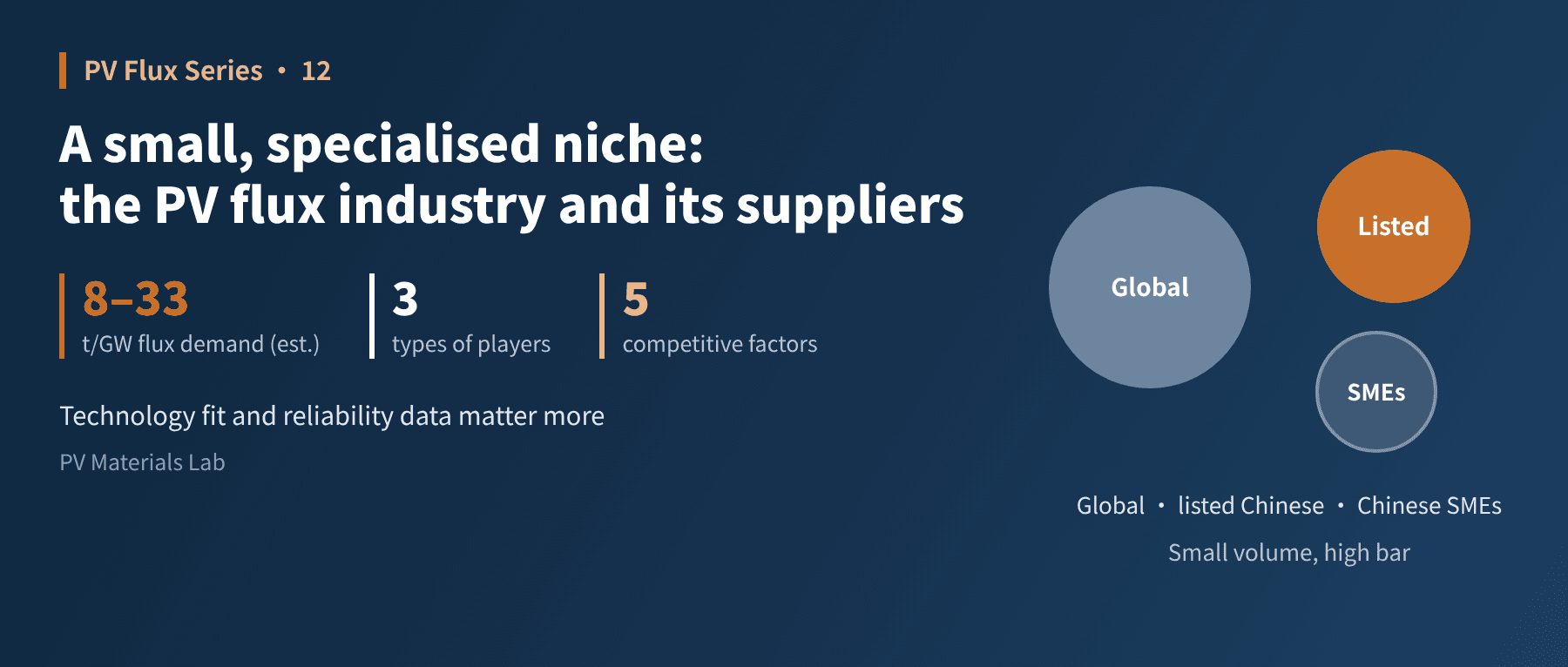
Compared with encapsulants and ribbon, PV flux is a rarely discussed niche market. How big is it? Who makes it? How do they compete? This article first uses a simple framework to estimate flux volume and value per GW of modules. It then draws on public information to map three types of players: international soldering-material specialists, listed Chinese soldering-material companies and specialised Chinese SMEs. It compares the technology routes of several published products and closes with the competitive factors and likely evolution of this "small but specialised" market. Because public data are limited, the article offers a framework for judgement rather than a market-share ranking.
Over the previous eleven articles we took flux apart from the angles of technology, process, reliability and cost. This article looks at the industry itself: how big is the PV flux market, who are the players, and how do they compete? One caveat up front: public industry data on flux are very scarce, and we found no reliable market-share statistics, so this article offers a framework for judgement rather than a league table.
01How big is the market: a small, specialised niche
Using the same basis as article 11, flux usage is 5–20 g per 600 W module and the price CNY 30–100 per kg. One GW is about 1.67 million modules, which gives the following flux demand per GW:
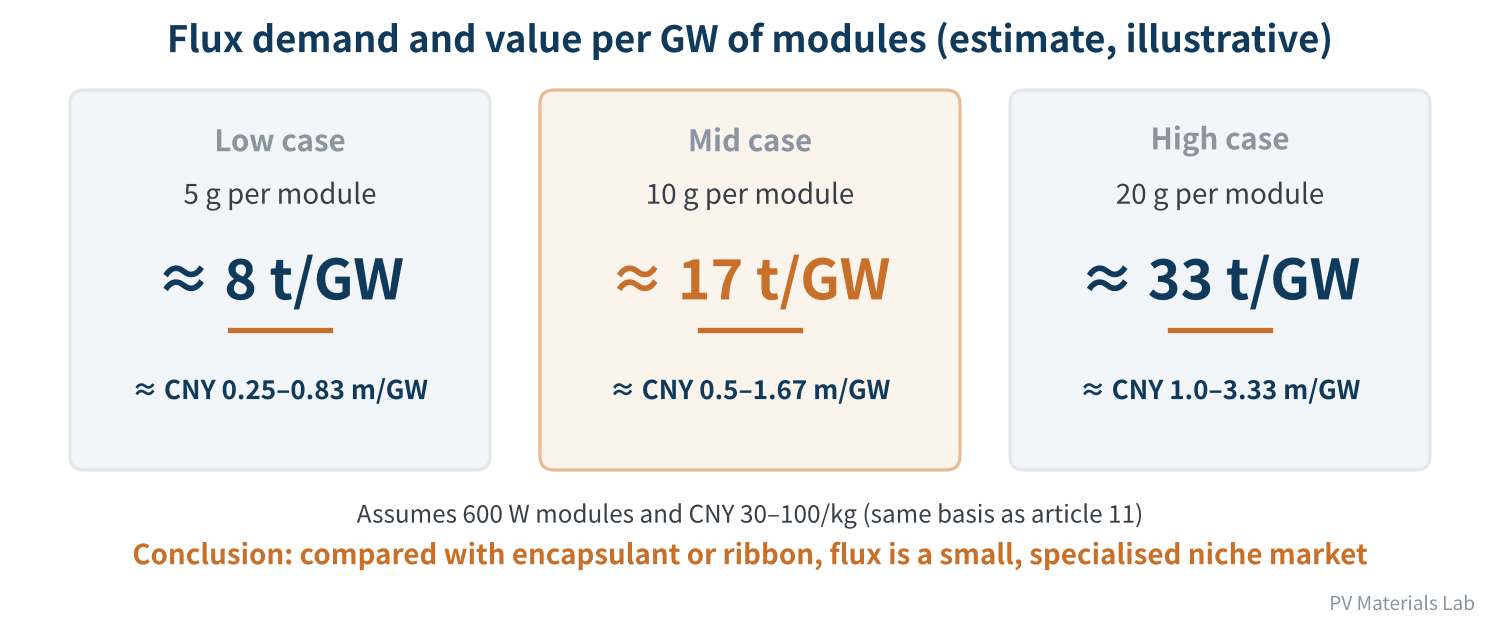
Figure 1. Flux demand and value per GW of modules (estimate, illustrative)
In other words, each GW of modules needs roughly 8–33 tonnes of flux, worth from a few hundred thousand to just over three million yuan. By comparison, encapsulant alone is commonly estimated at about 10 million square metres per GW, worth far more than flux. Flux is a classic "small but specialised" market.
This shapes several basic features of the industry:
- Limited market size: each customer's purchases are small in value, but requirements for quality and stability are anything but low.
- Highly concentrated customers: module capacity is concentrated in the leading companies, so flux suppliers' business is concentrated too. Qualification and adoption by major customers determine a supplier's scale.
- High validation barrier: as article 10 explained, a flux goes through several rounds of validation before entering mass production. Once a customer has qualified it, it rarely switches, which gives incumbents a degree of stickiness.
02Who makes it: three types of players
Based on public information, participants in the PV flux market fall roughly into three groups:
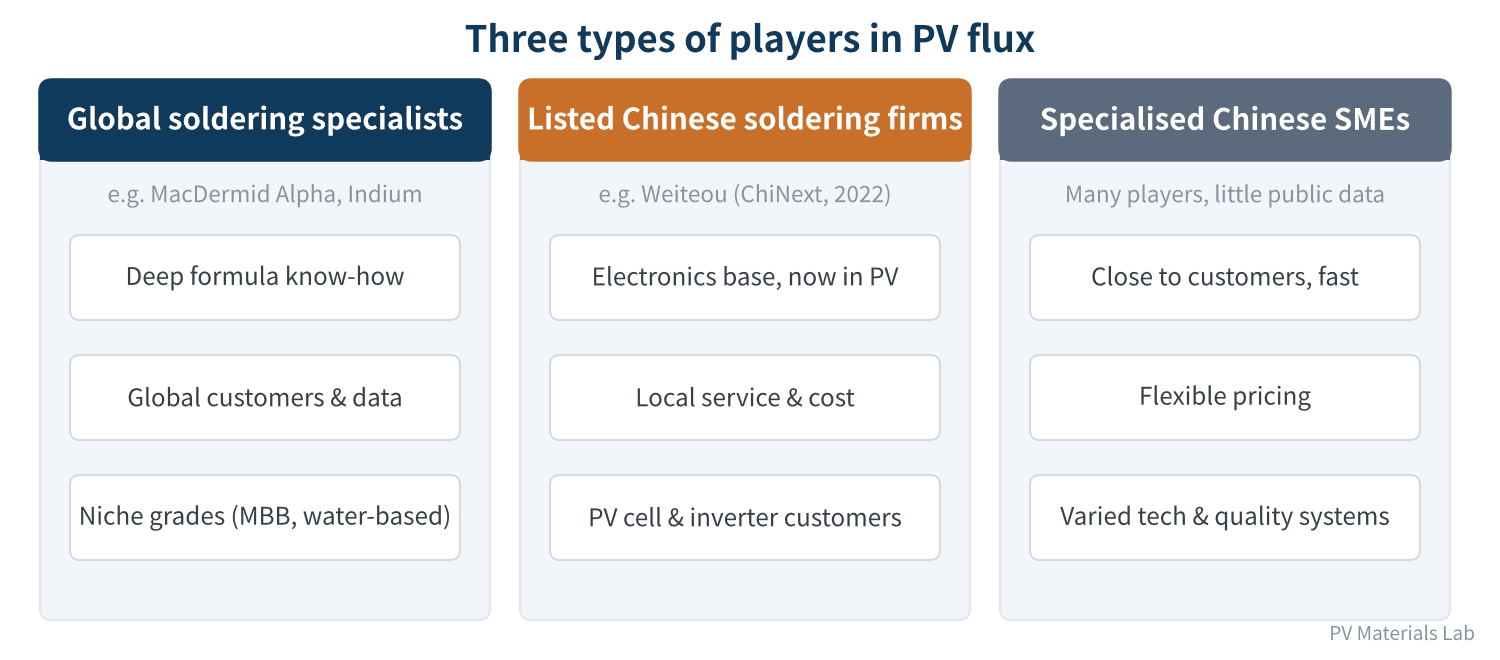
Figure 2. Three types of players in PV flux
- International soldering-material specialists: represented by MacDermid Alpha (with brands such as Alpha and Kester) and Indium. They have deep experience in electronics soldering materials and fairly fine-grained PV product lines, such as the Kester SF800-LR and ALPHA SF828-MBB cited several times in earlier articles, and Indium's range of fluxes for solar ribbon tabbing.
- Listed Chinese soldering-material companies: for example Weiteou (唯特偶), listed on the Shenzhen ChiNext board in 2022. Its main products are microelectronic soldering materials such as solder paste, bar and wire, plus auxiliary materials such as flux, cleaners and thinners. PV is one of its end markets, and public information lists Tongwei, Aiko and Sungrow among its representative PV customers. In the first half of 2026 the company reported revenue of CNY 934 million, up about 40.6% year on year, and launched a water-based PV flux.
- Specialised Chinese SMEs: numerous and mostly small, close to customers, quick to respond and flexible on price, but with widely varying technical depth and quality systems, and limited public information.
Note that these are representative companies named from public information and do not represent a market ranking. Many suppliers in the market disclose no information publicly.
03Technology routes: approaches in published products
Published product information shows each supplier emphasising different formulation approaches:
| Published product | Main features | Process need addressed |
|---|---|---|
| Kester SF800-LR | Alcohol-based, zero halogen, low residue, about 1.5% solids | Conventional stringing; low residue, no-clean |
| ALPHA SF828-MBB | Alcohol-based, rosin-free, halogen-free, ORL0, about 2% solids | Multi-busbar and fine round-wire ribbon (below 0.4 mm); less ribbon slip |
| Indium GS-1424 | Water-based, low solids | Open flux tanks |
| Indium GS-5414 | Very low solids, halogen-free | Clean cells and equipment after soldering |
| Indium GS-5415 / 5415-1 | Low solids, evaporation control, reduced crystallisation; 5415-1 is alcohol-based, fast-wetting, and also works in unheated pots | Heated flux pots; less evaporation and crystallisation |
| Weiteou PV flux range | Modified resin + organic activator system; published grades mostly halogen-free, about 4–7% non-volatiles; water-based grade added in 2026 | Module and ribbon soldering; some grades also for electronics and inverters |
Table 1. Technology routes of published PV flux products
Several directions stand out: low solids and halogen-free are a consensus; dedicated grades have appeared for fine round-wire ribbon and multi-busbar designs; "evaporation control" products address bath evaporation and crystallisation (the bath management issues in article 05); and water-based fluxes are mature at international suppliers and now being taken up by Chinese companies too. Bear in mind that published parameters are not defined on exactly the same basis, and higher or lower solids does not simply mean better or worse. Validation in your own process remains the final word.
04How they compete: not just on price
In a market with limited size and highly concentrated customers, suppliers compete on more than price. We see five main factors:
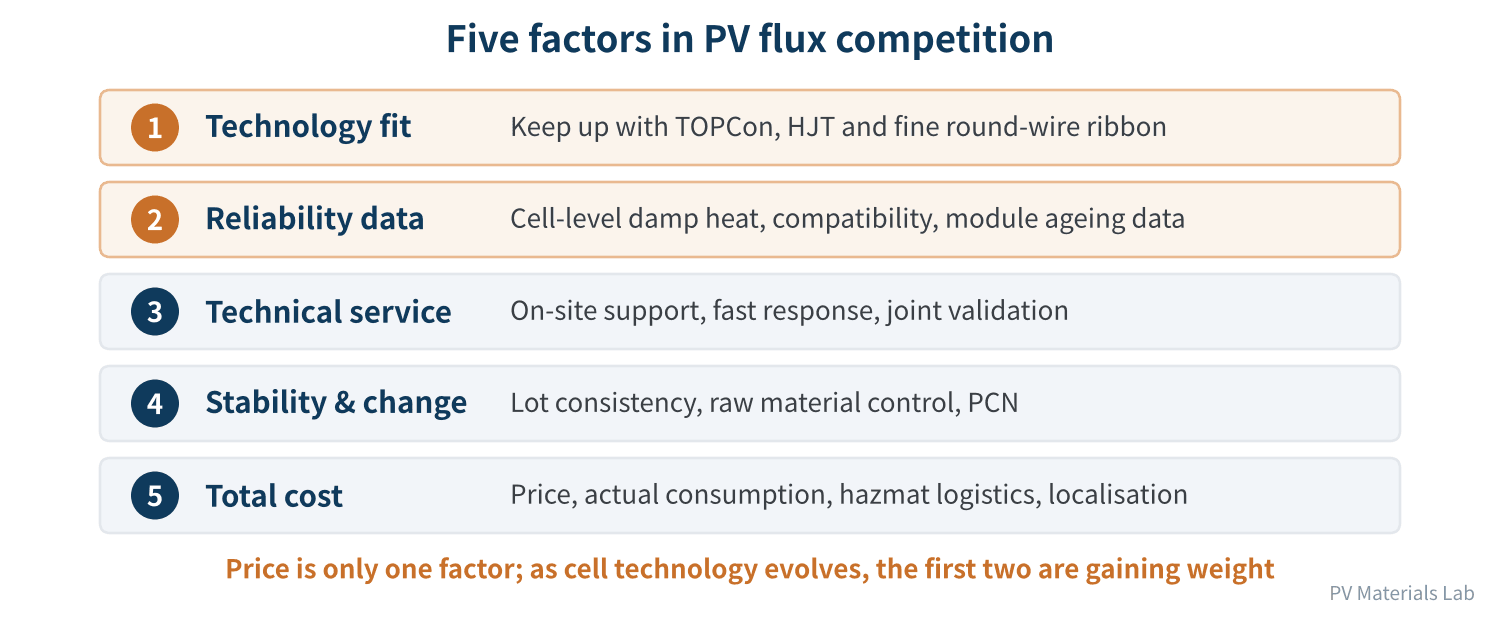
Figure 3. Five factors in PV flux competition
- Technology fit: the ability to bring out formulas for TOPCon, HJT, BC and fine round-wire ribbon quickly is the "ticket in" to leading customers.
- Reliability data: the ability to supply cell-level damp heat, encapsulant compatibility and module ageing data, and to complete joint validation with customers.
- Technical service: on-site support, fast response to problems and help troubleshooting soldering defects are often valued more than price on the line.
- Stability and change management: lot consistency, raw material control and proper change notification decide whether customers dare to use a product long term.
- Total cost: price, actual consumption, and cost differences from hazardous-goods logistics and local supply.
International companies' strengths are formula know-how, global reliability data and brand recognition; Chinese companies' strengths are speed of response, local service and cost. As cell technology iterates rapidly, "technology fit" and "reliability data" are gaining weight, a new test for every supplier.
PV flux is a "small but specialised" market: low volume, high barrier. What decides the winners is the ability to keep pace with cell technology and reliability data that reassure customers.
05How the landscape may change
Drawing on the earlier articles, we see several forces shaping how the PV flux industry evolves:
- Rising technical barriers: TOPCon and HJT are making requirements on flux corrosivity ever stricter (see articles 06 and 09), and suppliers competing on price alone will find it harder to get into leading customers.
- Changing demand mix: some 0BB routes no longer need flux (see article 06), while routes that keep soldering demand even more from it. Total demand may be diluted, but high-end demand is growing.
- Continued localisation: under module cost pressure, Chinese fluxes, with their service and cost advantages, are likely to win more share, provided they pass full qualification.
- Strong customer bargaining power: the module industry is highly concentrated, and leading module makers have strong leverage over suppliers on technology, price and service.
The PV flux market may move towards "stable total volume, diverging structure": general-purpose products compete on price and service, while high-end products for new technologies compete on R&D and data.
06Final thoughts
Three things to remember about the PV flux industry:
- The market is small and specialised: about 8–33 tonnes per GW, limited in value, but with a high validation barrier and sticky customers;
- There are three kinds of players: international soldering-material specialists, listed Chinese soldering-material companies and specialised Chinese SMEs, each with its own strengths;
- Competition is about capability: technology fit and reliability data are gaining weight, and price is not the only weapon.
In the final article we take a longer view of where PV flux is heading: halogen-free and lower-solids formulas, water-based fluxes and VOC rules, and how much future flux has under 0BB and conductive adhesive routes.
Does your line use an international brand or a Chinese flux? What matters most to you when choosing a supplier? We would be glad to hear from you.
References
- MacDermid Alpha: Kester SF800-LR PV flux technical data sheet, 2021
- MacDermid Alpha: ALPHA SF828-MBB Liquid Soldering Flux product page and data, 2023
- Indium Corporation: Solar Tabbing Fluxes product page (GS-1424, GS-5414, GS-5415, GS-5415-1), https://www.indium.com/products/fluxes/solar-tabbing-fluxes/
- cfi.cn: Weiteou (301319) company profile and H1 2026 results, https://quote.cfi.cn/jyzj/161722/301319.html
- Shenzhen Weiteou New Material Co., Ltd.: PV flux product page
- Gelonghui: summary of material consumption across the PV value chain (basis for about 10 million m² of encapsulant per GW)
- Articles 05, 06, 09, 10 and 11 of this series
A PV R&D and technology team with 10+ years of experience | In-depth technical knowledge sharing
Materials · Reliability · Failure Analysis · Standards & Certification · Products · Processes
Exploring AI + PV; collaboration welcome
Disclaimer:
1. Original content reflects the authors' personal views only, is for reference only and does not constitute investment advice.
2. Reposted and cited content is credited to its source, out of respect for original work.
3. Some content was produced with AI assistance (chart generation, data retrieval, concept explanations, etc.); the core framework and key content were written by our technical team and reviewed by people.
4. If anything is inaccurate or infringes your rights, please leave a message or contact us and we will deal with it.