
Frame Supply Chain and Market: Aluminum Prices, Processing Fees and Overseas Capacity
PV Module Frame Series · 10
Half of a frame's cost story is the aluminum price, the other half the processing fee. In the tenth article of our frame series, we map the frame supply chain, explain the “aluminum price plus processing fee” pricing model and how aluminum prices pass through to module cost, use public data to look at industry concentration and processing-fee trends, summarize overseas capacity and trade barriers such as India's anti-dumping duty and US component-origin rules, and close with lessons for module makers on frame sourcing.
In the first nine articles we took the frame apart from a technical angle. This one takes a different view and looks at the business behind frames: how does money flow along the supply chain? Who bears aluminum price swings? How do frame makers earn money? And what barriers do overseas markets set up?
01 What the frame supply chain looks like
The PV frame supply chain is not long and falls roughly into three segments:
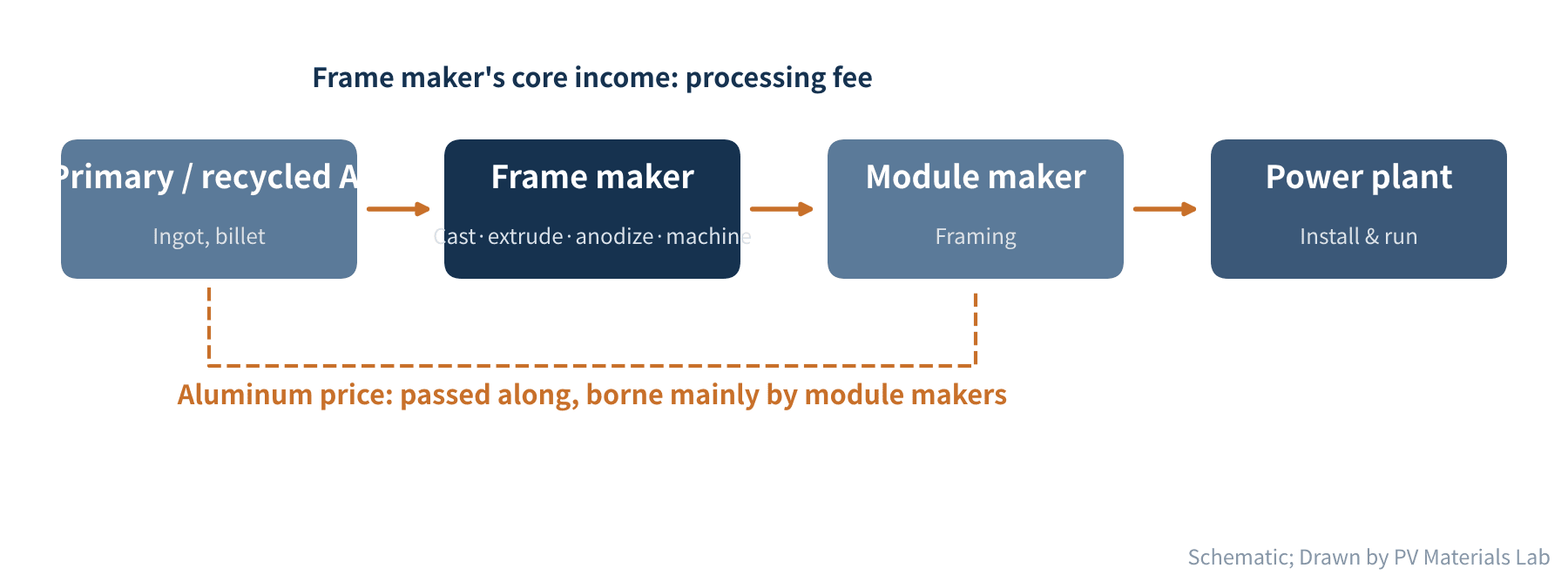
Figure 1 The aluminum PV frame supply chain
- Upstream: primary and recycled aluminum supply ingot or billet, which sets material cost and carbon footprint;
- Midstream: frame makers handle casting, extrusion, aging, surface treatment and further processing, i.e. all the steps covered in Article 05;
- Downstream: module makers do the framing, and modules are finally delivered to power plants.
One key feature of this chain: most of a frame's value is the aluminum itself, and what frame makers truly control is the processing value of turning aluminum into frames.
02 Pricing: aluminum price plus processing fee
According to a broker research report, PV frames are generally priced as “public-market aluminum price plus processing fee”. The aluminum price floats with the market and is largely borne downstream; frame makers' profits depend mainly on the processing fee, so aluminum price swings affect their results relatively little.
This means aluminum price moves pass fairly directly into module cost. Using the basis from Article 02, frames use about 6.5 g/W of aluminum, so every RMB 1,000/t rise in aluminum adds about RMB 0.0065/W to the frame cost of a module. With module prices now negotiated in fractions of a cent, that sensitivity cannot be ignored, which is one reason module makers care so much about using less aluminum or none.
Takeaway: Under the “aluminum price plus processing fee” model, aluminum price risk lands mainly on module makers, while the frame maker's lifeline is the processing fee. Understand this and you understand what each party in the chain wants.
03 Competitive landscape: rising concentration, squeezed processing fees
Public data show the industry going through clear changes:
- From fragmented to concentrated: according to the broker report, the industry was fairly fragmented before 2021, with the top five holding less than 25% combined; after aluminum prices surged in the second half of 2021, small players' margins were squeezed and share began shifting to leaders;
- Leading players' share: taking Yongzhen as an example, the broker report estimates its market share at about 9.2% in 2023 and about 12% in 2024; its frame sales were 348,500 t in 2024 and 437,900 t in 2025, up 25.65% year on year;
- Squeezed processing fees: from 2024, as the PV industry as a whole came under pressure, frame processing fees fell quickly and leading players' frame gross margins fell with them.
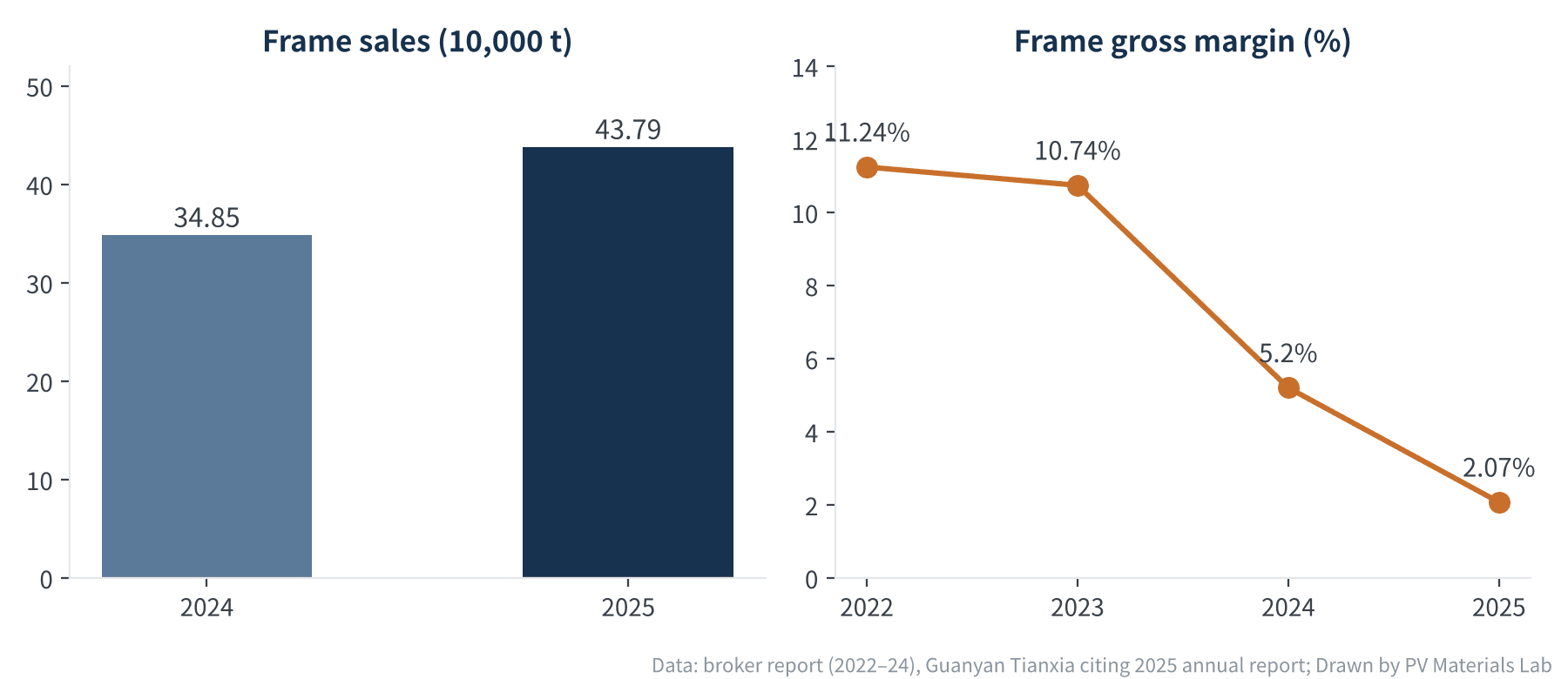
Figure 2 Yongzhen's PV frame sales volume and gross margin
The two lines in Figure 2 sum up the industry's situation: volume up, margins down. This mirrors the whole PV chain over the past two years, with profits in the auxiliary-materials segment squeezed just as hard.
04 Overseas expansion and trade barriers
As domestic processing fees came under pressure, overseas markets became a new direction for frame makers, for two reasons: trade barriers restrict “Made in China” frames in some markets, and overseas frame capacity is relatively scarce, commanding higher processing fees. According to the broker report, Yongzhen's overseas sales gross margin in 2024 was about 7.12 percentage points higher than domestic.
There are two main kinds of trade barrier:
- India's anti-dumping duty: on 29 June 2024, India issued an affirmative final anti-dumping finding on anodized aluminum frames originating in China, imposing a five-year duty of USD 403–577 per tonne from September 2024;
- US component-origin rules: after the tariff exemption for Southeast Asian modules expired in June 2024, Southeast Asian modules exported to the US must meet a component condition: of six materials (aluminum frame, silver paste, glass, backsheet, encapsulant and junction box), no more than two may come from China.
Against this backdrop, leading frame makers have been building plants overseas. According to public reports and the broker report, some disclosed overseas capacity is as follows:
| Company | Location | Planned capacity | Status (per public information) |
|---|---|---|---|
| Yongzhen | Vietnam | 180,000 t | Full production by end of August 2025 |
| Xinbo | Malaysia | 70,000 t | Broker report expected completion in Q3 2025 |
| Gaster | Laos | Phase 1: 30,000 t | Groundbreaking in August 2024 |
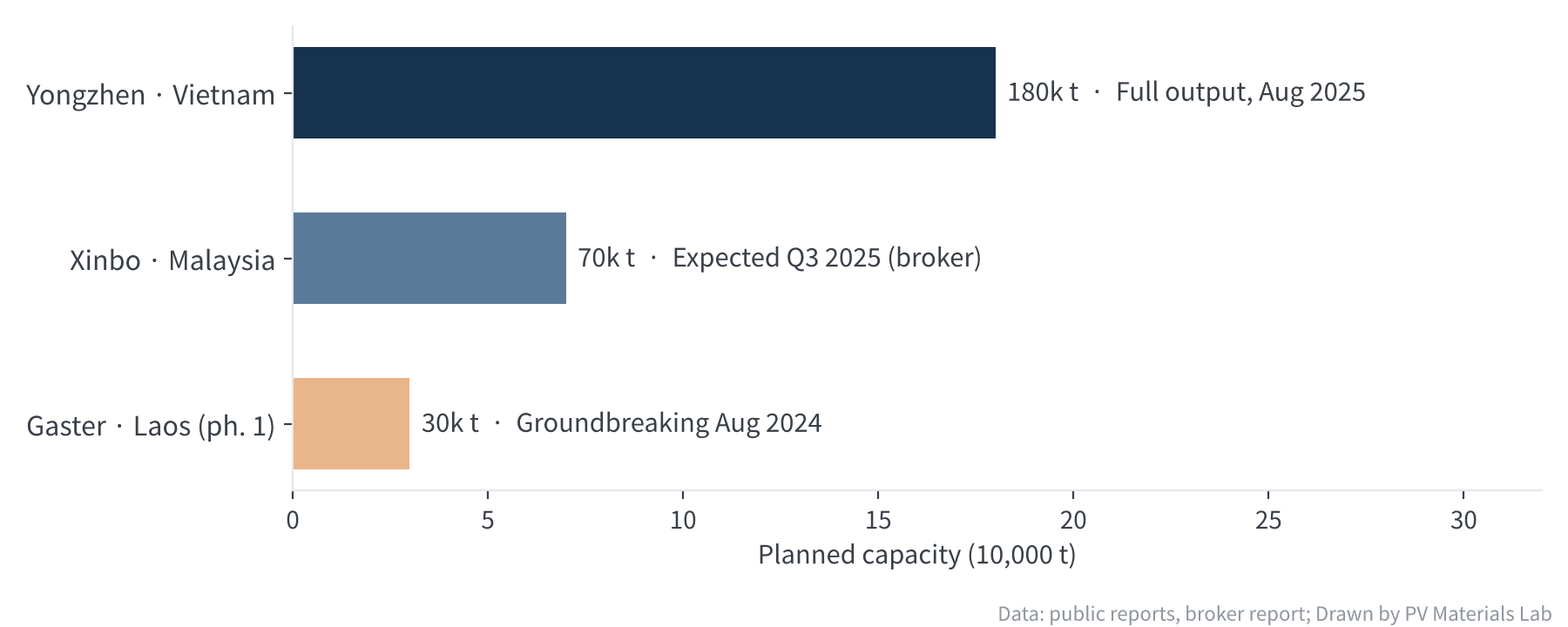
Figure 3 Some disclosed overseas PV frame capacity
In addition, carbon footprint is becoming another “hidden barrier”. As Articles 02 and 09 explained, primary aluminum carries high emissions, and overseas customers keep tightening module carbon-footprint requirements, so a frame's aluminum source and recycled content are turning from technical questions into market-access questions.
05 Make or buy?
For module makers, whether to make frames in-house or buy them is a recurring question. Each model has trade-offs:
| Item | Make in-house | Buy |
|---|---|---|
| Cost | Saves the frame maker's processing margin | Transparent fees; compare several suppliers |
| Investment | Heavy assets: casting, extrusion, anodizing | Asset-light, flexible capacity |
| Quality control | Full-process control | Relies on supplier process and incoming inspection |
| Iteration | Fast trials of new sections and materials | Depends on supplier cooperation |
| Overseas compliance | Must build overseas capacity | Can use suppliers' overseas plants |
As Article 05 showed, frame manufacturing involves several asset-heavy steps such as casting, extrusion, aging and surface treatment, with clear economies of scale in extrusion and anodizing. So whichever model is chosen, the key is managing processing fees, quality and overseas compliance all at once.
06 Lessons for module makers
- Manage aluminum price risk: module makers bear most aluminum price swings and can smooth costs through agreed pricing periods, hedging and similar tools;
- Multiple sources: as concentration rises, so does single-supplier risk; keeping at least two qualified suppliers for key products is safer;
- Overseas supply-chain compliance: when exporting to markets such as the US and India, plan frame origin and traceability documents early so that non-compliant component sourcing does not affect whole module shipments;
- Carbon footprint data: ask suppliers for aluminum source, recycled content and carbon footprint data to prepare for exports and customer audits.
Bottom line: Frame sourcing is no longer just about price: aluminum price risk, supplier concentration, overseas compliance and carbon footprint are all becoming variables module makers must manage.
07 Final thoughts
To wrap up this article:
- Supply chain: most of the value is aluminum, while frame makers control the processing value;
- Pricing: aluminum price plus processing fee, with aluminum price risk passed mainly to module makers;
- Competition: rising concentration, with volumes growing but processing fees and margins under pressure;
- Overseas: India's anti-dumping duty and US component-origin rules push frame capacity abroad, where processing fees are higher;
- Lessons: manage aluminum price risk, multiple sources, overseas compliance and carbon footprint data.
The frame series has now reached its final article. Next we look at where frames are heading: how to balance large formats, light weight and high loads, how fast new materials will substitute, and what changes low-carbon aluminum and recyclability will bring. Stay tuned.
Calculation notes / data basis
- “Every RMB 1,000/t rise in aluminum adds about RMB 0.0065/W to frame cost” follows the basis of Article 02: frame aluminum use of about 6,500 t/GW (about 6.5 g/W) per SMM; 6.5 g/W × RMB 1/kg ≈ RMB 0.0065/W. Actual aluminum use may be lower as frames get lighter.
- Yongzhen frame gross margins: 2022–2024 from the broker research report; 2025 from Yongzhen's 2025 annual report as cited by Guanyan Tianxia (frame business gross margin 2.07%). The two sources may use different bases; the chart only shows the trend.
- Overseas capacity and status come from public reports and the broker report; for the latest status at the time of publication, refer to company announcements.
- All company operating data in this article come from public sources, are used only for industry analysis, and do not constitute investment advice.
References
- Broker research report (in-depth report on Yongzhen), 2025-08, East Money PDF (in Chinese). https://pdf.dfcfw.com/pdf/H3_AP202508101724924579_1.pdf
- Guanyan Tianxia. PV frame industry analysis (citing Yongzhen's 2025 annual report, etc.), 2026-04 (in Chinese). https://www.chinabaogao.com/market/202604/792097.html
- Tencent News. Report on Yongzhen's Vietnam base, 2026-04-25 (in Chinese). https://news.qq.com/rain/a/20260425A05UU500
- pv magazine. Aluminum frames lead solar panel costs amid shifting industry prices, 2024-12-30. https://www.pv-magazine.com/2024/12/30/aluminum-frames-lead-solar-panel-costs-amid-shifting-industry-prices
PV Materials Lab
https://pvmaterialslab.com
PV Materials Lab
A PV R&D and technical team with 10+ years of experience | In-depth technical knowledge sharing
Materials · Reliability · Failure Analysis · Standards & Certification · Products · Processes
Exploring AI + PV — collaboration welcome
Disclaimer:
- Original content reflects the authors' personal views only, is for reference, and does not constitute investment advice.
- Reposted and cited content is credited to its source, with respect for original work.
- Some content is AI-assisted (chart generation, data retrieval, concept explanations, etc.); the core framework and key content are written by our technical team and reviewed by humans.
- For any inaccuracy or infringement, please leave a message or contact us.