
Where PV Frames Are Heading: Lighter, Lower-Carbon and Scenario-Specific
PV Module Frame Series · 11
In the final article of our frame series, we lift our heads from the technical detail of the first ten and ask where frames are heading. We look at the triangle of large formats, light weight and high loads, judge the pace of new-material substitution, discuss the changes brought by low-carbon aluminum, the EU CBAM and module recycling policy, consider what lightweight, flexible and BIPV modules demand of frames, and close with one chart reviewing the whole series.
Starting from the “five jobs” in Article 01, we have worked through materials, surface treatment, structural design, manufacturing, framing, testing, failure, cost reduction and supply chain. In this final article of the frame series, we lift our heads from the details and look at the future of this “skeleton”: what will it become, and what forces are driving the change?
01 A triangle of trade-offs: large formats, light weight and high loads
Frame design is always pulled in three directions:
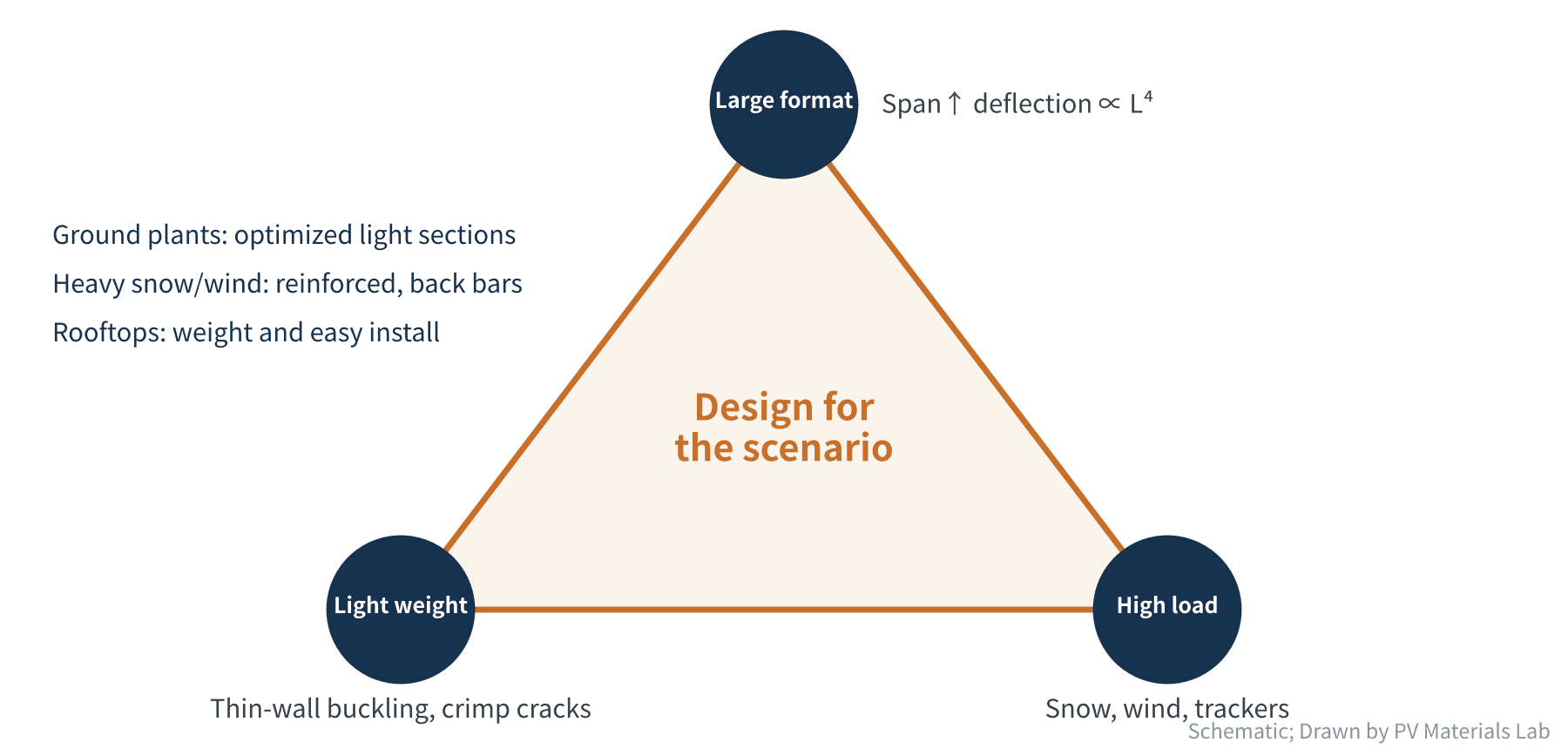
Figure 1 The triangle of trade-offs in frame design
- Large formats: modules keep growing, spans increase, and deflection grows with the fourth power of span (Article 04);
- Light weight: aluminum prices and carbon footprint push for less aluminum, while thin walls risk local instability and crimp cracking (Articles 02 and 09);
- High loads: heavy snow, strong wind and tracker applications demand ever higher loads, with non-uniform snow a dedicated test of its own (Article 08).
All three cannot be maximized at once. Our view is that frame design will move from “one size fits all” to “designed for the scenario”: thoroughly optimized lightweight sections for standard ground-mounted plants, reinforced sections or back supports for heavy-snow and high-wind regions, and a focus on weight and ease of installation for distributed rooftops. Product lines will become more segmented and installation manuals more specific.
02 New materials: gradual change, not disruption
Steel and composite frames attract a lot of attention, but the data show substitution moving more slowly than one might think:
- Aluminum still dominates: according to the 2025–2026 China PV Industry Roadmap, aluminum frames held about 93% in 2025; a broker report assumes about 92% for 2026, very little change;
- Composites are just starting: taking Covestro's polyurethane composite frame as an example, cumulative shipments of modules using it passed 3 GW by June 2025, still early compared with annual module shipments of several hundred GW;
- Standards are catching up: composite frames now have the group standard T/CPIA 0081—2024 and non-uniform snow loading has IEC 62938, so the validation framework is gradually maturing.
The root reason substitution is slow is the “long-term validation” discussed in Article 09: modules serve outdoors for two to three decades, and new materials must prove themselves with time and data. So we think the coming years are more likely to bring continued lightening of aluminum frames and gradual penetration of new materials in specific scenarios, rather than wholesale replacement overnight.
Bottom line: New-material substitution is a marathon: aluminum frames' moat is not cost but decades of outdoor data and a mature supply chain.
03 Low-carbon aluminum: from technical issue to market access
Carbon footprint is changing the rules of frame competition. According to TÜV SÜD data, 100% primary aluminum profile emits about 24.2 kg of CO₂ per kilogram, while recycled aluminum uses only about 5% of the energy of primary aluminum (Article 02). This makes the aluminum's source as important as its alloy and wall thickness.
On the policy side, the EU Carbon Border Adjustment Mechanism (CBAM) entered its definitive period on 1 January 2026, and aluminum is one of its covered sectors. Importers must declare the embedded emissions of products and buy CBAM certificates. For the frame supply chain, this means:
- Data first: aluminum ingot source, power mix, recycled content and product carbon footprint are becoming essential documents for export customer audits;
- Green and recycled aluminum: frames made from hydro or green-power aluminum and high recycled content will earn a premium in carbon-sensitive markets;
- Quality control: as recycled content rises, the impurity control and batch consistency discussed in Article 02 become even more important.
04 Recyclability: designing for disassembly
On 3 March 2026, six Chinese ministries led by the Ministry of Industry and Information Technology issued guidance on promoting the comprehensive utilization of PV modules, aiming to raise the share of recycled materials by 2027 and to be able to handle a large wave of module retirements by 2030.
In module recycling, the aluminum frame is one of the easiest and most valuable parts to remove. According to Guanyan Tianxia, aluminum's recycling economic value ratio is about 83.9%, versus about 22.8% for steel. This raises a new question for frame design: when a module is scrapped, can the frame be removed easily and cleanly?
- Framing method: silicone bonds firmly but is hard to separate, while tape may have an edge in disassembly (Article 06);
- Material choice: thermoset composites are relatively hard to recycle, and steel's recycling economics trail aluminum's (Article 09);
- Labeling and traceability: a frame's alloy, surface treatment and aluminum source may in future need to be traceable along with the module.
05 New scenarios: flexible, lightweight and building-integrated
Traditional frames were designed for ground-mounted plants and standard rooftops, but new applications are placing different demands:
- Lightweight modules: commercial and industrial roofs with limited load capacity need lighter modules, so frames either get lighter or disappear, replaced by back reinforcement or dedicated mounting structures;
- Flexible modules: bendable modules no longer need rigid frames, so edge protection and mounting must be redesigned;
- Building-integrated PV (BIPV): the frame becomes part of the building envelope and, beyond carrying load and sealing, must consider appearance, color, connection with curtain-wall and roofing systems, and building codes.
In these scenarios the frame's five jobs still exist; it is just that the whole mounting system, rather than a single aluminum profile, takes them on.
06 Series recap: the frame on one page
Finally, here is one chart tying the 11 articles together:
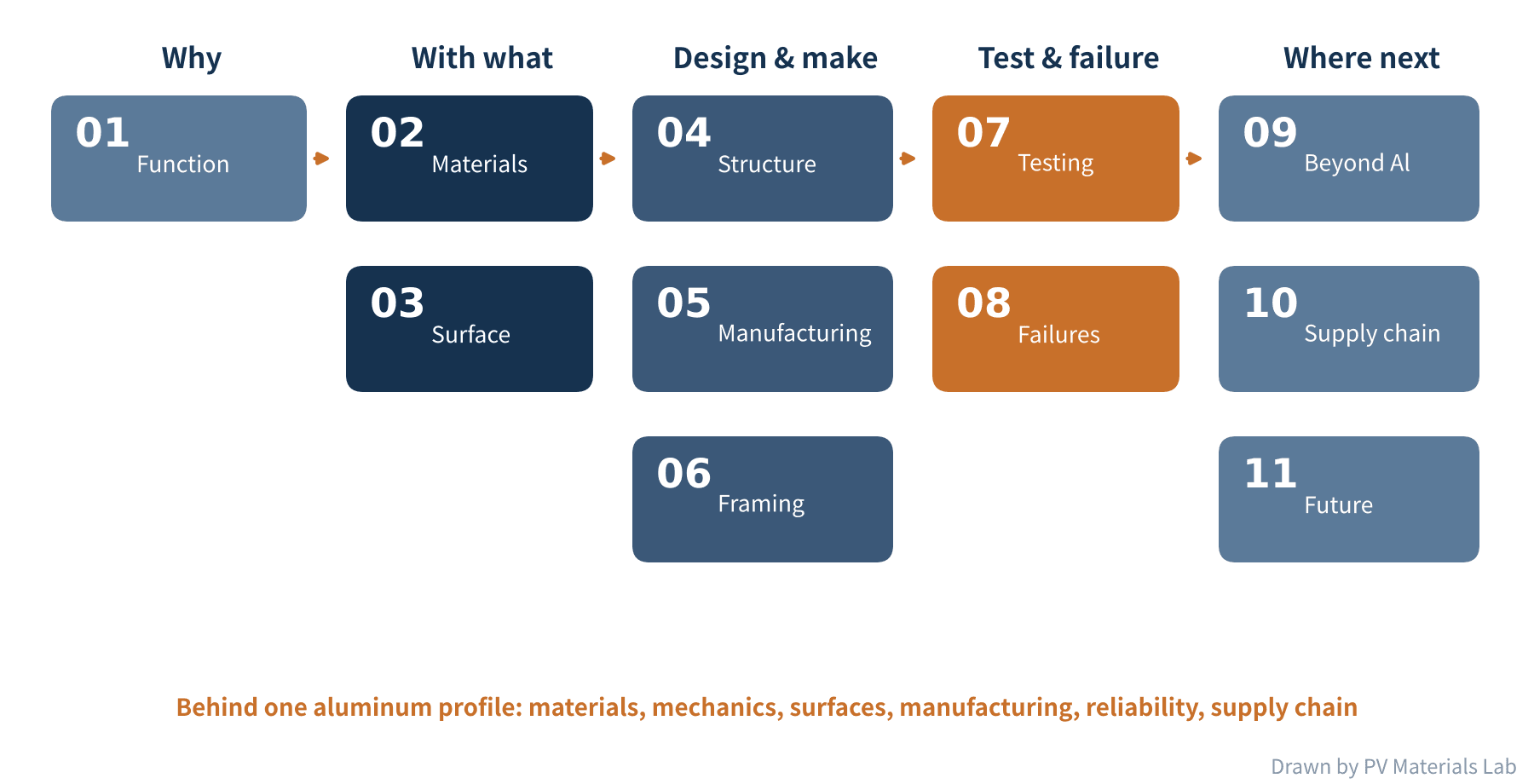
Figure 2 Knowledge map of the 11-part PV frame series
| Article | Topic | One-line takeaway |
|---|---|---|
| 01 | Function | Five jobs: structure, sealing, mounting, grounding, transport protection |
| 02 | Materials | 6063 offers the best overall value; strength is not stiffness |
| 03 | Surface treatment | Thickness sets the armor; sealing decides if it leaks |
| 04 | Structural design | Height beats thickness; standard holes sit at 0.21L |
| 05 | Manufacturing | Quality is built in; weld seams and corner keys are key |
| 06 | Framing | Silicone forgives; tape is clean and fast |
| 07 | Testing | Profile is the precondition, module the result, qualification the link |
| 08 | Failure modes | Passing 5400 Pa does not mean surviving uneven snow |
| 09 | Beyond aluminum | Steel matches aluminum's specific stiffness; composites need long-term proof |
| 10 | Supply chain | Aluminum price plus fee; volume up, margins down |
| 11 | Future | Scenario-specific design, low-carbon aluminum, design for disassembly |
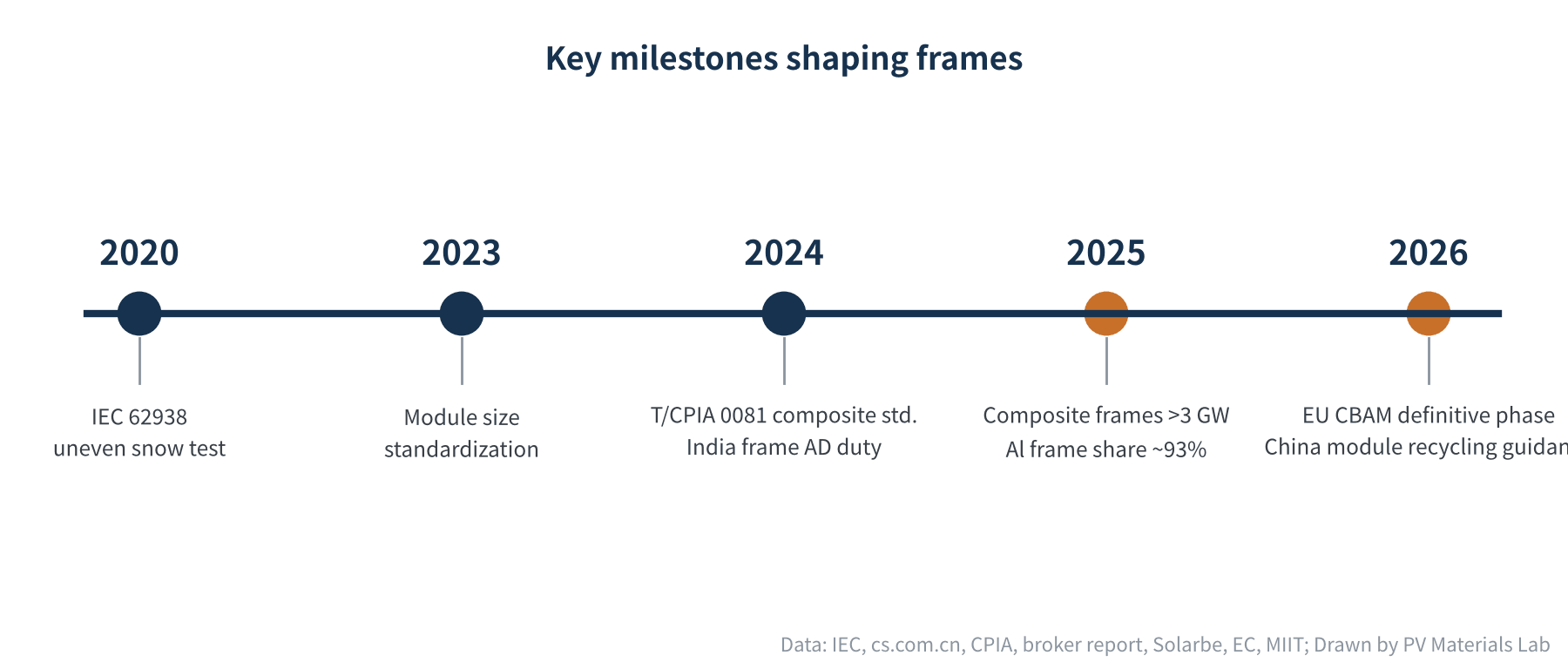
Figure 3 Key milestones shaping the future of frames
07 Final thoughts
To wrap up this article:
- Triangle of trade-offs: large formats, light weight and high loads cannot all be maximized, so frames will be designed for the scenario;
- New materials: substitution is gradual, and aluminum frames remain mainstream in the near term;
- Low-carbon aluminum: policies such as CBAM turn carbon footprint from a technical issue into a market-access issue;
- Recyclability: recycling policy pushes frames to be designed for disassembly;
- New scenarios: lightweight, flexible and BIPV modules are redefining what a frame looks like.
This brings the frame series to a close. Behind what looks like the simplest aluminum profile lie materials, mechanics, surface engineering, manufacturing, reliability and supply chains. Thank you for reading this far. If the series has helped your work, please share it with colleagues who need it, and tell us in the comments which series you would most like to see next.
Calculation notes / data basis
- The ~92% aluminum frame share for 2026 is an assumption in a broker research report, not actual statistics.
- The start date of the CBAM definitive period comes from the European Commission's Access2Markets page; aluminum's coverage is per Annex I of Regulation (EU) 2023/956. Whether a given frame or module falls under a covered CN code should be checked against the latest EU rules and customs classification.
- The recycling economic value ratios for aluminum and steel (83.9% and 22.8%) are cited from public material compiled by Guanyan Tianxia, which gives no year or calculation basis.
- Trend judgments such as “designed for the scenario” and “gradual substitution” are our views based on the series and public information, for reference only.
References
- European Commission, Access2Markets. Start of the definitive period of the CBAM in the EU. https://trade.ec.europa.eu/access-to-markets/en/news/start-definitive-period-cbam-eu
- Regulation (EU) 2023/956 establishing a carbon border adjustment mechanism (Annex I: covered goods incl. aluminium)
- IThome. Six ministries issue guidance on promoting comprehensive utilization of PV modules, 2026-03-03 (in Chinese). https://www.ithome.com/0/925/343.htm
- Guanyan Tianxia. PV frame industry analysis, 2026-04 (in Chinese). https://www.chinabaogao.com/market/202604/792097.html
- Broker research report (in-depth report on Yongzhen), 2025-08 (in Chinese). https://pdf.dfcfw.com/pdf/H3_AP202508101724924579_1.pdf
- Solarbe. Covestro polyurethane composite frame modules pass 3 GW cumulative shipments, 2025-06-23 (in Chinese). https://cn.solarbe.com/news/20250623/50003282.html
- IEC 62938:2020 Photovoltaic (PV) modules – Non-uniform snow load testing
- T/CPIA 0081—2024 Glass-fiber-reinforced composite frames for PV modules (in Chinese)
PV Materials Lab
https://pvmaterialslab.com
PV Materials Lab
A PV R&D and technical team with 10+ years of experience | In-depth technical knowledge sharing
Materials · Reliability · Failure Analysis · Standards & Certification · Products · Processes
Exploring AI + PV — collaboration welcome
Disclaimer:
- Original content reflects the authors' personal views only, is for reference, and does not constitute investment advice.
- Reposted and cited content is credited to its source, with respect for original work.
- Some content is AI-assisted (chart generation, data retrieval, concept explanations, etc.); the core framework and key content are written by our technical team and reviewed by humans.
- For any inaccuracy or infringement, please leave a message or contact us.