
From a 1500 °C Furnace to a Raw Sheet: How PV Glass Is Rolled
In brief
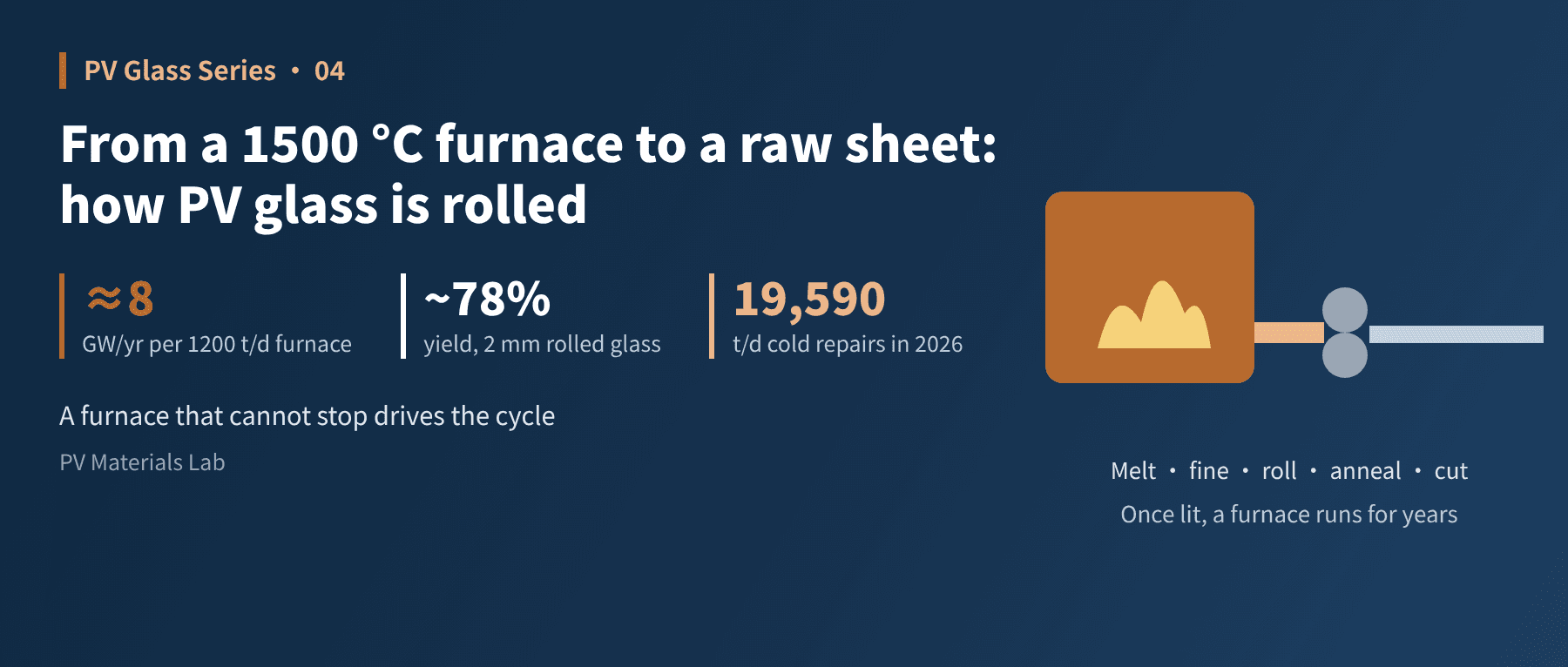
Raw PV glass is produced on a continuous line running from batching, melting and fining through rolling, annealing and cutting, built around a furnace that burns year-round without going out. This article walks along the line, explaining the role and difficulty of each step, then decodes the industry's most-used terms: daily melting capacity, yield, cold repair and blocked outlets. It also explains why PV glass supply "cannot stop even when it wants to".
In the previous article we covered raw materials. Once the batch arrives at the plant, it goes into the furnace. Many people picture a glass plant as a furnace glowing red around the clock. PV glass is no different, and the "temperament" of this furnace not only determines glass quality but also shapes supply, demand and the price cycle of the entire industry.
01The whole raw-sheet process in one figure
Production of rolled PV glass raw sheet can be broken into seven steps: batching, melting, fining and homogenising, rolling, annealing, cutting and inspection, and raw-sheet storage. The first three or four steps take place at high temperature and are usually called the "hot end"; the later steps, as the temperature falls, are called the "cold end".
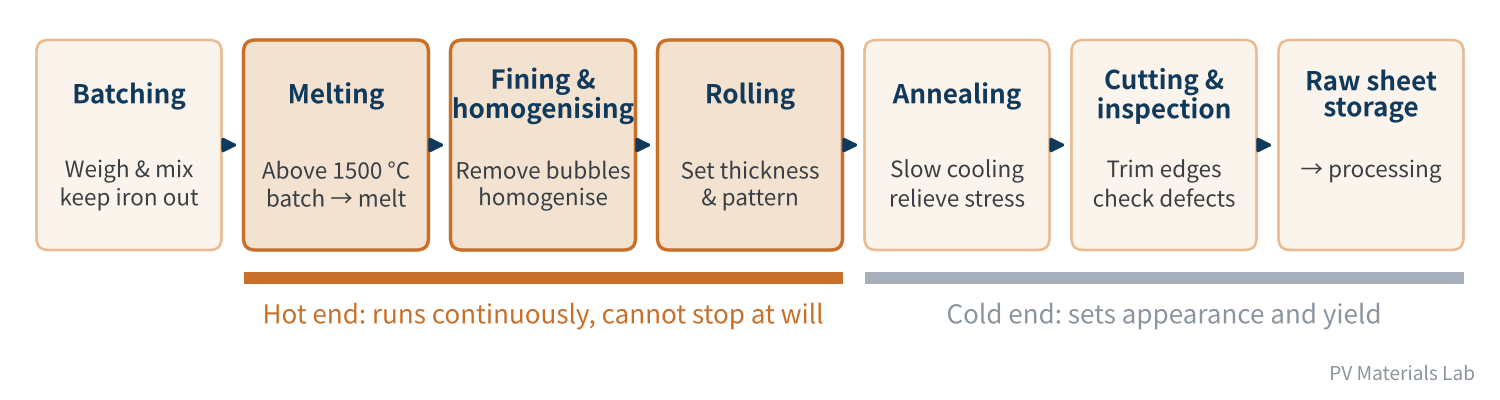
Figure 1. Production flow for rolled PV glass raw sheet
One concept to establish first: the hot end runs continuously. Once a furnace is lit, it must produce without interruption for years; it cannot be switched on and off like an ordinary machine. This comes up again and again below, and it is a key to understanding the PV glass industry.
02Melting and fining: slow work above 1500 °C
After weighing and mixing, the batch is fed continuously into the furnace at the charging end. PV glass generally uses tank furnaces fired with natural gas and similar fuels, with melting-zone temperatures above 1500 °C. At these temperatures, soda ash, dolomite and other raw materials decompose, the quartz sand gradually dissolves, and a uniform glass melt forms.
Melting is only the first step. The melt still holds a great many bubbles and must stay in the hot zone long enough for the fining agent described in the previous article to clear them out. The melt must also be homogenised to remove differences in composition and temperature; otherwise the product will show defects such as cords and ream.
So the test of a furnace is not "is it hot enough" but how stable the temperature field, residence time and atmosphere control are. Furnace atmosphere also affects the oxidation state of iron and therefore transmittance, carrying the "iron control" theme of the previous article into the process.
Energy saving and decarbonisation are also driving furnace upgrades, such as oxy-fuel combustion and electric boosting, which some new lines have begun to adopt. Fuel and power account for nearly 40% of PV glass cost, so furnace efficiency bears directly on cost competitiveness.
03Rolling: a pair of rollers sets thickness and pattern
After fining, the melt cools to a suitable viscosity, flows out at the end of the furnace and enters the rolling machine. At its heart is a pair of water-cooled rollers; the melt passes between them and is "rolled out" into a continuous ribbon of glass.
- Setting thickness: the roller gap sets the glass thickness. The thickness tolerance for 2.0 mm glass is only ±0.15 mm, which demands highly stable roller-gap precision, melt temperature and flow.
- Imprinting the pattern: the pattern on the roller surface is copied onto the glass, forming the patterned side. The pattern affects light scattering and adhesion to the encapsulant, and is one of each maker's process details.
- Controlling temperature: roller temperature and melt temperature must be matched. If they are unstable, problems such as uneven thickness, roll marks and blurred patterns appear easily.
The thinner the glass, the harder it is to roll. Glass of 2.0 mm and thinner is more sensitive to fluctuations in temperature and flow, and uniform thickness is harder to achieve, one reason thin glass generally has lower yield than thick glass. Public sources put the yield of 2 mm rolled glass at about 78%.
04Annealing, cutting and inline inspection
The freshly rolled ribbon is still very hot. If it were cooled directly, the surface and core would cool at different rates, leaving large residual stresses in the glass that would make it shatter easily during later cutting and tempering. The ribbon therefore passes through an annealing lehr, cooling slowly through the annealing range so that internal stress is fully released, before cooling more quickly to room temperature.
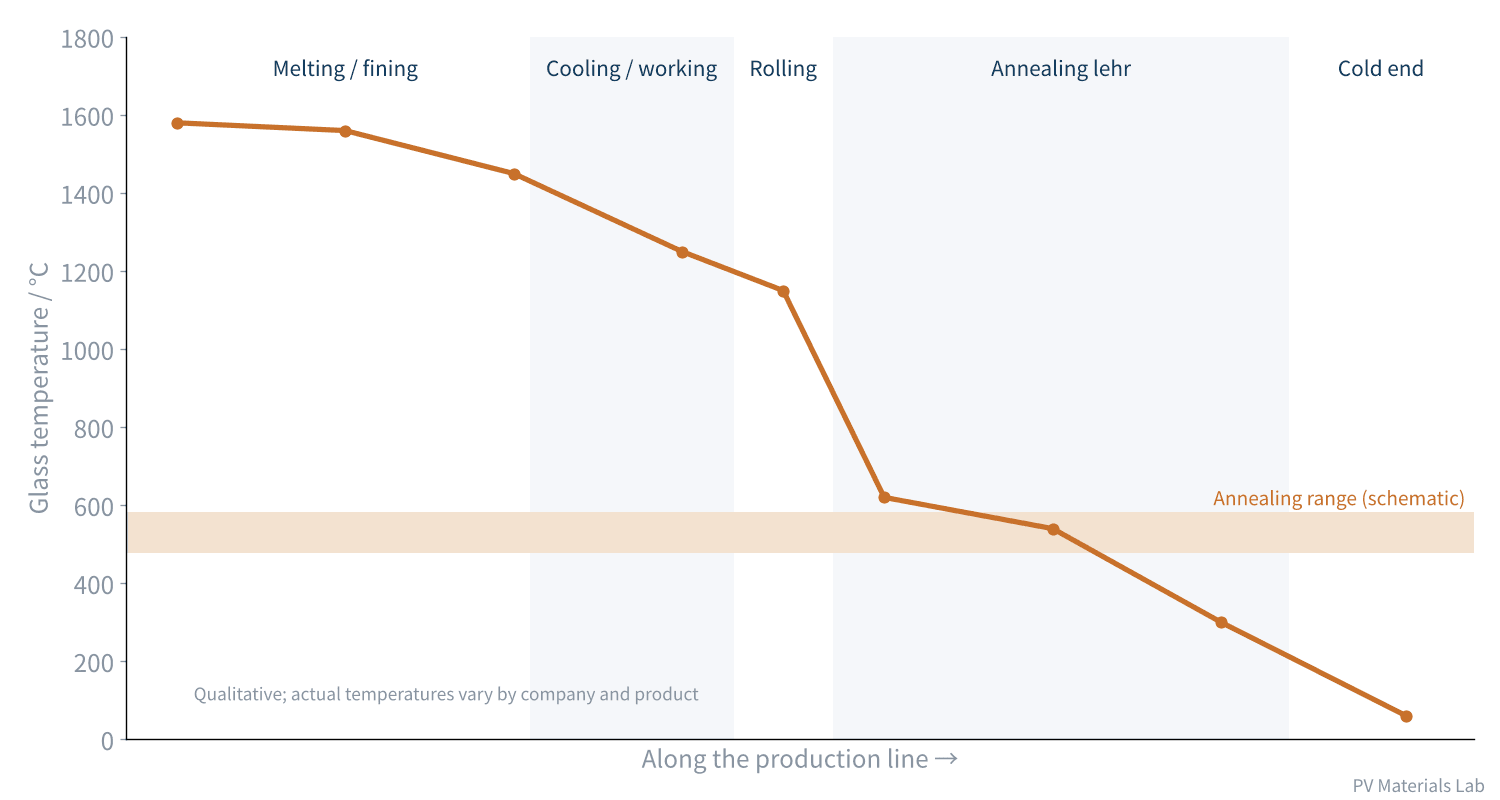
Figure 2. Glass temperature along the production line (schematic)
The quality of annealing directly affects cutting yield and tempering quality downstream. Many breakage problems in processing can be traced back to poor annealing of the raw sheet.
After cooling, the ribbon enters the cold end: it is cut inline to size and the irregular edges are snapped off; an inline inspection system uses cameras to detect defects such as bubbles, stones and scratches and automatically rejects bad sheets. Offcuts and rejects are crushed into cullet and sent back to batching to be remelted.
The hot end decides whether the glass is "good in essence": composition, bubbles, transmittance. The cold end decides "how much of it is usable": stress, dimensions, appearance and yield.
05Decoding industry terms: daily melting capacity, yield, cold repair and blocked outlets
You cannot read PV glass industry news without meeting a few terms. Here they are in one table:
| Term | Meaning | Why it matters |
|---|---|---|
| Daily melting capacity (t/d) | Weight of glass melt a furnace can produce per day | The core unit of capacity; all industry statistics use it |
| One furnace, multiple lines | One furnace feeding several rolling lines at once | Spreads investment and energy use; large furnaces have clear economies of scale |
| Yield | Share of melted glass that becomes good raw sheet | Thin glass has lower yield, directly setting unit cost |
| Ignition / ramp-up | From heating a new furnace to stable full output | There is a ramp-up period from ignition to full production |
| Cold repair | Shutting down and cooling a furnace for repair or rebuild | At end of furnace life or to cut output; restarting is costly |
| Blocked outlets / hot hold | Keeping the furnace hot but blocking some outlets | Cuts output without a cold repair; a common way to reduce supply |
Table 1. Common PV glass industry terms
What does daily melting capacity mean in modules? A rough calculation for a 1200 t/d furnace: at 80% yield it produces about 960 tonnes of raw sheet a day, or about 190,000 m² of 2.0 mm glass, enough for roughly 35,000 2.0 + 2.0 mm glass-glass modules, or about 8 GW a year.
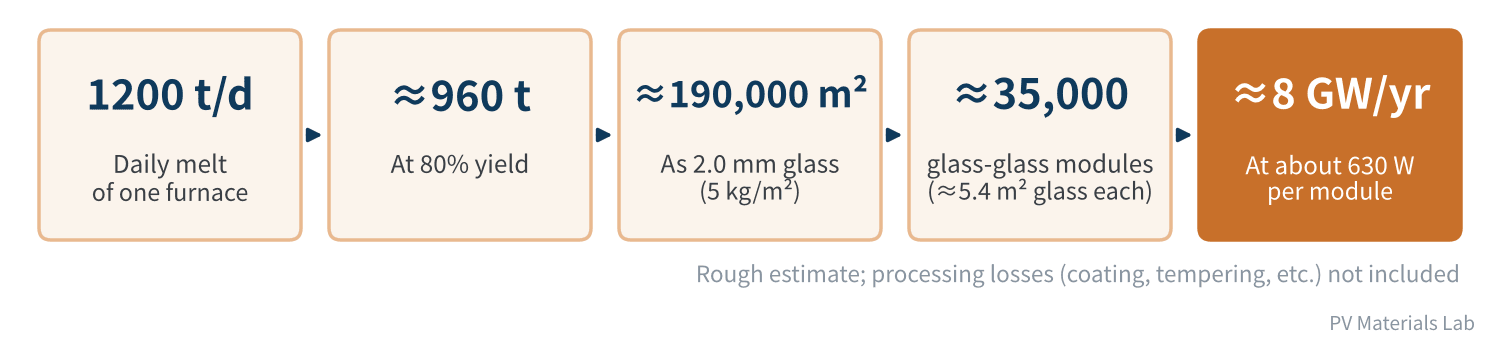
Figure 3. Module output corresponding to one 1200 t/d furnace (estimate)
Once you understand that "a furnace cannot be stopped at will", the PV glass cycle makes sense. When demand falls, companies cannot simply switch off; they can only lower the pull rate, block outlets and hold the furnace hot, or go for a cold repair outright, and relighting after a cold repair costs considerable money and time. So supply adjustments in PV glass always lag half a beat, and prices swing sharply as a result.
This year is a textbook example. According to brokerage research citing Zhuochuang Information, as of 10 September 2026, China's nominal PV glass capacity in operation was about 72,000 tonnes per day; about 19,600 t/d of lines had gone into cold repair since the start of the year, about 15,400 t/d of them since May, and net new capacity for the year was negative. Trade media also reported that by the end of September, daily melting capacity in operation had fallen from about 83,000 t/d in May to about 71,000 t/d. After the wave of cold repairs, industry inventory days came down from their peak, and 2.0 mm glass prices rose repeatedly from their lows: three consecutive increases took them to about CNY 10.25/m² by mid-September, and according to SMM, 2.0 mm double-layer AR-coated glass was quoted at about CNY 11.4/m² in mid-October.
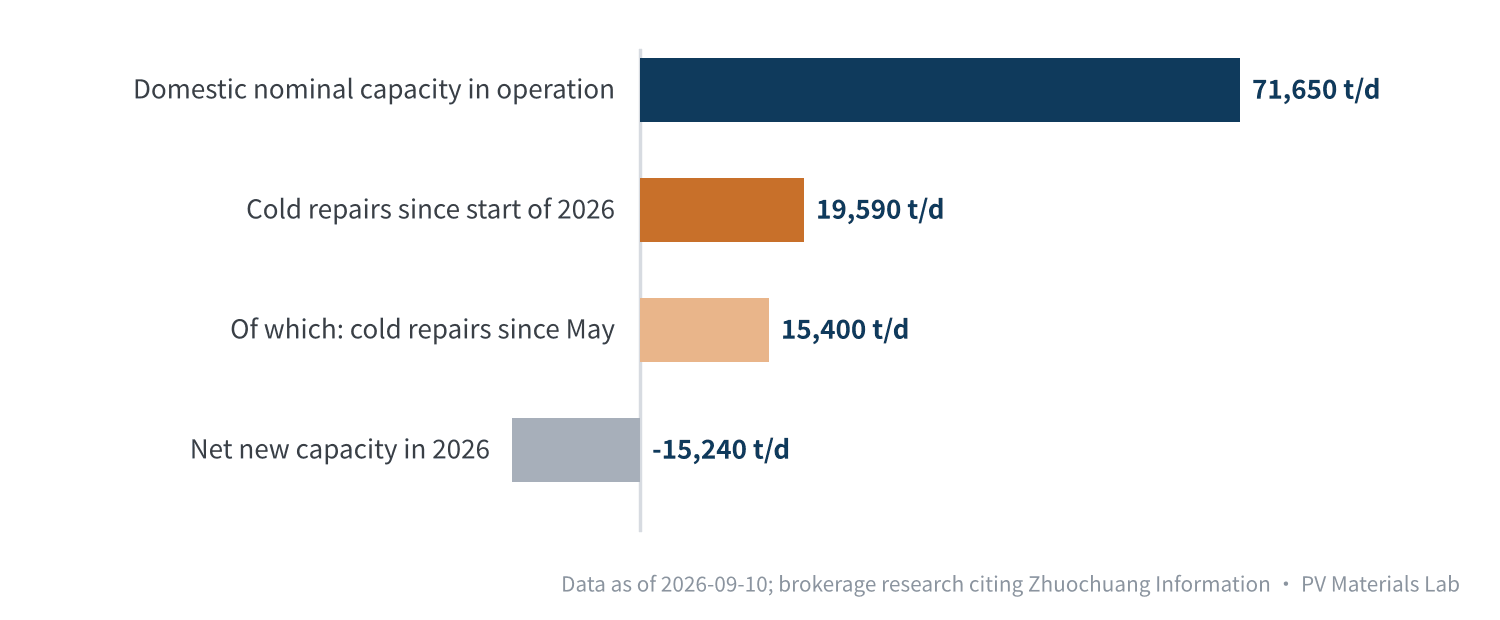
Figure 4. China's PV glass capacity and cold repairs in 2026
06Final thoughts
From batch to raw sheet, PV glass travels along a line on which its temperature falls from above 1500 °C to room temperature. At the hot end, the competition is in furnace stability and efficiency; at the cold end, it is in the yield delivered by annealing, cutting and inspection.
The defining feature of this line is that it is "continuous". This makes PV glass a capital-heavy industry with strong economies of scale, and it also means supply adjustments naturally lag, so the cycle swings more violently than for other module materials.
The quality of PV glass is decided in the furnace, its cost in the yield, and the industry cycle in the simple fact that "the furnace cannot stop".
At this point we only have a raw sheet. In the next article we cover processing: edging, drilling, coating and tempering. How does a raw sheet become PV glass ready for a module? And why can 2.0 mm glass only be heat-strengthened? Stay tuned. We would be glad to hear from you.
References
- Sinolink Securities power equipment team: PV glass: supply clearing accelerates; leaders' profitability and share set to recover (citing Zhuochuang Information data as of 2026-09-10), 2026-09-15, https://news.qq.com/rain/a/20260915A0C0P100
- TMTPost: Report on PV glass makers' losses and cold repairs, 2026, https://www.tmtpost.com/8153344.html
- Sina Finance (SMM data): Glass prices stabilised in October; what to expect in November, 2026-10-22, https://finance.sina.com.cn/roll/2026-10-22/doc-iniwavxm5908240.shtml
- Guanyan Report: Current state of the PV glass industry and comparison of rolled and float glass, 2024-11
- Zhiyan Consulting: PV glass industry encyclopedia: value chain and cost structure, 2024-03
- SMM: Sharp Increase in Number of Blocked Outlets in PV Glass Furnaces, 2025-06-19
- China Photovoltaic Industry Association: T/CPIA 0028.1—2024 Glass for photovoltaic modules — Part 1: Front plate anti-reflective coated glass, 2024
https://pvmaterialslab.com
A PV R&D and technical team with 10+ years of experience | In-depth technical knowledge sharing
Materials · Reliability · Failure Analysis · Standards & Certification · Products · Processes
Exploring AI + PV — collaboration welcome
Disclaimer:
1. Original content reflects the authors' personal views only, is for reference, and does not constitute investment advice.
2. Reposted and cited content is credited to its source, with respect for original work.
3. Some content is AI-assisted (chart generation, data retrieval, concept explanations, etc.); the core framework and key content are written by our technical team and reviewed by humans.
4. For any inaccuracy or infringement, please leave a message or contact us.