
How the APEC Green Power Station Is Supplied
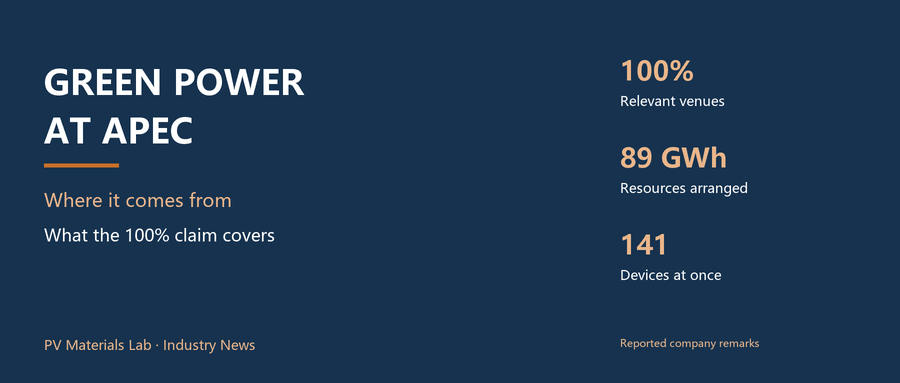
A charging service for reporters offers a practical view of how renewable generation, electricity trading and green-consumption evidence connect.
Charging a camera or laptop is an ordinary need in a press center. The Green Power Energy Station at the Shenzhen APEC press center gives that small action another meaning: it turns distant wind and solar generation, cross-regional electricity allocation and green-power consumption into a service reporters can experience directly.
01 What the reports say
On 15 November, China News Service reported remarks by Shen Sai of China Southern Power Grid’s Shenzhen Power Supply Bureau. During the APEC meetings, core venues, transport hubs, reception facilities and other relevant settings would receive 100% green-power supply. The company had arranged 89 million kWh of renewable electricity resources, including offshore wind from Yangjiang in Guangdong and wind and solar bases in northwestern desert regions.[1]
A Jimu News field report on 16 November added details of the service: a smart charging cabinet can accommodate 141 devices at once, including phones, cameras and laptops. Data displays and interactive activities explain where green power comes from and how it is consumed, turning a broad energy concept into an everyday service.[2]
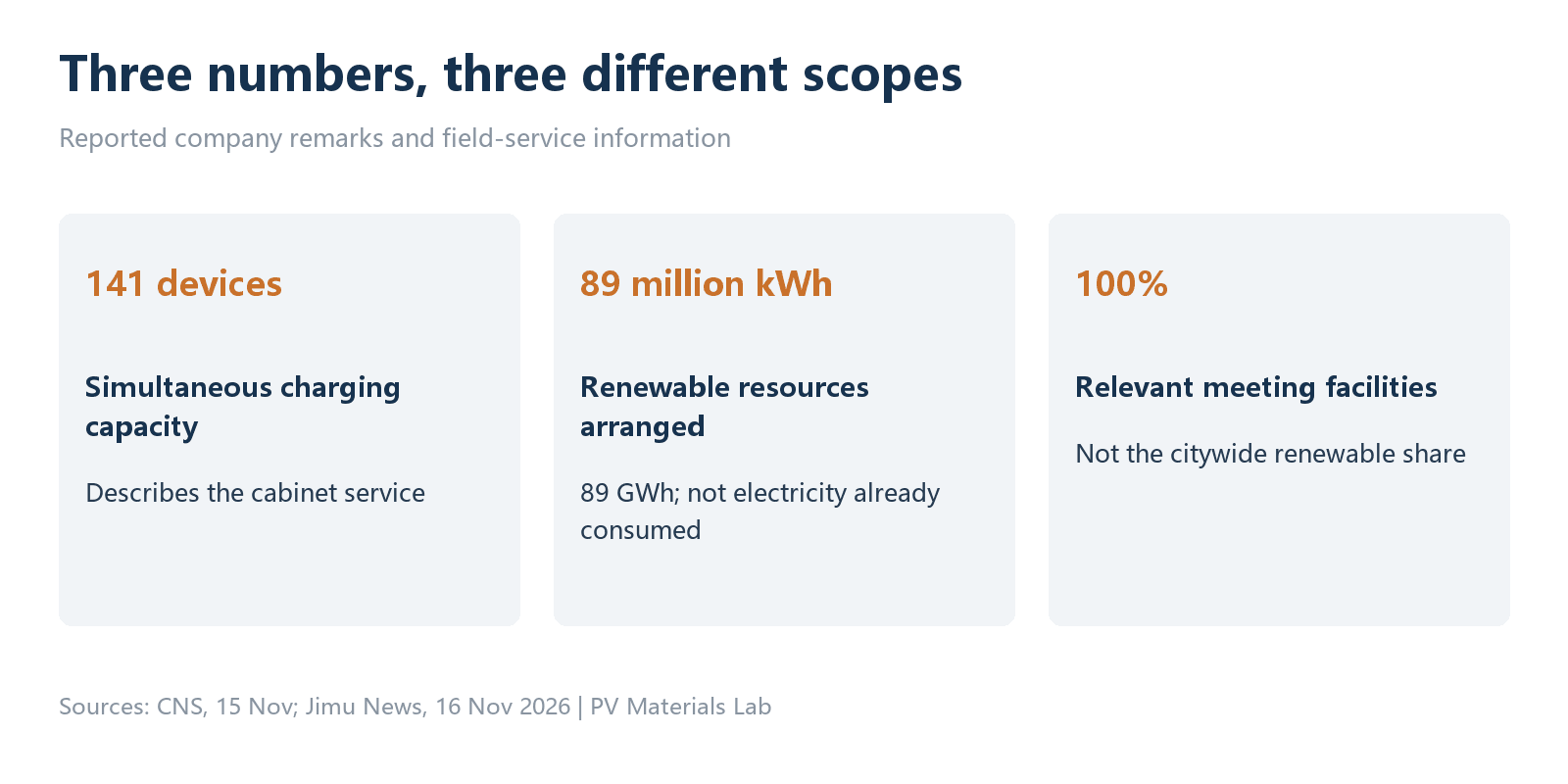
Figure 1 The three numbers describe different objects. Device count is not a power rating; the arranged electricity is not cabinet consumption; the percentage is not citywide. Based on reports [1][2].
Resources arranged must be distinguished from electricity already consumed. The 89 million kWh figure describes supply arrangements. The reports do not establish that the meetings have already consumed that amount, nor do they quantify the charging station’s consumption.
02 Distinguish the press center from the overall meetings
China’s desert-region wind and solar bases turn local renewable resources into electricity that can be allocated through the grid to demand centers. Yangjiang offshore wind represents a different resource setting. A socket in a meeting venue can therefore sit at the end of a much larger system of cross-regional resource allocation and interconnected grid operation.
Sources for different settings should not be conflated. Jimu News specifically identifies a wind project in Baicheng, Jilin, as the press center’s green-power source. References to Yangjiang and northwestern wind and solar bases concern overall meeting arrangements. These are different scopes, so all press-center charging consumption should not be attributed to northwestern desert PV. The available information also does not provide a complete breakdown of source shares.[1][2]
Green power is not synonymous with solar power. The reports involve wind and solar sources, among others. PV’s role can be discussed, but the entire 89 million kWh should not be counted as solar generation or used to infer a PV installed-capacity figure.
03 Read the electricity and environmental attributes together
A 100% green-power claim involves two separate questions: how the grid maintains electricity supply, and how the relevant consumption obtains traceable renewable environmental attributes. Jimu News reports a combination of market-based green-electricity procurement and green-certificate purchases for the meeting settings.[2]
Green-electricity trading involves electricity and its environmental value. Buying a green certificate separately acquires the environmental attributes of the corresponding renewable generation; it does not install another dedicated cable. Chinese policy identifies green certificates as the unique evidence of renewable electricity’s environmental attributes, with one certificate corresponding to 1,000 kWh. Trading, ownership and consumption claims must align under the applicable rules.[3][4]
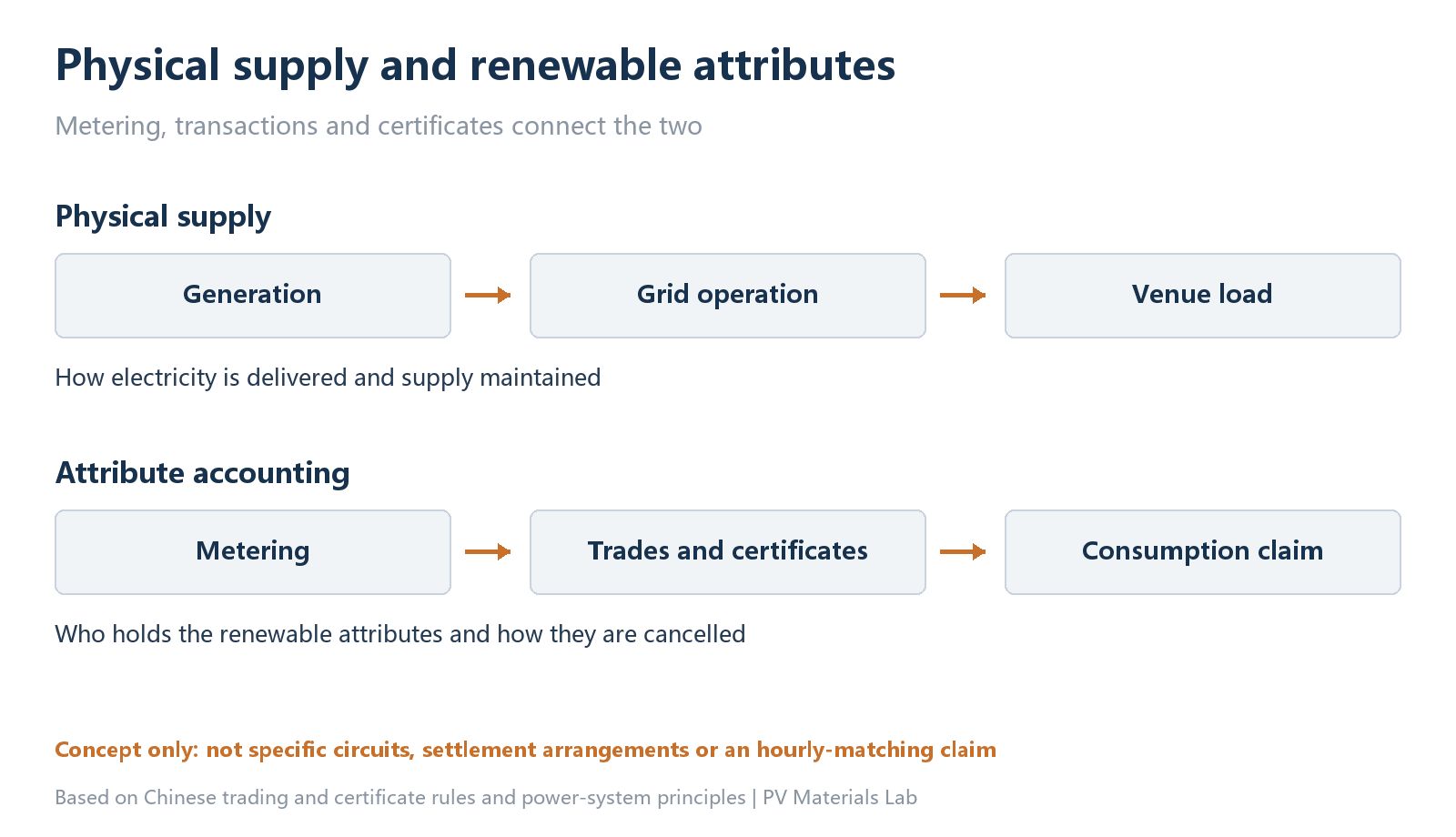
Figure 2 Physical supply and renewable-attribute accounting are separate concepts linked through metering, transactions and certificates. This schematic does not depict the event’s specific circuits or settlement arrangements.
Accordingly, 100% green-electricity consumption within a defined scope does not, by itself, establish that every socket receives physical electricity from a particular solar plant at every instant. Power in an interconnected grid follows network operating conditions. Demonstrating hourly renewable matching requires more detailed evidence linking generation, load and time.
The green-certificate rules currently in force also require, from 1 January 2026, that generation years match consumption years for certificates cancelled to declare green-power consumption, while encouraging finer time matching.[5] Annual attribute matching and hourly matching are therefore different levels of commitment. Completion for this event should be assessed using actual procurement, settlement and certificate-cancellation records.
04 What this means for the PV industry
As an industry application, the story illustrates what happens after PV electricity is generated. Trading, transmission, metering and confirmation of environmental attributes help turn generation into consumption that users can explain and trace. A major event presents these steps together, offering a tangible example for industrial parks, factories and public facilities considering renewable procurement.
For module suppliers and plant owners, attention can extend from energy yield to the delivery and substantiation of green-energy use. However, arrangements for one meeting do not establish recurring new orders or incremental demand for a particular module type. Those judgments require subsequent procurement volumes, transaction prices and long-term electricity demand.
05 Conclusion
The APEC energy station uses a small charging service to connect renewable resources, the power system and green consumption. Three distinctions matter: 141 describes device service capacity, 89 million kWh describes resources arranged in advance, and 100% applies to relevant meeting facilities.
Our assessment is that the useful lesson for PV is how renewable generation reaches consumers with supporting evidence. Clearly stating the scope, source and accounting conditions provides more information than suggesting that an entire city is powered exclusively by solar energy.
Verified on 17 November 2026. Meeting scope, volumes and sources are attributed to company personnel in the cited reports, not independently audited here. The Jimu News original could not be opened directly; field details were checked against its Phoenix-hosted republication. The 89 GWh figure is only a unit conversion. No emissions savings, source shares or zero-total-event-emissions claim are calculated or assumed.
References
[1] 中新社 郭超凯|风光绿电点亮APEC会场 奇迹之城深耕绿色转型 (2026-11-15 16:14). https://www.chinanews.com.cn/cj/2026/11-15/10732365.shtml
[2] 极目新闻 程曼诗|APEC新闻中心这一度绿电 跨越山海而来 凤凰网转载 (2026-11-16 21:48). https://news.ifeng.com/c/8y6izpLr24U
[3] 国家发展改革委 国家能源局|电力中长期市场基本规则 第三十三条. https://zfxxgk.ndrc.gov.cn/web/iteminfo.jsp?id=20581
[4] 国家发展改革委 财政部 国家能源局|绿证全覆盖通知 发改能源〔2023〕1044号 (2023-07-25). https://zfxxgk.nea.gov.cn/2023-07/25/c_1310735434.htm
[5] 国家能源局|可再生能源绿色电力证书管理实施细则 试行 第三十一条. https://henb.nea.gov.cn/xxgk/zcfg/202602/t20260203_295284.html
PV Materials Lab
A team with over a decade of PV R&D and technical experience
Materials · Reliability · Failure analysis · Certification · Products · Processes
AI and PV exploration and collaboration
Disclaimer:
- Original content expresses the author’s views for reference and is not investment advice.
- Reproduced and cited content is attributed to its sources.
- Some content uses AI assistance for charts, research and explanations; the core framework and key content are written by the technical team and reviewed by humans.
- Contact us about factual errors or intellectual-property concerns.